
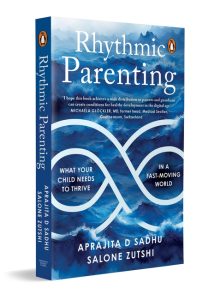
How does rhythm shape a child’s growth? Discover this excerpt from ‘Rhythmic Parenting’.
Chapter 2
Rhythm: A Cradle for Healthy Growth
A young child is like a sponge, soaking up their environment continuously during their waking hours. The child’s inner forces, like a sculptor’s hands, receive impressions from the environment to form the physical body. Everything in the environment, eating a juicy strawberry, playing with a remote-controlled car, listening to a story, the touch of a wool sweater, the chirping of birds, conversations between adults, the flash of traffic lights, stimulates these inner forces. Just like a sculpture, if something suddenly pushes the sculptor’s hands, the sculpture will flatten. If something moves the hands gently, the sculpture will receive a soft impression. The quality of a child’s environment creates soft or hard, slow or sudden impressions on the physical body. What happens when the child receives very strong or too many impressions?
Today, young children are increasingly encountering experiences that are new on the human stage and questionable in terms of their impact on child development. Little children in strollers glued to smartphones in a shopping mall. Threeyear- olds expected to write the alphabet at an age when their wrist bones have not developed yet. Four-year-olds being asked to choose the school they want to go to. Hitech creep, premature academic expectations and children being treated like little adults are burdensome on a young child. Such experiences demand the child to exercise their feelings and thoughts, which is a premature expectation. (The capacity of feeling starts developing only around seven years of age and of thinking around puberty.) As a result, their formative forces are pulled away from physical growth, which is the actual task of early childhood, and diverted towards dealing with these advanced impressions. Physical development is neglected, formative forces are depleted and the child is saddled with undigested impressions. The result is ‘difficult children’ when the child is simply expressing their discomfort.
The rhythmic environment of Ukti’s kindergarten worked therapeutically on such children. Initially, they found the calm, harmonious mood unsettling. With no intense impressions to drown their unease, they did not know what to do with themselves. They didn’t know how to listen to a story without interrupting. They could not enter into free play so they kept moving, talking and disrupting other children’s game. They would get cranky easily and cling to the teacher.
When they received the right environment that prioritized their physical development, they started to heal. The process took time—several weeks, even months. Bit by bit, they were freed from the shackles that had been holding them back. They were able to eat well, play by themselves and with other children, sleep well at night and be energetic and joyful during the day. Because they felt at ease with themselves, they were able to take an interest in the world: explore, interact, engage and learn from it.
What was special about this environment that gave children what they needed for their healthy development? It offered them impressions that they could use for their growth and rest that allowed them to digest these impressions.
We make a vessel from a lump of clay; it is the empty space within that makes it useful. We make doors and windows for a room; But it is these empty spaces that make the room liveable. Thus, while the tangible has advantages, it is the intangible that makes it useful.
The intangible aspect of growth is rest. The sculptor’s hands must pause after stretching. Rest is essential for growth to happen. This is seen most easily with an infant. Drinking milk, the main growth experience, is such intense work for them that they doze off soon after and sometimes even during it. Upon waking, they are energized and ready for the next meal. Activity and rest alternate to create a rhythm of growth.
When we sow a seed, it doesn’t turn into a plant overnight. The seed needs to go through the rhythms of the sun, rain and soil, as well as the absence of these forces which allows for their absorption. Then it begins to sprout. This alternating process of activity and rest must continue for the sapling to turn into a blossoming plant that bears fruit.
All nature moves and transforms itself in rhythm: the alternation of day and night, the transition from winter to spring, the disappearance and return of comets in the night sky. It is no different for human beings.
Until not very long ago, our lives pulsated to the rhythms of nature. People woke up at the break of dawn and went to sleep after sunset. Spring and summer were active seasons, and things slowed down in autumn and winter. Children played and rested according to these natural rhythms. They rolled about in the dirt, climbed trees and splashed in streams. Their toys were sticks and stones, wooden animals, and simple dolls made of cotton, wool or straw. The child’s physical being imbibed impressions from the natural world and grew and developed out of them. Because the natural world moves in predictable rhythms, the child did too. The first sign appeared around three months of age, when babies started sleeping for longer stretches during the night. This was the beginning of the twenty-fourhour circadian rhythm of light and dark—our internal rhythm that is responsible for the healthy functioning of life processes, from digestion to memory consolidation to hormone release and more.
What started with the invention of the light bulb a hundred years ago has metamorphosed into a high-speed train with no brakes. With our technological achievements, we are no longer dependent on nature. The rising and setting of the sun have little bearing on our schedules. We have the freedom to eat, bathe, exercise, work, socialize and sleep at our will. Nature no longer exclusively determines when we are active and when we are at rest. So we can spend hours in our cars, on the phone and in front of our screens, and not even realize. And our children are right there with us. Can they assimilate all these myriad, new experiences for growth?
A child fashions their growth instinctively out of their environment with no control over the environment itself. Today, parents have the unique responsibility of creating the environment and crafting the cradle for their child’s healthy growth. This cradle is rhythm.
Crafting the Cradle
When the child’s environment is imbued with rhythm, their growth will have the same quality. Parents can create this environment by working with four questions.
1. How does your child experience a typical day?
Any experience has one of two qualities: stretching or releasing. The first experience is asking the child to stretch in order to take something in from the world. We call it an inbreath. These experiences press upon the child’s physical organism and stimulate it, and the child grows by assimilating them.
Inbreath
From the time the child wakes up, they begin to breathe in the world: the chirping of birds, the bark of the dog, the aroma of breakfast being cooked, the sight of parents drinking tea, morning hugs and conversations.
Take a moment to reflect on your morning today. Can you identify all the different things that were going on? Start with the obvious ones and list them. Recall anything that you perceived with your senses of sight, sound, touch, smell and taste. They are tangible and easier to remember. Now try and recall how you felt. Did you have any strong emotions? What about your partner? What was the general mood? Was there an unexpected phone call or work email? Something in the news?
If your child goes to day care or kindergarten, they will breathe in more impressions: obvious ones like snacks and meals, rhymes and stories, and less obvious ones like the colours of the classroom, the teacher’s tone of voice. All instructions are inbreaths. These could be academic instructions about letters and numbers or instructions for a crafting activity. Then there are impressions a child receives from their peers: ‘I will get a kitten for my birthday’; ‘My father went to London. He is coming back today, and I will pick him up from the airport’; ‘My dog runs away with all the shoes in our house’.
Outbreath
Along with all this stretching activity, the child also receives outbreaths. The outbreath is when the sculptor’s hands can be still because no external impression is pushing them, allowing the child’s body to process previous stretching experiences and giving the ‘hands’ a break so they can rest and rejuvenate. Any time the child is moving (running about the house, walking to the car, running about in the playground, playing tag with friends), the child is able to breathe out. The extent of outbreath depends on how long and how freely the child is engaged in movement. Indoor free play also offers the child an opportunity to exhale. If the child has time to be in nature, they have the fullest opportunity to exhale. A nap or quiet time during the day helps digest experiences from the morning. And finally night-time sleep is the ultimate outbreath. All that the child explores and learns during the day is digested in sleep, making it possible for them to resume their task—growing and inhabiting their physical body—the next day.
Both the work of taking in the world during the day and the movement and rest to assimilate it develop the physical body and the senses. Growth happens in a twenty-four-hour continuum. If a child has too much inbreath, they will have a greater need to move and rest. If this need is not met, they will find it difficult to fall asleep at night, making them tired the next day and compromising their ability to take up the task of growth.
***
Get your copy of Rhythmic Parenting on Amazon or wherever books are sold.