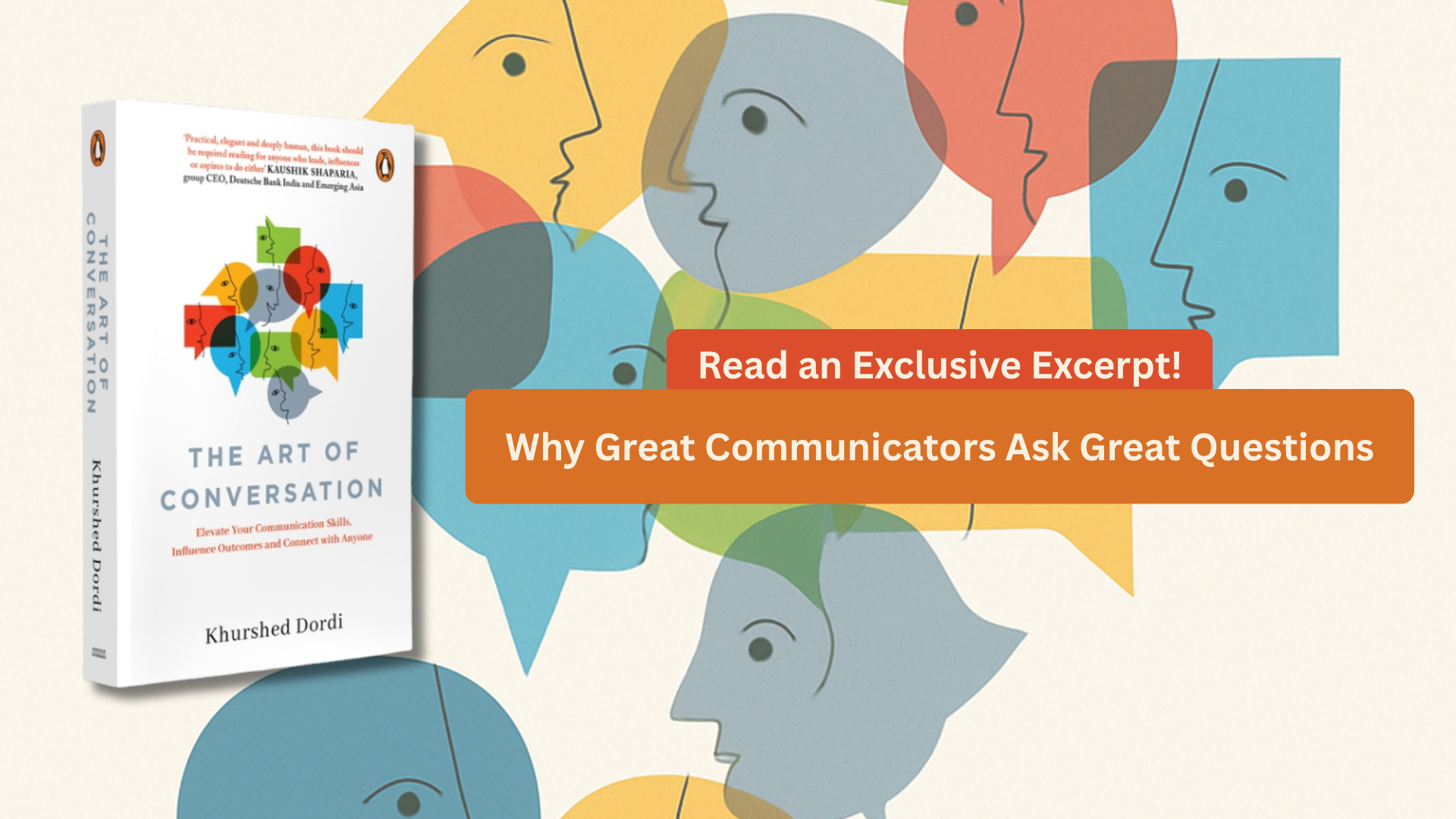
Read an exclusive excerpt from The Art of Conversation: “The Power of the Question”
INTRODUCTION TO QUESTIONING
Asking questions is an essential skill in any conversation. It helps gather information, gain clarity and show interest in the other person. However, asking the right questions requires practice and understanding of different types of questions.
This section will cover the basics of questioning and how it can enhance your communication skills. We will also explore the power of open-ended and closed-ended questions and when to use them effectively.
In the complex dance of human interaction, a powerful tool exists that can unlock doors, forge connections and illuminate the path to understanding: the art of questioning. As Voltaire eloquently said, ‘Judge a man by his questions rather than his answers.’ Questions are not mere inquiries; they are catalysts for thought, sparks that ignite curiosity and pathways to deeper knowledge.
Some of human communication is non-verbal, a silent symphony of expressions, gestures and subtle cues. Yet, within the spoken word lies an extraordinary power to shape perception, influence outcomes and build rapport. And at the heart of this power lies the question.
Questions are not simply tools for gathering information; they are instruments of connection. When we ask a question, we extend an invitation—to share, engage and collaborate. We signal our interest, curiosity and willingness to learn. And in that exchange, we open a window into the minds and hearts of others.
But not all questions are created equal. Some questions are closed, seeking a simple yes or no answer. Others are open-ended, inviting exploration and elaboration. And still others are leading, subtly guiding the conversation towards a desired outcome. The most effective questions are those that are carefully crafted, thoughtfully delivered and genuinely curious. They are questions that challenge assumptions, spark new ideas and encourage deeper reflection.
In the realm of professional success, the art of questioning is an indispensable skill. Whether you’re interviewing for a job, negotiating a deal or leading a team, the ability to ask the right questions can make all the difference. It can help you uncover hidden opportunities, build trust and rapport and create a culture of collaboration and innovation.
Take the example of a job interview. A well-prepared candidate will not only answer the interviewer’s questions thoughtfully but will also ask insightful questions of their own. This demonstrates initiative, curiosity and a genuine interest in the role and company. It can also help the candidate assess whether the job is a good fit for their skills and aspirations.
In the world of sales, questions are the lifeblood of the relationship between the salesperson and the customer. By asking the right questions, a salesperson can uncover the customer’s needs, pain points and motivations. This information is essential for tailoring the sales pitch and closing the deal.
However, the power of questioning extends far beyond the realms of interviews and sales. In any professional setting, the ability to ask the right questions can help you build relationships, influence outcomes and achieve your goals. It can help you gain a deeper understanding of your colleagues, customers and your industry. It can help you identify problems, develop solutions and drive innovation.
Questions are not just for the workplace, of course. They are essential tools for personal growth and development. When we ask ourselves questions, we challenge our assumptions, expand our perspectives and deepen our understanding of ourselves and the world around us.
But perhaps the most important questions we can ask are those that challenge us to think critically, question the status quo and envision a better future. These are the questions that drive innovation, inspire creativity and lead to positive change.
In the words of Albert Einstein, ‘The important thing is not to stop questioning. Curiosity has its own reason for existing.’ When we embrace the power of questioning, we open ourselves up to a world of possibilities. We expand our knowledge, deepen our understanding and forge stronger connections with others. And, in so doing, we unlock the full potential of human interaction.
The art of questioning is not simply a skill to be mastered; it is a way of life. It is a commitment to curiosity, a thirst for knowledge and a willingness to engage with the world around us. When we embrace the power of questioning, we embark on a journey of lifelong learning and discovery. And, in that journey, we find not only answers but also the inspiration to ask even more questions.
So, the next time you find yourself in a conversation, whether it’s with a colleague, a customer or a loved one, remember the power of the question. Ask with curiosity, listen with intention and be open to the unexpected. For in the art of questioning lies the key to unlocking the full potential of human connection and achieving professional success.
The Importance of Questions ‘Judge a man by his questions rather than his answers.’
—Voltaire
Renowned French philosopher Voltaire, with this simple yet profound statement, encapsulates the essence of questions—the power they hold in shaping thoughts, driving discovery and fostering understanding. In the grand scheme of communication, questions often take a backseat to answers.
We are conditioned to believe that answers signify knowledge, authority and perhaps even power. However, a paradigm shift is underway. The spotlight is now on the art of asking questions, the skill that fuels intellectual curiosity, ignites creativity and builds meaningful connections.
The Question as a Catalyst for Change
In an era overflowing with information, the ability to ask the right questions is a potent tool. Questions act as catalysts, propelling us beyond the surface level of knowledge to uncover deeper insights. They challenge assumptions, spark debate and invite a plurality of perspectives. In the realms of science, philosophy, business and personal development, questions are not merely tools for gathering information; they are instruments of transformation.
Consider the groundbreaking discoveries that have shaped our world—from Albert Einstein’s theory of relativity to the development of the Internet. Each of these monumental achievements was born out of a simple question, a spark of curiosity that ignited a quest for knowledge. In a similar vein, businesses that foster a culture of inquiry are more likely to innovate and adapt to a rapidly changing landscape. By encouraging employees to question the status quo, companies create an environment where ideas flourish and solutions emerge.
The Question as a Bridge to Understanding
Questions are the threads that weave connections between individuals. They invite dialogue, foster empathy and build trust. When we ask questions, we demonstrate a genuine interest in others, their experiences and their perspectives. This act of curiosity creates a space for shared understanding and mutual respect.
Questions have the power to bridge the gaps between us. By seeking to understand rather than to judge, we open the door to dialogue and collaboration. Questions invite us to step outside our echo chambers and engage with those who hold different beliefs and values. In this way, questions become a force for unity and reconciliation.
***
Get your copy of The Art of Conversation on Amazon or wherever books are sold.