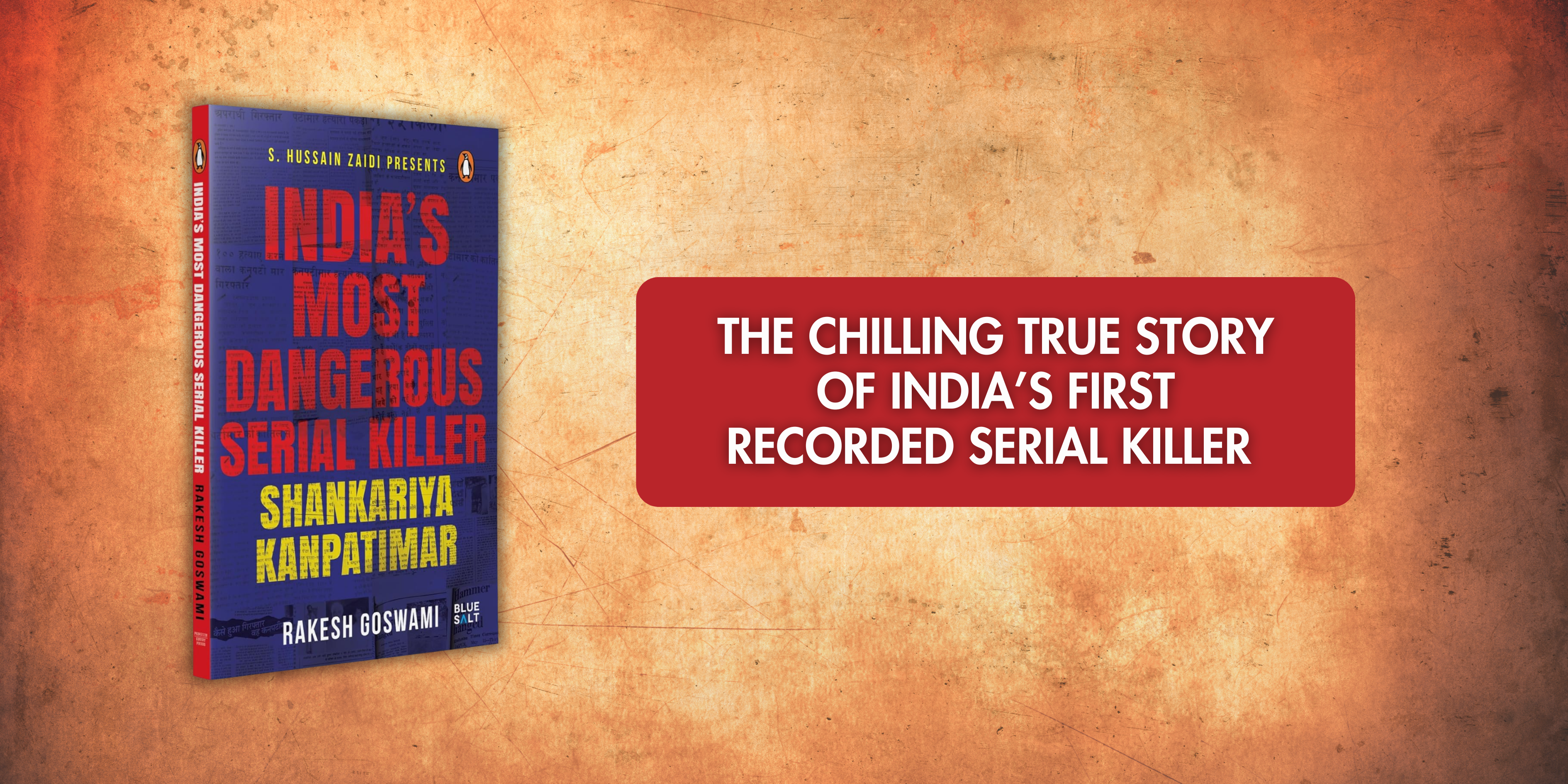
As India entered a turbulent new decade marked by political change and military history, India’s Most Dangerous Serial Killer uncovers the far darker story of Shankariya Kanpatimar, whose brutal murders left nearly seventy people dead across Rajasthan, Punjab and Haryana.
***
1973, The Year That Was
The year 1973 began with a historic military development: chief of the Indian Army, Gen. S.H.F.J. Manekshaw, was made India’s first field marshal.
Indian Express quoted a defence ministry press note stating that the promotion was ‘in recognition of his outstanding services’. The note further said that Gen. Manekshaw would hold the rank of Field Marshal for life.
According to British Army tradition, when an outstanding general is promoted to field marshal in peacetime, his name continues to remain on the army list and he receives a higher pension, though he ceases to be in effective service. He is also given certain perquisites, such as an office in Army Headquarters and some personal staff. The American Army does not have the rank of field marshal, but they have the rank of a five-star general. A full general of the army in the US is usually called a four-star general.
The Government of India followed the British practice in the case of Field Marshal Manekshaw.
Gen. Manekshaw, who took over as the Army Chief on 8 June 1969, succeeding Gen. Kumaramangalam, was due to retire on 3 April 1972 upon completing fiftyeight years of age. But the uncertain security situation in the country following hostilities in December 1971 led to his receiving an extension for an unspecified duration. The retiring army chief was later involved in negotiations with Pakistan over the delineation of the Line of Control in Jammu and Kashmir and the withdrawal of forces along the international border.
Gen. Manekshaw was rewarded for his role in all this. As chairman of the Chiefs of Staff Committee during the conflict, he was responsible for coordinating the overall strategy and the general conduct of the war with Pakistan following the large-scale influx of refugees from the then East Pakistan. He has been credited with fostering teamwork among the services in the planning and execution of the operations.
Earlier, when he was general officer commandingin-chief (GOC-in-C), Eastern Command at Calcutta, Gen. Manekshaw was responsible for containing the revolt by Mizo rebels, which began in April 1966. During his tenure as Eastern Army commander, a large number of Naga hostiles returning from China after training, and carrying weapons, were intercepted and captured, leading to demoralization among the underground army.
Commissioned into the Frontier Rifles in April 1934, Gen. Manekshaw served as brigadier-major of the Razmak Brigade in Waziristan in 1943–44 and saw active service in Burma and French Indo–China in 1945–46. He was awarded the Military Cross. When the Frontier Rifles was transferred to Pakistan at Independence, Gen. Manekshaw moved to the Gorkha Rifles. He was general staff officer in the Military Operations Directorate at Army Headquarters in 1946–47. He served as director of military operations from 1948 to 1952 and took over command of the Infantry School at Mhow in 1955. Following a course at the Imperial Defence College, London, he was promoted to major-general in December 1957 and given command of a division in Jammu and Kashmir (J&K). Gen. Manekshaw was Commandant of the Defence Services Staff College, Ootacamund (presentday Ooty), during 1959–62. After serving as a corps commander during 1962–63, he was GOC-in-C, Western Command, in 1963–64. He took over as GOC-in-C, Eastern Command, in November 1964 and moved to the capital as army chief in June 1969.
***
Get a copy from Amazon or wherever books are sold!