




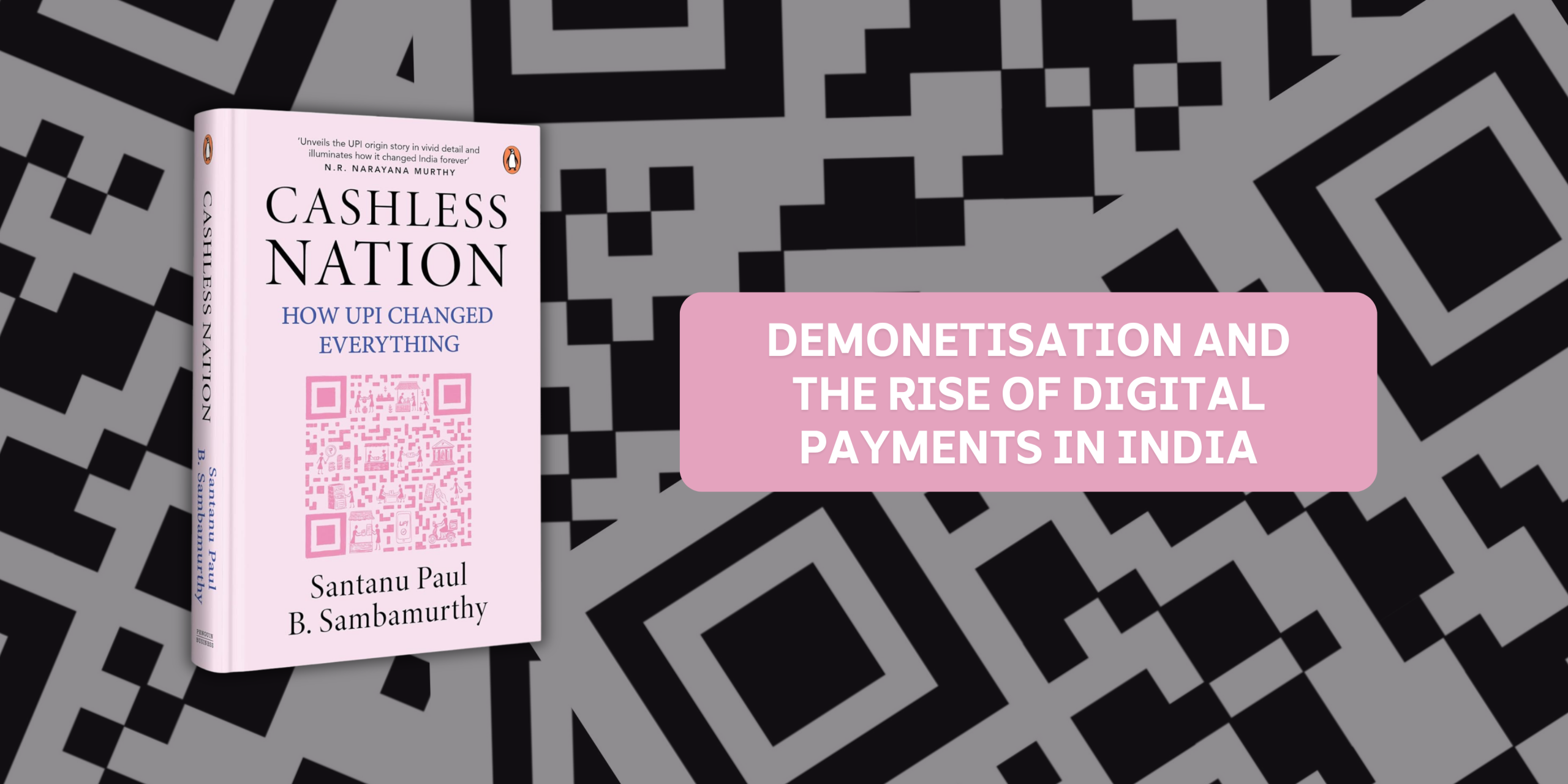
In Cashless Nation, Santanu Paul and B. Sambamurthy revisit the dramatic night of 8 November 2016, when India’s currency landscape changed overnight—and trace how that disruption helped set the stage for the digital payments revolution that followed.
***
It was 8 November 2016, and the day had felt like any other. Barely ten days had passed since Diwali, and India was beginning to emerge from its after-effects. Diwali motivates and excites Indians like no other festival. From lighting oil lamps to setting off colourful fireworks, from buying shiny gifts to wearing new clothes, from scrubbing homes to gorging on sweets, Diwali is an opportunity to indulge in jubilant and boisterous excess. The celebrations of 2016 had been no exception.
Of all Indian festivals, Diwali enjoys a special relationship with money, or more specifically, currency notes. This year too, clean and crisp currency notes flowed like a river through families, businesses and society. The clamour for freshly minted notes had reached a frenzy, and the affluent class did not mind paying a tidy premium to get their hands on them. Elders gave them as gifts to young members of their families. Devotees offered them to Goddess Lakshmi as they prayed for their own financial prosperity. Workers in India’s massive informal economy invariably look forward to cash bonuses during Diwali. Their employers had not disappointed them this year.
Diwali is also a harbinger of new business cycles. As in other years, small businesses organized chopda pujan ceremonies to close the accounts of previous years and open new ledger books decorated with auspicious symbols. Despite it being a national holiday, stock markets opened briefly for muhurat trading so investors could make token trades for good luck. As the Diwali fever reached its zenith, consumers emptied their wallets, merchants offered cut-rate discounts and lenders teased borrowers with attractive schemes. Cash from new buyers rained down on sellers of bicycles and BMWs alike. The demand for currency notes was so great that even the Reserve Bank of India, or RBI, the country’s central bank, advised commercial banks to generously overstock their currency chests. By early November, with the madness behind them, everyone heaved a sigh of relief.
Yet, as day turned to dusk, there was a sudden buzz in the air that Prime Minister Narendra Modi might address the nation later that evening. Elected a little over two years earlier, Modi already had a burgeoning reputation for bold pronouncements and muscular action. Curiosity and speculation immediately ricocheted throughout the country. Mercifully, the wait was short. At 8 p.m., the prime minister appeared on national television and cleared his throat. Over the next twenty-five minutes, as tens of millions of Indians hung on to his words with a combination of incomprehension and anxiety, Modi laid out the case for why a whopping 86 per cent of India’s currency notes needed to be rendered null and void within the next four hours. Suddenly, the country was on the brink of the unknown.
‘There comes a time in the history of a country’s development when a need is felt for a strong and decisive step. For years, this country has felt that corruption, black money and terrorism are festering sores . . . To break the grip of corruption and black money, we have decided that the ₹500 and ₹1000 currency notes presently in use will no longer be legal tender from midnight tonight’, said the prime minister. And with that, Modi effectively banned ₹15.4 trillion of the nearly ₹18 trillion cash in circulation. It was a breathtaking act. From billionaires to beggars, from ministers to minions, from entrepreneurs to employees, no one would be spared the oncoming pain.
The sun rose on 9 November to not one but two black swan events. In India, the vast majority of currency notes had been demonetized overnight. In the United States, Donald Trump lost the popular vote to Hillary Clinton but inflicted an unexpected defeat on her in the electoral college. Proving most political pundits completely wrong, Trump was on his way to the White House as the next US President.
Overnight, the world’s two largest democracies had managed to jolt not just themselves but the entire planet. Would anything ever be the same again?