




***
There’s a school of thought that says frameworks kill creativity. That real storytelling can’t be stuffed into boxes.
I understand the concern. And honestly, some of the most brilliant storytellers I’ve encountered would never use a framework consciously. Instead, they use instinct born of years of experience to perform something akin to magic.
But study their work closely, and you’ll notice that they’re using patterns. They’ve just absorbed them so completely that they don’t recognize them as patterns anymore.
There’s a story about Johann Sebastian Bach that I think about often. In 1747, Bach visited the court of Frederick the Great in Prussia. He was sixty-two years old and somewhat out of fashion in that age of music. The king, who was a musician trained in the modern style, handed Bach a melody and asked him to improvise a fugue on the spot. The theme was long, intensely chromatic and rhythmically awkward. Some commentators have speculated that Frederick conspired with Bach’s own son, Carl Philipp Emanuel, who worked at the court, to design a melody that would be nearly impossible to work with. It was, by most accounts, a trap. But Bach improvised the fugue flawlessly.
Frederick then raised the stakes: create a sixvoice fugue on the same impossible theme. Even Bach couldn’t do that on the spot. He promised to send something later.
Two months later, Frederick received ‘The Musical Offering’. It contained the six-voice fugue he’d demanded. But also, a three-voice fugue, ten canons of increasing complexity and a full trio sonata, all built on the same ‘impossible’ theme Frederick had used to try to embarrass him.
The constraint revealed Bach’s art instead of limiting it.
That’s what I want for you from this book.
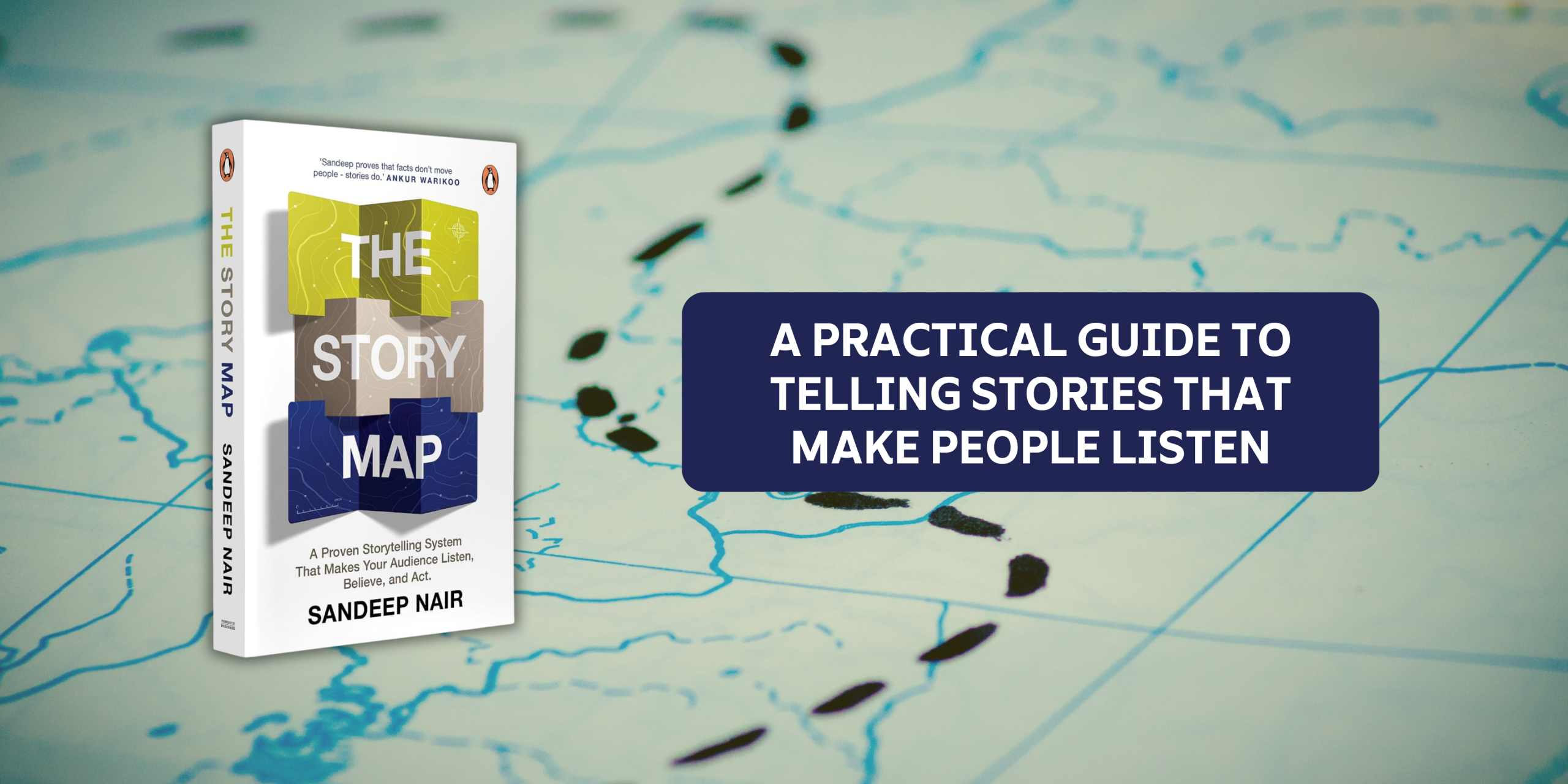
This book is a system of patterns that helps you find the story already inside the situation you’re facing. This is not a formula that makes all your stories sound the same, or a template that strips the life out of anything you want to say.
The Story Map: Soul, Body, Spirit
So, what did Pasteur have that Semmelweis didn’t?
It wasn’t intelligence. Semmelweis was brilliant. It wasn’t evidence. Semmelweis had more data than Pasteur did when he started. It wasn’t even courage. Semmelweis risked his entire career to tell the truth.
What Pasteur had was a complete story. And every complete story, I’ve come to believe, rests on three pillars. Miss any one, and the story fails.
I call these pillars Soul, Body and Spirit.
Soul is the meaning of your story. It’s what makes people care even before you’ve told them anything useful.
Soul answers three questions:
Who is this story about? That’s your Character. It might be you, your customer, your company, your team or somebody else. But someone has to be at the centre of the story, facing something.
What do they want? That’s your Goal. Every Character worth caring about wants something. To solve a problem, to achieve a milestone or perhaps to undergo transformation.
What’s standing in their way? That’s your Challenge. Without an obstacle, there’s no tension. Without tension, there’s no story—you just have a sequence of events.
Character. Goal. Challenge. These three levers move the Soul of every story worth telling.
Body is the structure of your story. It’s how you organize and deliver the meaning you’ve established.
Body also answers three questions:
What shape will this story take? That’s your Structure. There are nine master structures that cover most situations you’ll encounter, from the Hero’s Journey to the Inverted Pyramid to the simple Problem Solution. Each has a different purpose and a different effect on the listener.
How do you create tension? That’s where Tension Tactics come in. Starting in the middle of the action. Introducing a ticking clock. Setting up a David-versus Goliath dynamic. These are the moves that grab attention and hold it.
How do you build connection? That’s where Connection Tactics come in handy. A well-placed anecdote. A vulnerable confession. A visual metaphor that explains an abstract concept. These are the parts that build trust and make your audience feel like you understand them.
Soul gives your story meaning. Body gives it shape.
Spirit is what makes your story land with your audience, in a moment, in a particular context.
You can have a perfect Soul and Body and still fail, because you didn’t adapt to the room you were actually in.
Spirit answers three final questions:
Who are you talking to? That’s your Audience. A story that works for investors might bore your team. A story that energizes a conference crowd might feel over the top in a one-on-one conversation. You need to know who’s actually listening.
What should they feel? That’s the Emotion you’re designing for. Urgency. Trust. Pride. Belonging. Hope. Different emotions drive different actions. Pick the wrong one and your story might be admired but not acted upon.
Where and how are you telling it? That’s your Context. A boardroom presentation is different from an email is different from a toast at a sangeet is different from a difficult conversation with a direct report. The medium shapes what’s possible.
Spirit is the final gate. It’s what separates a good story from the right story for this specific moment. This is where Semmelweis failed most completely. His Audience was physicians who valued professional status above almost everything else. The Emotion he triggered was shame and defensiveness—the exact opposite of what he needed. And his Context kept shifting from medical journals to public accusations to, eventually, screaming at colleagues that they were murderers.
Pasteur read the room. He gave doctors a story that made them heroes, not villains. He let them feel like they were defeating an enemy rather than admitting a mistake.
***