Publish with Us

Follow Penguin

Follow Penguinsters

Follow Penguin Swadesh

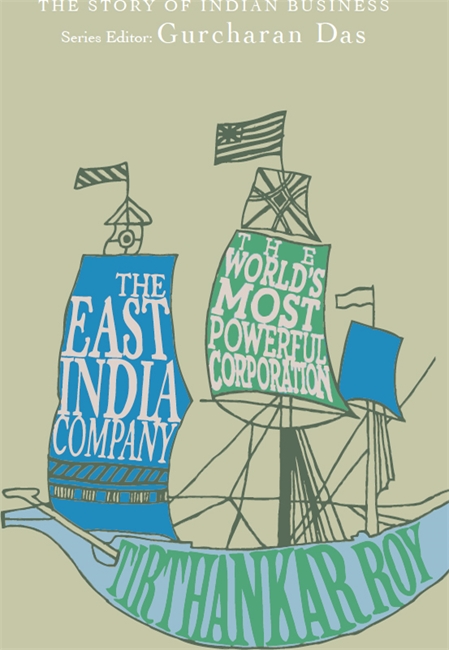
The East India Company

The East India Company

The World's Most Powerful Corporation

Tirthankar Roy
,
Gurcharan Das
Select Preferred Format
Buying Options
Paperback / Hardback
Ebooks

This groundbreaking study examines how the East India Company founded an empire in India at the same time it started losing ground in business. For over 200 years, the Company’s vast business network had spanned Persia, India, China, Indonesia and North America. But in the late 1700s, its career took a dramatic turn, and it ended up being an empire builder.

In this fascinating account, Tirthankar Roy reveals how the Company’s trade with India changed it-and how the Company changed Indian business. Fitting together many pieces of a vast jigsaw puzzle, the book explores how politics meshed so closely with the conduct of business then, and what that tells us about doing business now.

‘One of the first major attempts to tell the company’s story from an Indian business perspective’-Financial Express

Imprint: India Portfolio

Published: Jan/2016

ISBN: 9780143426172 (Paperback)

Length : 268 Pages

MRP : ₹299.00

The East India Company

The World's Most Powerful Corporation

Tirthankar Roy
,
Gurcharan Das

This groundbreaking study examines how the East India Company founded an empire in India at the same time it started losing ground in business. For over 200 years, the Company’s vast business network had spanned Persia, India, China, Indonesia and North America. But in the late 1700s, its career took a dramatic turn, and it ended up being an empire builder.

In this fascinating account, Tirthankar Roy reveals how the Company’s trade with India changed it-and how the Company changed Indian business. Fitting together many pieces of a vast jigsaw puzzle, the book explores how politics meshed so closely with the conduct of business then, and what that tells us about doing business now.

‘One of the first major attempts to tell the company’s story from an Indian business perspective’-Financial Express

Buying Options
Paperback / Hardback
Ebooks

Tirthankar Roy

Tirthankar Roy is professor of economic history at the London School of Economics and Political Science. He is the author of The Economic History of India, 1857–2010, The East India Company: The World’s Most Powerful Corporation, The Crafts and Capitalism: Handloom Weaving Industry in Colonial India and co-author of The Economic History of Colonialism, and Law and the Economy in a Young Democracy.

Gurcharan Das

Gurcharan Das is one of India’s foremost authors and public intellectuals. He graduated in philosophy with honors from Harvard University and was awarded Phi Beta Kappa for ‘high attainments in liberal scholarship’. After a successful business career – as CEO, Procter & Gamble India and Managing Director, Procter & Gamble Worldwide (Strategic Planning) – he retired at age 50 to pursue a literary career. As a writer, he went on to shape global understanding of India’s rise and its civilizational inheritance. Through books, plays, and widely read newspaper columns, he influenced public discourse relating to India’s growth story.
The cornerstone of his literary contribution is a monumental quartet on the four classical Indian aims of life, which he uniquely interprets as a timeless ideal of human flourishing for the contemporary world. His masterwork, India Unbound, addressed the aim of artha (material well-being). It was the first book to predict India’s economic rise following historic 1991 reforms, providing an anxious nation with a confident narrative of aspiration. Celebrated internationally — The Guardian termed it “a quiet earthquake”; Washington Post said it was an “eye-opener”; the New York Times wrote, “something tremendous is happening in India and Das has his finger on the pulse of the transformation,” and Amartya Sen, the Nobel prize winner, called it a “wonderful book.”
The second volume of the quartet, The Difficulty of Being Good, offered the civilizational ideal of dharma as a contemporary compass to navigate the moral life, and introduced global audiences to the epic, Mahabharata, as a source of ethical reflection. The book earned praise from Indian and foreign media and world-renowned scholars: the philosopher, Martha Nussbaum, called it “one of the best things I have read about the contribution of great literature to ethical thought”; the Indologist, David Shulman, described the work as “a miracle”; the renowned Sanskritist, Sheldon Pollock, wrote, “This superb book is knowledgeable, passionate, and courageous.” It has become a text at universities and a Case Study at Harvard Business School.
He completed the quartet with Kama: The Riddle of Desire, which shows how to cherish desire in order to live a flourishing, pleasureful life and Another Sort of Freedom, which describes his lifelong struggle to give meaning and purpose to life, while offering a secular take on the final goal of moksha.
Alongside these works, his incisive critique of governance, India Grows at Night, was recognized by London’s Financial Times as “one of the best books of 2013”, further cementing his reputation as a premier analyst of the Indian state and society. He has also written a novel, A Fine Family; a book of essays, The Elephant Paradigm, and an anthology, Three Plays. His latest work is a political essay, and The Dilemma of the Indian Liberal. He has also edited for Penguin a 17-volume economic and business history of India. He lives in Delhi with his wife.

More By The Authors

Monsoon Economy

Monsoon Economy

Tirthankar Roy
The Marwaris

The Marwaris

Gurcharan Das, Thomas A Timberg, Timberg Tom
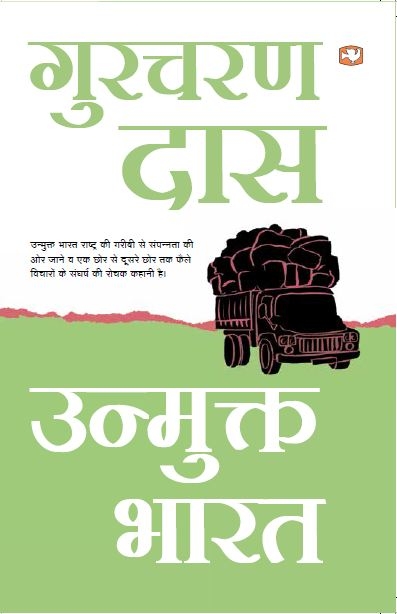
UNMUKT BHARAT

UNMUKT BHARAT

Gurcharan Das
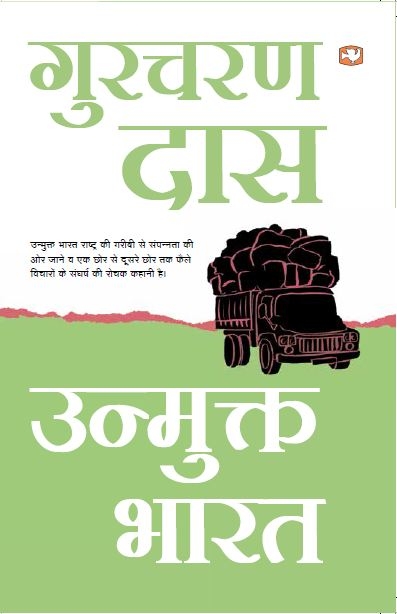
UNMUKT BHARAT

UNMUKT BHARAT

Gurcharan Das
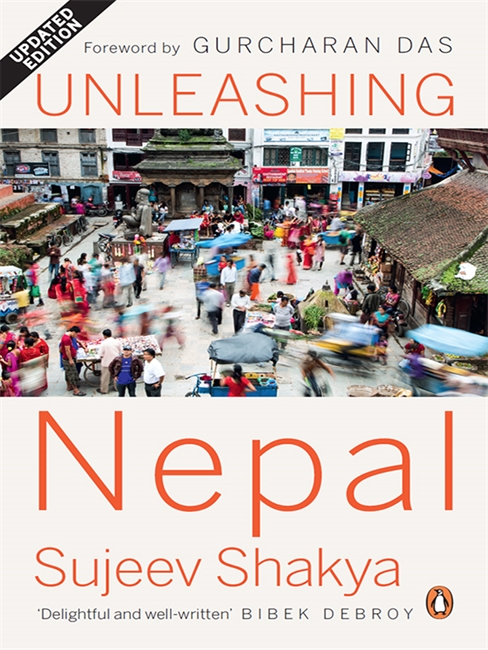
Unleashing Nepal

Unleashing Nepal

Gurcharan Das, Sujeev Shakya
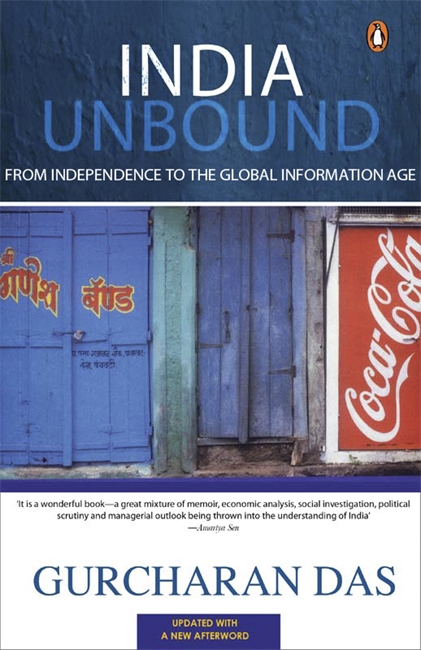
India Unbound

India Unbound

Das Gurcharan, Gurcharan Das

The Struggle between Kama Pessimists, Optimists and Realists

Kama: The Riddle of Desire by Gurcharan Das is a fascinating account of love and desire that sheds new light on love, marriage, family, adultery and jealousy. The book weaves a compelling narrative soaked in philosophical, historical and literary ideas while talking about Kama optimists, pessimists and realists. But how are these characterised? Let’s find out in […]

error: Content is protected !!