



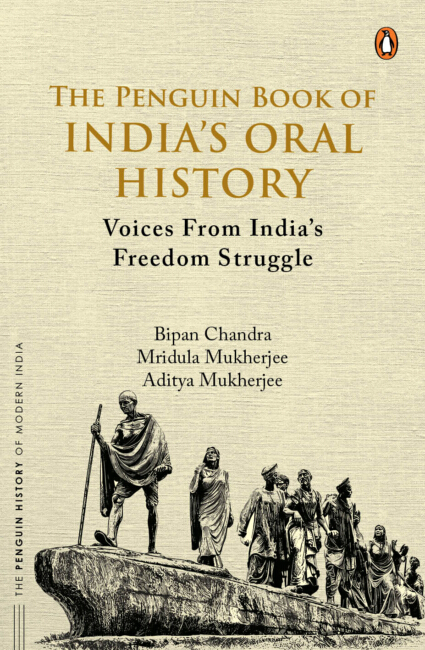
What was it really like to live through India’s struggle for freedom from the British colonial rule? What did those who took part in it remember: of Gandhi and the Congress, of ideological disagreements, of going underground, of prison, protest and the choices that changed their lives?
In the 1980s, eminent historian Bipan Chandra, together with Mridula Mukherjee, Aditya Mukherjee, and a team of scholars began recording the memories of men and women who had witnessed and participated in the freedom movement.
This amazingly brilliant collection brings together the conversations, featuring voices as varied as Renuka Ray, Usha Mehta, S. A. Dange, E. M. S. Namboodiripad, Achyut Patwardhan, Umashankar Joshi, Morarji Desai, J. R. D. Tata, S. Nijalingappa, Vadilal Lallubhai Mehta, Vijay Merchant and K.K. Das.
Candid, personal and thought-provoking, their recollections take us beyond the familiar history of movements and milestones into the arguments, friendships, convictions and sacrifices that animated an extraordinary generation. Together, they offer something increasingly rare: India’s freedom struggle remembered by those who were there.
Archives: Books
Monkpreneur
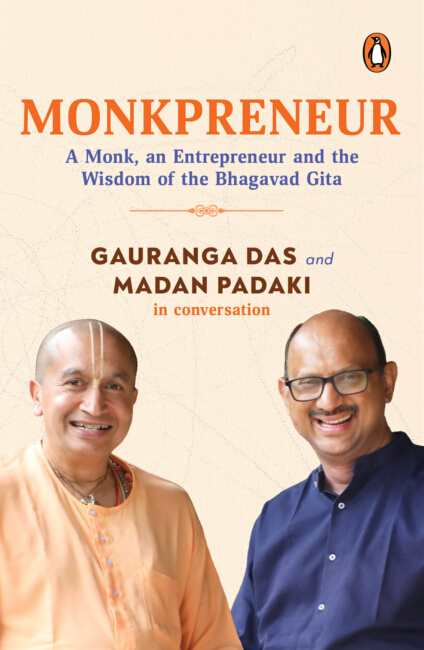
What can an ancient scripture teach us about building a business, leading people and making difficult decisions?
In Monkpreneur, Gauranga Das, renowned spiritual guru and teacher, and entrepreneur and business leader Madan Padaki come together to explore the timeless dilemmas of work and life through the wisdom of the Bhagavad Gita. While the world of business may seem far removed from spiritual practice, the questions at its heart are universal: How do we find purpose? How do we act without being consumed by outcomes? How do we lead, navigate setbacks and make decisions in moments of uncertainty?
Through eight fundamental principles—Purpose, Habits, Focus, Relationships, Determination, Discrimination, Humility and Tolerance—their conversations reveal how ancient wisdom can offer practical answers to modern challenges.
For entrepreneurs, founders, leaders and anyone navigating ambition and uncertainty, Monkpreneur offers a new way to think about success: not just as what we achieve, but as who we become along the way.
The World Infront of You
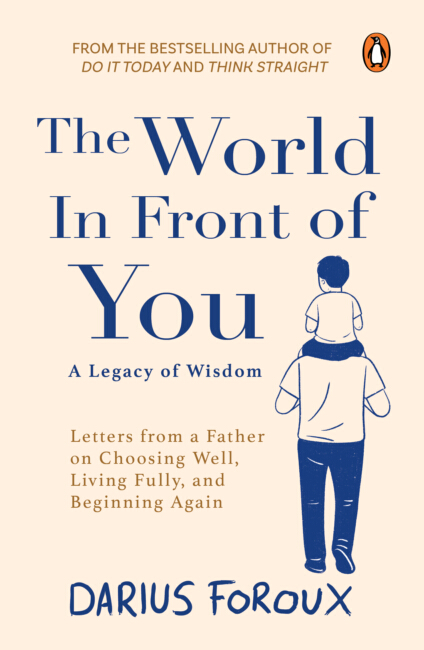
A lifetime of lessons in letters.
One chance to build a life to be proud of.
Written in the 54 days before his son’s birth, Darius Foroux’s The World in Front of You is a moving collection of letters which offers timeless guidance for navigating an increasingly complex world.
Part memoir, part handbook, these letters draw on the author’s journey from an overweight, overlooked teenager to a self-made man who achieved the life he once dreamed about. Along the way, he shares what he learned about resilience, confidence, discipline, and the courage to start over when life doesn’t go according to plan.
Written as a gift from father to son, The World in Front of You is for anyone trying to trust their judgment and build a meaningful life, one day at a time.
Forged in experience, written with love—a father’s blueprint for a head start to life.
The First Witch of Boston
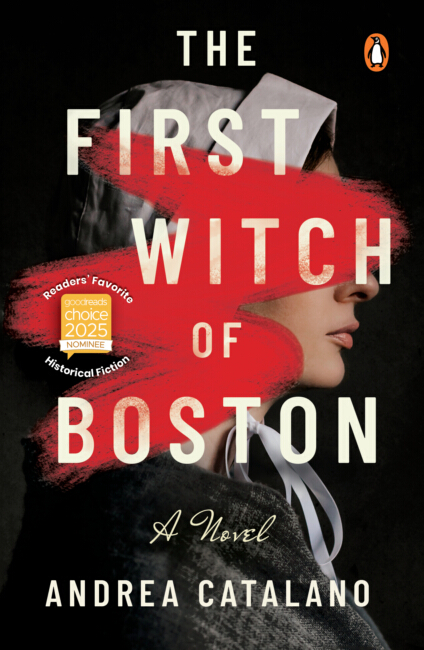
2025 Goodreads Choice Award Finalist for Readers’ Favorite Historical Fiction
“Andrea Catalano draws a tender, intimate portrait of a marriage and a bold defense of an independent woman ahead of her time.” —Kate Quinn, New York Times bestselling author of The Rose Code
A gripping and intimate novel based on the true story of Margaret Jones, the first woman to be found guilty of witchcraft in seventeenth-century Massachusetts.
Massachusetts Bay Colony, 1646
Thomas and Margaret Jones arrive from England to build a life in the New World. Though of differing temperaments, cautious Thomas and fiery Margaret, a healer, are bound by a love that has lasted decades. With a child on the way, their new beginning promises only blessings.
But in this austere Puritan community, comely faces hide malicious intent. Wrong moves or words are met with suspicion, and Margaret’s bold and unguarded nature draws scorn. Soon, Margaret is mistrusted as more cunning woman than kind caregiver. And when personal tragedies, religious hysteria, and wariness of the unknown turn most against her, even the devotion Margaret and her husband share is at risk.
Inspired by actual diary entries and court records, The First Witch of Boston is at once the riveting story of a woman unjustly accused and a love story set amid the political and social turmoil of both Old and New England. Harrowing, and with a deep understanding of the human heart, history is brilliantly imagined.
2 AM Thoughts
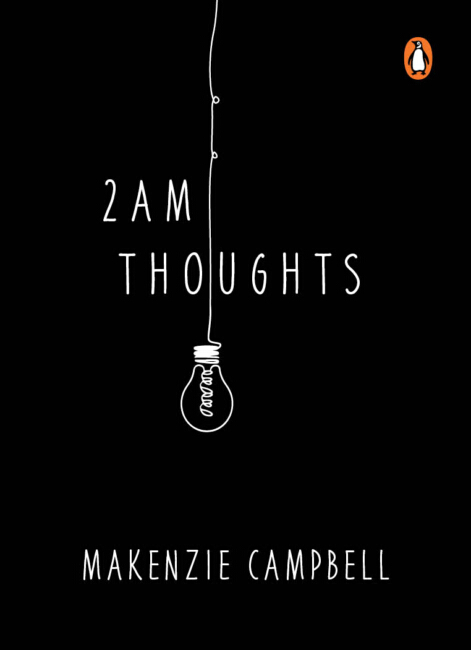
“I met you at dusk.
We loved till midnight.
Then, you left me. 2 AM found me at my lowest.
When the sun came up, I dried my tears,
found my strength, and went on with my day.”
There is a particular cruelty in the small hours—the way they strip away distraction and leave you alone with everything you have lost. In a single day moving from dusk to dawn, 2 AM Thoughts traces the arc of emotions that come with relationships in the span of hours rather than years.
The poems in this collection sit with hope and the silent cracks of heartbreak, the echoing pain and the silent griefs, the carousel of memories, the 2 AM mental math of tallying what went wrong. As the night gives way, so does the grief—not suddenly, not neatly, but in the way wounded hearts seal up—quietly, by and by, without ceremony.
For anyone who has ever lain awake mending their broken heart while the rest of the world sleeps, 2 AM Thoughts will feel like being finally understood and witnessed.
Sri Sai Satcharita
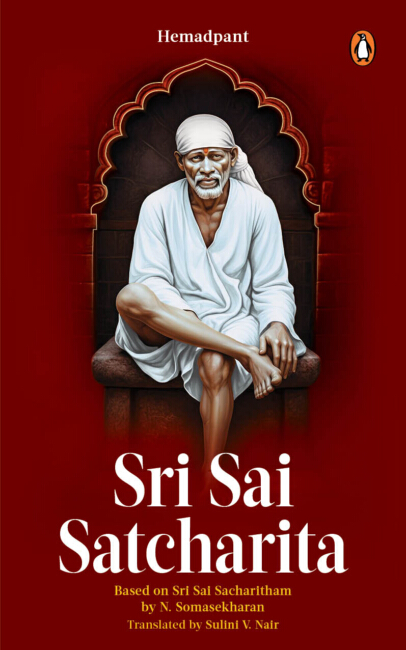
Sri Sai Satcharita is the timeless chronicle of Sri Sai Baba’s life, teachings, miracles, and divine play. Through the eyes of His beloved devotee Hemadpant, it brings alive the world of Shirdi and the wisdom of Baba’s teachings.
More than a collection of miraculous stories, it offers practical guidance on faith, patience, humility, surrender, and trust in God, making it a source of comfort and courage in everyday life.
It can also be read as a saptaha, a sacred seven-day journey through Baba’s life and teachings, undertaken to deepen one’s connection with Him and seek His grace.
Treasured by generations of devotees, this enduring classic continues to inspire readers to live with faith and trust in Baba’s grace.
The Housewife: An Unputdownable Domestic Thriller

INSTANT USA TODAY BESTSELLER
“Natalie Barelli delivers every time.” ― Freida McFadden, #1 New York Times bestselling author
“This is how you write an original main character!” ― Iliana Xander, author of Love, Mom
***
From the celebrated author of Finders Keepers comes a brand new, deliciously dark thriller about a woman who married the man of her dreams, only for him to become her worst nightmare.
Jodie always dreamed of being a housewife. And after a whirlwind romance, she marries renowned psychologist Dr Roy Davies and moves into his perfect Beverly Hills home. But the fairy tale fades fast. Roy is distant, his friends view her as a gold-digger, and the house reveres his late wife, Deborah, whose presence still looms over everyone and everything.
When Jodie learns Deborah became a recluse before death, she begins to suspect Roy was behind it. And the deeper she digs, the darker Roy’s past appears―obsessive, controlling, unfaithful. Increasingly convinced he had something to do with Deborah’s death, Jodie knows she should go to the police, but that would require revealing her own secret. A secret that could destroy her.
But Jodie won’t be silenced. Because the truth about Roy is worse than she imagined―and now, trapped in a house built on lies, she must find a way out before she becomes the next perfect wife to vanish.
Natalie Barelli delivers a supercharged, addictive thriller that will have you hooked from start to finish―a must-read for psychological thriller and Freida McFadden fans.
Tropes
Psychological Suspense
Domestic Thriller
Marriage Secrets
Missing Molly: A Dark Cold-Case Psychological Thriller Full of Twists
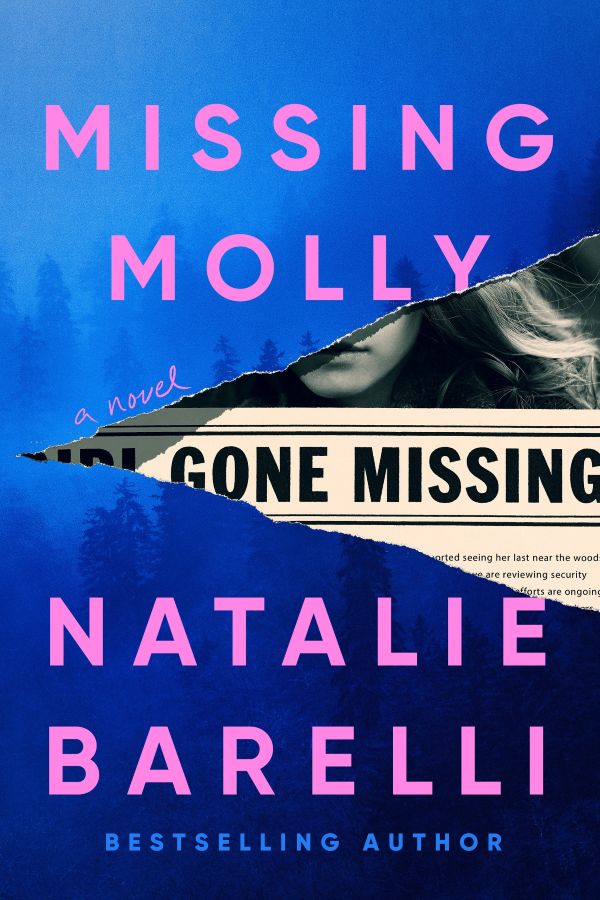
From bestselling author Natalie Barelli comes a dark psychological thriller about a cold case, the newspaper investigating it, and the woman for whom it all hits a little too close to home…
Millions are searching for the truth. Only she knows it’s all a lie.
Rachel Holloway has built a quiet life in London. She has a daughter, a partner, and a steady job at the local paper. Then the paper launches a true-crime podcast, and their first case is the disappearance of twelve-year-old Molly Forster, missing since her family’s brutal murder twelve years ago.
But Rachel knows exactly what happened to Molly. Because Rachel is Molly. She’s spent years hiding from the killer who destroyed her family, and now her own podcast is about to expose her and the truth she’s buried.
As the story goes viral, new evidence emerges that confirms what Rachel has known all along: The wrong man was convicted.
The real killer is still free.
And he’s coming for Rachel.
The Constitution and the People
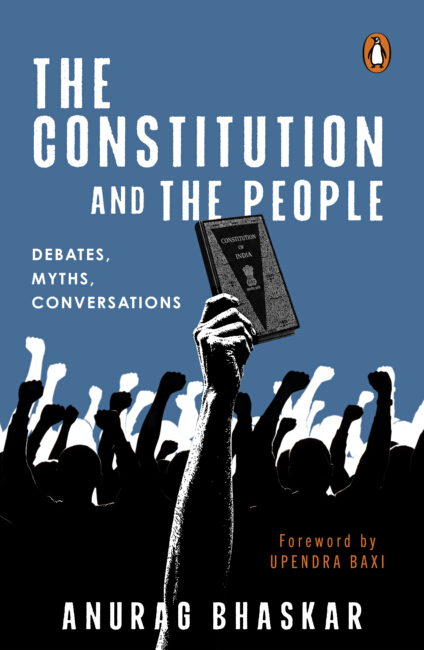
The Constitution is more than a document. It is a conversation.
The Indian Constitution has two ‘lives’. Its juridical life unfolds in courtrooms and lawyers’ chambers through technical discussions. Its social life unfolds in the public imagination in stories and popular myths. Over time, these stories and myths gain a life of their own, resulting in beliefs about matters like the originality of the Constitution, affirmative action (‘reservation’) and much else.
In The Constitution and the People, Anurag Bhaskar challenges persistent myths about the Constitution, its origins, its scope, its socio-political impact and explores the historical context, lived experiences, and real-life stories that illuminate the Constitution’s continuing relevance in contemporary India.
This is a book intended for citizens who do not possess formal legal training but wish to understand the foundational document of their nation.
The Accidental Stylist
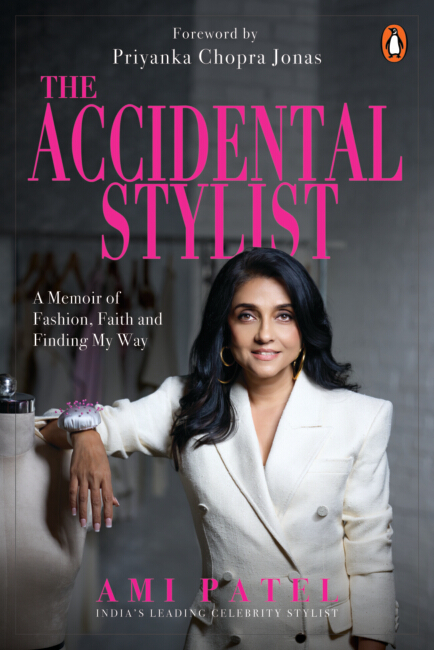
Maybe she’s born with it. Maybe she stumbled into it.
Priyanka Chopra, Katrina Kaif, Alia Bhatt, Rashmika Mandana, Janhvi Kapoor. Some of India’s best dressed women have another one in common: Ami Patel.
Here is the story of a woman who became one of India’s most influential stylists—by accident. Told with depth, intensity and humour, The Accidental Stylist is a memoir set against the backdrop of fashion, creativity, spirituality and a rapidly changing world. But ultimately, it is about something far more universal: finding your place, learning to trust the unexpected and discovering that what appears to be an accident may in fact be designed just for you.
For anyone who has ever wondered if they are on the right path, this book shows that sometimes the detours become the destination. And sometimes the life you stumble into becomes the life you were always meant to live.
The Accidental Stylist is a reminder that the most important transformations rarely happen in front of the world. They happen within.