Is it possible to possess a portable, lightweight (say 400 grams), user-friendly soul with a twenty-four-hour battery life?
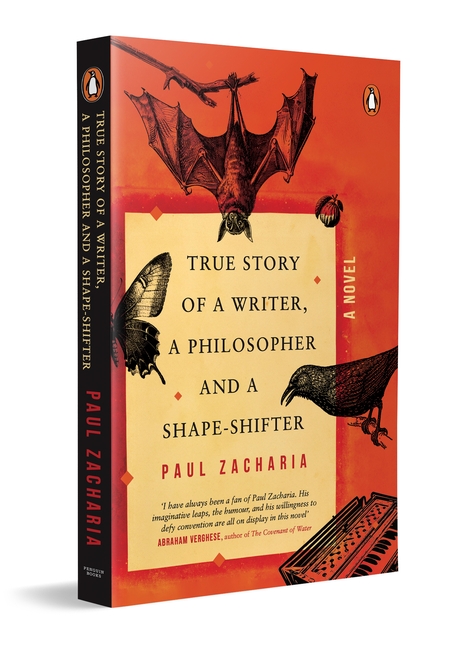
WELCOME TO LORD SPIDER’S WORLD OF MARVELOUS LIES
Lord Spider, celebrated author of popular fiction; J.L. Pillai, eminent executioner and voyeur; Rosi, Spider’s wife and freelance philosopher. When they get together to write an essay on ‘Compassion’ for the revolutionary party, the art of lying reaches its outrageous zenith. So does story-telling.
Spider’s world is a novel in brilliant, irresistible free fall.
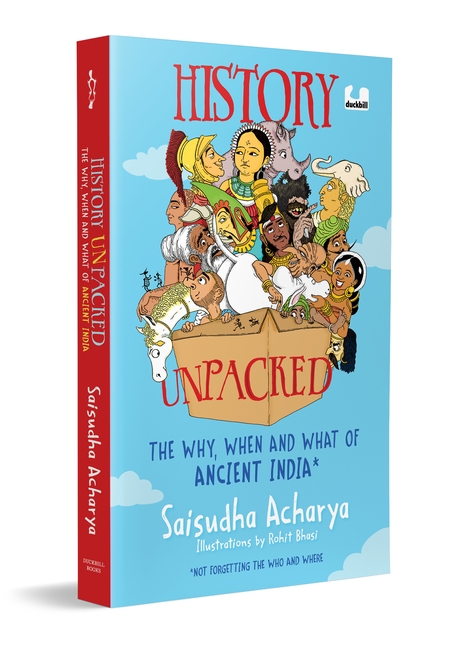
Does history leave you scratching your head? Does the endless parade of kings, battles and dates make you yawn?
Well then, this is the book to change that! It is full of amazing, often hilarious and sometimes baffling stories from ancient India. From the Stone Age to the Golden Age, India’s past is full of interesting people, mad antics and unbelievable connections. From central Asia to Kanyakumari and ancient Rome to southeast Asia—ancient India was linked with the world in ways you wouldn’t expect!
With quizzes, timelines and maps, and laugh-out-loud funny cartoons—the book truly unpacks ancient Indian history and tells you what we know about names, places (as far as we can decipher inscriptions), events and motives (as far as we can figure out!) and of course the strange things that humans do, whether back then or now.
Stop Overthinking Workbook: Break Free from Anxiety and Reclaim Your Peace
Overthinking is often the root cause of unhappiness, trapping you in a relentless cycle of worry and self-doubt. This book is here to help you break free.
Stop Overthinking Workbook understands the challenges you’ve faced, the mental exhaustion of endless thought loops, and the stress that holds you back. Acclaimed author Nick Trenton guides you with actionable, science-backed strategies to rewire your brain, master your thoughts, and transform your mental habits.
Inside, you’ll discover proven techniques to:
- Regain control of your mind and stay present.
- Overcome anxiety and stress with practical tools.
- Build a healthier, more positive relationship with your thoughts.
With insightful advice and easy-to-follow exercises, this workbook offers a fresh perspective on breaking free from overthinking and embracing a calm, focused mindset. Start your journey to mental clarity today!
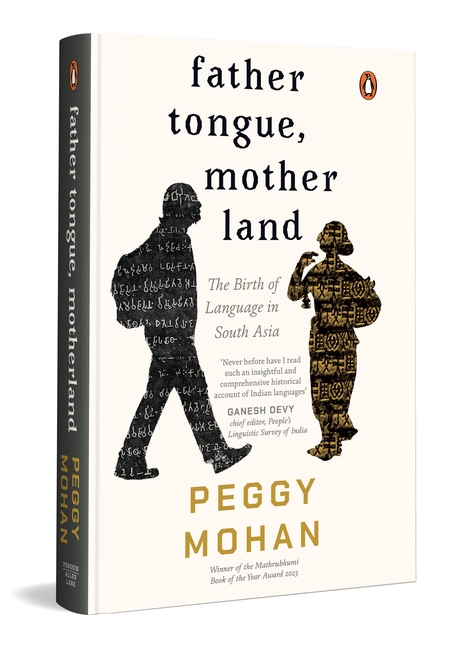
How do languages mix? Does it begin in chaos, new migrants and old inhabitants needing a pidgin to communicate? Or does it happen more smoothly, in stages? And what is a prakrit? Why do we hear only of prakrits, and never of pidgins, in South Asia?
In Father Tongue, Motherland, Peggy Mohan looks at exactly how the mixed languages in South Asia came to life. Like a flame moving from wick to wick in early encounters between male settlers and locals skilled at learning languages, the language would start to ‘go native’ as it spread. This produced ‘father tongues’, with words taken from the migrant men’s language, but grammars that preserved the earlier languages of the ‘motherland’.
Looking first at Dakkhini, spoken in the Deccan where north meets south, Mohan goes on to build an X-ray image of a vanished language of the Indus Valley Civilization from the ‘ancient bones’ visible in the modern languages of the area. In the east, she explores another migration of men 4000 years ago that left its mark on language beyond the Ganga-Yamuna confluence. How did the Dravidian people and their languages end up in south India? And what about Nepal, where men coming into the Kathmandu Valley 500 years ago created a hybrid eerily similar to what we find in the rest of the subcontinent?
One image running through this book is of something that remains even when the living form of language fades. Tucked away in how we think and speak now are echoes of our history, and the story of ancestors who lived hundreds and thousands of years ago.
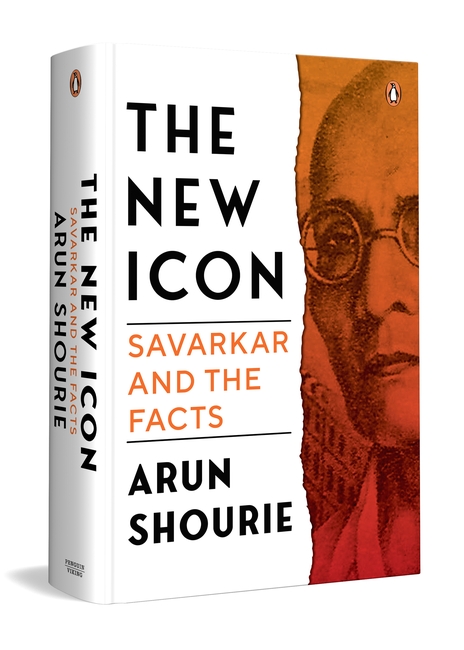
Did Savarkar battle a stormy sea when he attempted his legendary escape at Marseilles? Did Gandhiji and he stay together ‘as friends’ in London as Savarkar claimed during Gandhiji’s assassination trial? Did he turn against Muslims because of the cruelty of jailers in the Andamans? What is one to make of his ‘mercy petitions’ to the British? Did he pledge to be ‘politically useful’ to the British and accept conditions for his release that even the British had not demanded? During the Quit India movement, did Savarkar promise ‘whole-hearted cooperation’ to the British? What did he seek from the British? Was Savarkar the one who showed Subhas Bose the path that Netaji then followed?
What did Savarkar think of Hinduism, about our beliefs and ‘holy cows’, about the texts Hindus hold to be sacred? Have our people been suffused with Hindutva as Savarkar maintained? What sort of a State did he envisage? Is Savarkar being resurrected today to erase the one great inconvenience—Gandhiji?
In The New Icon, Arun Shourie delves deep into Savarkar’s books, essays, speeches, statements to answer these and other questions. He exhumes archives of the British government. He takes us through contemporary records. And unearths facts that will surprise you.
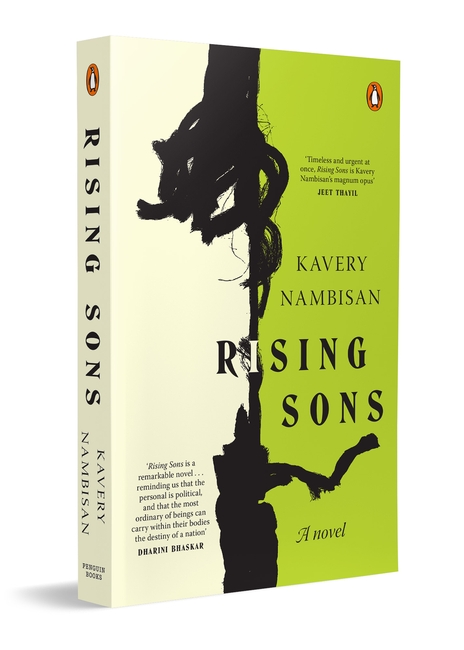
In pre-independent India, in the small village of Kesarugattu somewhere in Karnataka, Devaraya, a Brahmin, goes about further ossifying his status. This little hamlet, like every other, follows the said and unsaid rules of caste and religion. Inter-caste marriages are frowned upon. Brahmin and other wealthy upper caste men set the rules. The Ai tribes live far away from the village, in the forest. As societal divisions and unlikely friendships play out in the everyday life of the village, a secret from Devaraya’s past comes to haunt him and his family. The repercussions are huge for both Devaraya, his wife Gowru and his two sons Nanju and Anna.
Even as battle lines are drawn in the village and undeclared allies offer support, this fresh trouble claims one of his two sons. That’s not all – meanwhile, the Independence movement that infects the little hamlet sweeps away his other son in its fever. What is to become of the dreams Devaraya had for his sons?
Rising Sons, a novel in four parts, tells the delicate story of the relationship between fathers and sons, between husbands and wives, between family and society; of the fate of a small village that is tied to the making of a great nation; of the hope and promise of the young against the disappointments of the past; of the hows and whys of political life.

How on earth did Stephen Huyler find himself pedaling a bicycle rickshaw through the Indian border on his twentieth birthday?
Intriguing stories like this define Huyler’s life and his metamorphosis into a leading documentarian of the cultures and peoples of India.
In the fifty-two years since his unusual first entry, Stephen has traversed the subcontinent dozens of times by a wide variety of transportation in order to conduct a detailed survey of India’s village and other subcultures.
His innate friendliness has always opened doors, while his skills as a writer and photographer have allowed him to create books and museum exhibitions of material never before recorded.
Transformed By India invites the reader to join Dr. Huyler as he navigates this remarkable nation. The chapters revolve around tributes to the individuals he has known from maharajahs to musicians, Dalits to Brahmins, politicians to potters. Tying all the many stories together is the innate strength and creative capacity for improvement expressed everywhere in the subcontinent.
Early in his career as an anthropologist and art historian, Stephen Huyler recognized that most of the world had little access to feeling the pulse of the peoples of South Asia.
His seven previous books and dozens of museum exhibitions build bridges of communication between India and countries beyond its boundaries.
stephenhuyler.com and www.pipparannbooks.com
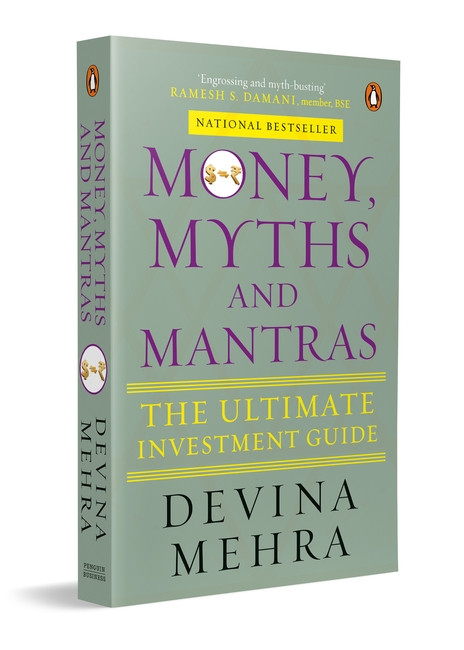
From the legendary investment guru Devina Mehra—one of the most powerful women on Fortune India 2022 and one of the only two women to receive a gold medal in the history of IIM-Ahmedabad—Money, Myths and Mantras answers some of the most difficult yet pertinent questions
about investing.
How do you get started on your investment journey?
Is investment only about the stock market or should you go beyond it?
What are the rules of investing and when should you break them?
What are the strategies of successful investors, and should you follow them?
Which well-known investment mantras are really myths?
How can your brain sabotage your portfolio?
An investment book like no other, it critically analyses different investing approaches and underscores what works and what doesn’t. It helps readers not only learn about investing but also unlearn some of the commonly held beliefs and practices that often lead to wrong choices. Engagingly written by a thought leader in the industry, Money, Myths and Mantras includes frameworks, thoughts and aha moments for both the novice investor and the investment pros. This book is the distillation of three decades of analysis of the fundamentals of investing. It is sure to be your ultimate guide to wealth creation.

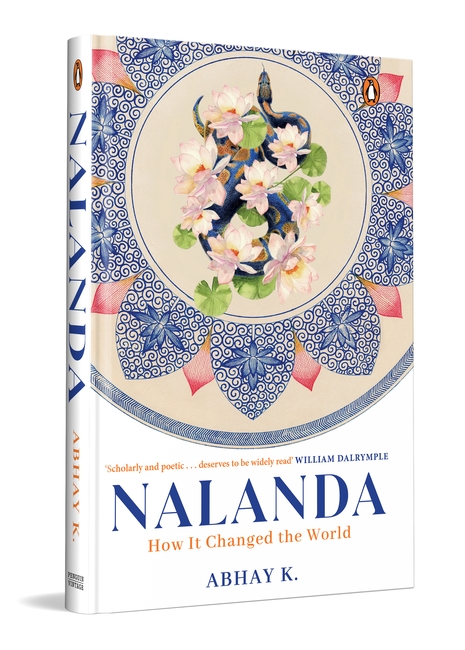
Much about Nalanda remains shrouded in mystery. When was it founded? Who founded it? Who studied and taught there? What subjects were offered? How many students and teachers were there? Was Nalanda a university in the modern sense? And what ultimately led to its downfall? Nalanda by Abhay K. unravels these questions, telling the story of the rise, fall, and re-rise of Nalanda Mahavihara. Through extensive research, the book explores Nalanda’s contributions in fields such as science, mathematics, philosophy, art, architecture, and poetry. It also highlights the great luminaries who elevated its unparalleled reputation as the preeminent seat of knowledge, as well as the foreign scholars who visited the celebrated monastery.
Broad in sweep and deep in history, Nalanda is a thrilling read that sheds new light on Nalanda and its journey over millennia.