A fantastic two-books slipcase from one of the most eclectic and stimulating public intellectuals at large today, Jordan Peterson.
12 RULES FOR LIFE
What does everyone in the modern world need to know?
Renowned psychologist Jordan B. Peterson’s answer to this most difficult of questions uniquely combines the hard-won truths of ancient tradition with the stunning revelations of cutting-edge scientific research. Humorous, surprising and informative, Dr. Peterson tells us why skateboarding boys and girls must be left alone, what terrible fate awaits those who criticize too easily, and why you should always pet a cat when you meet one on the street.
Dr. Peterson journeys broadly, discussing discipline, freedom, adventure and responsibility, distilling the world’s wisdom into 12 practical and profound rules for life. 12 Rules for Life shatters the modern commonplaces of science, faith and human nature, while transforming and ennobling the mind and spirit of its readers.
BEYOND ORDER
The companion volume to 12 Rules for Life offers further guidance on the perilous path of modern life.
In 12 Rules for Life, clinical psychologist and celebrated professor at Harvard and the University of Toronto Dr. Jordan B. Peterson helped millions of readers impose order on the chaos of their lives. Now, in this bold sequel, Peterson delivers twelve more lifesaving principles for resisting the exhausting toll that our desire to order the world inevitably takes.
In a time when the human will increasingly imposes itself over every sphere of life—from our social structures to our emotional states—Peterson warns that too much security is dangerous. What’s more, he offers strategies for overcoming the cultural, scientific, and psychological forces causing us to tend toward tyranny, and teaches us how to rely instead on our instinct to find meaning and purpose, even—and especially—when we find ourselves powerless.
“The must-have Diary of a Wimpy Kid 15-book collection! 50% words, 50% cartoons, 100% hilarious!
Stories that all readers can’t wait to get their hands on – laughter guaranteed!
THE BESTSELLING DIARY OF A WIMPY KID SERIES BOOKS 1-15 ARE NOW AVAILABLE TOGETHER IN A COLLECTIBLE BOX-SET.
The perfect gift for readers of 8+ from Wimpy Kid fans to all those looking for a new, hilarious and oh-so-readable world of craziness to discover. The best entertainment there is for the holidays!
Just don’t touch the cheese slice…
Books included:
1. Diary of a Wimpy Kid
2. Diary of a Wimpy Kid – Rodrick Rules
3. Diary of a Wimpy Kid – The Last Straw
4. Diary of a Wimpy Kid – Dog Days
5. Diary of a Wimpy Kid – The Ugly Truth
6. Diary of a Wimpy Kid – Cabin Fever
7. Diary of a Wimpy Kid – The Third Wheel
8. Diary of a Wimpy Kid – Hard Luck
9. Diary of a Wimpy Kid – The Long Haul
10. Diary of a Wimpy Kid – Old School
11.Diary of a Wimpy Kid – Double Down
12. Diary of a Wimpy Kid – The Getaway
13. Diary of a Wimpy Kid – The Meltdown
14. Diary of a Wimpy Kid – Wrecking Ball
15. Diary of a Wimpy Kid – The Deep End”

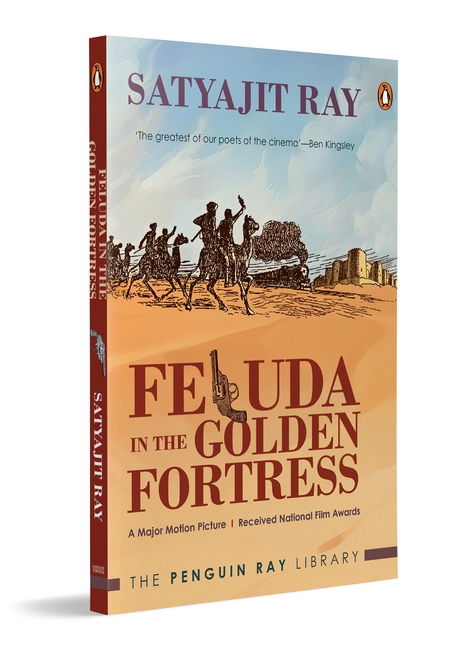
Feluda in the Golden Fortress opens a window to Satyajit Ray’s detective novel called Sonar Kella. First published in 1971 in Bengali, this book was also adapted to screen and was the first film adaptation of Ray’s famous ‘private investigator’ Feluda, which he not only directed but also wrote its screenplay and composed music for it. In the book, Mukul, a young boy, is persistently haunted by incidents from his birth. When his father takes him to a renowned parapsychologist Dr. Hemanga Hazra. H e studies the boy’s drawings and believes the sketches depict the Indian Province of Rajasthan. He also suggests taking the boy there.
Meanwhile, a group of brigands get to know about this boy and believe that he could lead them to a treasure that they have been hunting for a long time. They kidnap Mukul and now, Feluda along within assistant Topse must bring back the boy and solve the mystery. They are joined on road by Lalmohan Ganguly, a pulp writer who goes by the non de plume, Jatayu.
Celebrating 50 years Sonar Kella, the most popular film by Satyajit Ray based on the adventures of detective Feluda, this book opens a window to previously unseen works of Ray from his journal. With rare photographs, interviews and film stills, Feluda in The Golden Fortress is your ultimate Feluda book.

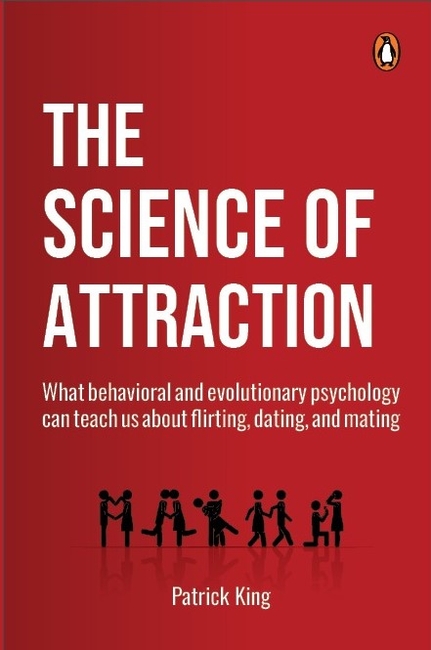
The Science of Attraction: What Behavioural & Evolutionary Psychology Can Teach Us About Flirting, Dating, and Mating
The guide to subconscious and psychologically proven methods to attract others, spark chemistry, and create affection and love.
Like all human interaction, even love is primarily guided by our hormones, and there is a definitive science to attraction. This book is your field manual to understand the instinctual, and evolutionary triggers of attraction.
The Science of Attraction is an in-depth look at human attraction and what draws people together. Diagnosing and recommending highly actionable steps to take your dating life to the next level. No tricks, no manipulation; only getting inside the human psyche.
- Find the shortcuts to powerful chemistry
- Predict people’s responses as a matter of psychology
- How to attract from first sight and first touch.
- Flirting styles, methods, and sequences proven to work
- Take control of your love life and an authentic and genuine way
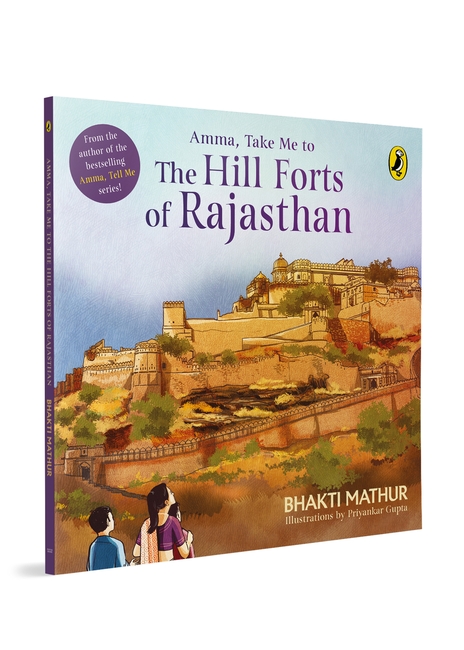
Embark on a grand adventure, exploring the majestic forts of Rajasthan, where history and art intertwine!
Join Amma and her boys, Shiv and Veer, on a captivating journey to the
hill forts of Rajasthan—Chittorgarh, Kumbhalgarh and Amer—that are
UNESCO World Heritage sites.
Travel back in time as Amma narrates tales of legendary kings, formidable queens and fearless fighters. Listen to the war stories of Bappa Rawal, Rana Sanga and Maharana Pratap, as well as the legends of Rani Padmini’s sacrifice and Mirabai’s devotion. Soak in the awe-inspiring architecture, from the imposing battlements to the intricately decorated temples, reflecting centuries of grandeur and artistry. Marvel at the towering walls, secret passageways, and impressive towers! Through vivid illustrations and colourful anecdotes that echo Rajput strength and pride, discover the history of the remarkable people who once walked these lands.
This series offers a dazzling introduction to the resplendent heritage of Rajasthan, bringing history to life in the most magnificent way.
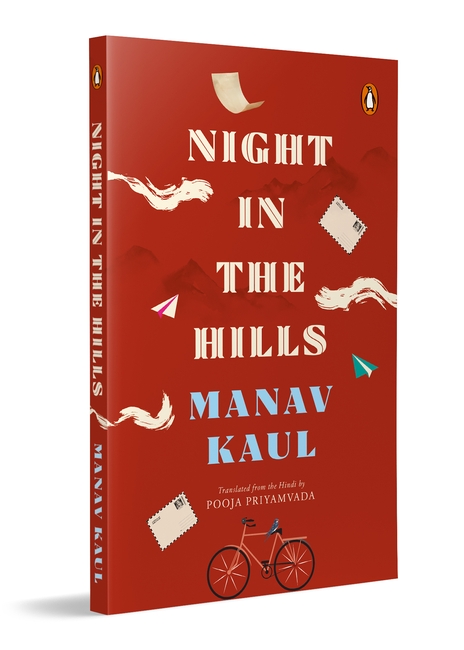
A Night in the Hills is rich with human stories of grief, passion, loneliness, first love and emotions that defy explanation. One feels as if these people have moved in and out of their lives at some point in time. Whether it is the young love of Raju in A Bunch of Old Letters, or the exploration of intimacy between Inder and Roshni in a hospital in Tragedy, or a lost love in Itti and Uday, one finds oneself absorbed in the palpability of their existence. You feel as if you’ve have met A Copy Artist who’s not only lost all sense of reality, but also insists it all be seen through his lens. The Swallow creates a world where very different people are brought together and yet they share a bond.
Full of sensitive moments of hope and despair, togetherness and separation, A Night in the Hills carries tales that you can dip into and savour.
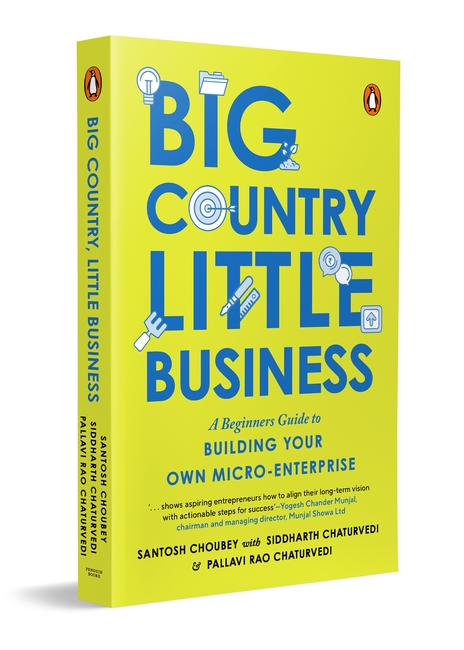
Historically, India has been a country of small businesses and a nation of entrepreneurial strivers. While the notion of job is a relatively modern-day invention, entrepreneurship is in our DNA, which could be why small businesses continue to power the Indian growth story even today. Post-pandemic, economies all over the world are encouraging the small entrepreneur and India is no exception.
Big Country, Little Business will teach you not only how to avoid common missteps while setting up your new business, but also help it thrive. This book is packed with exceptional examples, networking toolkits, funding advice and detailed how-to guides for launching your new venture, and also has over 100 business ideas for those seeking inspiration.
Award-winning educationist and social entrepreneur Santosh Choubey, along with Dr Siddharth Chaturvedi and Dr Pallavi Rao-Chaturvedi, have drafted this book from the experiences of thousands of micro-enterprises that they have helped set up, reflecting in-depth understanding of the small business environment. If you’ve always wanted to be your own boss, Big Country, Little Business will give you just the impetus you need.

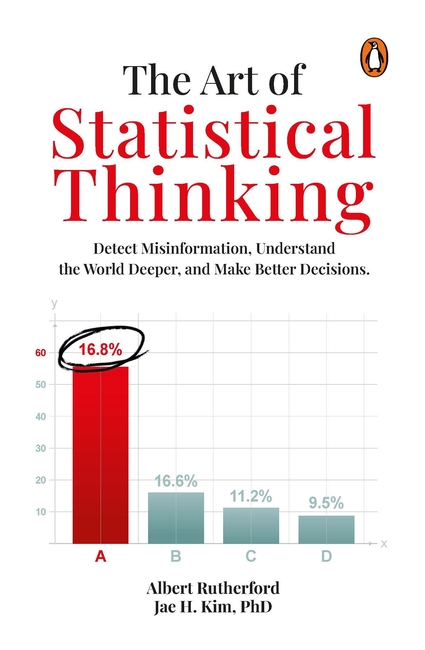
Not knowing statistics can lead to a loss of money, time, and accurate information.
What am I looking at? What do these numbers mean? Why? These are frequent thoughts of those who don’t know much about statistics.
“I’m not a numbers person” is not a good excuse to avoid learning the basics of this essential skill. Are you a person who earns money? Do you shop at the supermarket? Do you vote? Do you read the news? Then lets learn to make decisions like world leaders do.
Statistics can help you make exponentially better calls on what to buy, who to listen to, and what to believe. This book offers a detailed, illustrated breakdown of the fundamentals, designed to help develop and use formal logical thinking abilities to understand the message behind numbers in politics, and economy.
This step-by-step guide not only helps you detect what goes wrong in statistics but also educates you on how to utilize invaluable information statistics gets right to your benefit.

Twilight meets The Vampire Diaries in this new steamy romance.
A human searching for her sister, a grumpy vampire bodyguard in charge of keeping her alive, and a malicious creature hunting them down. What could go wrong?
THE SURVIVOR
The death certificate says my sister died two years ago in the accident, but her body was never found. I was the sole survivor. Then I saw her. Someone lied. Now, I must travel across the country to find answers from a bloodthirsty vampire with one thing on his mind. I will find out the truth. Even if it kills me.
THE PROTECTOR
I didn’t mean for this to happen. I didn’t mean for any of it to happen. Now Raya is here. She is mine, and I must protect her at all costs. If she dies, I die. It doesn’t add up, and it’s all a mess. It’s my job to fix it and find my brother. She knows I’m hiding something, but I’m terrified to tell her the truth.
THE PREDATOR
It’s been years since I had a lead. Now, I have one. I will watch. I will wait. I will strike. He will be mine.

Think Less; Do More: A practical guide that will get you into motion, no matter your circumstances or distraction.
We all have days when exhaustion hits, and finding motivation to push through are the hardest; yet, it’s in those very moments that overcoming our struggles becomes essential.
Learning practical and actionable tips to overcome a lack of motivation, will make this process a lot less daunting.
Start whatever you want, and finish what you start.
Think Less; Do More is your guide to actually changing your life. It’s about taking action. You know it, but you just don’t do it. Welcome to the guide that will inspire you to take the steps you need, regardless of the distractions that may arise.