A fantastic 5-books boxset featuring Rick Riordan’s extraordinary Kane Chronicles trilogy, along with a companion book to the series, Brooklyn House: Magician’s Manual and Demigods and Magicians.
The Red Pyramid (Kane Chronicles Book 1)
Brilliant Egyptologist, Dr. Julius Kane tries to bring his estranged children together. Instead, he unleashes the Egyptian god Set, who banishes him to oblivion and forces the children to flee for their lives. To stop him, the siblings embark on a dangerous journey across the globe.
The Throne of Fire (Kane Chronicles Book 2)
Carter and Sadie, offspring of the brilliant Egyptologist Dr. Julius Kane, embark on a worldwide search for the Book of Ra, but the House of Life and the gods of chaos are determined to stop them.
The Serpent’s Shadow (Kane Chronicles Book 3)
Despite their best efforts, Carter and Sadie Kane can’t seem to keep Apophis, the chaos snake, down. Now Apophis is threatening to plunge the world into eternal darkness, and the Kanes are faced with the impossible task of having to destroy him once and for all.
Demigods and Magicians
Join Percy Jackson, Annabeth Chase and Carter and Sadie Kane as they battle with an ancient Egyptian magician determined to become a god. Against impossible odds, the four demigods and magicians team up to prevent the apocalypse. Contains short stories The Son of Sobek, The Staff of Serapis and The Crown of Ptolemy, in one volume for the first time.
Brooklyn House: Magician’s Manual
Packed with quizzes, stories and inside info on the Ancient Egyptian deities, this training manual is the insight you need to harness the powers of the Kane Chronicles Trilogy.
For those with the blood of the pharaohs, this is your first step down the path of the gods.
But beware, anything can happen in the world of Egyptian magic . . .

What does it mean to be in the presence of beauty? And how can one explore and understand this through the filmography of writer, director, editor, music composer and choreographer Sanjay Leela Bhansali?
In this sweeping text, Prathyush Parasuraman walks the reader through the auteur’s films—those hailed, those hauled—like Gangubai Kathiawadi, Padmaavat, Devdas, Ram-Leela, and Saawariya. With sensitivity and finesse, On Beauty examines beauty as an idea, and aesthetics as a philosophy, while simultaneously shedding light on the making of Bhansali’s painstaking frames through conversations with his cinematographers, composers, choreographers and production and costume designers. In these pages, Bhansali’s cinema comes alive.
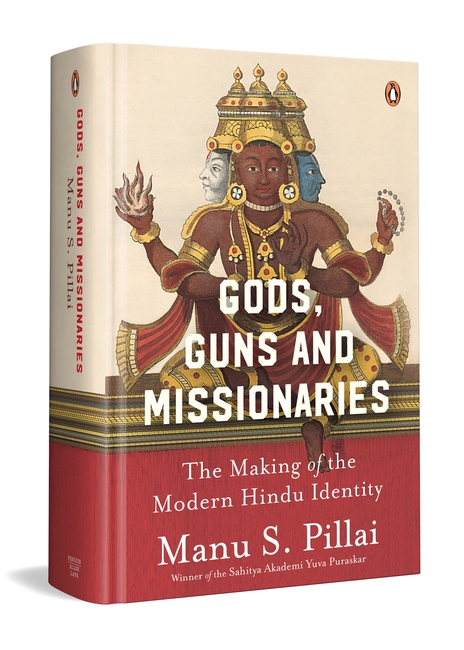
When European missionaries first arrived in India in the sixteenth century, they entered a world both fascinating and bewildering. Hinduism, as they saw it, was a pagan mess: the worship of devils and monsters by a people who burned women alive, performed outlandish rites and fed children to crocodiles. But soon it became clear that Hindu ‘idolatry’ was far more complex than white men’s stereotypes allowed, and Hindus had little desire to convert.
But then, European power began to grow in India, and under colonial rule, missionaries assumed a forbidding appearance. During the British Raj, Western frames of thinking gained ascendancy and Hindus felt pressed to reimagine their religion. This was both to fortify it against Christian attacks and to resist foreign rule. It is this encounter which has, in good measure, inspired modern Hinduism’s present shape. Indeed, Hindus subverted some of the missionaries’ own tools and strategies in the process, triggering the birth of Hindu nationalism, now so dominant in the country.
In Gods, Guns and Missionaries, Manu S. Pillai takes us through these remarkable dynamics. With an arresting cast of characters—maharajahs, poets, gun-wielding revolutionaries, politicians, polemicists, philosophers and clergymen—this book is ambitious in its scope and provocative in its position. Lucid and exhaustive, it is, at once, a political history, a review of Hindu culture and a study of the social forces that prepared the ground for Hindu nationalism. Turning away from simplistic ideas on religious evolution and European imperialism, the past as it appears here is more complicated—and infinitely richer—than popular narratives allow.
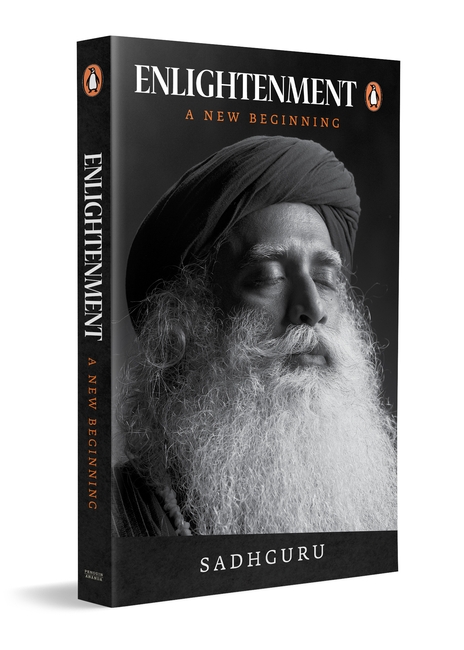
Much is being said, asked, and questioned about enlightenment. The modern world has turned yet another simple, natural process into something to feel complicated about. Enlightenment: A Homecoming is a collection of discourses by Sadhguru, in which he talks about enlightenment as a natural process to be engaged with, rather than something that can be “given” to us as a practice. With easy wit and charm, he challenges the myths and beliefs surrounding this subject, guiding one in the right direction by simply changing the origin of thought. Along the way, Sadhguru also answers some commonly asked yet pressing questions regarding enlightenment. Refreshingly simple and simply deep, Enlightenment encourages the seeker to experience life to the fullest and to live it in its purest form.
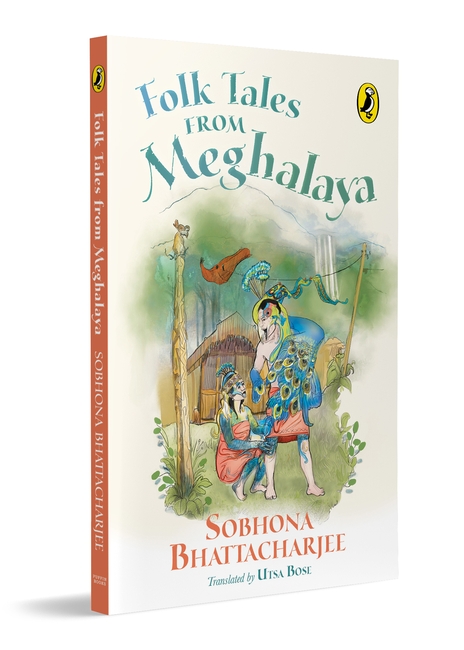
A collection of sixteen magical myths and fables that will transport you to the abode of clouds!
In the beautiful hills of Khasi, Garo and Jaintia in Meghalaya, there are fairies that can create rivers, a plant that can make people invisible and a fern bush which can ward off evil spirits. There are also three-headed giants, queens and villagers, animals and birds, and many other fascinating plants and creatures.
In this book, you will find a wonderful selection of stories about these fantastic beings and simple hill folk who have lived on these blue hills since ancient times.
Passed down by word of mouth over hundreds of years, these sixteen magical folk tales from Meghalaya, in the north-east of India, are full of adventure, wonder and excitement.
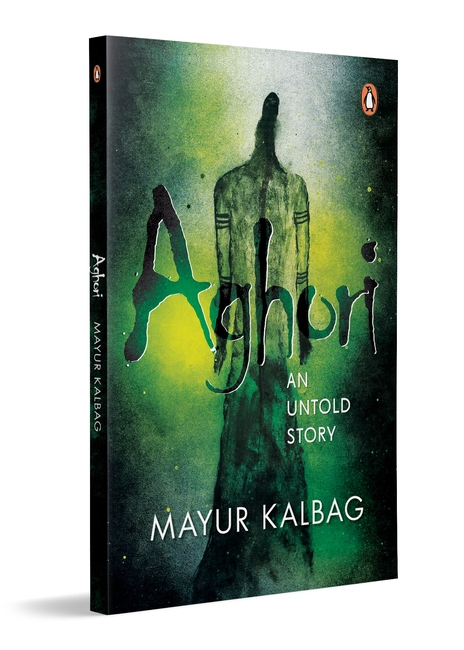
Subbu’s most earnest desire is to find out more about the Aghori sadhus. These babas, devotees of Lord Shiva, are known for their esoteric practices, and Subbu yearns to learn about, and from them. An opportunity arises when his guru requests him to travel to the Himalayas to have three mantras embedded in him. These mantras will then be transferred to his guru.
Thus, Subbu embarks on the most unique journey of his life, filled with indelible experiences. Aghori 1: An Untold Story is not just a tale, but an opportunity for readers to undergo an exuberant expedition that incorporates different and diverse activities that are spiritual, intriguing, ethereal and, at times, frightening.
Subbu returns from the Himalayas, having spent many remarkable days with the Aghori sadhus. Three powerful mantras have been successfully embedded in him, and must now be extracted and transferred to Subbu’s revered guru. Thus begins another tremendous experience for Subbu as he meets unusual creatures—such as the enormous Naga and a mysterious starfish that communicates through telepathy—and spirits trying to stop the transfer. Above all, he has the incredible opportunity to interact with more of the extraordinary Aghoris.
The sequel to the bestselling Aghori 1: The Untold Story is filled with spiritually invigorating adventures that readers will love.
Now a national bestseller!
Play to Potential offers a refreshing exploration of human potential, emphasizing discovery through play rather than work. Deepak Jayaraman weaves insights from his eponymous podcast, his coaching work and his lived experience to share a powerful yet simple framework (FLAVOUR) that can act as a guide to navigate the pulls and pressures of life.
This book is a guide to living a fulfilled life, integrating family, aspirations, value creation, and deep relationships. It transcends traditional career advice, providing actionable insights for personal growth and fulfillment.
While there are many books that act as a North Star for people to navigate their journey, this book strives to be a torch light that can show people the way through the imperfections and the messiness to lead a full life and unlock their human potential.
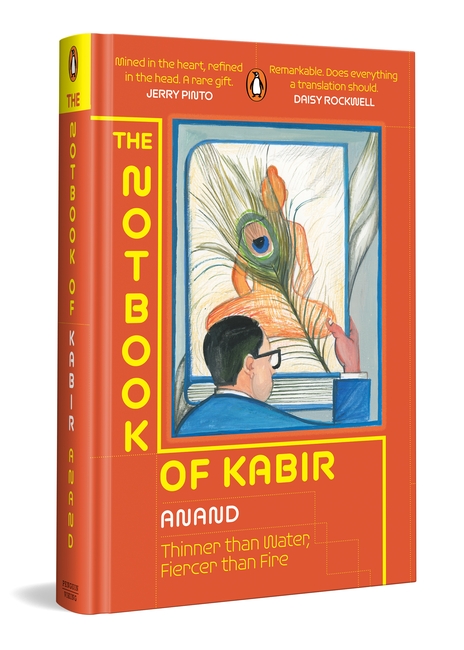
Kabir is the most alive of all dead poets. He is a fabric without stitches. No centres, no edges. Anand threads his way in.
Over the years, as a publisher and editor, Anand immerses himself in the works of Babasaheb Ambedkar and other anticaste thinkers. He gives up his practice of music and poetry, blaming his disenchantment on caste. One day in Delhi, Anand starts looking for Kabir. He finds him here, there, everywhere. He begins to pay attention to the many ways in which Kabir’s words are sung, and translates them. Soon, Kabir starts looking out for Anand.
The songs of Kabir sung by a range of singers—Prahlad Tipaniya, Fariduddin Ayaz, Mukhtiyar Ali, Kumar Gandharva, Kaluram Bamaniya, Mahesha Ram and other wayfarers—make Anand return to music and poetry. Anand translates songs seldom found in books. Along the way, he witnesses Kabir drawing on the Buddha, often restating ancient suttas in joyous ways.
The Notbook of Kabir is the result of this pursuit with no end in sight. This is the story of how Anand loses himself trying to find Kabir.