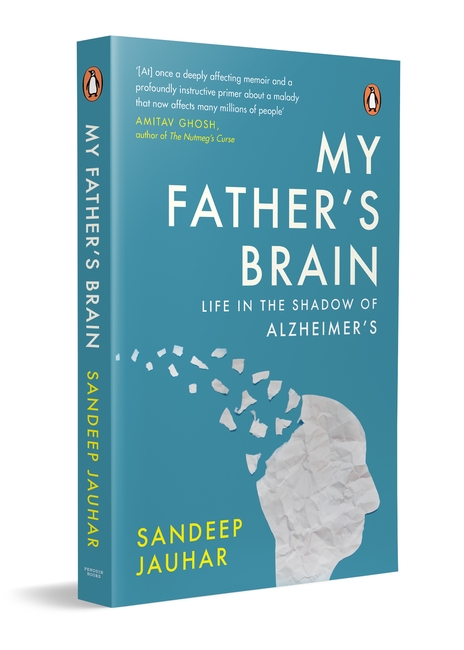
There may be up to 10 million Indians living with Alzheimer’s disease or related dementias, and that number is expected to increase dramatically in the next few decades. What is it like to live with and amid this increasingly prevalent condition-an affliction that some fear more than death? In My Father’s Brain, the distinguished physician and author Sandeep Jauhar sets his father’s descent into Alzheimer’s alongside his own journey toward understanding this disease and how it might best be coped with, if not cured.
In an intimate memoir rich with humour and heartbreak, Jauhar relates how his immigrant father and extended family felt, quarrelled, and found their way through the dissolution of a cherished life. Along the way, he lucidly exposes what happens in the brain as we age and our memory falters and explores everything from the history of ancient Greece to the most cutting-edge neurological-and bioethical-research. Throughout, My Father’s Brain confronts the moral and psychological concerns that arise when family members must become caregivers, when children’s and parents’ roles reverse, and when we must accept unforeseen turns in our closest relationships-and in our understanding of what it is to have a self. The result is a work of essential insight into dementia, and into how scientists, caregivers, and all of us in an aging society are reckoning with the fallout.
Darjeeling, late 1980s. The demand for a separate state of Gorkhaland has taken a violent turn. The Green Party is at war with the Red Party-and with the state’s security forces. Murder, loot, terror and arson beset the Himalayan foothills.
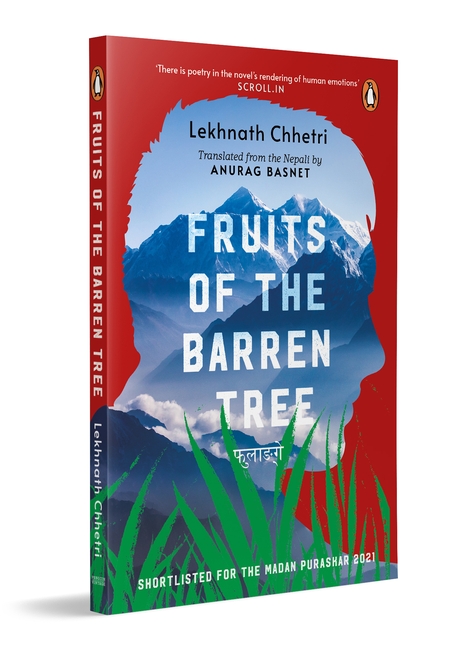
Fruits of the Barren Tree is a story of that time, and of Relling, a small village near Darjeeling. In Relling there’s Basnet, the village shaman, and his wife; there’s Jhuppay, their son-incorrigible thief, truant and amateur drunk; and also Nimma, Jhuppay’s great love, whose only desire in life is that he take the path of virtue. There’s Chyaatar too, former army man, now a militia commander in the Green Party, who rules the village with an iron hand. Ever the miscreant, nothing Jhuppay does can win Nimma’s heart. But when the Red Party hires his loudspeaker for a meeting-the first innocent, honest job of his life-it sets Jhuppay, Nimma and Chyaatar on a murderous course that fate itself cannot derail.
Originally published in Nepali as Phoolange, this sharp, evocative novel is the story of a failed movement and a cautionary tale of how easily the contagion of violence can infect a community. Intensely visual and imbued with a strong sense of place, it is equally a compelling portrait of Darjeeling away from the brochures and the postcards.

What of the many travels undertaken through history by men and women, in war and peace, that have been unrecorded, invisible, and forgotten?
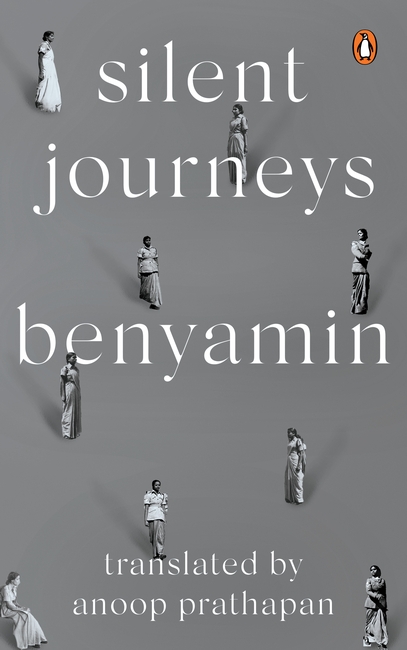
In Benyamin’s Silent Journeys, we trace the voyage of Mariamma, a young nurse from Kerala who travelled from her hometown in Manthalir all the way across the world. Nothing was known of her journey until many decades later, when a curious great grandson began his investigations only to stumble across a tale of great adventure, hardship, resilience, and love.
The novel reflects upon terrific stories of unaccompanied and courageous journeys that many valiant women, primarily nurses, have made through history, reaching the coldest places in the Arctic, Canada, remote tribal locations in the desert, the interiors of the dark continent, and almost everywhere in Europe

In August 2017, over a thousand neo-Nazis, fascists, Klan members, and neo-Confederates descended on a small southern city to protest the pending removal of a statue of Robert E. Lee. Within an hour of their arrival, the city’s historic downtown was a scene of bedlam as armored far-right cadres battled activists in the streets. Before the weekend was over, a neo-Nazi had driven a car into a throng of counter-protesters, killing a young woman and injuring dozens.
Pulitzer Prize finalist Deborah Baker has written a riveting and panoptic account of what unfolded that weekend, focusing less on the rally’s far-right leaders than on the story of the city itself. University, local, and state officials, including law enforcement, were unable or unwilling to grasp the gathering threat. Clergy, activists, and organizers from all walks of life saw more clearly what was coming and, at great personal risk, worked to warn and defend their city.
To understand why their warnings fell on deaf ears, Baker does a deep dive into American history. In her research she discovers an uncannily similar event that took place decades before when an emissary of the poet and fascist Ezra Pound arrived in Charlottesville intending to start a race war. In Charlottesville, Baker shows how a city more associated with Thomas Jefferson than civil unrest became a flashpoint in a continuing struggle over a nation’s founding myths.
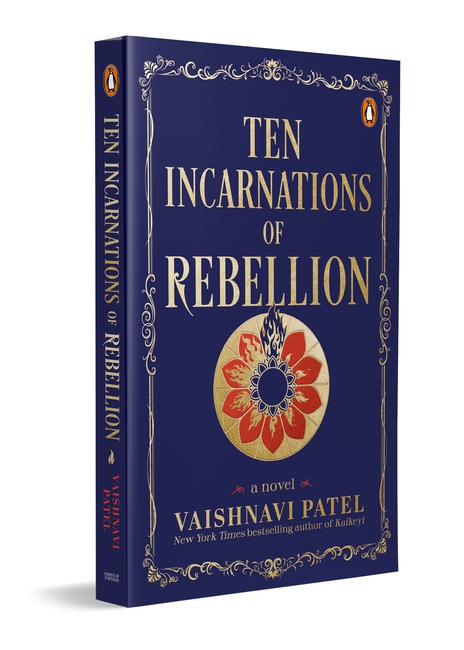
Kalki Divekar grows up a daughter of Kingston—a city the British built on the ashes of Bombay. The older generation, including her father, have been lost to the brutal hunt for rebels. Young men are drafted to fight wars they will never return from. And the people of her city are more interested in fighting each other than facing their true oppressors.
When tragedy strikes close to home, Kalki and her group of friends begin to play a dangerous game, obtaining jobs working for the British while secretly planning to destroy the empire from the inside out. They found Kingston’s new independence movement, knowing one wrong move means certain death. Facing threats from all quarters, Kalki must decide whether it’s more important to be a hero or to survive.
Told as ten moments from Kalki’s life that mirror the Dashavatara, the ten avatars of Vishnu, Ten Incarnations of Rebellion is a sweeping, deeply felt speculative novel of empowerment, friendship, self-determination, and the true meaning of freedom.
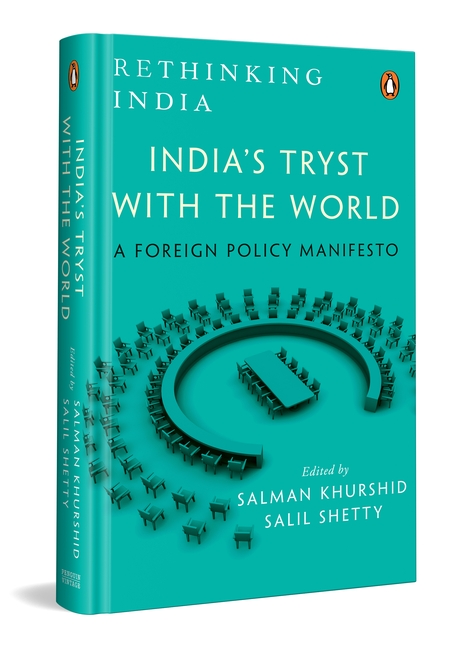
As technology, trade and affordable travel make our planet a much more interconnected place, and India’s importance on the world stage grows, India’s foreign policy attracts greater interest and scrutiny than ever before, both within and outside the country.
How do we understand the evolution of India’s foreign policy from the early years after Independence to the present day? How should India position itself as it moves towards 100 years of independence in 2047? These are among the big questions India’s Tryst with the World seeks to address.
Recognizing that India’s foreign policy is ultimately driven by the strength of its people (not just the privileged few) and its economy as a whole, this book prises open the discussion on India’s place in the world, taking it far beyond traditional foreign policy mandarins.
A thoughtful mix of essays by some of India’s most respected diplomats, opinion makers and political leaders—including the late Manmohan Singh, Shashi Tharoor, Shivshankar Menon, Suhasini Haider and Kishore Mahbubani—this new volume in the acclaimed Rethinking India series could not be coming out at a more opportune time in history, with all the uncertainty wrought by wars on several fronts and political disruption caused by the rise of the Right the world over.
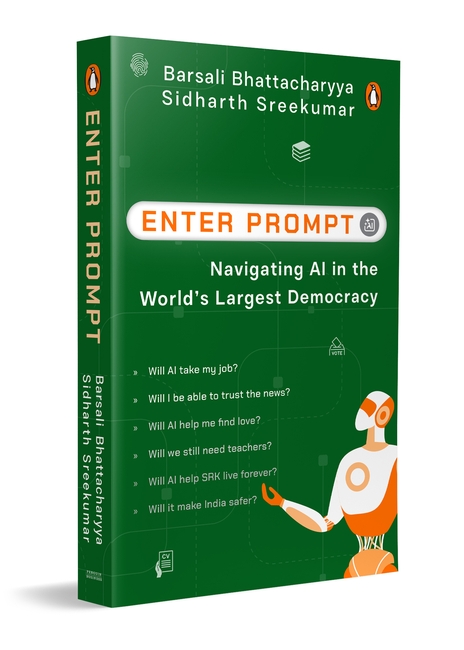
India, the largest democracy and fastest-growing large economy in the world, faces unique challenges when it comes to the epochal AI. This scrupulously researched book, which includes interviews with practitioners, policymakers and tech evangelists, answers the questions every Indian today is grappling with. Steering clear of utopian hype and dystopian gloom, this book provides a balanced and nuanced understanding of AI’s use cases and impact on our lives, livelihood and society.
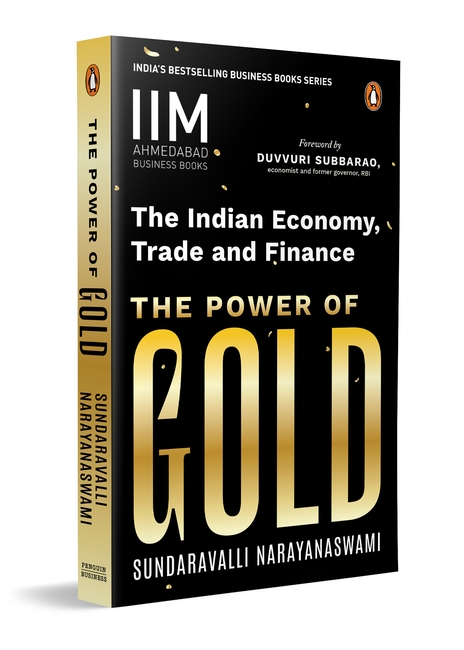
The Indian gold market is a multifaceted and dynamic sector, intricately linked to the nation’s culture, economy and demographics. Structural transformations, including escalating GDP, an expanding middle-class and a youthful, economically engaged populace propel the growing demand for gold. Innovations such as digital gold and the growth of organized retail are transforming consumer behaviour, while regulatory enhancements are tackling issues in refining, recycling and trading activities. Nonetheless, challenges such as smuggling, infrastructural deficiencies and fragmented industry dynamics continue to infest the industry, as the stakes are quite high.
Gold has seen a massive resurgence not only in India but around the world. This book covers the most essential facets of the Indian gold industry. Through targeted reforms and improved market structures,
India has the potential to harmonize its ancient veneration for gold with contemporary socio-economic ambitions.
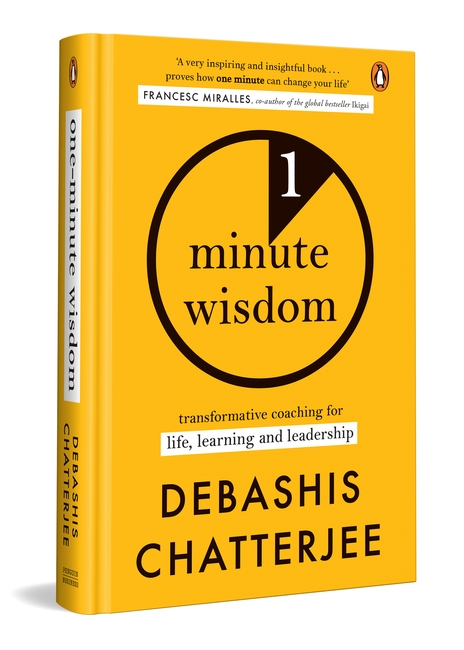
One-Minute Wisdom offers core insights and transformative coaching techniques that Prof. Debashis Chatterjee, one of the longest-serving directors of an IIM, has developed over three decades in leadership, education and personal development. Prof. Chatterjee’s impressive credentials include formal coaching training at INSEAD and Harvard, which have significantly shaped the methodologies shared in this work.
The book is divided into three parts—Life, Learning and Leadership—illustrated with hand-drawn sketches and slice-of-life examples.
Designed for the reader who is pressed for time, with easily digestible insights and charming essays, this is a book that will help you find purpose and also empower you to become wiser, one page at a time.
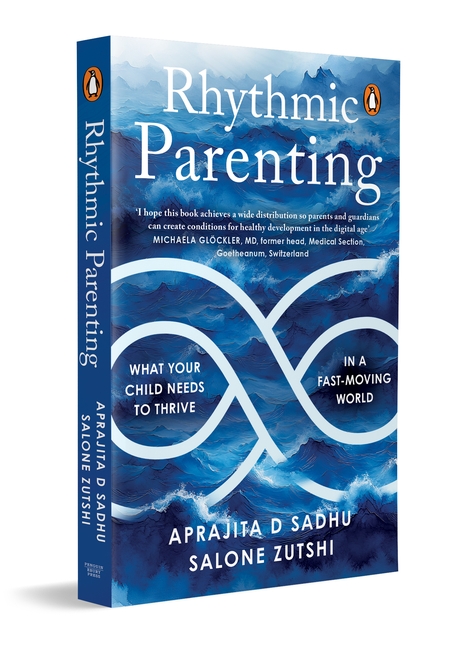
Today, children are entering a world that values speed and efficiency above all else, the opposite of what they need to become human beings. Our materialist, hi-tech culture fails to support children through their primary task in the first seven years—forming the physical body. Instead, it creates little adults who are prematurely intellectualized, uneasy in their bodies, and ill-prepared to become physically strong, emotionally resilient, freethinking individuals. To bridge the gap, this book:
- Educates parents about the consciousness of a young child who lovingly absorbs all impressions from the environment to develop as a physical being;
- Alerts parents to intense impressions such as screen use, academic learning and adultification bias that are hard for children to assimilate;
- Awakens parents to understand difficult behaviours as manifestations of undigested impressions; and
- Empowers parents to create a healthy rhythm of growth by preventing intense ‘inbreaths’ as well as balancing these with ‘outbreaths’ such as time in nature, free play, chores and plentiful rest.
Rhythmic Parenting reclaims children’s right to fulfil their highest human potential and places parents at the forefront of this mission.