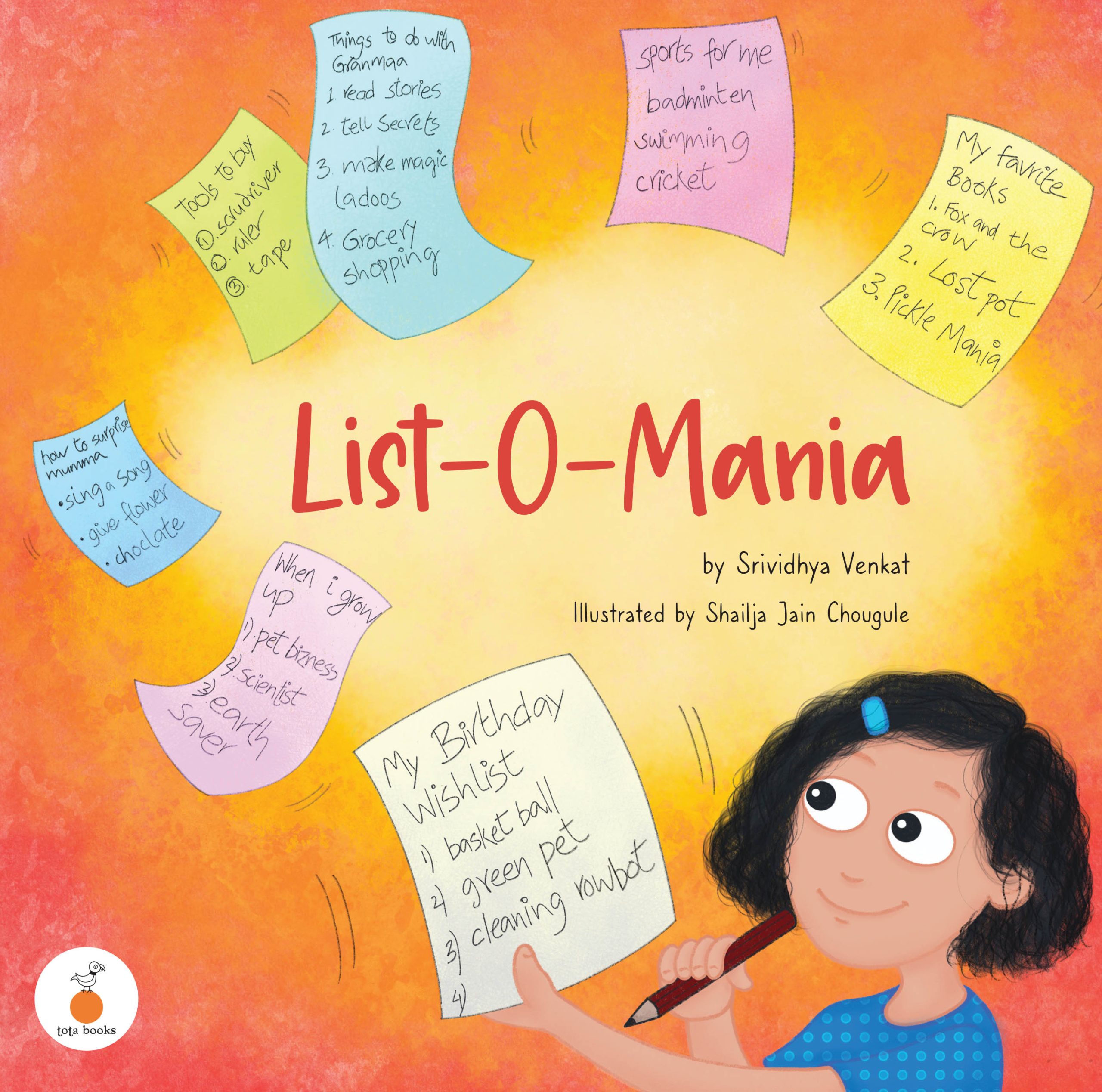
A heartwarming story of friendship and enjoying the moment.
Kimaya loves making lists for everything. But when things go wrong on a playdate, she realizes that some things just can’t go ‘by the list’.

A heartwarming story of friendship and enjoying the moment.
Kimaya loves making lists for everything. But when things go wrong on a playdate, she realizes that some things just can’t go ‘by the list’.
rg
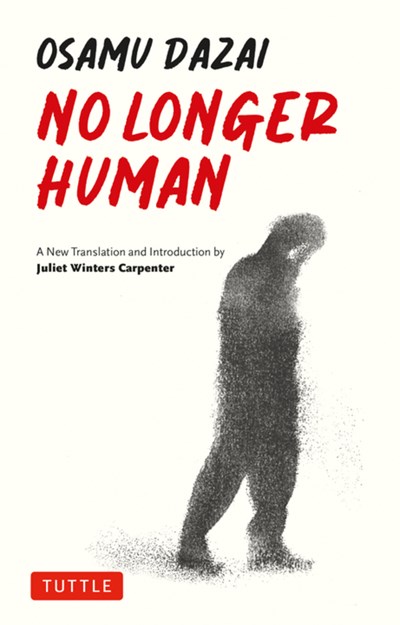
A completely new translation of Osamu Dazai’s great masterpiece by award-winning translator Juliet Winters Carpenter.
A journey to hell with Osamu Dazai, Japan’s ultimate bad boy novelist” —Damian Flanagan, The Japan Times
No Longer Human is the story of Yozo Oba, who, from early childhood, finds it impossible to form meaningful relationships with family or friends. As a child he copes by acting the fool—mocking himself while entertaining others. As an adult he turns to alcohol, sex and drugs, which lead to his eventual self-destruction.
Originally written in 1948 and based closely on Dazai’s own life, the timeless and universal themes of social alienation, failure and one man’s inner torture at his inability to feel like a normal human still resonate with young people everywhere, making this an enduring international classic.
This contemporary translation will be welcomed by all fans of modern Japanese literature as well as by readers familiar with Osamu Dazai. After Soseki Natsume, Osamu Dazai is Japan’s most popular writer. Dazai is enjoying a surge in interest among young people today thanks to the success of the manga, anime and film series Bungo Stray Dogs, whose protagonist, a detective named Osamu Dazai, is based on the real-life author.
“Dazai’s brand of egoistic pessimism dovetails organically with the emo chic of this cultural moment and with the inner lives of teenagers of all eras.” —Andrew Martin, The New York Times
From two of TIME’s 100 Most Influential People in AI, what you need to know about AI—and how to defend yourself against bogus AI claims and products Confused about AI and worried about what it means for your future and the future of the world? You’re not alone. AI is everywhere—and few things are surrounded by so much hype, misinformation, and misunderstanding. In AI Snake Oil, computer scientists Arvind Narayanan and Sayash Kapoor cut through the confusion to give you an essential understanding of how AI works and why it often doesn’t, where it might be useful or harmful, and when you should suspect that companies are using AI hype to sell AI snake oil—products that don’t work, and probably never will. While acknowledging the potential of some AI, such as ChatGPT, AI Snake Oil uncovers rampant misleading claims about the capabilities of AI and describes the serious harms AI is already causing in how it’s being built, marketed, and used in areas such as education, medicine, hiring, banking, insurance, and criminal justice. The book explains the crucial differences between types of AI, why organizations are falling for AI snake oil, why AI can’t fix social media, why AI isn’t an existential risk, and why we should be far more worried about what people will do with AI than about anything AI will do on its own. The book also warns of the dangers of a world where AI continues to be controlled by largely unaccountable big tech companies. By revealing AI’s limits and real risks, AI Snake Oil will help you make better decisions about whether and how to use AI at work and home.s
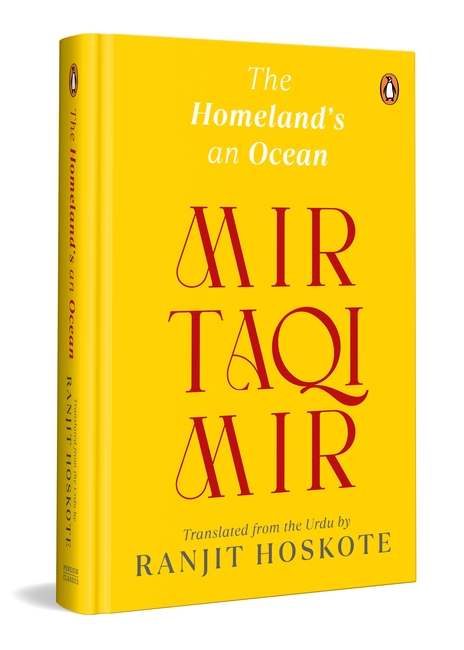
‘Like the whirlpool, still centre of a giddy circling,
the homeland’s an ocean that scatters us in all directions.’
Mir Taqi Mir (1723–1810)
Mir, one of the greatest Urdu poets, lived through extraordinarily turbulent times in a Delhi besieged by marauders, and in exile elsewhere in North India. By the time he died, aged eighty-seven, he had witnessed a long era of violence and chaos. Yet, through it all, he crafted the most exquisite poetry, shaping the Urdu language from the resources of Khari Boli, Persian and Brajbhasha. A thoughtful selection of 150 of his asha’ar or couplets by Ranjit Hoskote, The Homeland’s an Ocean reveals a far more political Mir than we know, a many-sided poet of melancholia, irreverent humour, love and audacious social vision. Hoskote’s fresh, contemporary translation brings Mir’s poetry back to a world that needs such a passionately urgent voice. Framed by the translator’s substantial introduction to Mir’s life and his literary, linguistic and political contexts, this book invites readers to look through a unique eighteenth-century lens at our current crises of homeland, identity and belonging.
hhh
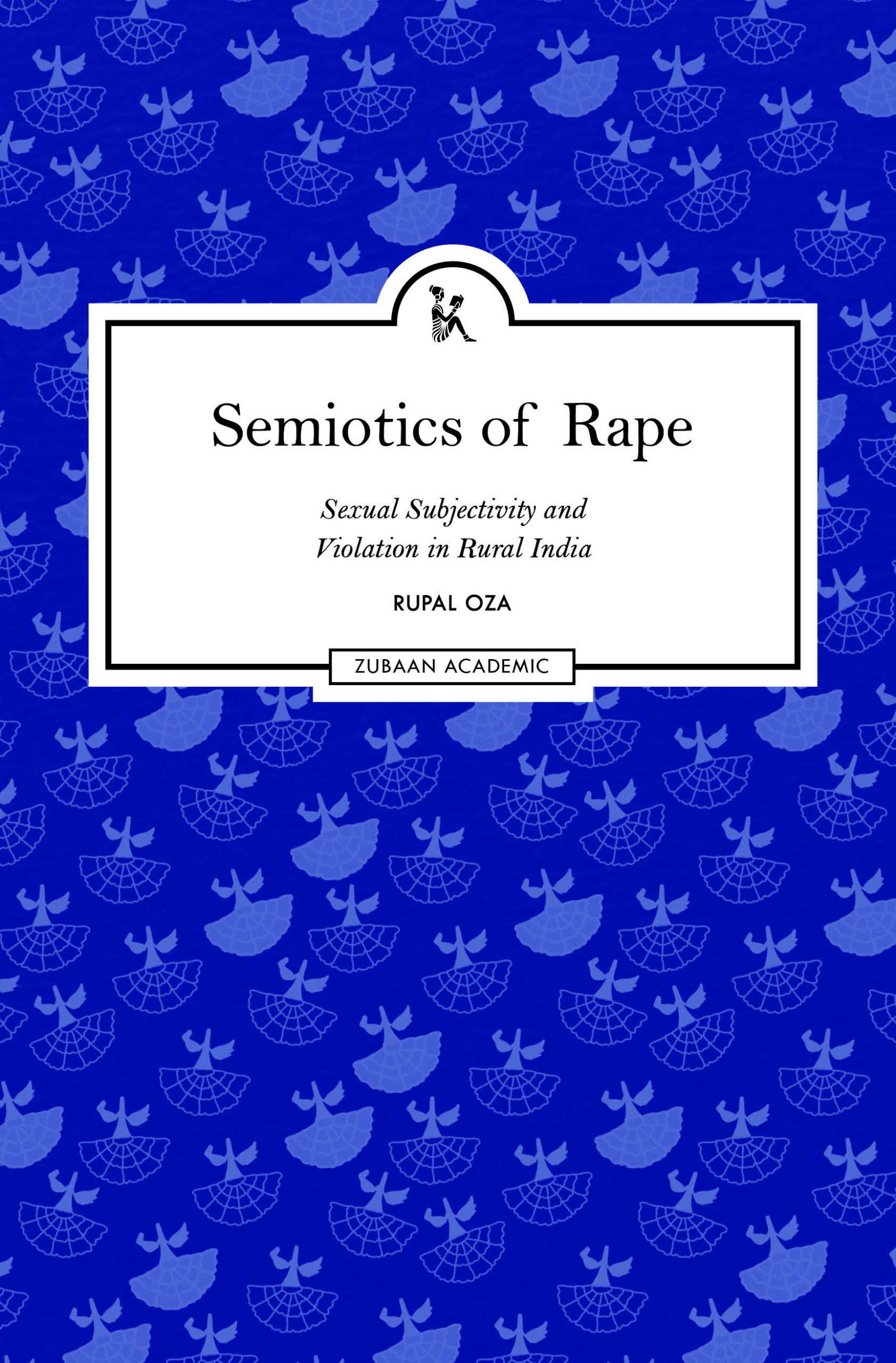
In Semiotics of Rape, Rupal Oza follows the social life of rape in rural northwest India to reveal how rape is not only a violation of the body but a language through which a range of issues—including caste and gender hierarchies, control over land and labor, and the shape of justice—are contested. Rather than focus on the laws governing rape, Oza closely examines rape charges to show how the victims and survivors of rape reclaim their autonomy by refusing to see themselves as defined entirely by the act of violation. Oza also shows how rape cases become arenas where bureaucrats, village council members, caste communities, and the police debate women’s sexual subjectivities and how those varied understandings impact the status and reputations of individuals and groups.
In this way, rape gains meaning beyond the level of the survivor and victim to create a social category. By tracing the shifting meanings of sexual violence and justice, Oza offers insights into the social significance of rape in India and beyond.
tt
trt
tt