Publish with Us

Follow Penguin

Follow Penguinsters

Follow Penguin Swadesh

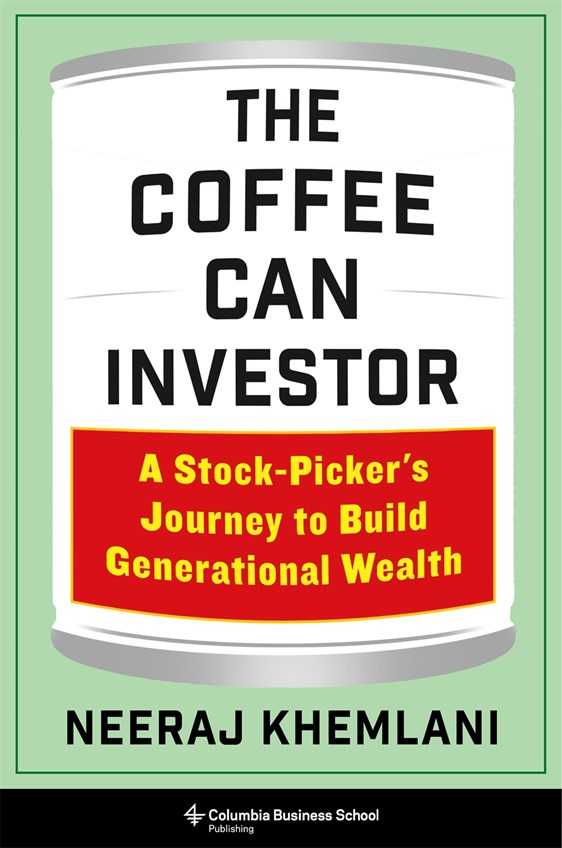
The Coffee Can Investor: A Stock-Picker’s Journey to Build Generational Wealth

What would happen if you bought a handful of stocks and then left them alone for some time, like stashing valuables in a coffee can? If you picked the right ones, you might wake up one day with life-changing wealth.

Neeraj Khemlani introduces readers to this investing philosophy through the eye-opening story of a portfolio manager who has put it into practice. Matt Ankrum researched 100-baggers—stocks that have multiplied in value a hundred times over multiple decades—looking for what they have in common. Drawing on these clues, he hunts down and buys shares in what he thinks are tomorrow’s breakout companies, planning to gift his children a coffee can portfolio that could someday be worth half a billion dollars.

The Coffee Can Investor shares Ankrum’s process for identifying companies that can stand the test of time, as well as his stock picks. It explores the principles of long-term investing, emphasizing the power of compounding and why it pays to be patient. This book details the qualitative and quantitative aspects of 100-baggers, revealing that a surprising share are business-to-business companies, not just the businessto- consumer companies that typically grab headlines. Khemlani also recounts his own decision to make a coffee can of investments for his kids.

Engaging and fast-paced, this book is for anyone who wants to invest in enduring companies for the long term.
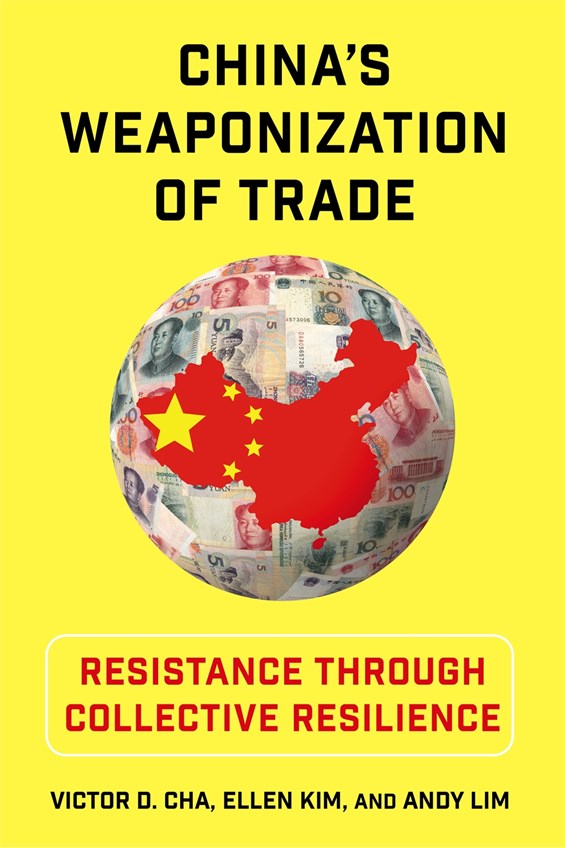
China’s Weaponization of Trade: Resistance Through Collective Resilience

In recent years, China and the United States have each turned economic interdependence into an instrument of coercion, using their dominant positions in international trade to push states and firms to comply with their political goals. What is distinctive about this form of economic pressure, and how can other countries fight back?
This groundbreaking book explores the weaponization of economic interdependence and its implications for the international order through a wealth of new and original data on China’s economic statecraft. Victor D. Cha, Ellen Kim, and Andy Lim examine how and in what ways the United States and China have deployed economic coercion, focusing on China’s extensive use of this tactic over the past three decades. They analyze a vast data set that includes more than 600 cases of China’s economic bullying of states, companies, and individuals in North America, Asia, and Europe. Cha, Kim, and Lim propose a multilateral strategy of “collective resilience” to counter intimidation, showing how targeted states can band together, leverage trading relationships, and threaten retaliation.

Synthesizing new insights from unique trade data with international security expertise, this timely book sheds new light on how China exercises economic power—and it provides a playbook to deter bullies and rebalance the global order.

Ideas on the Go 2026

A year’s worth of quick, practical management advice from Harvard Business Review—all in one place.

How to exude confidence. Present with style. Overcome overthinking. Give difficult feedback. To succeed at work, you need accessible, actionable, succinct ideas to help you solve your most common challenges. Drawing from Management Tip of the Day, HBR’s most popular newsletter, this concise, handy annual collection is packed with easy-to-read tips on a broad range of topics. Ideas On the Go 2026 puts the best management practices and insights, from top thinkers in the field, right at your fingertips. Pick it up any time you have a few minutes to spare, and you’ll have a fresh, powerful idea you can immediately put into action.

Death Row: A Brand-New, Gripping Thriller Novella from Freida McFadden, #1 New York Times Bestselling Author of The Housemaid

A gripping thriller novella from the #1 New York Times bestselling author of The Housemaid!

Death is coming for her… unless she finds the truth first.

Talia Kemper is on death row for murdering her husband. She had an alibi and no known motive, yet Talia’s unwavering protestations of innocence have always been ignored.

Then, one day in the visiting area, she sees a man she’s certain is her husband.

The person she’s been convicted of killing may not be dead after all.

But with the days ticking away towards Talia’s execution, what will it take for anyone to believe her?

As all hope of an appeal begins to fade, the fate of a condemned murderess takes a shocking turn.

Packed with suspense, secrets, twists and psychological tension, Death Row is a breathtaking novella that will keep readers guessing until the very end.

From the #1 New York Times bestselling author of The Housemaid comes a dark and twist-filled psychological thriller about murder, deception, innocence, and the desperate search for the truth.

Why You’ll Love Freida’s Latest:

• A gripping high-tension psychological thriller novella about a woman racing against time to prove her innocence before her execution.
• Combines murder mystery, psychological suspense, shocking twists, and a chilling question: what if the man you were convicted of killing is still alive?
• Perfect for fans of fast-paced crime thrillers, twisty mysteries, and one-sitting reads that keep you guessing until the final page.
• Explores themes of innocence, deception, desperation, and survival with Freida McFadden’s signature breakneck pacing.
• A must-read for fans of wrongly accused protagonists, death-row suspense, deadly secrets, and unexpected revelations.

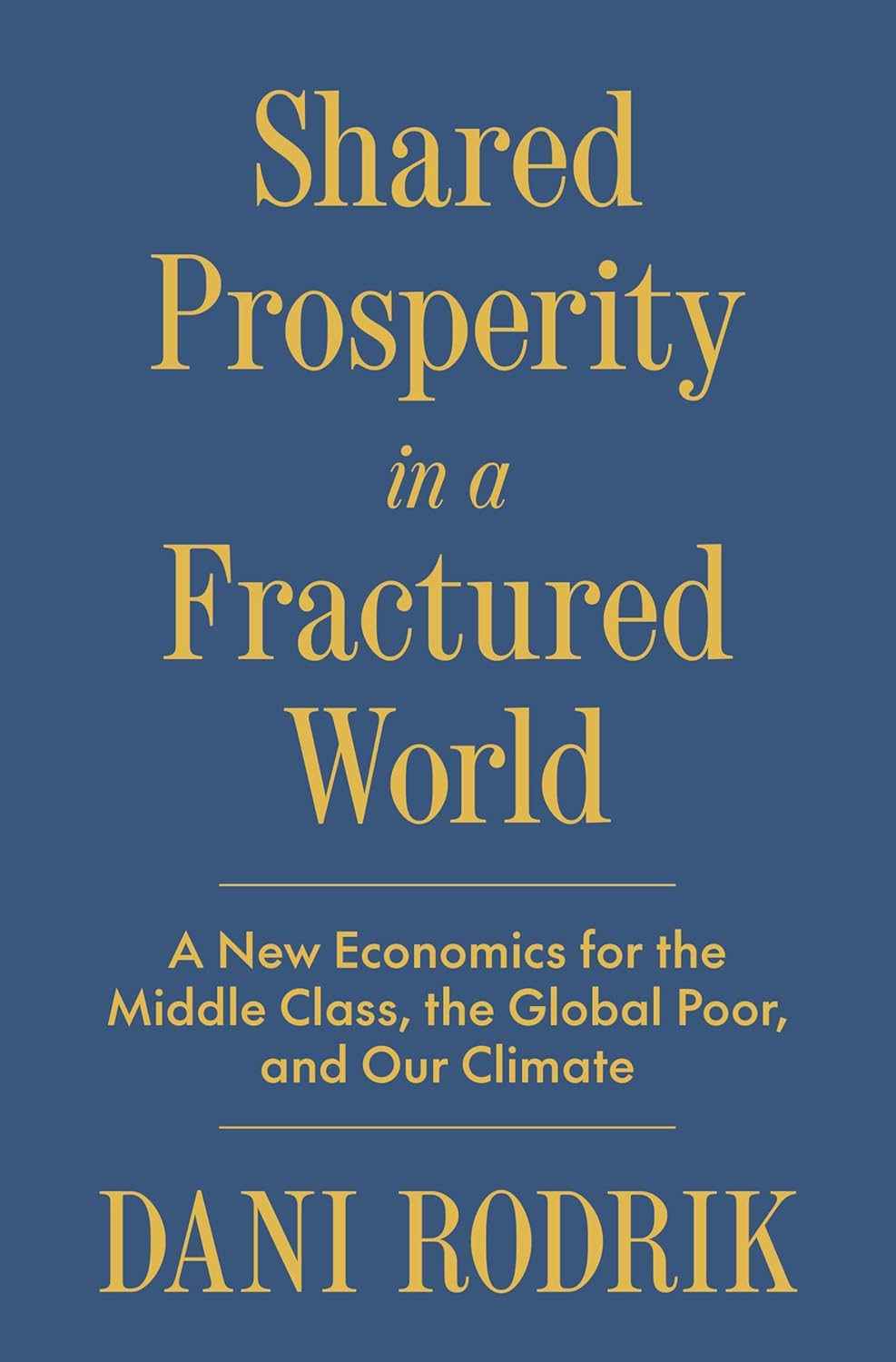
Shared Prosperity in a Fractured World: A New Economics for the Middle Class, the Global Poor, and Our Climate

New, practical approaches to confronting today’s most daunting global issues

Fighting climate change, saving democracy, and eradicating poverty are urgent global challenges, yet the world’s leaders continue to pursue outdated policies that focus on one while worsening the tradeoffs between each of them. Shared Prosperity in a Fractured World shows how the nations of the world can achieve all three objectives.

Dani Rodrik provides a bold new vision of globalization, one in which we accelerate the green transition to achieve a sustainable planet, shore up the middle class to restore democracy’s foundations, and hasten economic revitalization in the developing world to put an end to poverty. The rising tide of authoritarianism has demonstrated our inability to alleviate economic anxieties. Economic nationalism has raised the specter of increased protectionism and deteriorating prospects for economic growth. And automation and other new technologies have undercut the advantages of low-cost, unskilled labor in manufacturing and export-oriented industrialization. Rodrik reveals how we can restore prosperity through new forms of collaborative public-private action—to promote renewables and green industries, middle-class jobs, and enhanced productivity in labor-absorbing services—even in the absence of global cooperation. He explains why this new kind of globalization must also recognize the legitimate desire of governments to pursue their economic, social, and security interests autonomously.

Turning conventional economic wisdom on its head, Shared Prosperity in a Fractured World builds on practices that work while radically transforming those that don’t, presenting a grounded, clear-eyed approach to tackling the problems that affect us all, at home and around the world.

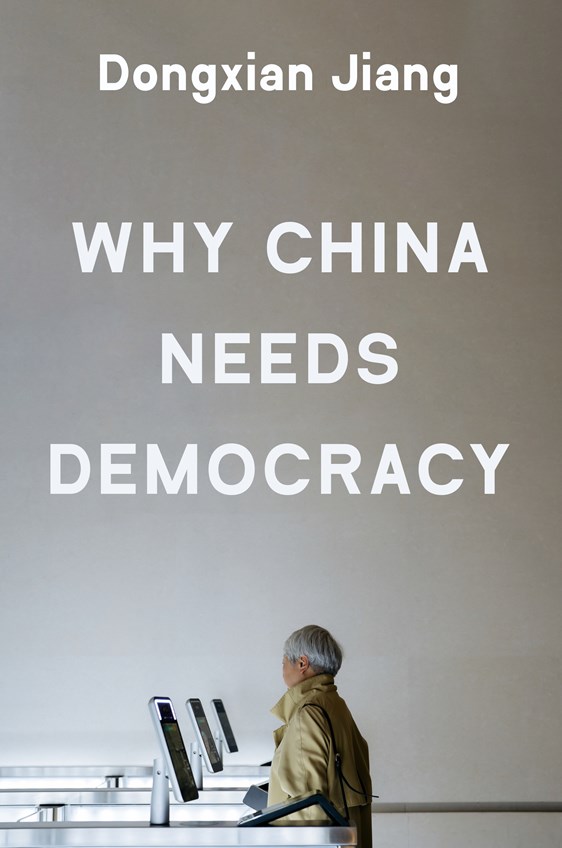
Why China Needs Democracy

A realist defense of constitutional democracy in China that challenges the assumptions of the so-called China Model

With liberal democracies under strain and the Chinese government delivering stability and prosperity to its citizens, is democracy still an ideal worth pursuing in China? In Why China Needs Democracy, Dongxian Jiang makes a powerful case for constitutional democracy in the Chinese context. Doing so, he challenges the so-called China Model, a normative vision that seeks to preserve China’s “meritocratic” one-party system while making it more open, more participatory, and less repressive. Jiang offers instead a realist defense of constitutional democracy that is grounded in a clear-eyed analysis of China’s political realities, a discerning critique of post-Mao moral and institutional problems, and a broad engagement with the findings of empirical political science on both democratic and authoritarian regimes.

Jiang shows that the China Model fails on two realist grounds: it places unwarranted faith in the willingness of China’s leadership to liberalize and share power with citizens; and even with limited power-sharing, the system would be unable to address one of China’s deepest problems—the state’s unchecked domination over ordinary people. For all its flaws, constitutional democracy remains an indispensable framework for limiting the state’s authoritarian overreach. Jiang argues that when realism is understood in a more expansive, historically grounded way—not simply as short-term political feasibility—constitutional democracy in China can be seen to be a realistic and necessary path forward over the long term.

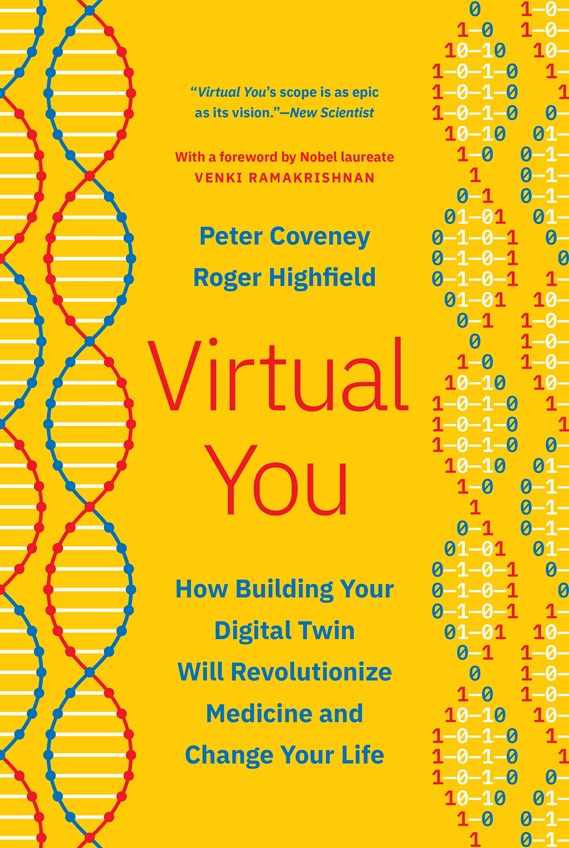
Virtual You: How Building Your Digital Twin Will Revolutionize Medicine and Change Your Life

The visionary science behind the digital human twins that will enhance our health and our future

Virtual You is a panoramic account of efforts by scientists around the world to build digital twins of human beings, from cells and tissues to organs and whole bodies. These virtual copies will usher in a new era of personalized medicine, one in which your digital twin can help predict your risk of disease, participate in virtual drug trials, shed light on the diet and lifestyle changes that are best for you, and help identify therapies to enhance your well-being and extend your lifespan—but thorny challenges remain.

In this deeply illuminating book, Peter Coveney and Roger Highfield reveal what it will take to build a virtual, functional copy of a person in five steps. Along the way, they take you on a fantastic voyage through the complexity of the human body, describing the latest scientific and technological advances—from multiscale modeling to extraordinary new forms of computing—that will make “virtual you” a reality, while also considering the ethical questions inherent to realizing truly predictive medicine.

With an incisive foreword by Nobel Prize–winning biologist Venki Ramakrishnan, Virtual You is science at its most astounding, showing how our virtual twins and even whole populations of virtual humans promise to transform our health and our lives in the coming decades.

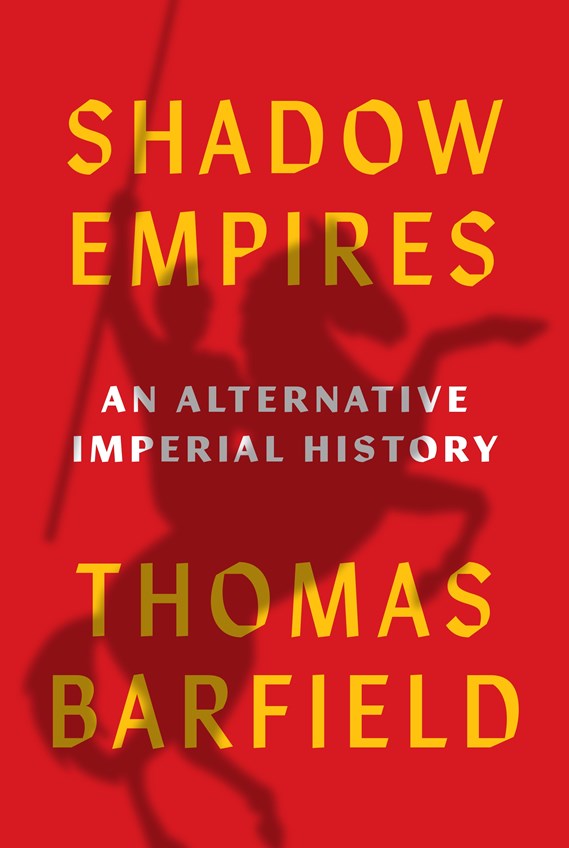
Shadow Empires: An Alternative Imperial History

An original study of empire creation and its consequences, from ancient through early modern times

The world’s first great empires established by the ancient Persians, Chinese, and Romans are well known, but not the empires that emerged on their margins in response to them over the course of 2,500 years. These counterempires or shadow empires, which changed the course of history, include the imperial nomad confederacies that arose in Mongolia and extorted resources from China rather than attempting to conquer it, as well as maritime empires such as ancient Athens that controlled trade without seeking territorial hegemony. In Shadow Empires, Thomas Barfield identifies six kinds of counterempire and explores their rise, politics, economics, and longevity.

What all these counterempires had in common was their interactions with existing empires that created the conditions for their development. When highly successful, these counterempires left the shadows to become the world’s largest empires—for example, those of the medieval Muslim Arabs and of the Mongol heirs of Chinggis Khan. Three former shadow empires—Manchu Qing China, Tsarist Russia, and British India—made this transformation in the late eighteenth century and came to rule most of Eurasia. However, the DNA of their origins endured in their unique ruling strategies. Indeed, world powers still use these strategies today, long after their roots in shadow empires have been forgotten.

Looking afresh at the histories of important types of empires that are often ignored, Shadow Empires provides an original account of empire formation from the ancient world to the early modern period.

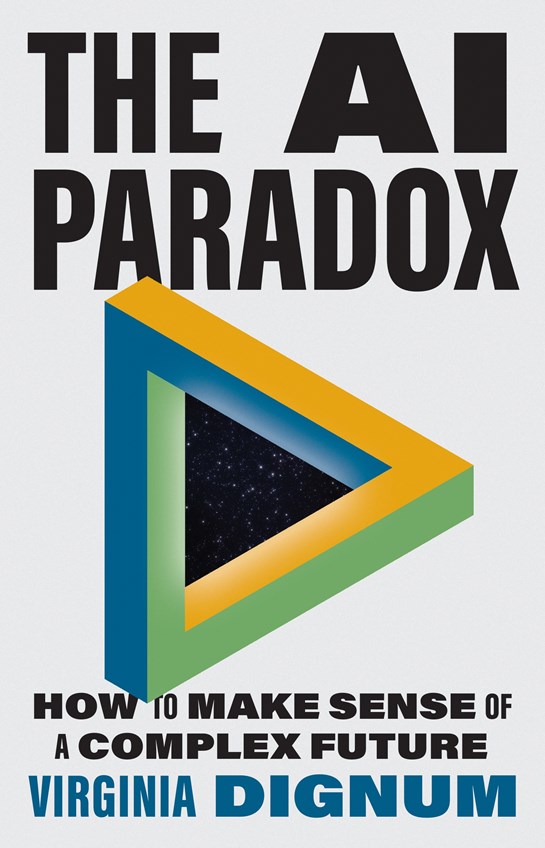
The AI Paradox: How to Make Sense of a Complex Future

A user’s guide to navigating the intricate, often contradictory relationship between artificial intelligence and human intelligence

Artificial intelligence will shape our future in unforeseen ways, and it is easy to fall into the trap of thinking that it could someday dictate the terms of our very existence. But the fact is, the more that AI can do, the more it underscores the irreplaceable qualities of human creativity, empathy, and moral reasoning. This is one of the eight paradoxes of AI that Virginia Dignum explores in this revelatory book. Drawing on her decades of experience in AI research and governance, Dignum cuts through the hype and sensationalism that often surround AI and reveals why the most profound questions it raises are not about technology but ourselves.

The AI Paradox is a guide to seeing complexity with clarity, questioning the seemingly inevitable, and using AI in ways that prioritize our collective values. Each paradox explored in this book illuminates a particular dimension of these emerging technologies while prompting us to reevaluate our most common preconceptions about them. Can they truly replicate human decision making or do they simply magnify our blind spots and biases? Is AI the ultimate problem-solving tool or does it introduce more problems? Is justice for all achievable when it comes to AI? Who does AI serve, big tech or the common good? How do we even define AI?

With thought-provoking examples and paradoxical insights, this powerful little book challenges us to reimagine the role of these technologies in our lives, advocating for a collaborative, transparent, and inclusive approach that keeps humanity at the core of AI innovation.

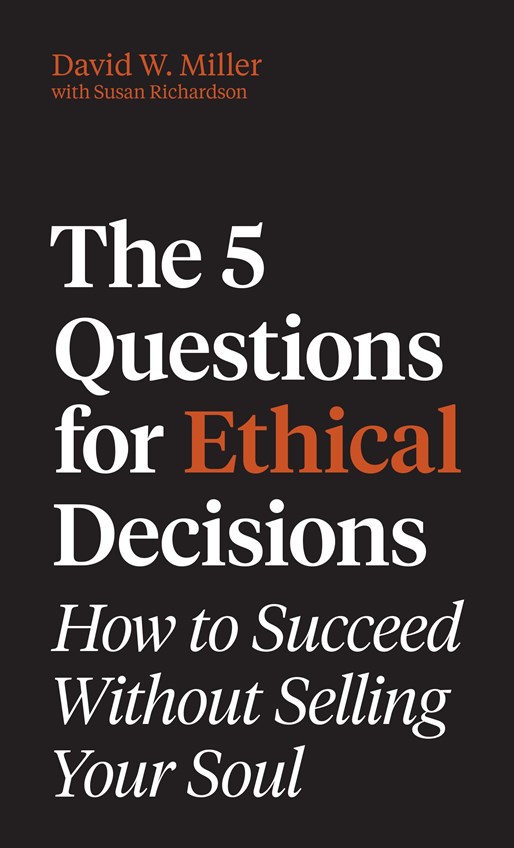
The 5 Questions for Ethical Decisions: How to Succeed Without Selling Your Soul

A practical guide for professionals, corporate executives, entrepreneurs, and college students who want to achieve personal success without compromising their morals

Whether in our daily work or in our personal life, even the most conscientious people with the best intentions can make ethically questionable decisions. The 5 Questions for Ethical Decisions helps you identify your own ethical “true north” and avoid the costly missteps that can betray your values, damage your relationships, and even end careers.

Each of the book’s five chapters begins with a provocative question that illustrates a foundational aspect of ethical practice and explains how to apply these questions to define and uphold your own values. This practical yet robust framework provides a process for ethical decision-making in professional and personal matters that strengthens self-awareness, improves intentionality in decision-making, and enhances the ability to think beyond the moment in a pressure-packed, fast-paced, and rapidly changing world.

Drawing on David Miller’s two decades of experience teaching professional responsibility and ethics to a diverse audience, including undergraduate and graduate students, entrepreneurs and young professionals, and senior executives and civic leaders, The 5 Questions for Ethical Decisions offers compelling and inspiring stories of moral courage and success, cautionary tales of ethical compromise and failure, plus end-of-chapter takeaways and exercises to help build your “ethical fitness.”

error: Content is protected !!