From the New York Times and USA Today bestselling author of Things We Never Got Over
Summer is heating up for reluctant psychic Riley Thorn and her handsome private investigator boyfriend, Nick Santiago.
First, her disapproving grandmother arrives determined to make Riley take her powers seriously or face the wrath of “the Guild.” Then there’s the homicide detective who needs her help figuring out who murdered the well-dressed corpse in the walk-in closet.
Nick’s got his own hands full with a tricky missing person case and his parents who want to know why he didn’t tell them about his live-in girlfriend. Then there’s the fact that he’s still the tiniest bit stressed about Riley almost getting murdered earlier that summer. The last thing he wants is her getting involved in another investigation.
Things go from bad to worse when the body count starts stacking up, the meet-the-parents dinner goes horribly wrong, and their elderly roommate is up to no good…dressed like a mime.
To top it off, Riley is forced to return to Channel 50 on official police business to question her spray-tanned news anchor ex-husband and his new weather girl fiancée.
The trouble comes to a head when Riley receives a warning from the killer: Back off or she’s next. Someone has to solve these murders before she becomes the next corpse.
From the #1 New York Times and USA Today bestselling author of Things We Left Behind
Her spray-tanned, self-absorbed news anchor ex-husband careening back into her life was not on this psychic detective’s bingo card.
But not only does Griffin Gentry show up unexpectedly at Riley Thorn’s door―the real shock is that he’s begging for her help. However, Riley’s hot private investigator boyfriend Nick Santiago refusing to take the job is…well, less of a surprise.
Too bad for Nick that his octogenarian business partner overrules him and decides to take the lead on Griffin’s case. And when a dead body makes it clear someone really is out to get Riley’s ex, the mile-long suspect list puts all hands on deck at Santiago Investigations. Even the wrinkly, retired ones.
It’s only a matter of time before Griffin brings danger directly to Riley’s doorstep. And with she and Nick busy interviewing suspects, their elderly roommates are wreaking havoc in the surveillance department. Can Riley block out the chaos and focus on her psychic visions long enough to narrow down the list of suspects, or will Griffin Gentry’s karma be the downfall of them all?
From the New York Times and USA Today bestselling author of Things We Never Got Over
“Are you calling dibs?”
“She’s a woman, not the last piece of f**king pie. And yes, I’m calling dibs if it keeps your hands off her.”
Carter Pierce wants to spend his days tending the family farm he inherited, and that’s about it. After a tour of duty and a few bullet holes, he’s looking forward to some peace and quiet in his hometown. Unfortunately, Blue Moon doesn’t believe in peace and quiet. And his nosy neighbors sure as hell don’t know how to mind their own business.
As it turns out, neither does the big city journalist who arrives to interview him for a magazine article. Summer Lentz is out of place with her designer wardrobe and workaholic schedule. She asks too many questions and gets under his skin with her smart mouth and those denim-blue eyes. She’s also typing his family’s story a mile a minute at his kitchen table and sleeping in the bedroom across the hall. Carter’s only chance for peace is to scare her away from farm life so he can go back to his comfortable, solitary existence.
But Summer’s got a stubborn streak and secrets of her own. And once Carter starts pulling at those threads, he’s not so eager to send her packing. Will a nudge from the matchmaking Beautification Committee result in a happily ever after or a homegrown disaster?
From the #1 New York Times and USA Today bestselling author of Things We Never Got Over
“Your kids are great,” he said, changing the subject.
“Don’t be sweet. I can’t resist sweet,” Gianna warned him.
“Your kids are monsters, and I hate your face.”
Beckett Pierce is the most eligible bachelor in the nosiest small town in upstate New York. But after his last girlfriend handcuffed herself to his porch and set his welcome mat on fire, he’s not looking for any more romance.
Especially if it lands right in his own backyard. And has miles of red hair.
Gianna Decker has her hands full―no, overflowing―with problems. With two kids, a useless ex, and a brand new yoga studio, the last thing on her mind is finding a man who’ll demand more of her time.
Fantasizing about her hot, broody landlord? Mistake. Lusting after the sexy mayor of her new town? Terrible idea. Getting naked with the “favorite” son of her father’s new lady friend? N-O. Getting involved with Beckett has disaster written all over it.
Those stolen kisses were accidental. A few moments of strings-free, sizzling passion couldn’t possibly cause any trouble. At least, not until tempers flare when their families complicate things and the interfering citizens of Blue Moon step in with their special brand of chaos.

Tributes, poems, and personal recollections from a wide range of notable authors and others, drawn together by Nissim Ezekiel’s daughter, Kavita Ezekiel Mendonca, for the 100th anniversary of the birth of the Father of Modern Indian Poetry

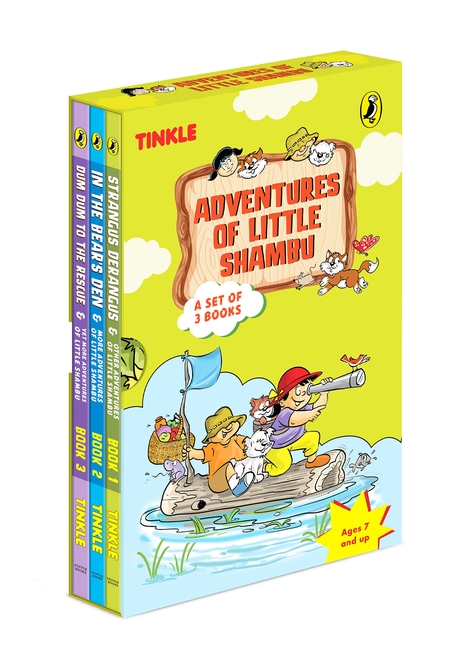
Join Little Shambu, his best friend Shanti and his loyal dog Dum Dum in a series of escapades filled with friendship, bravery and endless surprises! This delightful box set is perfect for young readers who love action, laughter and adventure.
Book 1: Step into the whimsical world of Little Shambhu and his best friend, Shanti, as they chase thrilling adventures filled with lost cats, mysterious carrot thieves, strange creatures and stolen pandas in these brand-new stories from TINKLE!
Book 2: What would you say about a boy who always finds himself in sticky situations? That’s Little Shambu, with his loyal dog, Dum Dum. Feel the excitement of their adventures with grouchy bears, rattling cattle, slouchy snakes and runaway elephants.
Book 3: Buckle up for an adventure with Little Shambu and Dum Dum, as they dive into a whirlwind of trouble! Meet quirky characters, from mischievous mice to unexpected aliens, in this exciting journey of friendship and fun!

From the sparkling lights of Diwali to the playful colours of Holi and the spirited dances of Navratri, experience the joy and magic of family and community gatherings. With charming illustrations and engaging narratives, this collection is perfect for nurturing a love for Indian traditions and culture. Celebrate the spirit of these festivals all year round!
This series of charmingly illustrated board books introduces kids to customs, traditions and stories behind important festivals like Holi and Diwali
- Explore the buzz of activities and rituals and discover how festivals connect us to our roots
- Dotted with interesting facts about each festival as well as an interactive seek-and-find activity.
- Suitable for bedtime reading and parent-child association.
- Perfect way to familiarize young readers with India’s rich cultural fabric.
- These books offer a fun and enjoyable introduction to timeless myths and festivals for modern kids.
- A must have to impart important life lessons
- Collect all books in the series!
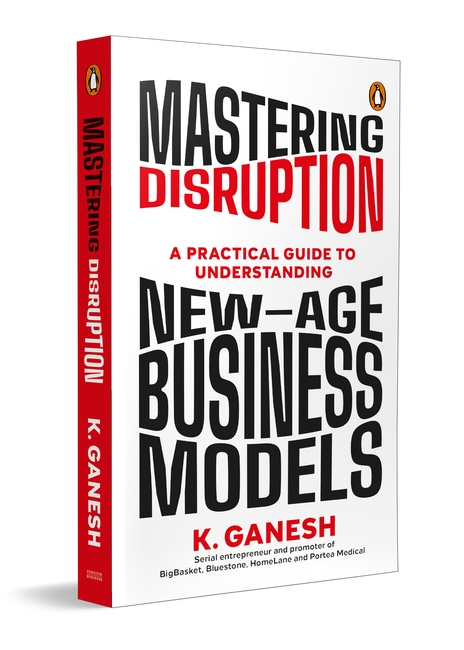
The need for this book is driven by the rapid pace of change and innovation in the business world. Traditional business models and strategies that may have worked in the past are no longer as effective, and new technologies and emerging trends are constantly disrupting the industry. To stay ahead of the curve and remain competitive in the modern business world, it is critical to gain a deep understanding of new business models and strategies that can help businesses succeed. Not only businesses but also working professionals need to stay up to date with the latest trends and best practices in management and business, and to adapt to the rapidly changing landscape of the industry. The book provides new insights, knowledge and a framework to help readers navigate the changes likely to come at a much faster pace thanks to disruptive technology. Read this book to position yourself for success in a rapidly changing world and stay ahead of the curve.

Sanghamitra Chakraborty’s biography covers the complete arc of Soumitra Chatterjee’s extraordinary life and captures the many facets of his talent as a creative artist and all-round icon of the Bengal cultural sphere. From his work as an actor of international renown and his long partnership with Satyajit Ray to his forays into poetry, editorship and art, Soumitra Chatterjee and His World captures the richness and complexity of his journey and explores the turbulent times that shaped him.
An essential book for legions of his fans, it introduces his legacy to a pan-India audience and a new generation of film lovers.
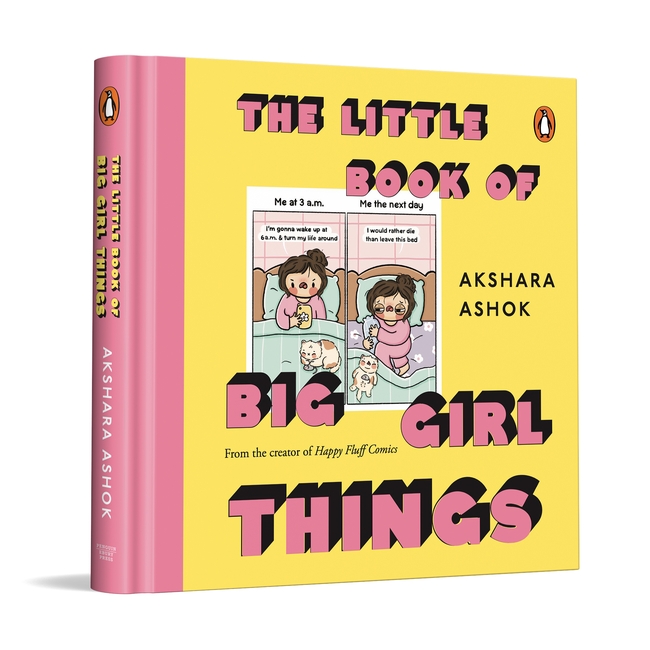
This book is not for kids. It’s for sad (adult) girlies)
Do you ever wonder how everyone knows what they should be doing? Everyone around you is talking about getting married or investing in the stock market and your biggest worry is, ‘What’s for dinner? . . . Oh and did I leave the stove on?’
If this sounds like you, you’ve picked up the right book. Wait. . . this isn’t a manual on how to get better at adulting because I’m clearly not very good at it. It’s a collection of silly and serious comics that’ll make you go, ‘OH! So this happens to everyone? I guess I’m not alone in this’. That’s something, right?
This book discusses everything from everyday problems that comes with being a girlie to depression, anxiety, body image, getting help & self-discovery. (I haven’t discovered anything yet though, LOL).