
Publish with Us

Follow Penguin

Follow Penguinsters

Follow Penguin Swadesh

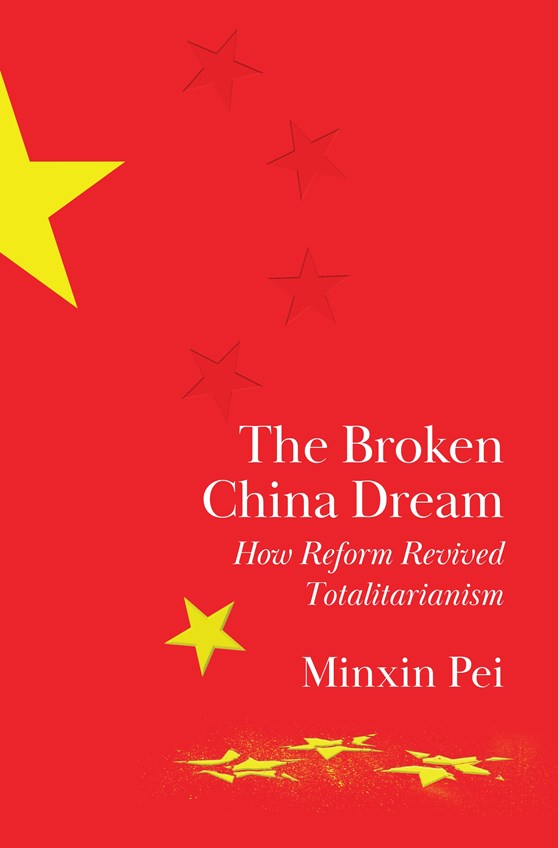
The Broken China Dream: How Reform Revived Totalitarianism

A provocative book that demystifies China’s great democratic leap backward under Xi Jinping, revealing why the country’s embrace of capitalism has given rise to hard authoritarianism, mass surveillance, and one-man rule instead of democracy as many in the West had hoped

When China embarked on its transformative journey of modernization in 1979, many believed the country’s turn toward capitalism would put its totalitarian past to rest and mark the birth of a democratic, open society. Instead, China reverted to a neo-totalitarian state, one backed by one of the fastest-growing, most formidable economies on earth. The Broken China Dream pulls back the curtain on the regime of strongman Xi Jinping, revealing why the reforms of the post-Mao era have been reversed on nearly every front—and why the world failed to see it coming.

Exposing the truth behind China’s economic ascendency after the Cultural Revolution, Minxin Pei shows how, following Mao’s death in 1976, Deng Xiaoping strategically deployed the tools of capitalism to preserve the Chinese Communist Party. Deng kept intact the institutional foundations of totalitarianism even as he unleashed private entrepreneurship and courted foreign investment, giving China’s one-party state control of a vast repressive apparatus and the most critical sectors of the economy. Only a fragile balance of power among dueling factions prevented the rise of a totalitarian leader in the two decades after the Tiananmen crackdown in 1989—but this temporary equilibrium collapsed.

Essential to understanding today’s China, this meticulously researched book is a sobering account of why the country’s reformers and institutions could not stop a shrewd and ruthless politician like Xi from resurrecting dormant totalitarian practices that, for the foreseeable future, have spelled the end of the dream of a free and prosperous China.
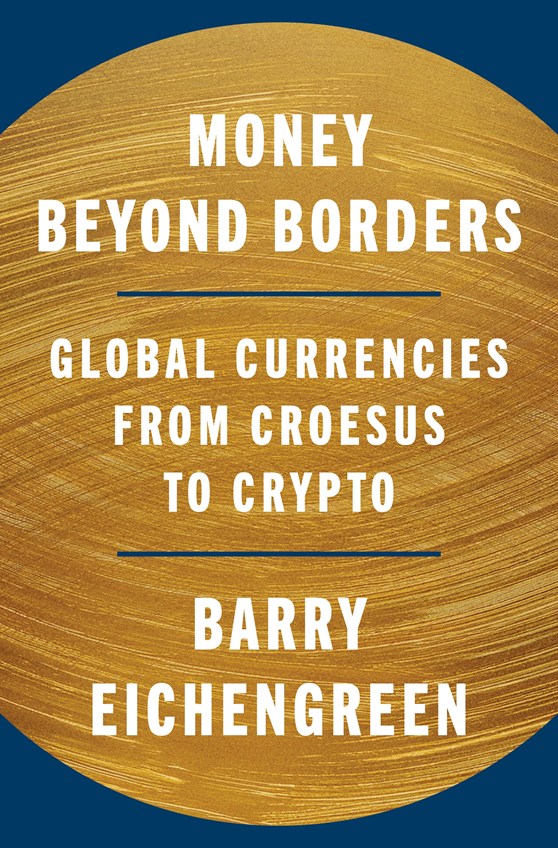

Money Beyond Borders: Global Currencies from Croesus to Crypto

A 2,500-year history of international currencies that reveals new insights about the future of the U.S. dollar—as well as crypto and central bank digital currencies

Doubts about the international dominance of the dollar are only growing amid worries about tariffs, political dysfunction, and fraying international alliances. Will the dollar continue to reign supreme? In Money Beyond Borders, the leading authority on international currencies, Barry Eichengreen, puts the dollar’s prospects in deep historical perspective by chronicling the entire history of cross-border currencies, from the invention of coins in the seventh century BCE to the cryptocurrencies of today and the central bank digital currencies of tomorrow.

Money Beyond Borders recounts how Greek and Roman coins became the first true international currencies. It tells how the Florentine gold florin became the “greenback of the Renaissance,” and how it was succeeded by Spanish silver and a Dutch fiat currency. The book explains why the British pound dominated the international economy in the nineteenth century, why the dollar rose to the top during World War II, and why the dollar has survived predictions of the imminent loss of its preeminence since the 1970s.

The long history of international currencies shows that the same factors that encourage their widespread use eventually lead to their abandonment. Money Beyond Borders makes a powerful case that the dollar is now on the downside of this cycle, and it considers who the winners and losers will be when there is flight away from the greenback. Revealing important patterns in the life cycles of international currencies over the past 2,500 years, the book offers valuable lessons and insights about how currencies rise—and why they fall.

Earth and Life: A Four Billion Year Conversation

From the world-renowned geobiologist and bestselling author of A Brief History of Earth, the epic story of a planetary conversation four billion years in the making

How did the world as we know it—from the soil beneath our feet to the air we breathe and the life that surrounds us—come to be? Geologists have proposed one set of answers while biologists have proposed another. Earth and Life is the first book to reveal why we need to listen to both voices—the physical and the biological—to understand how we and our planet became possible.

In this captivating book, Andrew Knoll traces how all life is sustained by Earth’s geological and atmospheric dynamics, and how life itself shapes the physical environment. Taking readers on a thrilling journey across four billion years of Earth history, he shows how Earth and life interact to cycle the very elements of life from rocks, water, and air, and how these and related processes control our climate, regulate our atmosphere, and support the diversification of life-forms great and small. Along the way, Knoll explains how we can draw on this history as we navigate the challenges of the Anthropocene, and how it can aid our search for life elsewhere in the universe.

Blending cutting-edge science with illuminating insights from a leading expert, Earth and Life explains how this ongoing interplay holds vital lessons for us today as humanity becomes an increasingly major voice in the conversation.

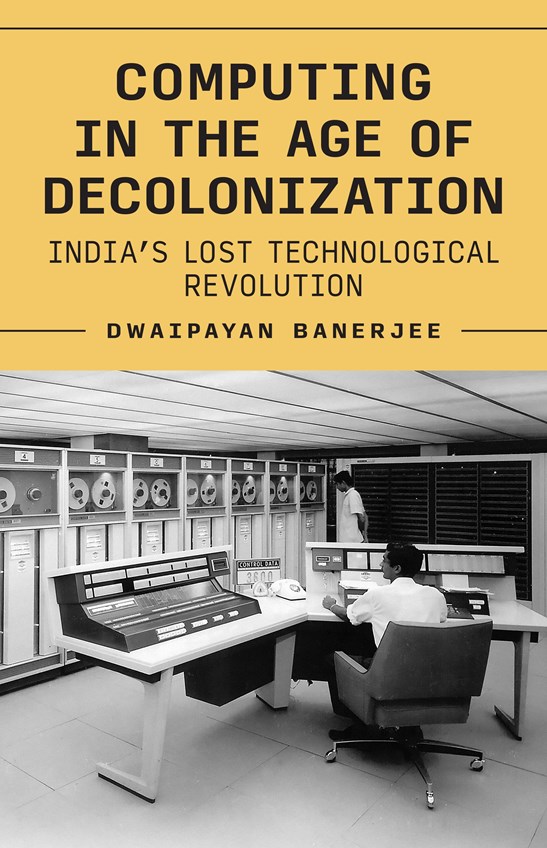
Computing in the Age of Decolonization: India’s Lost Technological Revolution

How Cold War geopolitics and domestic capitalism changed the trajectory of India’s computing industry

India today is widely recognized for producing world-class tech talent and Silicon Valley leaders, yet captures only a fraction of the global tech industry’s profits, primarily providing skilled but inexpensive labor for Western corporations. Computing in the Age of Decolonization uncovers the overlooked history behind this paradox, tracing India’s ambitious but ultimately thwarted drive to build a self-reliant computing industry from the 1950s to the 1980s.

After independence in 1947, Indian scientists and policymakers at institutions such as the Tata Institute of Fundamental Research saw computing as central to national sovereignty, economic growth, and scientific advancement. Through projects such as the groundbreaking TIFRAC computer and the decisive expulsion of IBM, they aimed for technological independence. But almost immediately, these initiatives faced powerful political and economic headwinds. Indian computer scientists grappled with Cold War politics, international trade imbalances, US corporate monopolies, and strategic decisions by India’s technocratic elite, who favored profitable technical services over costly investments in research and manufacturing.

In narrating this lost future, Computing in the Age of Decolonization shows that genuine technological independence requires more than technical expertise—it demands addressing enduring political and social structures rooted in colonial legacies. As global struggles over technology intensify, this book reveals how historical pathways continue to shape contemporary battles for technological and economic sovereignty.

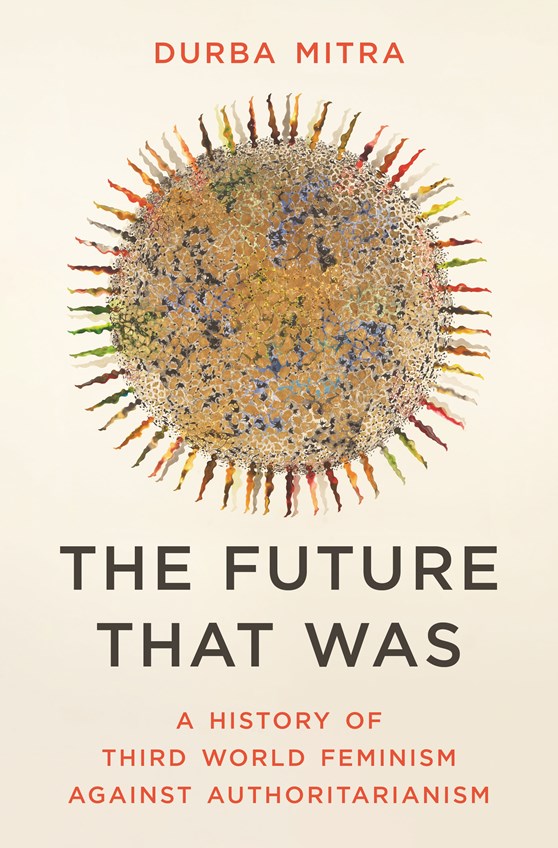
The Future That Was: A History of Third World Feminism Against Authoritarianism

How Third World women seized the means of knowledge production to fight against rising authoritarianism and imagine a future freer than our present.

Beginning in the 1970s, women of the decolonizing world offered new visions of liberation that centered the ideas and lives of women. Galvanized by International Women’s Year in 1975 and the UN’s Decade of Women, Third World women developed novel ideas of equality and self-determination, building a new internationalism in opposition to neocolonialism and postcolonial authoritarianism. In The Future That Was, feminist historian Durba Mitra offers a pathbreaking account of how these women wrote Third World feminism into being, catalyzing a momentous expansion of knowledge about women, gender, and sexuality that transformed emancipatory politics across the globe.

Mitra shows how women from former colonies in South Asia, Africa, the Caribbean, and beyond envisioned a radically just world—and did so by insisting that research on the world’s women lay at the heart of debates about global inequality, development, and human rights. Women gathered at international conferences, wrote reports on the dangers facing women, and took to the streets in protest, building a world of knowledge that contested the devastating effects of patriarchy and colonialism. Yet, despite hundreds of laws, institutions, and publications created through the efforts of these women, the future they imagined was never fully realized. The Future That Was transforms the story of decolonization and its aftermath through the history and ideas of women. By excavating these vital pasts, Mitra shows how we might envision a future of our own that is freer than the present.

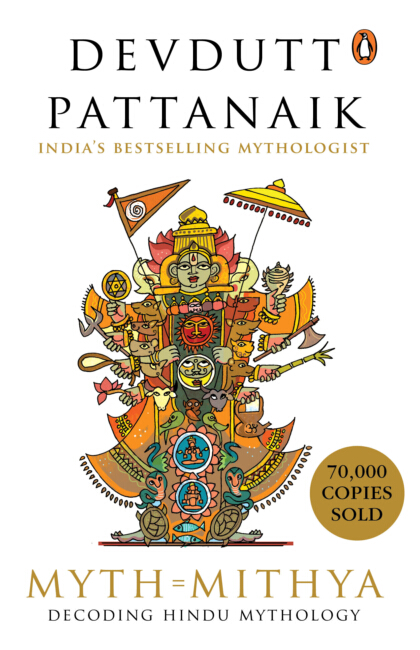
Myth = Mithya

Hindus have one God. They also have 330 million gods: male gods; female gods; personal gods; family gods; household gods; village gods; gods of space and time; gods for specific castes and particular professions; gods who reside in trees; in animals; in minerals; in geometrical patterns and in man-made objects. Then there are a whole host of demons. But no Devil. In this groundbreaking book Dr Devdutt Pattanaik; one of India’s most popular mythologists; seeks an answer to these apparent paradoxes and unravels an inherited truth about life and death; nature and culture; perfection and possibility. He retells sacred Hindu stories and decodes Hindu symbols and rituals; using a unique style of commentary; illustrations and diagrams. We discover why the villainous Kauravas went to heaven and the virtuous Pandavas (all except Yudhishtira) were sent to hell; why Rama despite abandoning the innocent Sita remains the model king; why the blood-drinking Kali is another form of the milk-giving Gauri; and why Shiva wrenched off the fifth head of Brahma. Constructed over generations; Hindu myths serve as windows to the soul; and provide an understanding of the world around us. The aim is not to outgrow myth; but to be enriched and empowered by its ancient; potent and still relevant language.

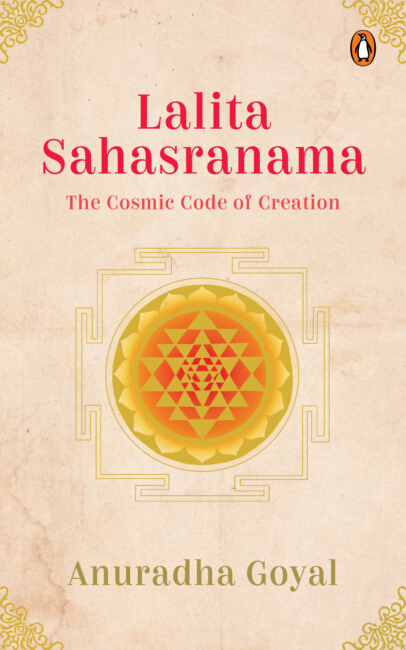
Lalita Sahasranama

The Lalita Sahasranama, the sacred hymn of the thousand names of the Divine Mother, is one of the most revered texts in Hinduism. For centuries, devotees have chanted it to invoke the Goddess’s grace, cultivate devotion, purify the mind, and move towards inner freedom. Each of its thousand names celebrates an aspect of Lalita Tripura Sundari—her beauty, compassion, power, wisdom and boundless presence.

Yet the Lalita Sahasranama is far more than a devotional hymn. Beneath its poetic verses lies a profound spiritual philosophy, revealing the nature of consciousness, the structure of the universe, the symbolism of mantras, yantras and chakras, and the soul’s journey from duality to self-realization.

In this illuminating guide, Anuradha Goyal explores the deeper meaning of every name, making this timeless scripture accessible to contemporary readers. With clarity, insight, and reverence, she uncovers the many layers of the stotra, enabling both seasoned practitioners and first-time readers to deepen their understanding of the Goddess and experience the transformative wisdom of the Lalita Sahasranama.

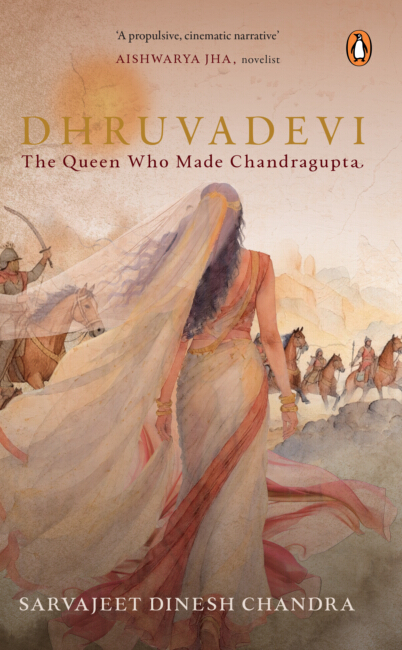
Dhruvadevi

India, c. 377 CE

The mighty Gupta Empire stands on the brink of collapse. After the celebrated reign of Samudragupta, his ineffectual son Ramagupta inherits the throne at Pataliputra. His marriage to the Licchavi princess Dhruvadevi secures a vital political alliance, but beyond the empire’s western frontier, the formidable Saka ruler Rudrasena waits for the right moment to strike.

In Malwa, Ramagupta’s ambitious half-brother Chandragupta plays a dangerous game. Secretly travelling to the Saka capital of Ujjayini, he builds a network of spies, gathers intelligence, and courts discontent within the enemy’s ranks—actions that could preserve the empire or shatter the fragile peace.

As the crisis deepens, Dhruvadevi faces an impossible choice. Should she remain loyal to her husband despite his disastrous leadership and his ill-treatment, or place her faith in Chandragupta—the capable, charismatic prince she secretly admires—before the Gupta Empire is lost forever?

The Correspondent | Exclusive Deluxe Hardcover Collector’s Edition with Stenciled Edges | Heartfelt Epistolary Literary Fiction Told Through Letters

“Winner of the Women’s Prize for Fiction 2026, #1 Sunday Times Bestseller, #1 New York Times Bestseller, and with over two million copies sold worldwide, The Correspondent is one of the most celebrated literary fiction novels of the year.

Now available in an exclusive deluxe hardcover collector’s edition, this beautifully crafted keepsake features stenciled edges and an elegant premium finish, making it the perfect addition to every book lover’s library. Designed for readers who cherish beautiful books as much as unforgettable stories, this special edition is ideal for collecting, and gifting.

Sybil Van Antwerp is seventy-three, an avid gardener, a retired lawyer, and a devoted letter writer. Through thoughtful, witty, and deeply personal correspondence with her children, favourite authors, neighbours, doctor, and even strangers, she quietly makes sense of the world around her. But there is one letter she has never sent. When the past resurfaces, Sybil is forced to confront old wounds and discover whether forgiveness is still within reach.

Told entirely through letters, The Correspondent is a beautifully written epistolary novel about friendship, family, memory, grief, and second chances. Tender, wise, and emotionally resonant, it is a celebration of the written word and the extraordinary connections that shape our lives.

Collector’s Edition Highlights

• An edition every reader will want to collect.
• Beautifully crafted with stunning stenciled edges.
• A premium keepsake edition, perfect for collecting and gifting.
• Celebrate one of the year’s biggest literary fiction successes in a beautiful collector’s format.
• A heartfelt novel told entirely through letters—an unforgettable reading experience.

Because unforgettable stories deserve an edition you’ll treasure for years to come.”

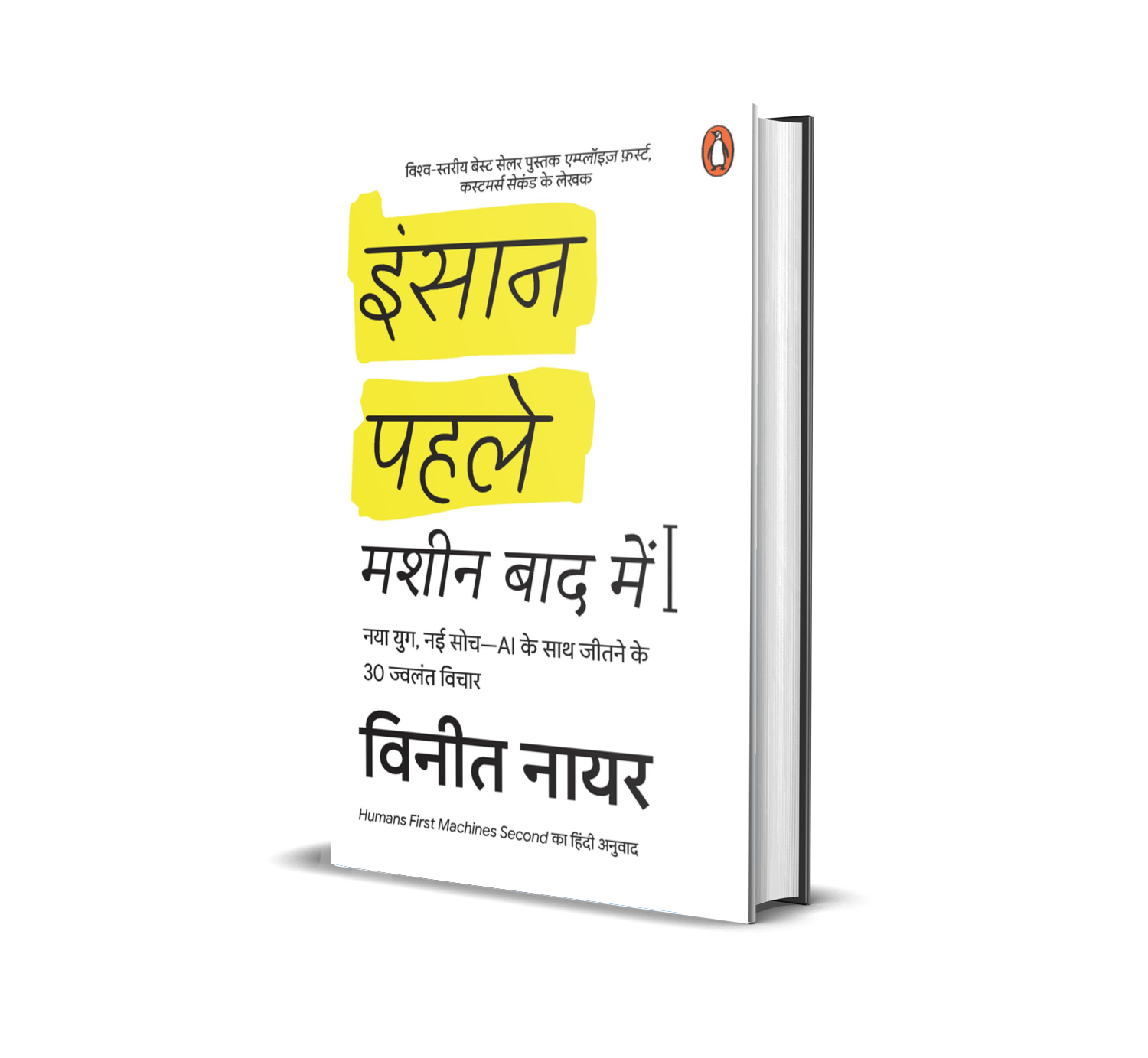
Humans First, Machines Second Hindi / Insaan Pahle Machine Baad Mein / इंसान पहले मशीन बाद में

पहले इंसान फिर मशीन AI के तेज़ी से बदलते दौर में इंसानी मूल्यों, नेतृत्व और रचनात्मकता की अहमियत को सामने लाने वाली प्रेरक पुस्तक है। यह किताब 30 प्रभावशाली विचारों के माध्यम से बताती है कि तकनीक कितनी भी उन्नत क्यों न हो जाए, असली ताक़त इंसानों की सोच, संवेदनशीलता और निर्णय क्षमता में ही होती है। यह पुस्तक नेताओं, उद्यमियों और हर उस व्यक्ति के लिए उपयोगी है, जो एआई के साथ संतुलित और सार्थक भविष्य बनाना चाहता है।

error: Content is protected !!