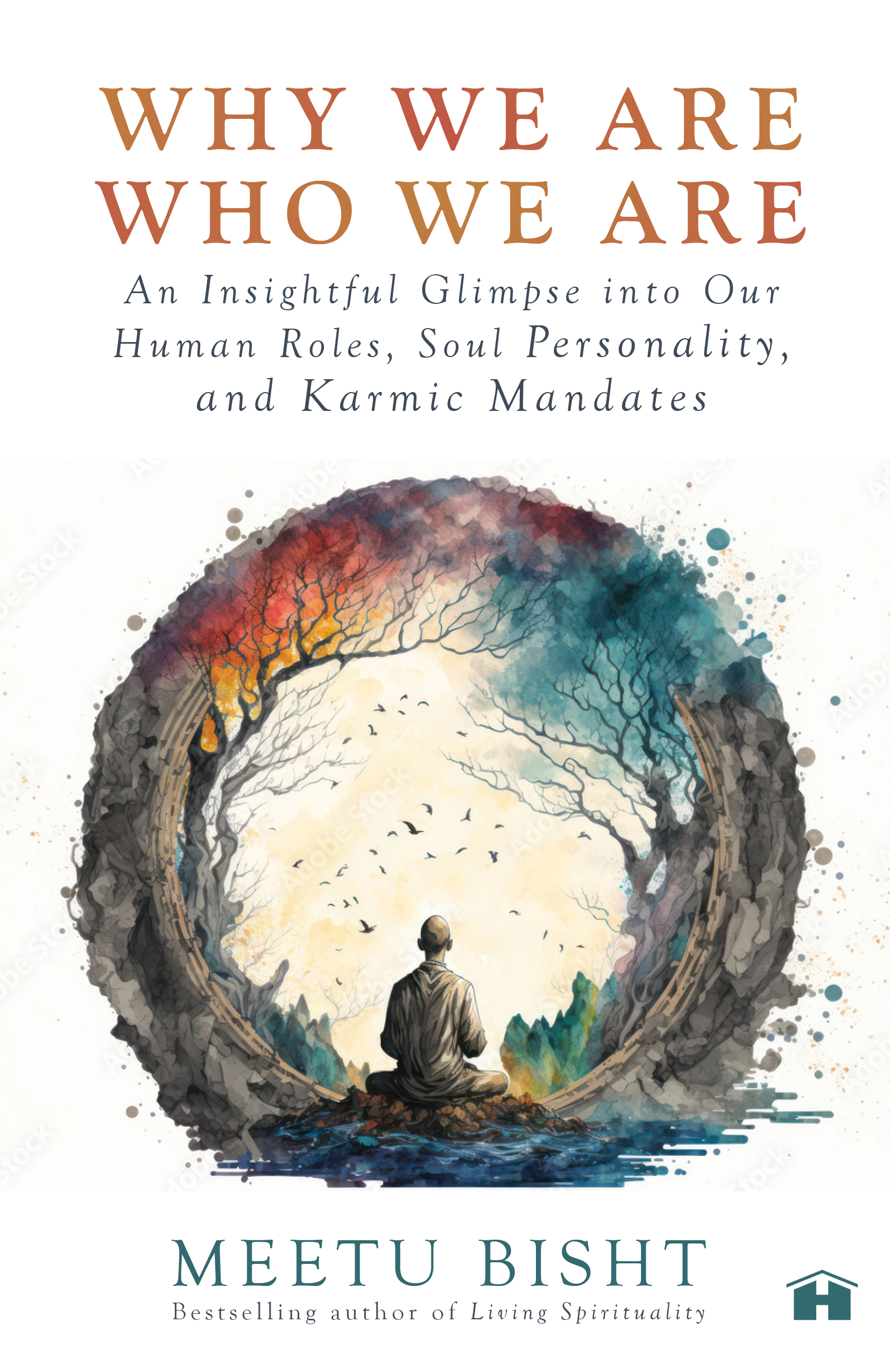
We all have come across moments in life when we ask ourselves, ‘Who Am I?’ and ‘What’s my life purpose?’ But often, we simply stop after the inquiry and spend our lifetimes chasing some dream—financial, personal, or societal—without thinking of the bigger picture. This way, we miss out on uncovering the deeper reality of life, its real purpose, and most importantly, why we are who we are.
After her highly successful book, Living Spirituality, Meetu Bisht delivers an insightful text that brings us closer to understanding why we live the life that we live, the true purpose of our unique individual journeys, and the ways in which we can progress and evolve. The book elaborates on concepts such as soul personality and karmic mandates and also explains how our tendencies and certain karmic factors are responsible for our individual life scenarios and destinies.
Why We Are Who We Are is relevant for all those who are keen to get a deeper understanding of their inner state and grow spiritually by living a life of greater meaning and purpose and by becoming a higher version of the self.

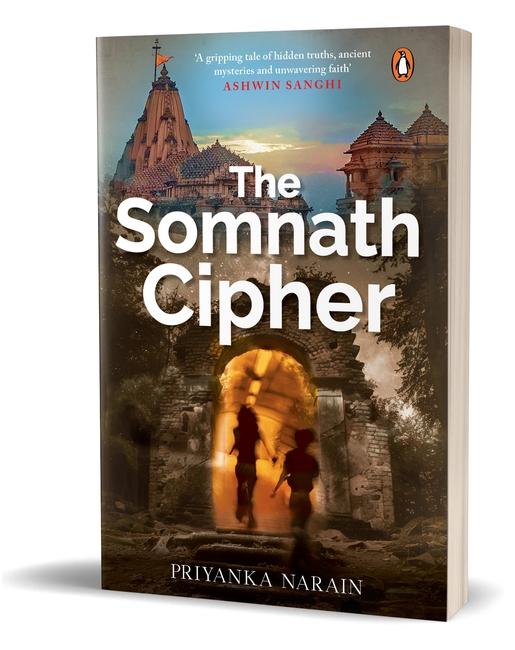
When a Somnath University professor sends a desperate plea for help, journalist Pia Jani and her childhood friend Aditya Narayan are pulled into a battle of wits and stealth to unravel a millennium-old mystery.
As the duo deciphers intricate clues and cracks baffling codes, they unearth a trail leading back to the day the Somnath Temple was plundered by the infamous Mahmud of Ghazni—and the staggering truth of what really happened.
Stalked by a faceless, merciless adversary who outmanoeuvres their every move, they must race against time before an explosive secret is lost forever in the annals of history.
Da Vinci Code meets Indiana Jones in this exhilarating and unputdownable read through India’s history, ancient cults, symbols and religion.

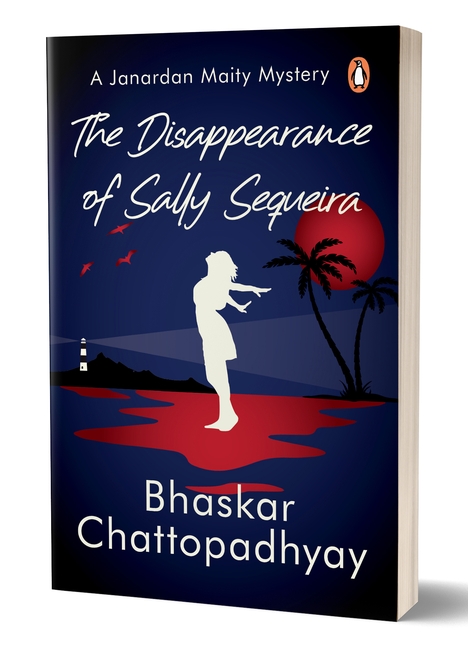
Those closest to you often have the most to hide. With its pristine beaches, clear turquoise waters and an ancient lighthouse towering over it, the picturesque hamlet of Movim in Goa seems like the perfect holiday spot for detective Janardan Maity and his friend, Prakash Ray. But when the father of a local teenage girl receives a letter asking for a large sum of money in exchange for his daughter, Maity and Prakash find themselves in the thick of an unlikely mystery. For they discover that the girl has not been kidnapped at all, and is in fact still safe and sound in her house. As they begin to investigate, the duo realizes that the residents of the tiny village – a popular young priest; a retired teacher; an indiscreet ex-sailor; and a god-fearing old widow – are not what they seem. And, of course, there’s Sally Sequeira – the frail and shy girl who keeps to herself, but steps out onto the beach in the night to dance to tunes her father plays on his piano. What truth does the village of Movim hide? Who is the mysterious man that Sally has been seen with recently? And how will Janardan Maity solve a crime that has not yet been committed?
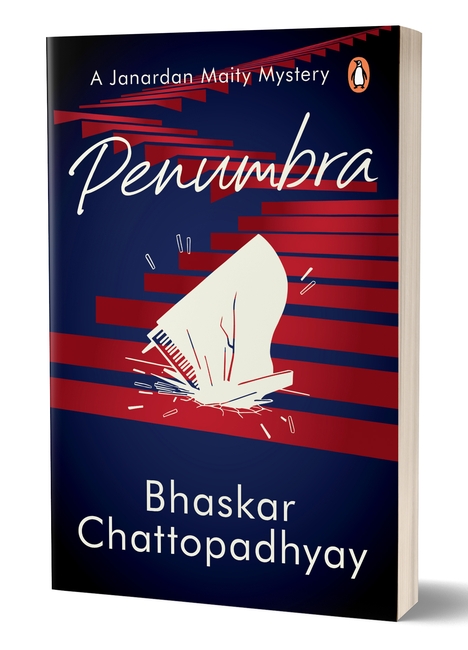
In the middle of one of the worst storms to hit the city, a mysterious letter arrives for Prakash Ray, an out-of-luck journalist, inviting him to a quaint, suburban bungalow, to celebrate the 60th birthday of an uncle he has never heard of… As Prakash reaches the venue, he is introduced to a motley group of people, all gathered there for the old man’s big day: his son, his reticent brother, a dignified middle-aged lady who once owned the bungalow, a listless lawyer who manages his legal affairs, a mild-mannered young man who works as his secretary, his beautiful, young biographer, and his mysterious friend, who has never lost a game of chess to him. As the storm lashes on through the night, one of the people in the bungalow is murdered! In a game of cat and mouse that follows, Prakash soon finds out that under the surface of apparent warmth and friendliness, nothing is as it seems and that the bungalow holds one shocking secret after another! In a bid to save his own life, Prakash hunts for the truth, which lies in a mysterious penumbra of shadows and lights, covered in a sheath of deceit and guile, only to realize that the worst is yet to come!
Think of your sins. Prepare to die.
On the edge of the forests of Deoghar, in the small, sleepy town of Nimdeora, novelist Sangram Talukdar’s peaceful life is unexpectedly shattered when he receives an anonymous threat.At first, he dismisses it as a cruel joke, but when two of the family’s beloved dogs, guardians of the estate, are found killed with a clean, swift arrow to each of their throats, Talukdar calls in the astute detective Janardan Maity to investigate. To uncover the dark secrets of this quiet town, Maity has to dig deep into the past – into the Talukdar family’s bloody history, and a curse that has haunted the family for generations. But he must act quickly, because someone, or something, is lurking in the shadows of the forest, watching, waiting to claim their prey…
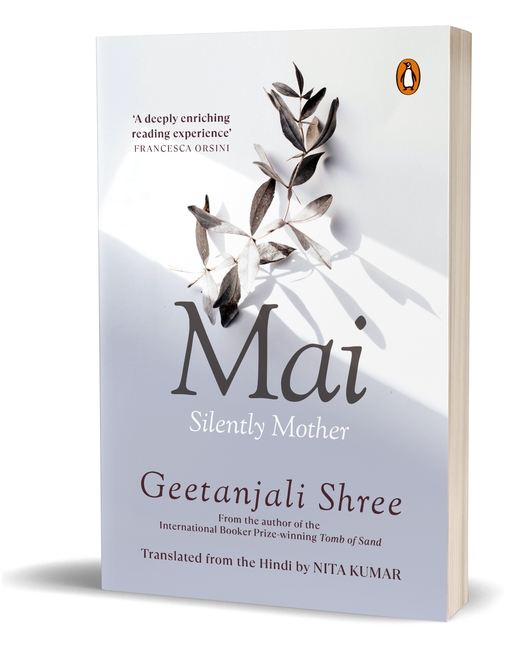
Nestled within the walls of a home in a north Indian town, a vibrant microcosm thrives—a tapestry intricately woven by a joint family, their attendants and a continuous flow of visitors. Across three generations, women and men employ varied strategies of adaptation and achievement, choosing either to conform or to challenge the constraints of patriarchy.
At the epicentre of this intricate web stands Mai, the ostensibly gentle mother, orchestrating the complex patterns of relationships and actions, carving out a life not just for herself but for those around her. Despite her modern children’s attempts to liberate her from perceived confinement, the evolving story challenges simplistic notions of bondage and freedom. The novel masterfully weaves profound tales of love and loss, with Mai serving as its central and compelling figure.
Mai, Geetanjali Shree’s debut work, is a recipient of the Sahitya Akademi Award in 2002. In Nita Kumar’s translation, the narrative comes alive, inviting readers into this captivating exploration of family, relationships and the intricacies of freedom.

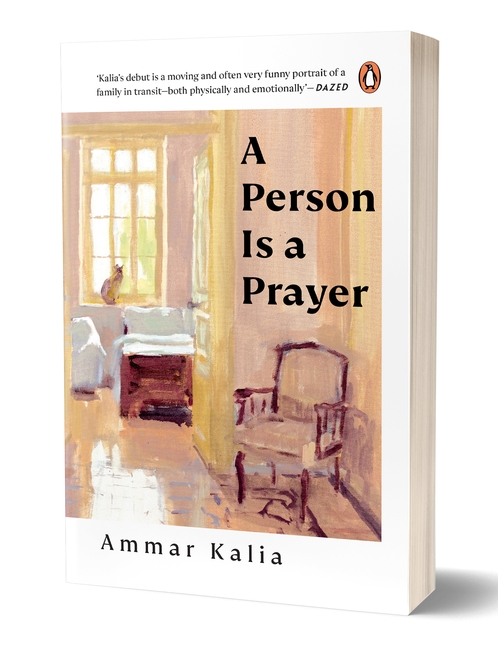
Bedi and Sushma’s marriage is arranged. When they first meet, they stumble through a faltering conversation about happiness and hope, and agree to go in search of these things together. But even after their children, Selena, Tara and Rohan, are grown up and have their own families, Bedi and Sushma are still searching.
Years later, the siblings attempt to navigate life without their parents. As they travel to the Ganges to unite their father’s ashes with the opaque water, it becomes clear that each of them has inherited the same desire to understand what makes a happy life, the same confusion about this question and the same enduring hope.
A Person Is a Prayer plumbs the depths of the spaces between family members and the silence that rushes in like a flood when communication deteriorates. It is about how short a life is and how the choices we make can ripple down generations.

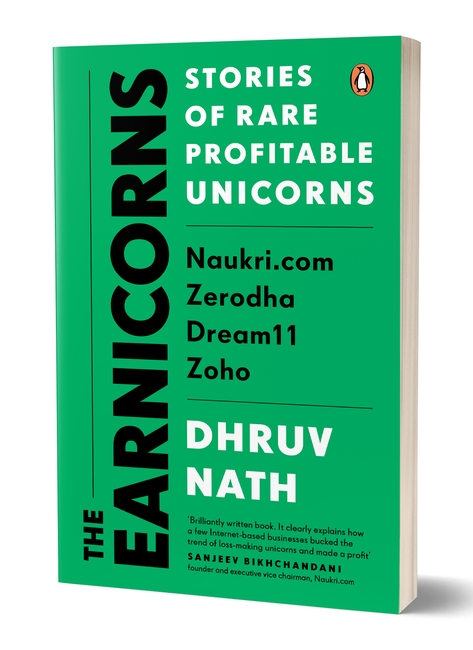
It is an accepted fact that Internet-related businesses are largely loss making. Dhruv Nath uncovers the secrets of four highly respected Internet giants which defy this trend boldly. The book narrates the story of four market leaders: Naukri.com, Zerodha, Zoho and Dream11, and how these companies managed to become profitable and stay that way.
These are stories about phenomenal companies and their equally phenomenal founders. How Zoho transformed rural Tamil Nadu, by recruiting young boys and girls who could not afford to go to a decent college. And nurturing them into becoming star programmers. Nithin Kamath, the outstandingly humble founder of Zerodha, who shocked the nation by charging absolutely no brokerage from investors. Sanjeev Bikhchandani, who started Naukri.com from the servant’s quarters above his father’s garage, using second-hand computers and furniture. And subsequently, grew the business to a point where they have an unbelievable 70 per cent share of the market for white-collar jobs. Harsh Jain of Dream11, who built a roaring fantasy sports platform when everyone advised him not to.

Priyanka Mattoo was born into a wooden house in the Himalayas, as were most of her ancestors. In 1989, however, mounting violence in the region forced Mattoo’s community to flee. The home into which her family poured their dreams was reduced to a pile of rubble.
Mattoo never moved back to her beloved Kashmir—because it no longer existed. She and her family just kept packing and unpacking and moving on. In forty years, Mattoo accumulated thirty-two different addresses, and she chronicles her nomadic existence with wit, wisdom, and an inimitable eye for light within the darkest moments.
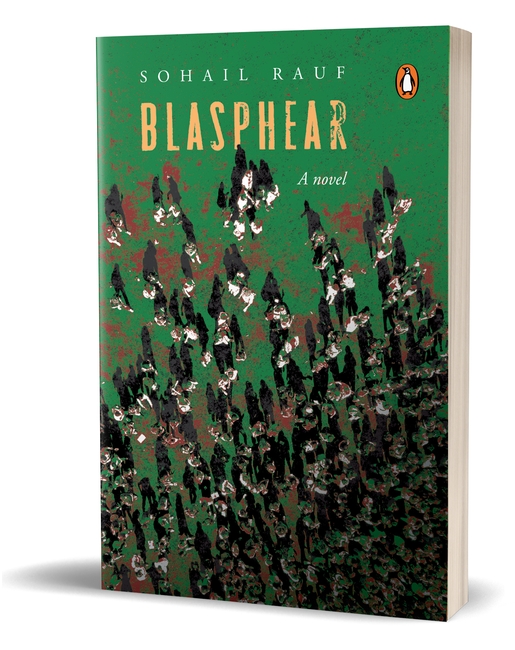
When Sub-inspector Waqas Mahmood is assigned the case of a suicide of a seventeen-year-old boy, he is tempted to do the bare minimum and close it. Waqas has been disenchanted with the police force and wants to quit anyway. And the ominous presence of a religious outfit around the boy’s house is another reason to stay away. It’s also just too hot in Shantinagar, a dusty town in Punjab in Pakistan.
But Waqas realizes there’s more to the case when the boy’s friend reaches out claiming that it was not a suicide. In fact, the case might be linked to another terrifying case in Shantinagar when a Hindu art teacher was lynched on the accusation of blasphemy against Islam.
Waqas is intrigued; a horror story from his childhood returns to haunt him. From witnesses’ statements, he pieces together accounts of friendships that transcended religions before they were ruined by betrayal, conspiracy and religious fanaticism. Will Waqas succumb to the terror of religious bigots, or will he uphold justice in a society that badly needs it?