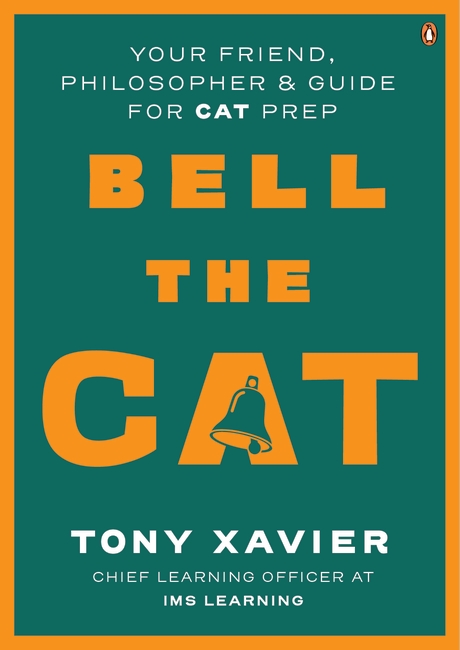
Every year lakhs of students take the Common Admission Test (CAT), arguably the third most-challenging entrance examination in India after the JEE and the UPSC, to secure a seat at one of the prestigious IIMs or other top-tier management institutes. But what are the odds of making it? 1 in 100. It is because most aspirants do not possess one of two things: the tools to develop the immense mental strength that is needed to crack such high-stakes exams or precise strategies to tackle the different challenges the exam throws up. If, however, they possess these two skills, they might miss out on the third part — information. What makes this test different from the JEE or UPSC exams is that selection is not based on the test alone but on the academic and professional profile of the applicants as well. Many aspirants lack this critical information. Most CAT-preparation books are focused on the specific sections of the exam and, therefore, fail to provide a holistic understanding of what the exam really is.
Bell the CAT is one of a kind since, unlike all the other books in the Indian MBA test-prep space, it goes beyond focusing on specific subjects and delves deep into the things that prevent test-takers from making it to an IIM. The book intends to provide aspirants with all the skills beyond math, logic and English—mental conditioning, test-taking strategies, profile-building and interview prep—that are necessary not just to crack CAT and make it to some of the most elite institutions in the country—the IIMs—but also to get recruited by elite employers in different domains.

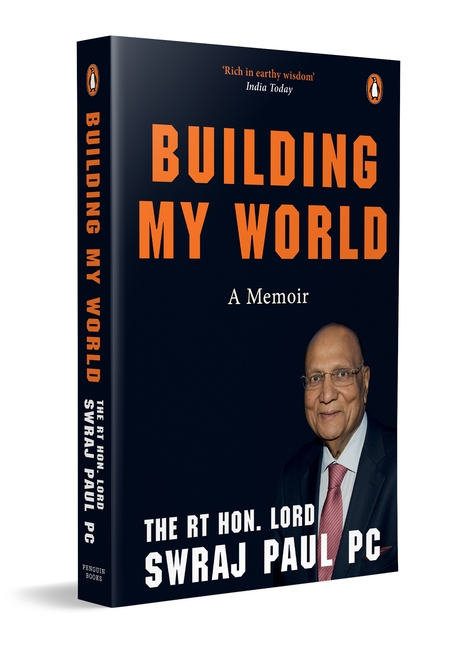
Swraj Paul – The Lord Paul of Marylebone – is Labour peer in the House of Lords, Chairman of the £500 million Caparo Group, a philanthropist best known for saving the London Zoo from closure, and a prominent politician. Unusually for an NRI, he is also recipient of one of India’s highest awards, the Padma Bhushan. By any yardstick his has been a career crammed with incident and achievement. Raised in Jalandhar, Punjab, where his father ran a small foundry making steel buckets and farming equipment, he went to the US to read mechanical engineering at the Massachusetts Institute of Technology. A thriving business career in India, taken up on his return home, was unexpectedly diverted into a heartbreaking battle to save the life of his fourth child, Ambika. The search for a cure led him to London in 1966, and it was there, eventually, as he emerged from the trauma of her death, that he set up Caparo, today the largest family-owned business in Britain.
In his memoir, Building My World, Lord Paul recounts the high points of a life well lived. Here are the details of his business career, including his run-in with DCM and Escorts, his encounters with the famous and the mighty, notably Indira Gandhi, Sanjay and Rajiv; and a distillation of his personal and business philosophy. Written with insight and candour, this memoir provides a glimpse into the making of one of the most outstanding success stories of our time.
- Can working out in the gym be dangerous?
- Are multivitamins and supplements the answer to everything?
- Is intermittent fasting healthy?
- What is the truth behind ‘immunity boosters’, ‘sulphate-free’ shampoo and ‘organic’ food?
- Is it bad to use a microwave to heat food?
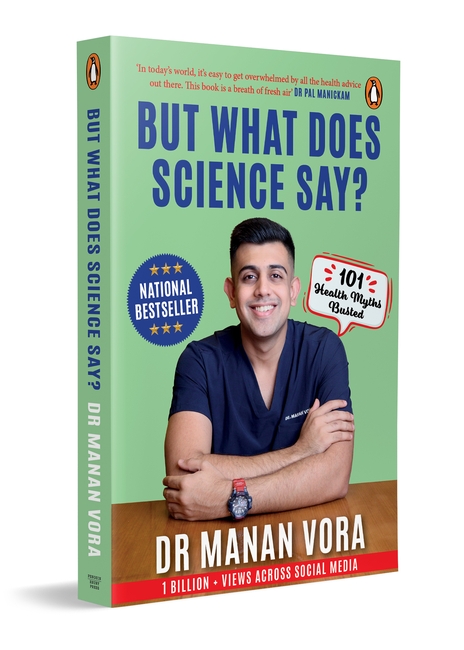
With the prevalence of social media, we see so much misinformation about health being disseminated. From period pains to dark chocolate, from depression to weight loss, everyone has an ‘expert’ opinion, and social media gives them a platform to voice it. How is one to figure out what is true, and what is not?
In But What Does Science Say?, Dr Manan Vora debunks 101 common health myths with science and a healthy dose of humour. His witty, easy-to-follow explanations make the book perfect for curious minds of all ages—kids, teens and adults alike.
Whether you’re navigating health trends or deciphering social media advice, Dr Vora breaks it down in a fun, relatable way that’s sure to engage the whole family. It’s no surprise that his playful yet insightful approach has made him a trusted voice on social media, where he connects with people of all generations.
‘You’ve got to love Dr Vora’s science-based content backed with fun jokes, answering some of the most common health questions we ask on Google!’—DR TANAYA NARENDRA (Dr Cuterus), embryologist, sexual health content creator and author
‘Absolute must-read! With clear explanations and scientific literature, it dismantles myths that have misled us for years’—REVANT HIMATSINGKA (Food Pharmer), health content creator and author
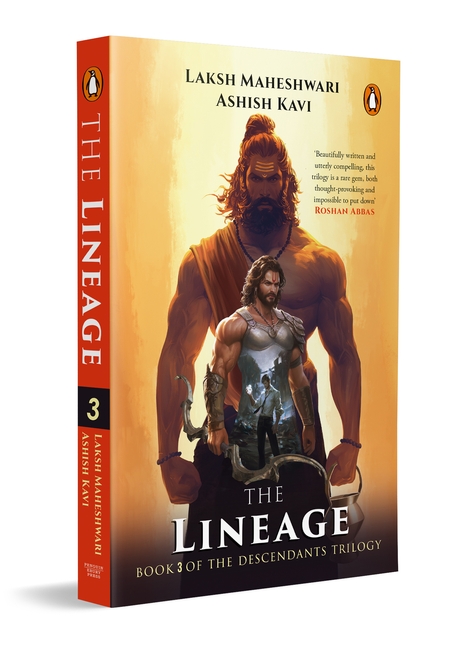
Thirty-two and a half hours: It is all the time this world has left.
Kaka has rung the Dhwansnaad, bringing upon earth an evil that will ruin all. Vyas ji has barely managed to save a chosen few. Karan has lost his father. Antima has lost her courage. And no one knows what has become of Jay.
In the midst of this chaos, Kaka’s nefarious plan has started to take root in a most terrible way and the only forces who can stop him are struggling with battles of their own.
Thirty-two and a half hours: Will this world find its saviour?
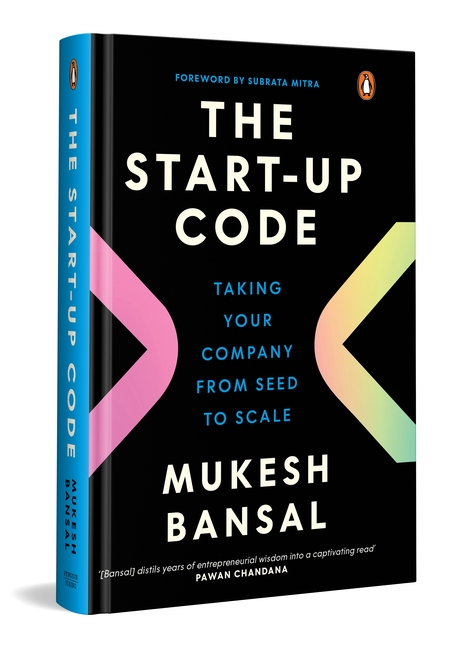
Seasoned entrepreneur and investor Mukesh Bansal delivers a masterclass on the art of building successful start-ups
Building a company from scratch is a risky business, with a very high chance of failure. But it is also one of the most rewarding life experiences, with an incredibly high learning curve. Mukesh Bansal draws on over two decades of first-hand experience to reveal the hard-won lessons that turn ambitious ideas into thriving enterprises. Through riveting stories and real-world case studies, he demystifies the entrepreneurial journey, guiding readers from the initial spark of inspiration to scaling a high-growth business.
In this book, discover your ‘why’, the importance of achieving product-market fit and how to foster a resilient company culture. Learn to navigate the complexities of funding, execution and growth strategies while gaining candid insights into why many start-ups fail. In the treacherous landscape of building a business, one has to survive the inevitable challenges, and Bansal confronts this harsh reality, while offering readers a method to the madness.
The Start-Up Code is more than just a guide—it’s your road map to transforming bold ideas into enduring success. Whether you’re a fledgling entrepreneur or a corporate leader aiming to ignite innovation within your organization, Bansal’s practical frameworks and proven strategies will empower you to dramatically improve your odds of success.

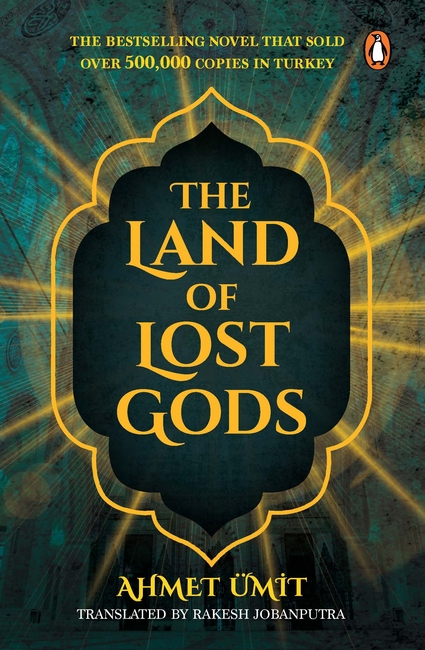
A gripping thriller by the bestselling author Ahmet Umit, sold 500,000 copies in Turkey.
“That is why I shall begin in the place you thought you had forgotten. Those that forget shall pay the price for forgetting. Those that did not show due respect shall be rewarded with the severest of punishments: those that tore me from their hearts shall have their hearts torn out…”
In 1879, a grand monument of stunning statues was bought from Bergama in Anatolia (Türkiye) to Belgium. These idols from the temple in Pergamon, ancient Izmir in Türkiye, were the last relics of the complex Ottoman mythology. Until one day, all legends began to come alive…
A brilliant assassin, inspired by the Gods depicted in the reliefs of temples in Pergamon, a poet who writes epics in Zeus’ name in human blood on parchments. A mortal that despises mankind, wishing to become a God. And a child preparing to climb Olympus to confront his father. Are all at the center of a chaotic, adventures chase across Europe and the Mediterranean, threatening to uncover the veiled darkness of mankind, in the pursuit of their own truths, which could end the world as we know it.
As Yildiz Karasum, a Turkish detective, and her mysterious assistant, Tobias Becker, investigates the suspicious murders, they uncover secrets that could destroy the city that stubbornly clings on to its diversity without forgetting its past. And just as they seem to grasp the core of the missing and imperfect pieces of the puzzle, a new name is revealed…
And a truth, that is beyond the reach of any mortal justice.
Because when the Gods demand a sacrifice, there is always one to be chosen….

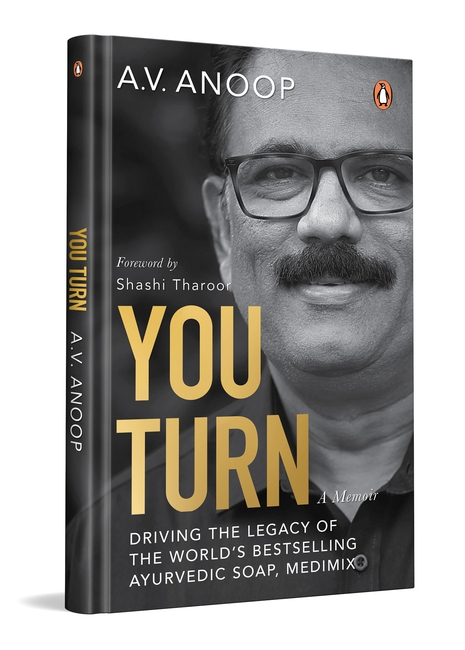
Dr A.V. Anoop, managing director of the AVA Group of Companies, has led the success story of the world’s largest-selling Ayurvedic bath soap, Medimix, for over four decades.
This book is Dr Anoop’s riveting memoir. Filled with uplifting anecdotes and guidance, the author has narrated his journey of the many upheavals, chance encounters and the actions he has taken as a prolific business leader, activist, philanthropist and filmmaker.
A.V. Anoop has been honoured with the Mahatma Gandhi Peace Foundation Award, A.P.J. Abdul Kalam Award and the Red Cross Award. In addition to his success in business, Dr Anoop is also a renowned philanthropist and a prominent figure in the film industry.
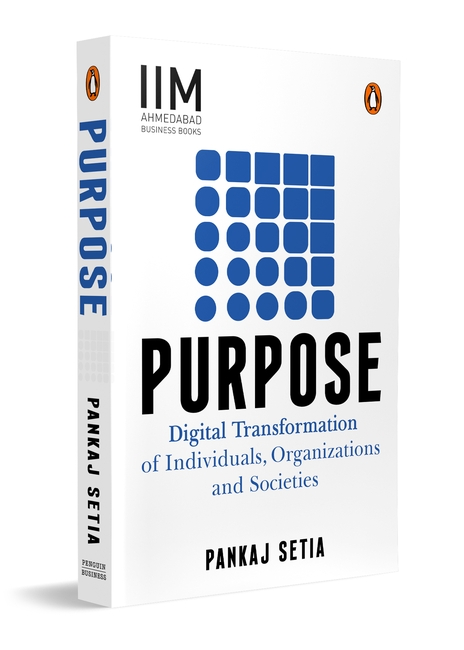
This book intends to reveal the latent purpose required to champion, lead, and enact digital transformation. It articulates that a purposeful approach, as followed in this book, is urgently required and may help the world’s population harness the power of technology. The book is based on over twenty years of the author’s research, thinking, discussions, publications, and observations about how technology influences us. He also builds upon his understanding of sciences–physics, chemistry, neuroscience, and others–to bring out the notion of purpose–the purpose of digital transformation. The book is a scientific endeavor to define and address the paradox surrounding digital technologies, framing it as a problem underlined due to unclarity in purpose. The lack of understanding of purpose may hurt individuals, organizations, and societies. The book, therefore, identifies purpose as a way to lead digital transformations. In doing so, it outlines complex and interwoven linkages between life, organization, and digital technologies. Thinking about digital technologies as an element devoid of links with life is dangerous. We are intertwined with technology today. So, to digitally transform, the books espouses a new way to look at ourselves and life, using the neuroscientific lens. Unraveling the linkages between the organization, life, and digital technologies, the book outlines a model for purposeful digital transformation.
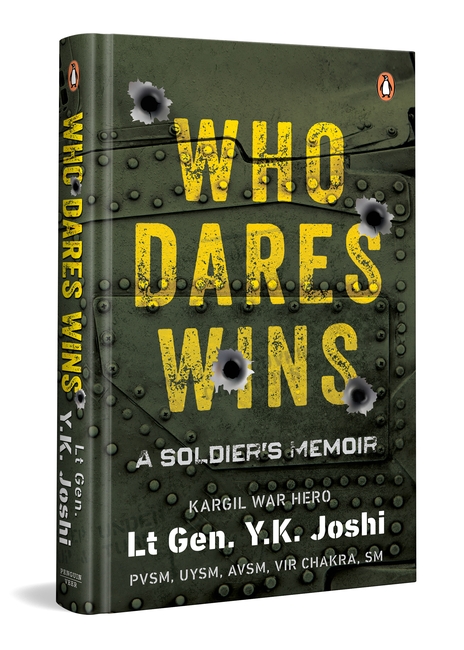
Who Dares Wins is an inspiring autobiography chronicling the extraordinary journey of ‘Kargil War Hero’ Lt Gen YK Joshi who rose from a modest background to become a General in the army. Through gripping narratives of personal struggles, decisive moments on the battlefield, and the responsibilities of leadership, this book explores the resilience, discipline, and determination needed to overcome life’s toughest challenges.
More than just a memoir, it is a guide for the youth, illustrating how unwavering focus, hard work, and integrity can turn even the most improbable dreams into reality. It offers a window into the values that define true leadership and a life devoted to service. Inspirational and heartfelt, this book is a tribute to the human spirit and a call to serve with courage and purpose.
Candid, evocative and emotional, Who Dares Wins is not merely a soldier’s story but a testament to the power of hope and perseverance, inspiring readers to rise above their circumstances and aspire to greatness.