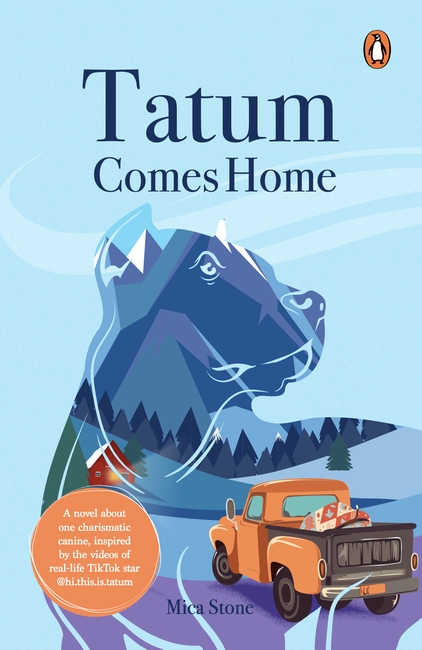
Tatum Comes Home by the TikTok and Instagram sensation hi.this.is. is a feel-good adventure about a charismatic and cuddly pet, his human family, and how love heals.
It’s late May, and Maine is blooming with the crispness of pine in air and the rich scents of spring. In this fairytale woodland city lives Tatum, a sweet rust-colored rescue dog, who is enjoying a trip to the hardware store with his dad when a heavy thunderstorm blows in. Frightened, Tatum scampers off to hide—and buries himself beneath a blanket on a nearby truck.
When Tatum wakes, hungry and confused, he’s hours from home and his family franticly searching for him. But as fate would have it, Tatum’s presence is the anchor this kind truck owner needs, who promises to get him back to his family. Will seeking help from an old vet friend help the truck owner find the love he has been evading for so long?
Tatum, with his deep golden eyes and trusting gaze, has a knack for making friends—and for letting humans know exactly what’s on his mind. Everyone Tatum meets on his journey are eager to do their part to get him home. And in turn, Tatum has a way of nudging everyone he encounters to overcome hurdles, seek out second chances, and find—or make—the families they need.
The millions of Tiktok and Instagram fans who love Tatum’s distinctive quirks and hilarious voice are in for a treat with this warm, emotional adventure.

Unlock the extraordinary within!
Are you tired of feeling stuck, as if your dreams are just distant mirages on the horizon? Do you long to break free from the chains of self-doubt and anxiety, and step into a life brimming with purpose and joy?
The Mindful Revival is your guide to transforming your life from the inside out. This interactive 50-day programme is designed to lead you out of the shadows and into the radiant light of self-worth and fulfilment. Each day, you’ll dive into a simple yet powerful activity that encourages deep introspection. These practices may seem small, but they hold the power to light the way to a more vibrant, joyful life.
Here’s what awaits you inside:
• 50 Daily Activities:Thoughtfully crafted exercises to shift your mindset and nurture self-compassion.
• Reflective Prompts: Invitation to explore your inner world and discover your hidden strengths.
• Engaging Dialogue: A guided journey of self-improvement that feels like a supportive friend by your side in a warm, engaging, and encouraging conversation.
• Online Community: A space to share your experiences and connect with fellow travellers on this transformative journey.
The Mindful Revival isn’t just another self-help book—it’s a gentle yet powerful push towards a life filled with passion and purpose.
Unlock the true power of your AI-generated content with AI to A+. Packed with practical strategies and proven techniques, this book equips you with the tools to elevate your writing to new heights. Each chapter presents a carefully crafted rubric designed to transform your drafts into polished, compelling narratives.
Whether you are a seasoned content creator or just beginning to explore the world of generative AI, this guide offers actionable insights to make your work stand out. With a handy checklist and key takeaways included, applying these principles becomes a seamless part of your writing routine.
More than just a manual, AI to A+ is your strategic partner in mastering the art of AI content editing. So, start your journey towards content excellence today and discover how to make every word count.
Imagine a world without bias
Imagine a world where all human beings can truly belong, just as they are, and unleash their full potential.
Take a moment to imagine how you feel in such a world. Not what you think about it, or whether you believe it’s possible, but how you feel.
This is the proposition that opens Breaking Bias. It’s your invitation to embark on an experiential journey with the power to radically change your daily life and, by extension, the world we share. Anu Gupta offers a page-turning deep dive into how bias is learned—and a strikingly original and highly effective set of tools to un-learn it. Breaking Bias is one of the few books that go beyond examining the history of bias to offer actual training in how to reduce bias. It’s also the only book of its kind written by an author with Anu’s unique intersectional identities: a gay brown immigrant with Buddhist, Christian, and Hindu roots who is also an American lawyer and scholar of bias with two decades’ worth of research and teaching experience and lived experiences that span the globe.
Anu takes you on a deep-time journey to explore human identities and to recognize that breaking bias is the key to unlocking multiple crises in our world, from racism, sexism, and classism to burnout, loneliness, and climate change. Then he offers his signature PRISM toolkit—a set of contemplative tools grounded in Buddhist wisdom and backed by science—to help you dismantle learned bias within yourself and in the world around you, moment by moment.
A perennially popular book by a beloved author—now in an updated package with a new preface—sheds light on what the next life may have in store.
“A book about living that will help readers see more beauty, feel more power, and know more love.” — don Miguel Ruiz, international best-selling author of The Four Agreements
If the dead could speak, don’t you wonder what they would say to those of us they’ve left behind? What would they tell us to soothe our sorrow for their loss, calm our fears of what happens when we die, and fire us up to live the best possible lives we can right now? These are the questions New York Times best-selling author Mike Dooley seeks to answer in The Top Ten Things Dead People Want to Tell YOU—and ten years after its initial release, it’s still one of Mike’s most popular and beloved books. In pages filled with wisdom, humor, and, yes, joy, Mike explores our most pressing and profound questions about the afterlife—and this life—by adopting the perspective of those who have made the transition to the next phase. Among the revelations and insights they share:
• We were ready; you are not.
• There’s no such thing as a devil or hell.
• We’re sorry for any pain we may have caused.
• Your pets are just as crazy, brilliant, and loving here as they were there.
• Nothing we say can prepare you for the beauty of the moment you arrive.
New readers are discovering The Top Ten Things Dead People Want to Tell YOU all the time—and this anniversary release gives the book a fresh new package and new preface from the author to frame its invaluable insights for the times we live in now.
Daily inspiration and support to find freedom from food addiction
Day by day, week by week, Susan Peirce Thompson, author of the New York Times best-selling Bright Line Eating, and her coauthor JoAnn Campbell-Rice, draw on the latest scientific findings to help you to make consistent progress toward the life you envision.
Whether you do Bright Line Eating, you’re a member of a 12-step program for food addiction or compulsive overeating, or are charting your own path of freedom from food obsession, you will feel guided and inspired as you work to:
• Live in a state of peace around food
• Develop lasting self-compassion
• Profoundly heal your body and mind
• Practice the habits that make recovery hum
• Unleash the meaning and purpose in your life beyond food and weight
With these practical words of wisdom, inspiration, and encouragement, you will have a daily reminder that your future is indeed Bright.
Do you feel like you’re hiding in the shadows and not living up to your potential? Do you dream of building a business, but lack the confidence to start? Do you want to stop comparing yourself to other people on social media and start feeling empowered in your own journey?
If you answered yes to any of these questions, then this is the guide you need to step into your spotlight at last. BE SEEN is an inspiring road map for building a personal brand that showcases your unique talents and strengths. Through relatable stories and actionable advice, Jen Gottlieb shares her own path to becoming a recognized expert in her field and takes you on a journey of self-discovery to help you find your voice and unleash your full potential.
Divided into four parts, each filled with step-by-step methods and tactical strategies, BE SEEN helps you to:
BE COURAGEOUS—using mindset shifts and self-reflection exercises to break through the barriers holding you back
BE CREATIVE—by tapping into the unique talents that make you stand out so you can build the future you dream of
BE CONNECTED—by building meaningful relationships, cultivating loyal supporters who align with your values and goals, and using Jen’s networking tips and tricks to connect with others authentically
BE VISIBLE—with practical content creation and marketing strategies to help you step into your spotlight and showcase your talents to the world
Whether you’re an entrepreneur or a creative professional, or just want to build a life that reflects your true self, BE SEEN gives you the tools to step forward as the incredible, unique person you are.
New York Times bestselling author KRIS CARR shares (embarrassing, painful, helpful, and often hilarious) stories and observations in this transformational book about loss, grief, and what to expect when you’re not expecting your world to fall apart.
A few years ago, Kris, a highly popular wellness leader who has educated and empowered millions for nearly two decades, found herself in the midst of a major life rupture—that moment when your worst fears are being realized. Her father was dying, her business was faltering, and her 20-year anniversary of living with an incurable stage IV cancer was on the horizon. But, as Kris found, “Even the worst ruptures can reveal a road map to our next chapter of fully alive living.”
In I’m Not a Mourning Person, Kris couples her signature wit and raw storytelling with tools and practices to help you tend to your most painful wounds with fierce grace. When your life has been turned upside down—whether by the dissolution of a relationship or marriage; the end of a job or career; or, like Kris, the grief of illness or death—it may feel easier to deny or bury whatever big, messy feelings threaten to overwhelm you. As Kris reveals, however, “When we’re brave enough to tend to our hearts, our messy emotions can teach us how to be free—not free from pain, but free from the fear of pain and the barrier it creates to fully living.”
According to renowned energy healer and spiritual activation expert Oliver Niño, your soul arrived in a clear, energetic state, and the universe wants you to return to your natural way of being.
Energetic blocks can hamper your ability to be the best version of yourself, while traumas, ancestral roots, or environmental factors give birth to feelings of fear, guilt, anger, and betrayal. But in this book, Oliver shares his 15-day energy cleanse that not only detoxes your energetic fields but helps you to tap into a higher power and activate your spiritual gifts.
By following Oliver’s program, which includes exercises, tools, and meditations—you will see vast improvements in your physical, emotional, and energetic bodies. After cleansing your energy field, you’ll also learn how to sustain this clearer state and invite peace, happiness, and abundance into your life.
Writes Oliver, “You already know about the healing benefits of green smoothies, liver cleanses, and detox diets. Well, it’s as important to cleanse your energetic body as it is your physical and mental ones. By doing this, you eliminate any issues at their energetic roots, which allows your body to become a clear vessel through which divine frequencies can flow.”

If you sleep, you dream, and if you dream, you can lucid dream – this book will show you how.
Lucid dreaming, the art of becoming conscious within your dreams, allows you to explore your mind’s deepest potential while you sleep. This practice has powerful, scientifically verified benefits while also being fun, exciting and spiritually transformative.
In this ground-breaking exploration of lucid dreaming within both Western scientific and Tibetan Buddhist traditions, Charlie Morley distils wisdom from more than 20 years of practice and teaching. This completely revised and restructured edition includes up-to-date scientific research and new sections on the use of lucid dreaming to aid the treatment of depression, PTSD and nightmares. Using a three-part structure of Ground, Path and Germination you will discover:
• how to lucid dream for psychological and spiritual growth
• the science and transformative benefits of lucid dreaming
• the latest research into lucid dreaming for treating trauma
• how to rewire your brain to create new, powerful pathways while you sleep
NEW in this edition: A brand-new chapter on trauma integration based on Charlie’s breakthrough 2023 study, the latest research into shadow work and healing (drawing on Charlie’s work with war veterans), and five new lucid dreaming techniques.