Aparna Sen is one of Bengal’s cultural icons and one of India’s foremost filmmakers. Her films hold up a mirror to their times, questioning and provoking audiences through compelling narratives, exceptional creative collaborations and meticulous craft.
In Guide Your Vision Like a Lamp, Sangeeta Datta offers a fascinating and intimate look at the director’s body of work and the ideas that have shaped it—from her focus on women’s narratives, psychological explorations, marginalized lives and female friendships to her probing questions about civic identity, patriarchy and prejudice. Conversations with Sen, as well as with the actors and technicians who have worked closely with her, offer further insights into her creative process, influences and inspirations, revealing facets of her work rarely seen before.
Datta also explores Sen’s journey as an actor on stage and screen, as the editor of a popular women’s magazine and as an activist, tracing the many lives and roles that have informed her extraordinary body of work.
Guide Your Vision Like a Lamp is a compelling portrait of an artist who has spent a lifetime looking closely at the world and asking us to do the same.

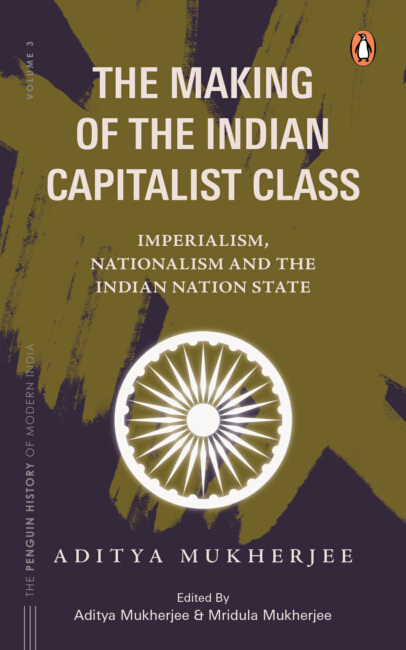
`Based on meticulous research in India and Britan, including interviews with leading participants. The Introduction, in particular, provides a very useful summary of recent research on the historic economic relationship between India and the United Kingdom…. This volume should be of interest to a wide readership’ – The Economic History Review
This book describes and analyzes the emergence and evolution of the Indian capitalist class and its relationship with imperialism and nationalism. It also provides a comprehensive economic history of colonial India in the first half of the 20th century.
Based on extensive empirical data, this is the first detailed, thoroughly researched and comprehensive account of the position of the Indian capitalist class.

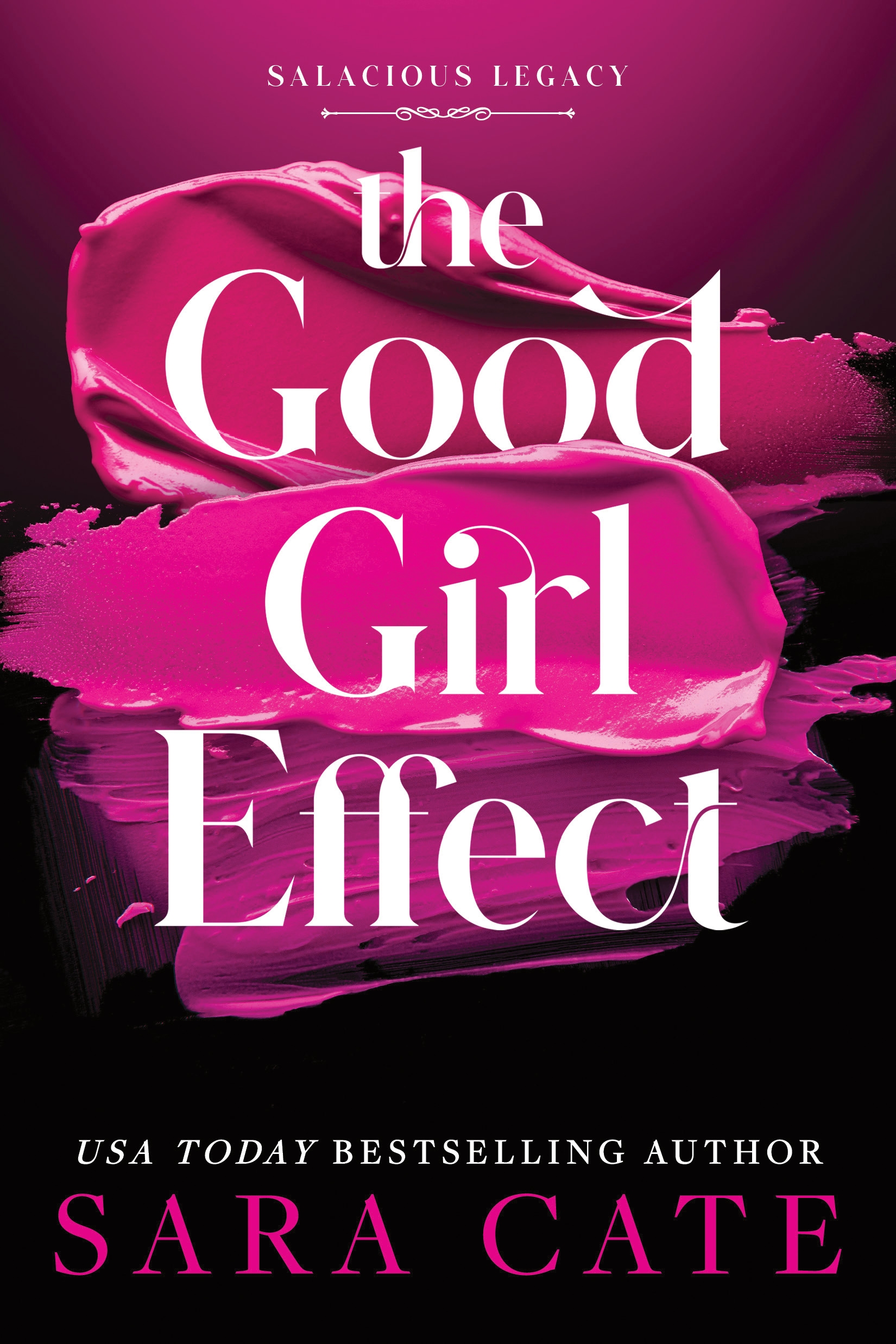
The first book in the brand-new contemporary romance series from Sara Cate, the New York Times bestselling author of The Salacious Players’ Club.
***
His praise is forbidden―his touch irresistible
Jack St. Claire is desperate. A grieving single father, he buries himself in his work―running a brand-new kink club in Paris. Instead of handling his grief, he’s built a fortress around his heart, and it’s time he hired someone to help him take care for his daughter before things get worse.
Camille Aubert wasn’t looking for a new job. She just wanted to return a lost love letter she’d found within the pages of a book. But when she’s mistaken for a job candidate and hired as Jack’s live-in nanny, something tells her this is exactly where she needs to be.
Shortly after arriving, Camille discovers a strange room in the apartment that sparks her curiosity―and hints at a dark, mysterious side to Jack that she’s desperate to uncover. The lines between professional and personal blur dangerously as the heat between them becomes impossible to ignore. She’s drawn to the broken man who hides his grief in ropes and bondage, and she challenges him in ways he never thought possible.
Caught between her growing feelings for Jack and the ghosts of his past, Camille must decide: can love heal a heart still grieving, or will their passion destroy them both?
Tropes:
Single Dad Romance
Nanny Romance
Forbidden Romance
Forced Proximity
Grumpy x Sunshine
Age Gap Romance
Boss x Employee
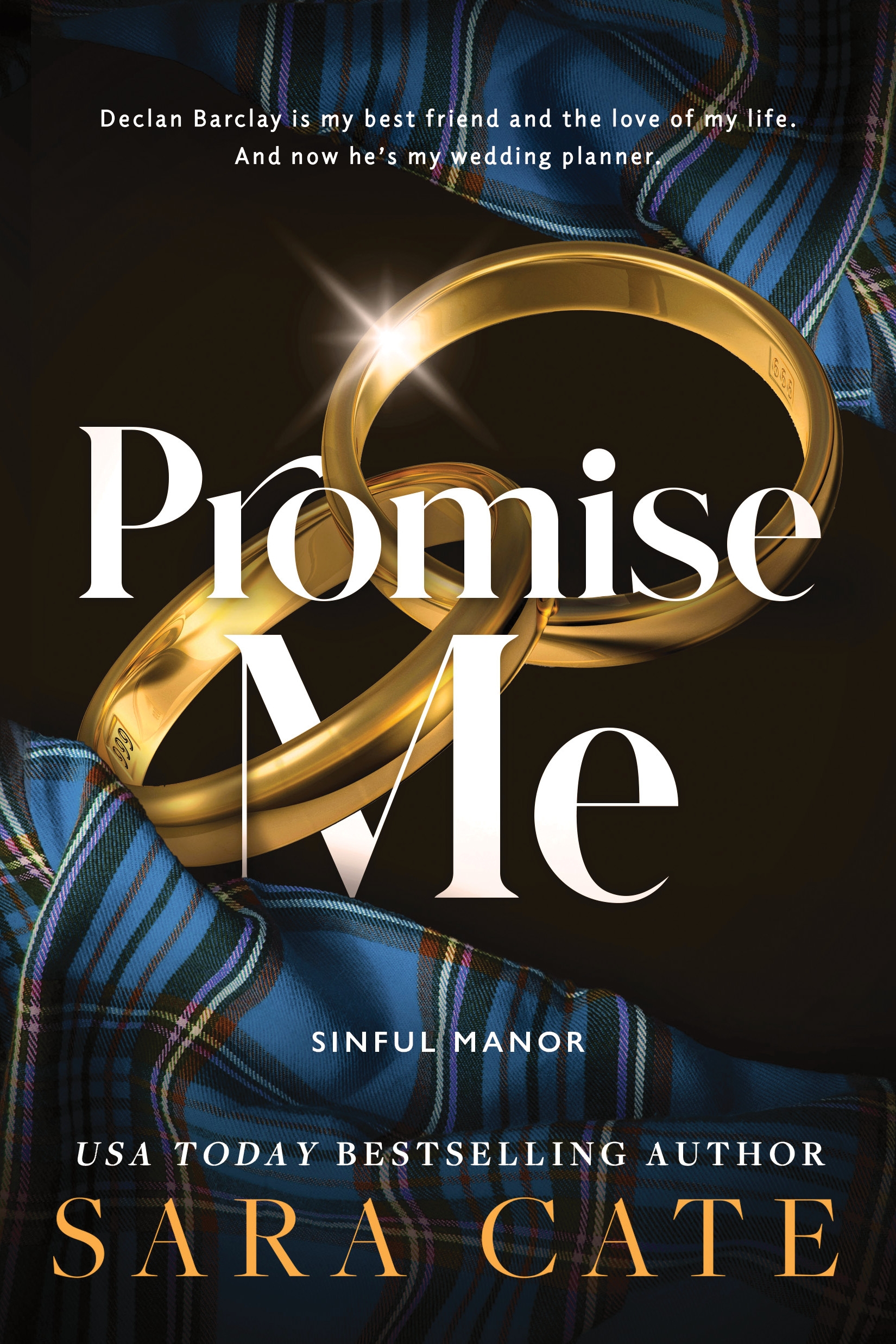
The second book in a brand-new contemporary romance series from Sara Cate, the New York Times bestselling author of The Salacious Players’ Club.
***
He let him get away once…Now he has seven days to get him back.
Fifteen years ago, Declan Barclay left for uni with plans of becoming an artist and escaping his family’s heavy rule. What he didn’t expect was to meet a soft and enigmatic actor in desperate need of guidance…and a friend. Declan quickly took Colin Shelby under his wing and the two were inseparable ever since.
That is until the night before graduation, when lines were crossed and everything changed.
Now, after years apart, Colin is back in Declan’s life, but he’s not alone. He’s made a promise to marry someone else, and Declan only has seven days to win back the love of his life. There’s just one problem: His family is counting on him to pull this wedding off at Barclay Manor.
With just one week until vows are exchanged, Declan must decide: stay silent and lose Colin for good, or risk everything and ask the one who got away to promise him forever.
This scorching friends to lovers romance invites readers into an all-new series from Sara Cate, who once again proves her prowess at crafting unrelenting, deliciously sexy contemporary romance stories.
Tropes
Billionaire Romance
Second Chance Romance
Friends to Lovers
MM Romance
Scottish Romance
Dark Romance

The first book in a brand-new contemporary romance series from Sara Cate, the New York Times bestselling author of The Salacious Players’ Club.
***
Their marriage of convenience is anything but…
All Killian Barclay wants is to be left the hell alone. He’s had enough heartache to last a lifetime, and he has no more need for love – earning him the reputation of a broody Scot and eventually turning his famous ancestral home into a den of iniquity. It doesn’t take long for tales of his raunchy house parties to reach the rest of his family, though, inspiring them to hatch a plan to shake Killian out of his routine.
New Yorker Sylvie Devereaux is tough as nails – as the daughter of famous yet neglectful parents, she’s grown a hard shell and keeps everyone at arm’s length. So when she sneaks into Barclay Manor during a trip to Scotland to get a glimpse of a famous heirloom, she doesn’t anticipate facing off against the brutish, maddening highlander who lives there. And she certainly didn’t expect to ever see the bastard again.
Yet just weeks later, she’s approached by Killian’s family with a proposal – move to Scotland and marry Killian to improve his playboy reputation, and after one year, she’ll walk away with ten million dollars. Sylvie agrees, even knowing that their plan is more deceptive than he realises. But as she grows closer to Killian and the end of their year together, she has to decide: Is the love of a good man with a dark soul worth keeping, or is she willing to break Killian’s heart now that it’s well and truly hers?
This scorching enemies to lovers romance invites readers to embark on a brand-new series from Sara Cate, who once again proves her prowess at crafting unrelenting, deliciously sexy contemporary romance stories.
Tropes:
Billionaire Romance
Enemies to Lovers
Arranged Marriage
Scottish Romance
Dark Romance

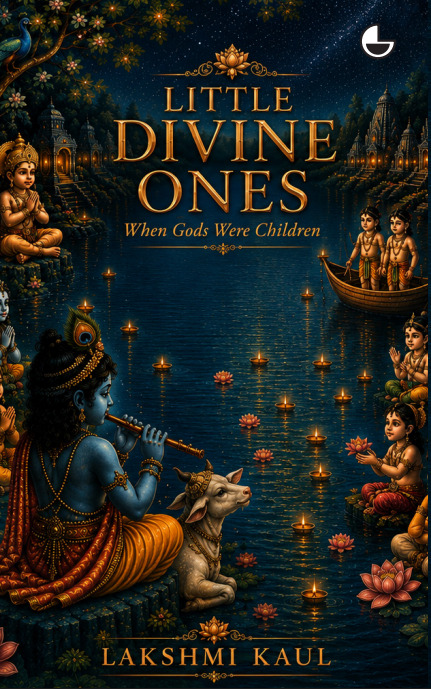
“The stories in this book were told in the spirit of one who has heard them with love and passes them on with love.”
Inspired by the spirit of story telling in Bharatiya traditions, where grand-parents would share the many ‘leelas’ of gods and goddesses, this is a book you enjoy as a family unit. It is something you share with your children, nieces, nephews and grand children and help them connect to their indic roots.
The stories gathered in this book have been retold from a vast and living body of written and oral tradition — the Puranas, the epics, regional folktales, temple lore, and the versions passed down by grandparents and storytellers across many generations and many parts of India.

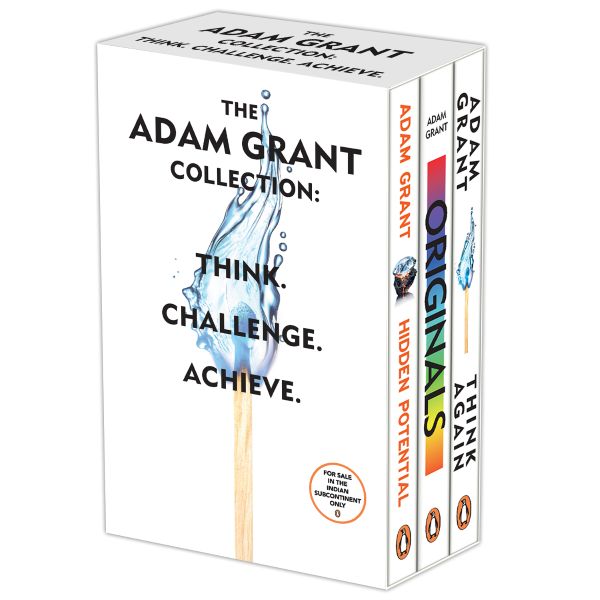
RETHINK WHAT YOU KNOW. UNLOCK YOUR POTENTIAL. DISCOVER NEW POSSIBILITIES.
Explore the ideas that challenge conventional thinking and inspire personal and professional growth with this three-book collection featuring Think Again, Hidden Potential and Originals.
Bringing together thought-provoking insights on psychology, success, creativity and human potential, this collection offers practical ideas to help readers question assumptions, develop new skills and approach life and work with a fresh perspective.
THINK AGAIN
Discover the power of rethinking. Learn how to question deeply held beliefs, embrace different perspectives and develop the flexibility to adapt in a rapidly changing world.
HIDDEN POTENTIAL
Explore how growth and achievement are shaped by character, opportunity and the right learning environment. Discover practical ways to build skills, overcome obstacles and reach beyond what you thought possible.
ORIGINALS
Find out how original thinkers challenge the status quo, champion new ideas and bring meaningful change to the world. Discover insights into creativity, innovation and making ideas a reality.
WHY THIS COLLECTION BELONGS ON YOUR BOOKSHELF:
• Three bestselling books exploring psychology, personal development and success.
• Practical insights for developing a growth mindset and embracing new perspectives.
• Ideas to inspire creativity, innovation and lifelong learning.
• Valuable reading for professionals, leaders, students and anyone seeking personal growth.
• A thoughtful gift for readers interested in human behaviour, self-improvement and professional development.
A compelling collection for anyone ready to think differently, grow with purpose and unlock new possibilities.

The Ultimate Styling Guide for Modern Men is your go-to toolkit for looking sharp, feeling confident and making a lasting impression, every single day.
From timeless classics to modern trends, and wardrobe essentials to the perfect accessory, this book breaks down the art and science of men’s style into practical, actionable steps. Because true style is not about following rules. It’s about knowing which rules to break.

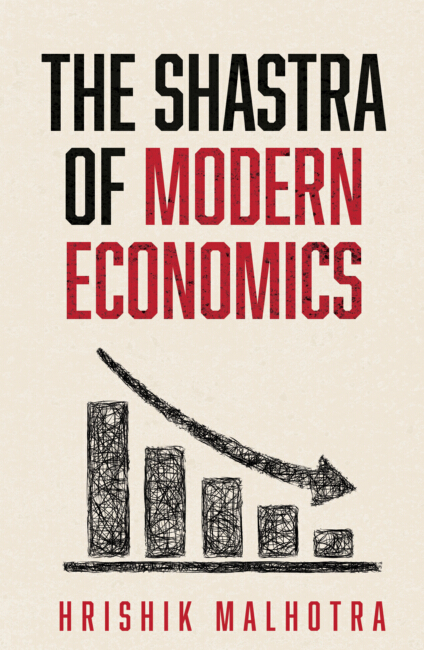
Every modern crisis tells the same story from a different angle.
Whether it is widening inequality, financial instability, climate change, technological disruption or corruption, today’s greatest challenges are deeply interconnected. The Shastra of Modern Economics brings together economic thought, historical perspectives and contemporary case studies to reveal the structural forces shaping our world, and why lasting solutions require rethinking the system as a whole, not solving one problem at a time.
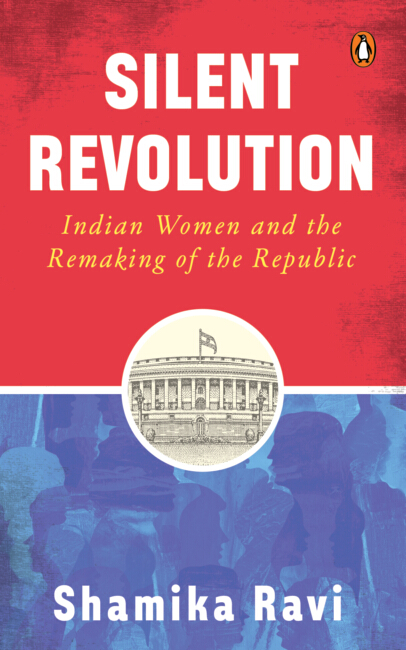
Over the past three decades, with the rising agency of women, India has undergone a profound transformation. It has been one of the most consequential forces shaping the country’s political, social, and economic trajectory.
Drawing on research and compelling analysis, Silent Revolution explores how women have emerged as a decisive electoral constituency, reshaped public policy, strengthened institutions, and transformed welfare, health, education, labour markets, and the care economy. It examines the barriers that continue to constrain women’s economic participation, offering a policy framework that supports both work and family formation.
Timely, incisive, and deeply relevant, Shamika Ravi makes the case that India’s future prosperity will depend not only on economic reform but on fully realizing the potential of its women. An essential read for anyone seeking to understand India’s path to inclusive and sustained growth.