___________________________________
‘Shoot all the bluejays you want, if you can hit ’em, but remember it’s a sin to kill a mockingbird.’
A lawyer’s advice to his children as he defends the real mockingbird of Harper Lee’s classic novel – a black man falsely charged with the rape of a white girl. Through the young eyes of Scout and Jem Finch, Harper Lee explores with exuberant humour the irrationality of adult attitudes to race and class in the Deep South of the 1930s. The conscience of a town steeped in prejudice, violence and hypocrisy is pricked by the stamina of one man’s struggle for justice. But the weight of history will only tolerate so much.
To Kill a Mockingbird is a coming-of-age story, an anti-racist novel, a historical drama of the Great Depression and a sublime example of the Southern writing tradition.

Kafka Tamura runs away from home at fifteen, under the shadow of his father’s dark prophesy.
The aging Nakata, tracker of lost cats, who never recovered from a bizarre childhood affliction, finds his pleasantly simplified life suddenly turned upside down.
As their parallel odysseys unravel, cats converse with people; fish tumble from the sky; a ghost-like pimp deploys a Hegel-spouting girl of the night; a forest harbours soldiers apparently un-aged since World War II. There is a savage killing, but the identity of both victim and killer is a riddle – one of many which combine to create an elegant and dreamlike masterpiece.
*Murakami’s new book Novelist as a Vocation is available now*
‘Wonderful… Magical and outlandish’ Daily Mail
‘Hypnotic, spellbinding’ The Times
‘Cool, fluent and addictive’ Daily Telegraph

‘A masterly novel’ New York Times
‘Such is the exquisite, gossamer construction of Murakami’s writing that everything he chooses to describe trembles with symbolic possibility’ Guardian
Read the haunting love story that turned Murakami into a literary superstar.
When he hears her favourite Beatles song, Toru Watanabe recalls his first love Naoko, the girlfriend of his best friend Kizuki. Immediately he is transported back almost twenty years to his student days in Tokyo, adrift in a world of uneasy friendships, casual sex, passion, loss and desire – to a time when an impetuous young woman called Midori marches into his life and he has to choose between the future and the past.
*Murakami’s new book Novelist as a Vocation is available now*
‘Evocative, entertaining, sexy and funny; but then Murakami is one of the best writers around’ Time Out
‘Poignant, romantic and hopeless, it beautifully encapsulates the heartbreak and loss of faith’ Sunday Times
‘This book is undeniably hip, full of student uprisings, free love, booze and 1960s pop, it’s also genuinely emotionally engaging, and describes the highs of adolescence as well as the lows’ Independent on Sunday

Madhav Gadgil was born in Pune in 1942, just as Salim Ali’s superbly illustrated Book of Indian Birds was published. Influenced by his birdwatcher father, he learnt to recognize birds from their pictures even before he could read. He is an unusual combination of a person fascinated by the diversity of the natural world, of the landscapes and the life they support, as well as the diversity of cultures and lifestyles of the people firmly rooted to India’s soil. He has dedicated himself to intellectual pursuits ranging over mathematics, natural and social sciences, history and public policy.
This book is an account of his life walking up and down the country’s hills and dales, watching peacocks dance and elephants prance, living among fisherfolk on the west coast, horticulturists on Western Ghats, and the tribals of Manipur and Maharashtra, all the while being a part of a vibrant scientific community.

Many consider caste as an outdated institution, though it thrives in post-liberalization India. That being the case, caste has only been studied from a religious, social and political angle. It is grudgingly accepted that caste has economic ramifications. For instance, the establishment and running of businesses tap into caste networks, both in terms of arranging finance and providing access to a ready workforce. Despite that, any study of this aspect has been limited to looking at caste groups in terms of their per capita income, their representation in various professions and other statistical details.
Caste as Social Capital examines the workings of caste through the lens of business, economics and entrepreneurship. It interrogates the role caste plays in the economic sphere in terms of facilitating the nuts and bolts of business and entrepreneurship: finance, markets and workforce. Through this qualitative view of caste, an entirely new picture emerges, which forces one to view the age-old institution of caste in a new light.

The subject of the liberation of Goa in 1961 and its integration into the Indian Union in 1962 is sparsely understood at best and misunderstood at worst. What were the events that led to the thirty-six-hour military operation-possibly the first since Independence that occurred entirely at India’s initiative? What was the political climate within Goa? What role did Goans themselves play?
In this gripping account, former journalist Valmiki Faleiro covers a wide canvas in detail, including the entire story of Operation Vijay, the events that preceded it and those that followed. The diplomatic efforts, the arguments, the run-up, the build-up, the actual ops and their aftermath in Goa, within India and internationally-all of it is vividly related in this nuanced telling. Faleiro lucidly outlines the prevailing political atmosphere and its changing character, the part played by indigenous independence movements and freedom fighters leading to the liberation of Goa, and the impact of its consequent assimilation into India.
Extensively researched and extremely well-written, Goa, 1961 is a seminal book on an important subject and a must-read for anyone interested in Indian history.
Impactful Communication is a highly practical and useful book based on the author’s first-hand experience in the field of communication. In today’s world of artificial intelligence and social media, where organizations demand sharp communication skills, this book carries tools to effectively deal with the conventional and nonconventional aspects of verbal and nonverbal communication in varied situations and with different stakeholders. It discusses the art of communication by evaluating its barriers and the seven vital Cs of communication. While highlighting the importance of listening, the book explores the challenges of communication in the era of artificial intelligence and shares insights into how one can maintain the personal touch of communication in a highly non-personalized world. Impactful Communication is a user-friendly guide with numerous enlightening illustrations for new professionals and managers entering the corporate world.

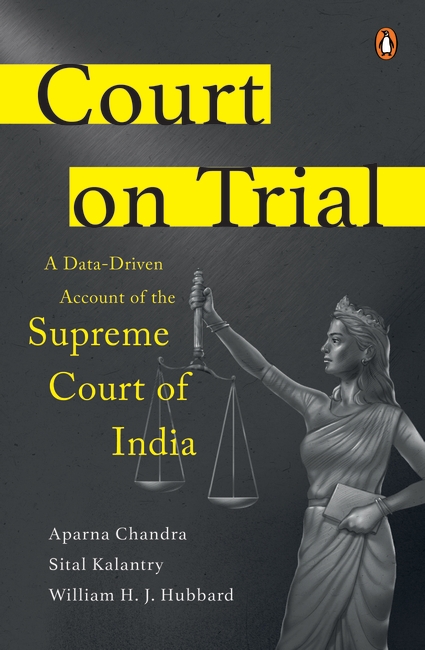
The Indian Supreme Court was established nearly seventy-five years ago as a core part of India’s constitutional project. Does the Court live up to the ideals of justice imagined by the framers of the Indian Constitution? Critics of the Supreme Court point out that it takes too long to adjudicate cases, a select group of senior advocates exercise disproportionate influence on the outcome of cases, the Chief Justice of India strategically assigns cases with an eye to outcome, and the self-appointments process-known as the collegium-is just another ‘old boy’s network’. Building on nearly a decade of original empirical research, this book examines these and other controversies plaguing the Supreme Court today. The authors provide an overview of the Supreme Court and its processes which are often shrouded in mystery, and present data-driven suggestions for improving the effectiveness and integrity of the Court.
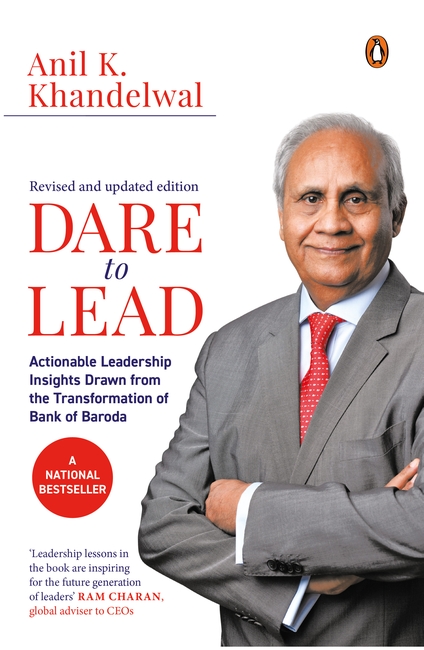
Dare to Lead is the fascinating story of how Anil K. Khandelwal transformed Bank of Baroda (BOB) from being just another public sector bank into one of the most valuable brands in Indian banking.
This is the story of the leadership challenges, management solutions and personal and professional excitement the author experienced in transforming the 97 year old bank into a modern, tech-savvy, customer-centric bank.
This book is an excellent blueprint for undertaking transformation in large, geographically dispersed public sector enterprises. It describes how a large-sized bank was transformed on all parameters with clear vision, execution discipline, customer centricity and people engagement. The author emphasizes that large-scale transformation can be undertaken successfully only if the CEO shows courage to change the status quo and mobilize the human effort within the organization.
The story of BOB’s transformation has captured international attention and finds its mention in Harvard Business Review, Human Resources Development International and the book The India Way by the Wharton School faculty.
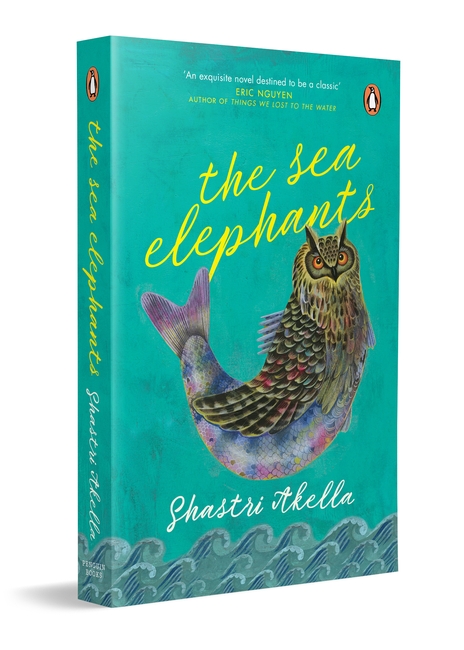
Shagun knows he will never be the kind of son his father demands. After the agonizing deaths of his beloved twin sisters, he flees his own guilt, his mother’s grief, and his father’s violent disapproval by enrolling at an all-boys boarding school. He forms tumultuous and eye-opening relationships there, but doesn’t find true belonging till he encounters a traveling theater troupe performing the myths of his childhood.
Welcomed by other storytellers, Shagun thrives-easily embodying mortals and gods, men and women-and embraces a life on the move, far from his father’s clutches. When Shagun meets Marc, a charming photographer, he seems to have found the love he always longed for. But not even Marc can save him from his lingering shame, nor his father’s ever-present threat to send him to a conversion center. As Shagun’s past begins to engulf him once again, he must decide if he is strong enough to face what he fears most, and to boldly claim his own happiness.
Set in 1990s India, The Sea Elephants is an utterly immersive and spellbinding novel, both dark and beautiful, harrowing and triumphant. An ode to the redemptive joys of storytelling, Shastri Akella’s soulful debut is a celebration of hard-won love-of others and for ourselves.