Long before European ships dominated the Indian Ocean, traders and travellers from the Indian subcontinent were already navigating its vast waters. In search of profit, adventure, and knowledge, their journeys shaped how Indians evolved as a society, what they consumed in their material lives, and how and why they produced and circulated oceanic knowledge.
Indians in the Ocean explores the ocean’s role in shaping the economic and cultural histories of the subcontinent between the tenth and sixteenth centuries. Drawing on a rich array of historical sources in many languages, it reconstructs the experiences of people from the region who travelled, traded, and participated in the global economy at a time when the oceans formed the principal highways linking countries and communities across continents.

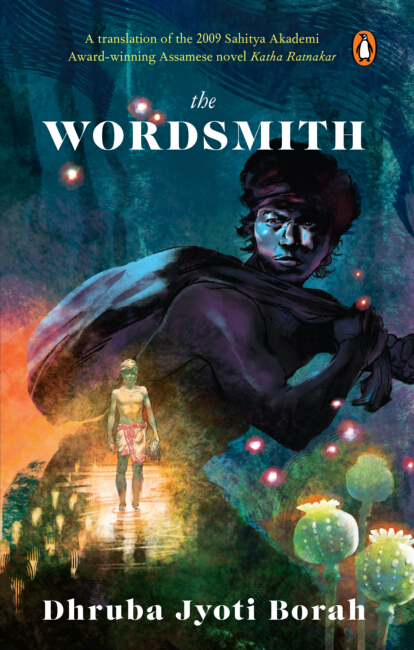
The Wordsmith is a modern bildungsroman and a human story from a master narrator—Moyna of Joharkhat belongs to an oppressed, Dalit community and is ostracized, vilified, and pushed into a life of crime. He lives a dual life: cultivating paddy by day, and theiving by night.
Translated from the Assamese Sahitya Akademi award-winning Kotha Ratnakar, this is a story of redemption and resurrection.

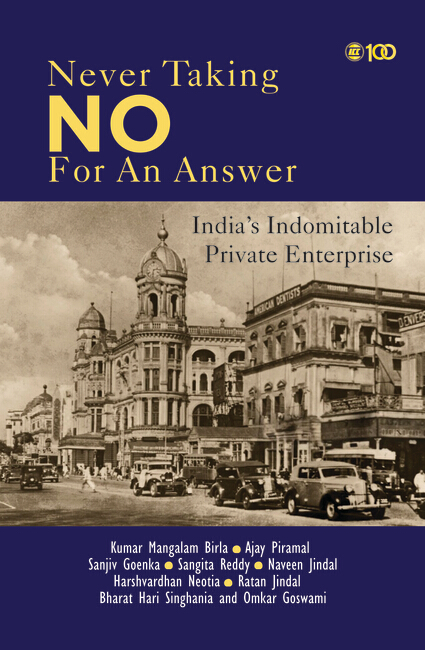
Edited by former Vice Chairman of NITI Aayog, Dr Rajiv Kumar, Never Taking No for an Answer traces the inspiring journey of the Indian industry, navigating through freedom movement and the constraints of the License Raj to liberalization and global growth.
Through reflections by some of India’s most distinguished business leaders—Kumar Mangalam Birla, Sanjiv Goenka, Ajay Piramal, Naveen Jindal, Sangita Reddy, Bharat Hari Singhania, Harsh Neotia, Ratan Jindal, and Omkar Goswami—this collection of essays offer rare insights and enduring lessons for entrepreneurs, SMEs, and women leaders determined to grow, adapt and lead in a rapidly changing world.

Strivers is a deeply reflective exploration of success, purpose and meaningful living among some of the most accomplished professionals and entrepreneurs. Drawing on extensive life-history interviews with twenty-eight graduates from premier institutions such as the Indian Institute of Management Ahmedabad, Indian Institute of Management Bangalore, Indian Institute of Management Calcutta, Indian School of Business, INSEAD and Harvard University, the book examines how high achievers navigate ambition, adversity, identity, family, leadership and inner purpose across different phases of life.
The book traces the evolving journeys of individuals who move beyond conventional markers of achievement—money, titles, prestige and power—to seek alignment, contribution and meaning. Through intimate narratives, the book offers a rare glimpse into how some of the most successful and influential minds define and continually redefine success. At its core, Strivers is an exploration of not just how people achieve grand success but also how they strive to live meaningfully.

‘A thought-provoking and important contribution to our understanding of India’s past’—Shashi Tharoor, author, parliamentarian and public intellectual
‘A valuable contribution to India’s military history by one who has seen war at close quarters’—Shiv Shankar Menon, former national security adviser and former foreign secretary of India
‘“A must” not only for students of military history but for all citizens of India’—Major General Ian Cardozo (retd)
‘Pillay writes with the heart of a soldier, the rigour of a historian and the probing lens of a scholar’—Probal Dasgupta, scholar and author
India’s story has never been one of uninterrupted peace or of permanent defeat. It is the story of a civilization that has endured invasions, empires, partitions and wars, yet has never surrendered its identity. Across millennia, kingdoms rose and fell, frontiers shifted and conquerors came and went. India was wounded at times, divided at others, but always capable of renewal.
From ancient battlefields to the World Wars, where Indian soldiers fought under a foreign Crown, and to the mountains of Kashmir, where they defended a newly independent India, generations answered the call of duty. Their courage shaped history far beyond the subcontinent, yet many of their stories faded into obscurity. The history of India’s wars is therefore not merely a record of battles fought, but a testament to a people who refused to forget who they were. It restores these forgotten stories to their rightful place in India’s civilizational journey.
More than a chronicle of campaigns and commanders, India at War explores memory, sacrifice, resilience and the enduring spirit of a civilization. It explores how India survived when many empires vanished into history and why its identity endured despite centuries of conflict.

You are holding a book that doesn’t want to hurry you. A book that believes wisdom lives in tender, unglamorous places—in handwritten recipes, lingering goodbyes, crocheted blankets and silences that speak louder than words.
Written over six years and across many countries, At the Speed of Flowers is a collection of essays that invites you to notice the life happening at the edges of your attention. With the intimacy of a friend and the clarity of a teacher, Deepak Ramola leads you through stories and small, sturdy truths that unfold one memory, one encounter, one love note at a time. Deeply human and hopeful, this book is about learning to bloom in your own season.

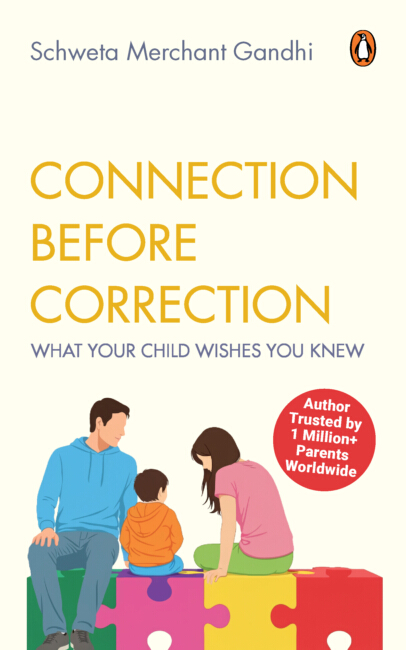
Modern parents are not struggling because they lack love, effort or good intentions. They are struggling because they are raising developing brains in a world that expects adult-level self-control from children who are not yet biologically ready for it.
Tantrums, defiance, anxiety, emotional outbursts and shutdowns are often seen as bad behaviour or parenting failure. In reality, they are signs of a brain still under construction.
This book helps parents understand how a child’s brain develops, why emotional regulation must come before discipline and how everyday interactions shape resilience for life. Drawing on neuroscience, psychology and practical experience, it introduces simple frameworks such as the Upstairs and Downstairs Brain, the Staircase of Regulation, Co-Regulation, the Window of Tolerance and Connection Before Correction.
This is not a book about permissive parenting or quick fixes. It is a brain-based guide to helping parents hold boundaries without losing connection.
At the heart of Connection Before Correction is one powerful truth: Children do not need perfect parents. They need regulated adults who understand the developing brain.
‘Our own Self-realization is the greatest service we can render the world’
The simple but powerful teachings of Sri Ramana Maharshi, one of India’s most revered spiritual masters, continue to enlighten and enrich sixty years after his death.
Be As You Are is a compendium of knowledge edited by the former librarian from Sri Ramana’s ashram, which can be found flourishing at the foot of the holy mountain of Arunchala. The book collects conversations with the many seekers who came to Sri Ramana for guidance, answering the questions we all seek on the road enlightenment.
Through this, we can discover the essence of Sri Ramana’s teaching: that Self-realisation is the vital quest we must all pursue, before we can attempt to understand the world.

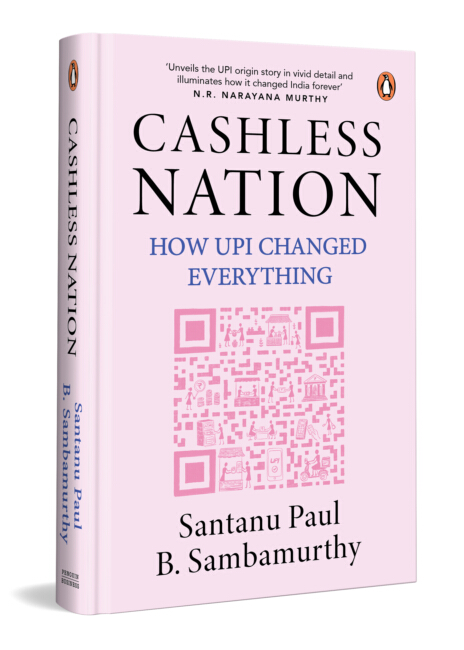
Few technologies have reshaped a nation’s habits as quickly—or as profoundly—as UPI. In less than a decade, it transformed how India does business, breaching barriers of literacy, language, culture and geography to connect everyone from street vendors to global corporations through a simple, instant, and robust payments network.
Its success can seem almost inevitable in hindsight. But every single one of those crores of daily transactions is founded on vision, technological ingenuity, institution building, improbable partnerships and
years of painstaking effort.
Spun as a taut, lucid, fast-paced tale by industry veterans Santanu Paul and B. Sambamurthy, Cashless Nation is the chronicle of a nation reimagining the relationship between citizens, markets and the state—and, in the process, creating a model that has captured the world’s attention.

Who actually won the US-Iran war? Did USA win the war? Did Iran not lose the war? How did it impact India?
The next crisis may not begin on India’s borders. It could arrive on our shores overnight.
A war in West Asia, tensions along our frontiers?
A cyberattack on critical infrastructure?
A disruption in the Indian Ocean, a terrorist strike?
Or, even a devastating tsunami or a pandemic could test the nation’s resilience in ways we have never imagined.
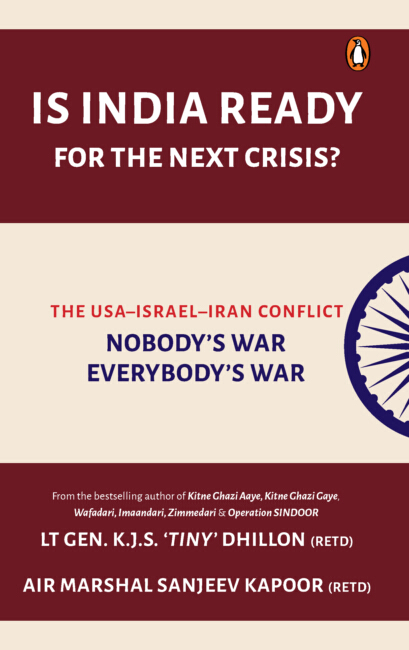
Is India truly ready for the next crisis?
World today stands at a defining moment. In today’s interconnected world, a conflict far beyond a country’s borders can disrupt energy supplies, trade, financial markets and national security.
The US–Israel–Iran conflict is a powerful reminder that no war remains local for long. Is India prepared for the next crisis? Whether it comes through tensions along our borders, instability in our neighbourhood, cyberattacks, maritime disruptions, terrorism, or even a natural or manmade disaster, India’s resilience and preparedness will be tested in unexpected scenarios within, along or away from India’s borders.
Written by two decorated veterans of the Indian Army and the Indian Air Force, this timely book combines military insight with geopolitical analysis to examine the challenges ahead and asks a question that concerns every Indian: Is India Ready For The Next Crisis?