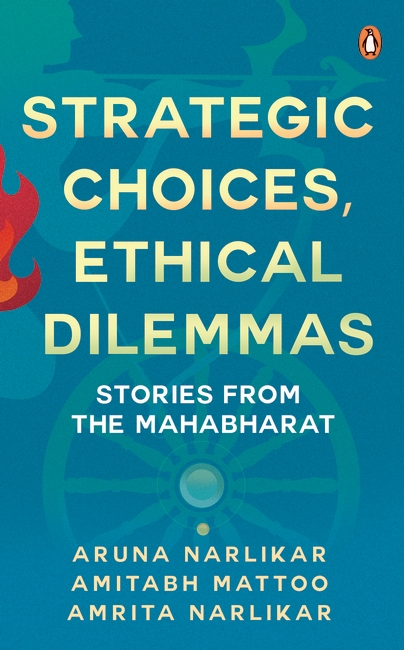
Is it possible to win and still keep one’s soul? The Mahabharat tells us we can.
The ancient epic, which flourishes in the hearts and minds of many even today, deals with profound normative questions of (and advice on) morality, duty, virtue, law, justice and war. The text also does not shy away from pragmatic and strategic issues of negotiation, alliances, training and education, leadership, and more. Its unflinching look at bleak realities makes the Mahabharat a text uniquely applicable to our current times.
Drawing on the timeless stories of the Mahabharat, this book applies its practical wisdom to questions of our personal lives. It explores winning strategies that are suited to the modern day and work together with ethical choices.
Written for a broader audience of scholars, practitioners and other avid readers, Strategic Choices, Ethical Dilemmas will be useful for all those seeking to put the world to rights and provide some tasty food for thought for those who enjoy paradoxes and squared circles.

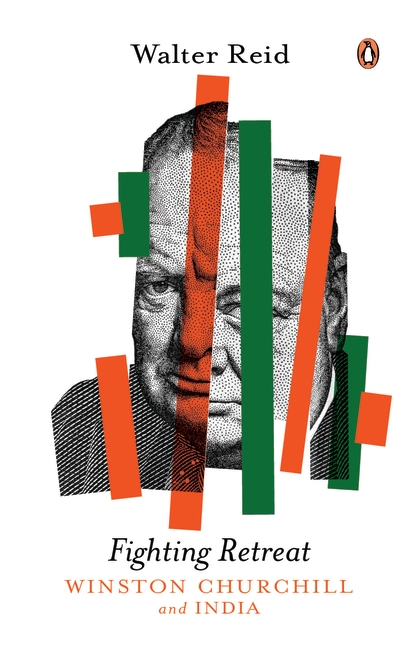
Winston Churchill was closely connected with India from 1896, when he landed in Bombay with his regiment, until 1947, when Independence was finally achieved. No other British statesman had such a long association with the subcontinent—or interfered in its politics so consistently and harmfully.
Churchill strove to sabotage any moves towards Independence, crippling the Government of India Act over five years of dogged opposition to its passage in the 1930s. As prime minister during the Second World War, Churchill frustrated the freedom struggle from behind the scenes, delaying Independence by a decade. To this day for Indians, he is the imperialist villain, held personally responsible for the Bengal Famine of 1943.
This book reveals Churchill at his worst: cruel, obstructive and selfish. However, the same man was outstandingly liberal at the Colonial Office, risking his career with his generosity to the Boers, the Irish and the Middle East. Why was he so strangely hostile towards India?

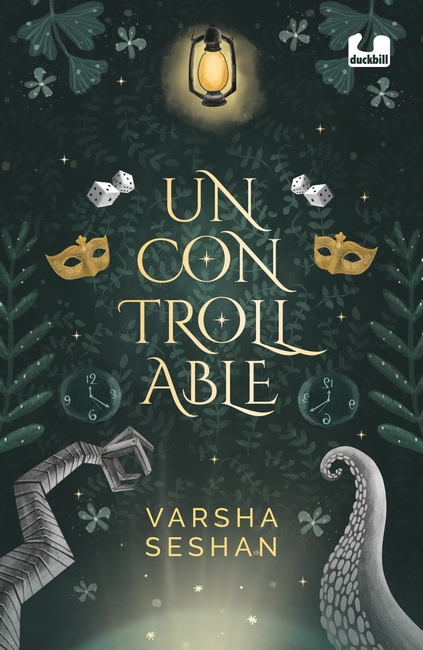
Children forced out of their homes
Humans discarded as empty shells
A Machine that sucks out Power.
Secrets
More secrets
And still more secrets-
I must fight a government of evil,
destroy the Machine,
and . . . save my mother.
Me, twelve-year-old Rohini.
Ha. Really?

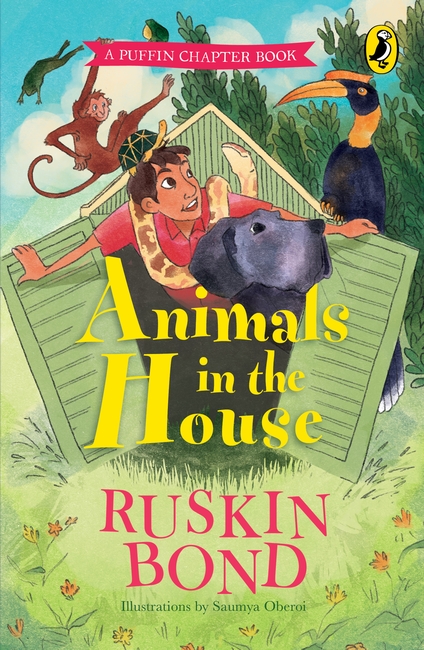
‘Grandfather and I saw eye to eye on the matter of pets, and whenever Grandmother decided it was time to get rid of a tame white rat or a squirrel, I would conceal them in a hole in the jackfruit tree.’
Instead of having brothers and sisters to grow up with in India, young Ruskin had several odd companions, including a monkey, a tortoise, a python and a Great Indian Hornbill. His grandfather was responsible for all this wildlife, and their home in Dehra became a centre of action and laughter as a variety of creatures were brought home—the furry, feathered, fierce and friendly—all under one roof.
Bursting with delightful illustrations, this chapter book features endearing characters and hilarious episodes, making it a perfect introduction to the wonderful world of Ruskin Bond!

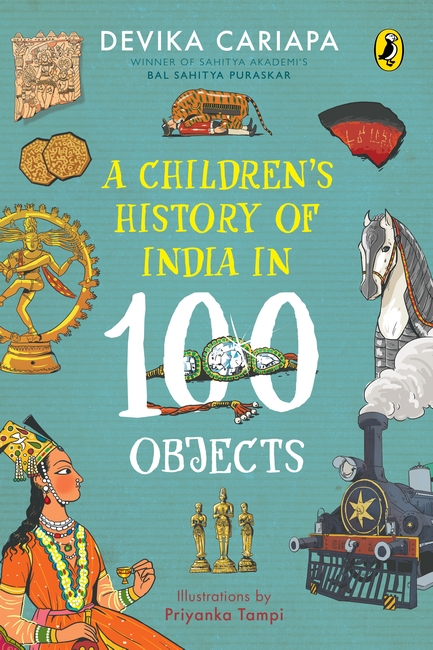
A stone-age hand axe, an enchantingly sculpted yakshi, the Koh-i-Noor diamond, and even an HMT watch—can these things have anything in common?
Yes, they can!
Each of these has been conceived by the human mind and shaped by the human hand. Each object has a voice, not just of rulers and conquerors, but also of the common people. Most significant of all, each carries stories of how communities and identities were built on the Indian subcontinent.
Spanning the entirety of Indian history, from prehistoric to contemporary times, the 100 objects and artefacts chronicled in this book have shaped our present. Learn about the people who created these amazing objects, their way of life and culture, and how these objects influenced our world.
Embellished with vibrant illustrations, this engaging book will fire the imagination of readers and make them look at our incredible material remains in a new light while helping them understand our diverse pasts.

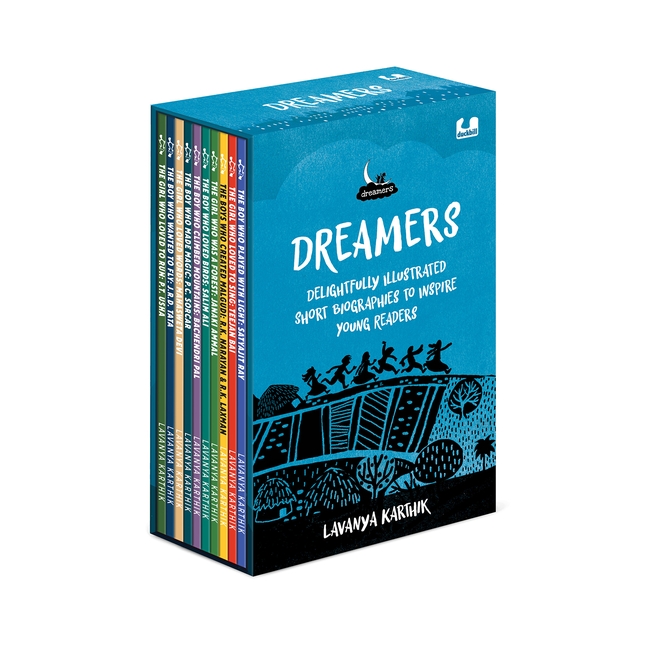
Do you dream of changing the world?
Here are ten tales of some exceptional girls and boys who dared to dream the impossible, and their first steps towards greatness in diverse fields.
They are Mahasweta Devi, Satyajit Ray, J.R.D. Tata, Bachendri Pal, Janaki Ammal, Salim Ali, P. T. Usha, R. K. Laxman and R. K. Narayan, P.C. Sorcar and Teejan Bai.
Illustrated in a style unique to each book, these are ten tales to inspire the Dreamer in you.
The box set has 10 books:
- The Girl Who Loved to Sing: Teejan Bai
- The Boy Who Played with Light: Satyajit Ray
- The Girl Who Was a Forest: Janaki Ammal
- The Boys Who Created Malgudi: R.K. Narayan and R.K. Laxman
- The Girl Who Climbed Mountains: Bachendri Pal
- The Boy Who Loved Birds: Salim Ali
- The Girl Who Loved Words: Mahasweta Devi
- The Girl Who Wanted to Run: P.T. Usha
- The Boy Who Wanted to Fly: J.R.D. Tata
- The Boy Who Built a Secret Garden: Nek Chand
Why should you buy this boxset?
- Discover the remarkable stories of ten extraordinary individuals who transformed their dreams into reality, from pioneering scientists to celebrated artists.
- Each tale is brought to life with a distinct art style, making every story visually engaging and memorable.
- Perfect for young readers and aspiring dreamers, this collection serves as a motivational tool to encourage perseverance and creativity.
- An ideal gift for anyone who needs a boost of inspiration and motivation in their journey toward achieving their dreams.

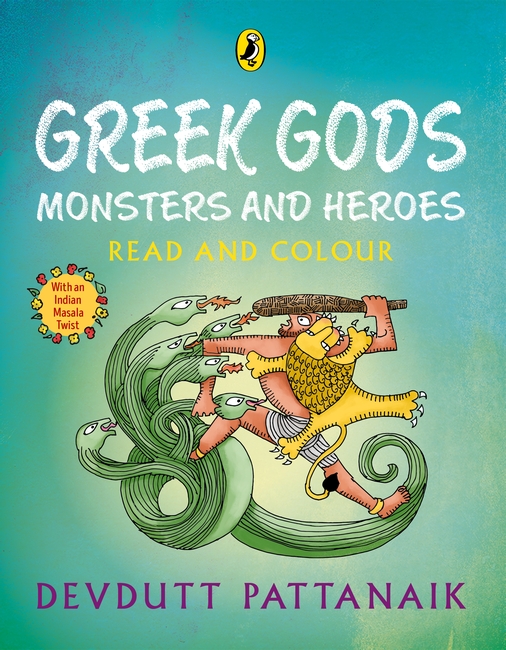
An all-in-one storybook, picture book and colouring book from India’s most-loved mythologist.
Devdutt Pattanaik introduces popular characters from Greek mythology to a new generation of readers-with a masala twist. Greek Gods, Monsters and Heroes is perfect as a read-aloud to acquaint young readers with the fantastic ancient Greek tales of valour, beauty and wonder.
Curated with fascinating bite-sized introductions-to well-known gods like Zeus and Poseidon, heroes like Heracles and Bellerophon, and monsters like Cyclops and Minotaur-it features over forty playful artworks of Greeks in Indian clothing along with dedicated colouring pages.
One-of-a-kind, this book is a must-have for every curious mythology enthusiast and budding artist!

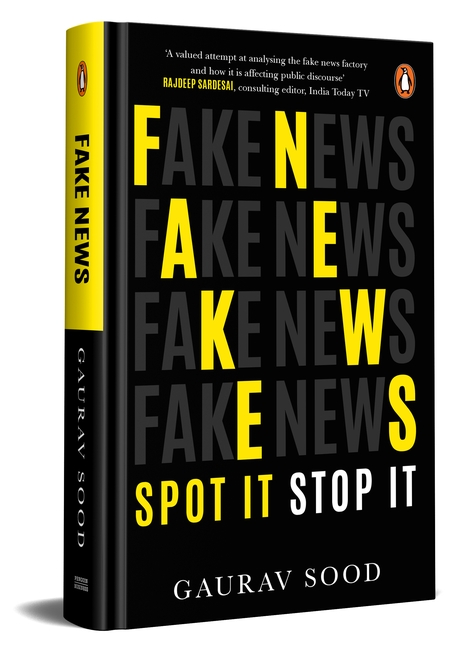
The news is a public good and needs to be handled with care and integrity. Even though lies and misinformation campaigns have been around for years—maybe since the dawn of journalism—the rate at which fake news is being spread these days is both alarming and preposterous. Almost every institution—public or private—uses fake news to further its own agenda. Governments and corporate houses spread fake news either through their own agencies or by influencing the popular media. In the business sector, fake news manifests itself in the form of exaggerated company returns and false data.
This book analyses the impact of fake news both on products and personalities. Foregrounded in rigorous research, it examines how fake news is used by companies, political parties, and leaders to create, amplify, and even tarnish a brand’s image and equity. It emphasizes how the customers’ perception of a brand impacts and influences its reputation, and acts as a decisive force in them gaining or losing competitive advantages. Elucidating how brands can interact both directly and indirectly with fake news, it brings to the readers’ notice how sometimes brands are the victims of fake news and other times, the purveyors.

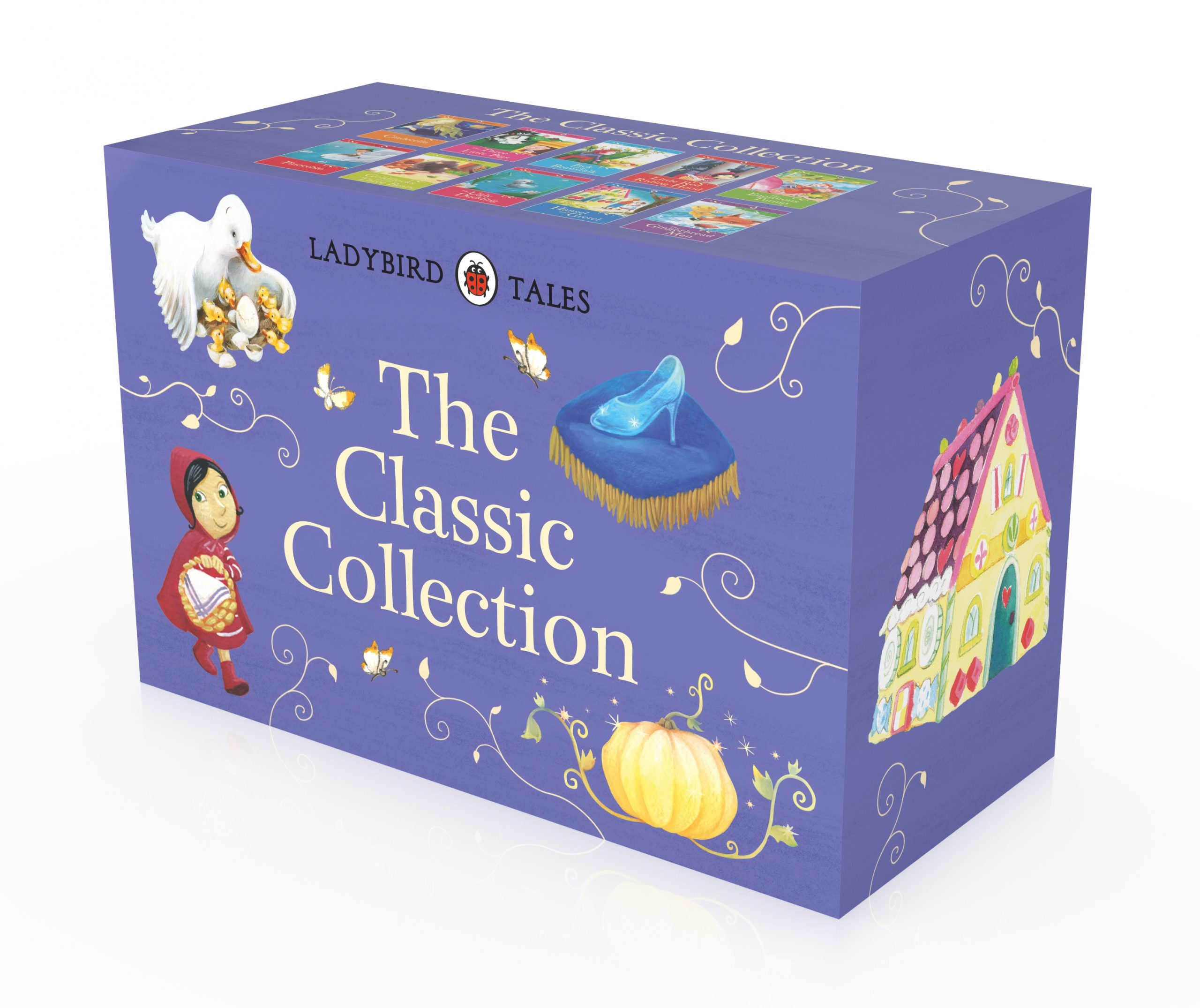
Ladybird Tales are based on the original Ladybird retellings, with beautiful pictures of the kind children like best – full of richness and detail.
Children have always loved, and will always remember, these classic fairy tales and sharing them together is an experience to treasure.
Ladybird has published fairy tales for over forty-five years, bringing the magic of traditional stories to each new generation of children.
This beautiful hardback collection is a perfect first illustrated introduction to this classic fairy tale for young readers from 3+.
Ladybird Tales The Classic Collection 10 Books Set includes:
Cinderella, Goldilocks and the Three Bears, Hansel and Gretel, Jack and the Beanstalk, Little Red Riding Hood, Pinocchio, The Enormous Turnip, The Gingerbread Man, The Three Little Pigs, The Ugly Duckling.

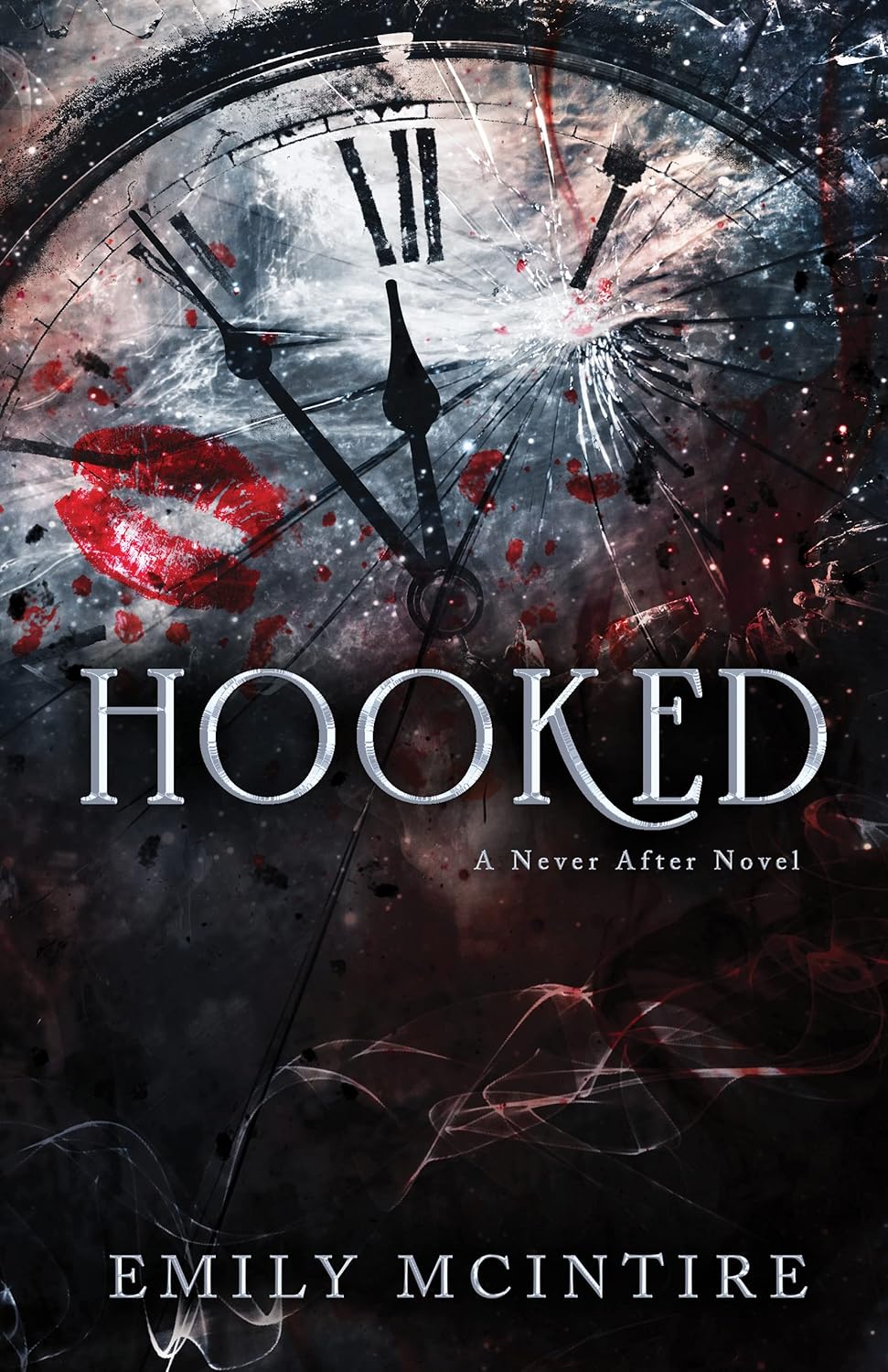
From BookTok sensation Emily McIntire comes a dark and delicious fractured fairy tale reimagining of Peter Pan.
He wants revenge, but he wants her more…
James has always had one agenda: destroy his enemy, Peter Michaels. When Peter’s twenty-year-old daughter Wendy shows up in James’s bar, he sees his way in. Seduce the girl and use her for his revenge. It’s the perfect plan, until things in James’s organization begin to crumble. Suddenly, he has to find the traitor in his midst, and his plan for revenge gets murkier as James starts to see Wendy as more than just a pawn in his game.
Wendy has been cloistered away most of her life by her wealthy cold father, but a spontaneous night out with friends turns into an intense and addictive love affair with the dark and brooding James. As much as she knows James is dangerous, Wendy can’t seem to shake her desire for him. But as their relationship grows more heated and she learns more about the world he moves in, she finds herself unsure if she’s falling for the man known as James or the monster known as Hook.