



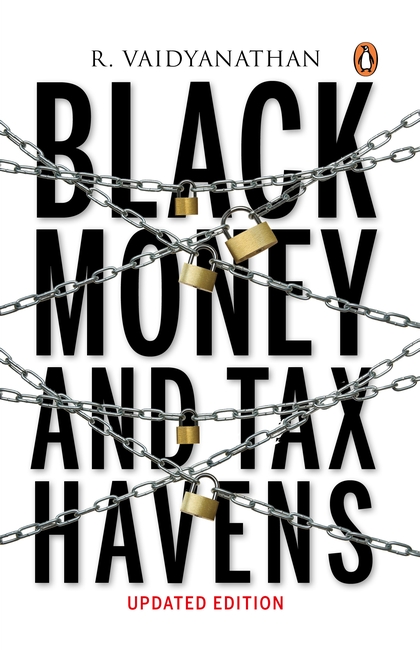
Just how much black money is there in India?
Estimates vary from 10 per cent to 20 per cent of our GDP. Conservatively, Rs 15 lakh crore (10 per cent of Rs 150 lakh crore, our GDP in 2016-17).
As for Indian money in tax havens around the world? Around Rs 65 lakh crore. Truly astounding figures.
Black money or kala dhan is a topic that has elicited much debate in recent times. This has been mostly marked by mudslinging and name-calling, and the discussions that have ensued often have no basis in fact. While most people have a hazy notion of black money, only a few understand it in its entirety.
The issue of tax havens is perhaps even more misunderstood. Most people fail to see the connection between tax havens and black money. Black Money and Tax Havens is the first work that discusses both of these issues in depth and offers a 360-degree view to the reader.
In this work, R. Vaidyanathan provides the reader with a brief overview of black money-its generation, its estimates and how and why it is spirited away to tax havens. He also lays bare the danger that is posed to world financial well-being on account of the lack of political will to tackle these issues. A unique and timely work, this book packs in much information in an accessible manner.
Archives: Books
Avatars of Brahma
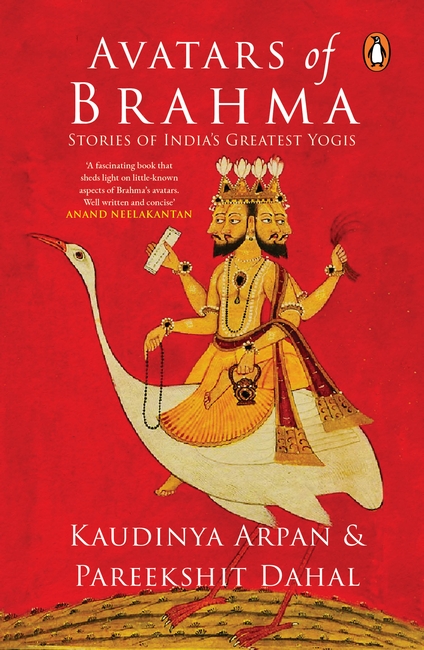
While the Puranas mention that Lord Brahma becomes an avatar whenever Lord Vishnu comes to Earth to establish dharma, it is in the Dasam Granth (one of the holy books of the Sikhs) that the avatars are actually listed. The common point in Hinduism and Sikhism regarding the avatars of Brahma is that they are seen as great thinkers and teachers.
In this book, the authors, who run the popular website, Scientific Monk, delve into the lives of each avatar, their works and the philosophies presented by them. They explain how the avatars of Brahma help us understand the Indian thought process and India’s intellectual heritage, and give readers a view of the works of India’s greatest yogis from a twenty-first-century world view.
Soul and Sword
Political Hinduism was once considered a sort of fringe ideology, shadowy and even misunderstood. Its ideas and narratives seemed, in popular discourse, to lack analytical rigour and were easily dismissed.
But history shows that political Hinduism as an intellectual idea was a pioneering theme in India’s nationhood. In fact, it precedes the Indian republic and has been one of the most resilient political theories of India, which survived many bans, boycotts and decades out of power to become, in the twenty-first century, the predominant political force of India. The adherents of political Hinduism are as determined as its detractors—one complains about facing relentless prejudice; the other throws accusations of promoting continuous religious strife. One believes that India cannot be saved without decimating political Hinduism; the other is sanguine that only political Hinduism can save the future of India.
Soul and Sword traces the journey of political Hinduism from events that are critical to its self-narration, that is, early Indian resistance to invasions, to intellectual definitions by nineteenth-century littérateurs and more contemporary electoral politics. It tries to understand the context and historical sources used to construct and promote political Hinduism’s world view.
From award-winning writer Hindol Sengupta, Soul and Sword is absolutely critical reading to understand India’s present and future.
Leadership in the Indian Army
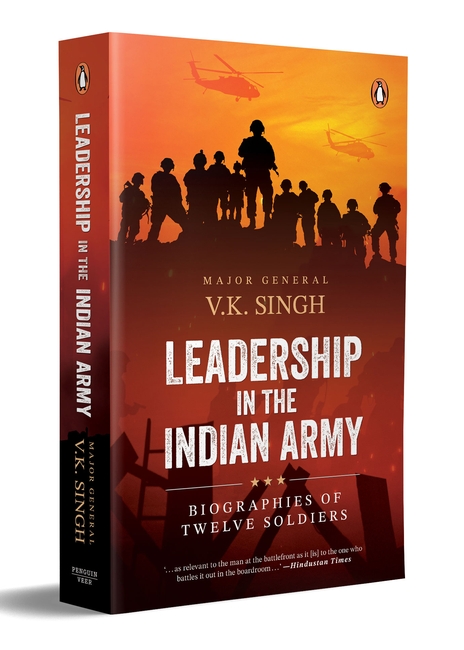
Unlike traditional biographies of combat leaders, which focus primarily on military operations or regimental histories, in this book Major General V.K. Singh concentrates on personal accounts, anecdotes and reminiscences in order to highlight these leaders’ personalities, and to draw out the human face behind the military facade. Through the stories of these twelve military leaders, the book also throws new light on several historical events and the role of political leaders during India’s fight for independence and the partitioning of the subcontinent. He gives an overview of India’s military history after independence, including major operations, and describes many hitherto unknown or little-known incidents concerning smaller operations like Nathu La in 1967 and Goa in 1962.
Written records tend to glorify the actions of battalions as well as individuals, Singh says, magnifying achievements while suppressing the mistakes and glossing over failures. Leadership in the Indian Army provides a truer picture of the strength of character and convictions of each of these leaders. A must-read for anyone interested in India’s military history.
Pain
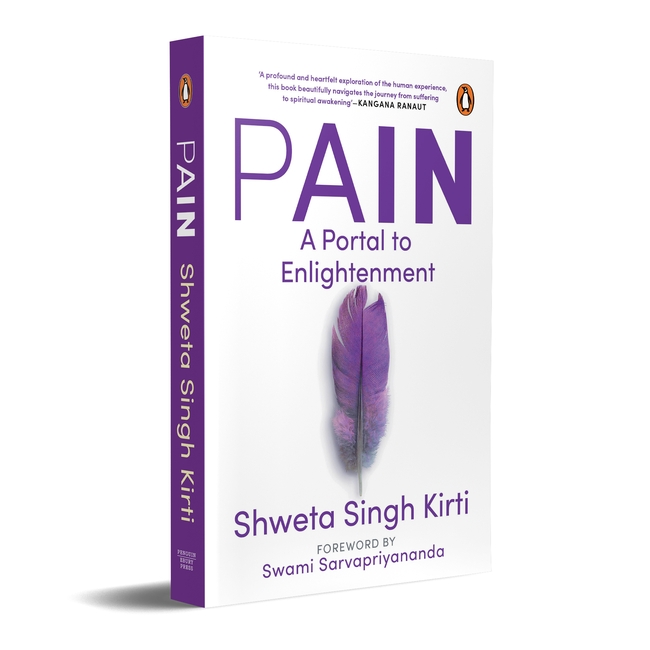
No human is unacquainted with the concept of pain. It is an inescapable universal experience. Shweta Kirti’s pain has been, unfortunately, very public because of the death of her thirty-four-year-old brother, the Bollywood actor Sushant Singh Rajput.
What she learnt, however, is that while pain is inevitable, suffering is optional. It is pain that can teach us how to rise above suffering and the limits we create for ourselves with our attachment to material goals like money, fame, success and relationships. In this book, Shweta shares her learnings so that no one is alone on this hard but necessary odyssey.
Synthesizing science, spirituality and philosophy, Pain: A Portal to Enlightenment is an invitation to embark on a transformative journey to find inner peace and fulfilment no matter what life throws at you.
Roman Stories
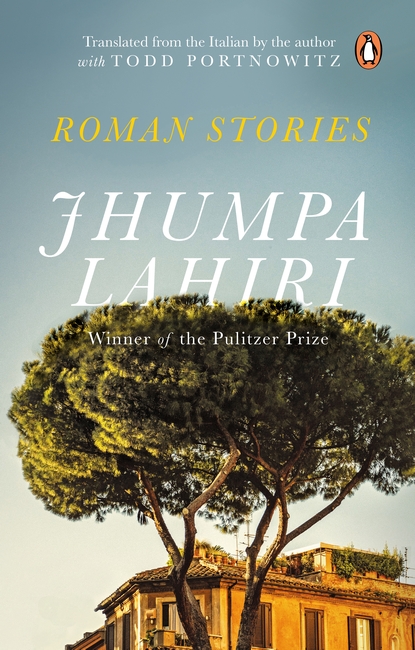
In ‘The Boundary’, one family vacations in the Roman countryside, though we see their lives through the eyes of the caretaker’s daughter, who nurses a wound from her family’s immigrant past. In ‘P’s Parties’, a Roman couple, now empty nesters, finds comfort and community with foreigners at their friend’s yearly birthday gathering-until the husband crosses a line.
And in ‘The Steps’, on a public staircase that connects two neighbourhoods and the residents who climb up and down it, we see Italy’s capital in all of its social and cultural variegations, filled with the tensions of a changing city: visibility and invisibility, random acts of aggression, the challenge of straddling worlds and cultures, and the meaning of home.
These are splendid, searching stories, written in Jhumpa Lahiri’s adopted language of Italian and seamlessly translated by the author and by Knopf editor Todd Portnowitz.
Lighter (Marathi)/Lighter/लायटर
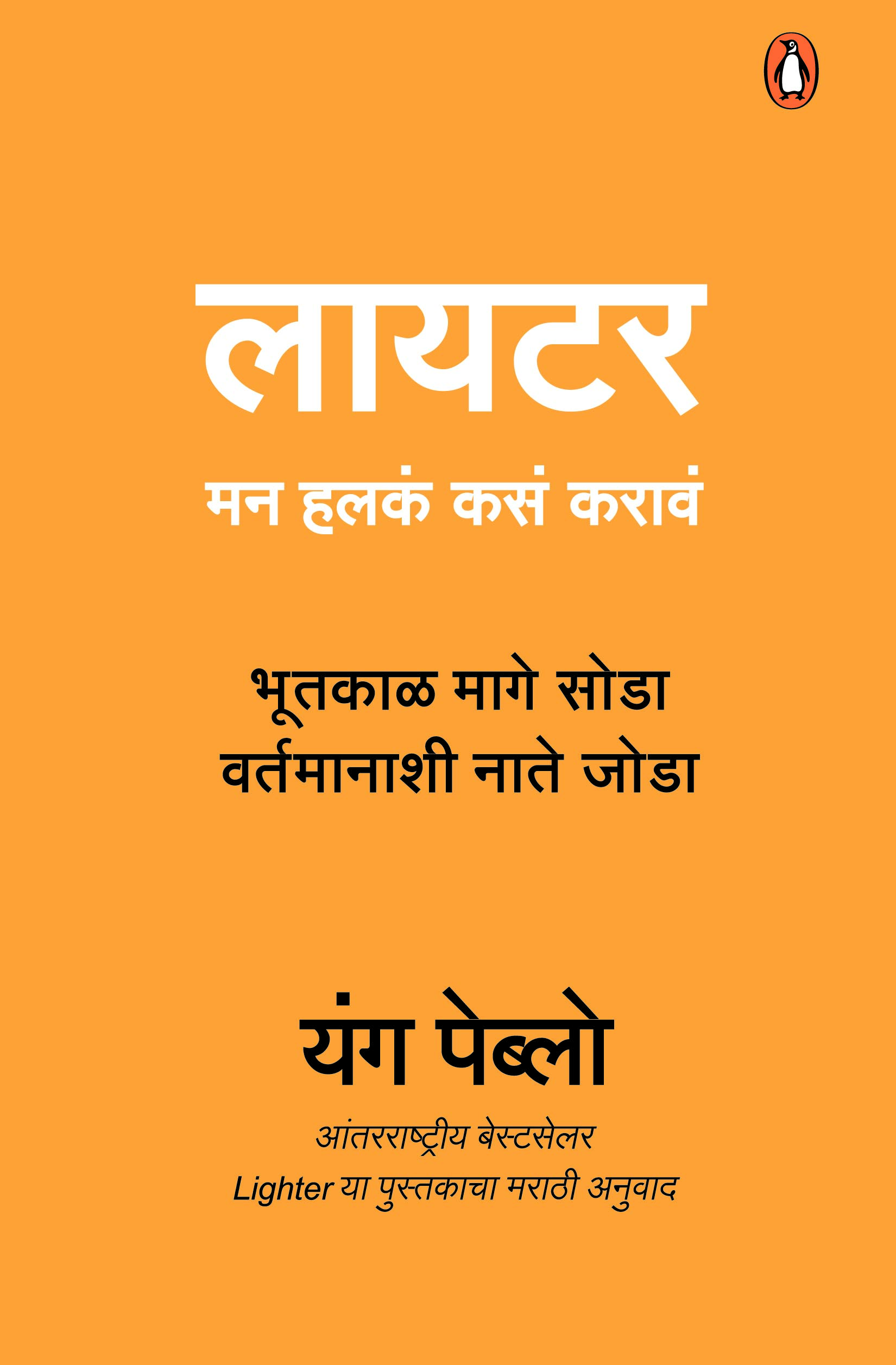
आपल्या अंतरात डोकावून स्वत:मध्ये आणि जगामध्येसुद्धा मानसिक सुधारणा घडवून आणण्यास प्रतिबंध करणारे आपल्या मनावरचे ओझे कसे दूर करायचे, याची एक अगदी पूर्णपणे सहृदय अशी योजना।
अनेक वर्षे मादक द्रव्यांने त्यांच्या तनमनाचा कब्जा घेतल्यानंतर युंग पेब्लो यांनी ‘उपचार व सुधारणा प्रक्रिये’चा मार्ग निवडला आणि अनुसरला। त्या प्रक्रियेदरम्यान त्यांच्या असे लक्षात आले की, आपल्या अंत:प्रेरणेवर पूर्ण विश्वास ठेवून, ध्यानधारणेवर लक्ष केंद्रित करून ते जेव्हा त्यांच्या मनाला ग्रासून बसलेल्या चिंता, काळजी, भीती या सर्वांना सरळ सरळ सामोरे गेले, तेव्हा त्या सगळ्याचे ओझे मनावरून दूर होऊन त्यांना एकदम हलके वाटू लागले आणि त्यांची त्यांच्या मनाशी चांगली ओळख झाली, हृदय आणि मनाचे अस्तित्व त्यांना जाणवू लागले।
या पुस्तकात युंग पेब्लो यांनी त्यांनी स्वीकारली तशीच एखादी ‘उपचार व सुधारणा प्रक्रिया’ निवडून आपणही त्या मार्गावर कशी प्रगती करू शकतो – प्रथम स्वत:कडे सहृदयतेने पाहायचे, मागचे सगळे सोडून द्यायचे आणि मग प्रक्रियेनुसार सुधारणा घडवून आणून भावनांच्या परिपक्वतेची प्राप्ती करून घ्यायची – हे समजावून सांगतात। आपल्या सर्व कृतींमध्ये अधिक सहेतुकता आणून, निर्णयांमध्ये अधिक सहृदयता आणून, आपल्या विचारात अधिक स्पष्टता व स्वच्छता आणून आपला भविष्यकाळ उज्ज्वल होण्यासाठी आपल्यामध्ये परिवर्तन कसे घडवून आणायचे, याचे हे पुस्तक उत्तम मार्गदर्शक आहे।
Another Sort of Freedom
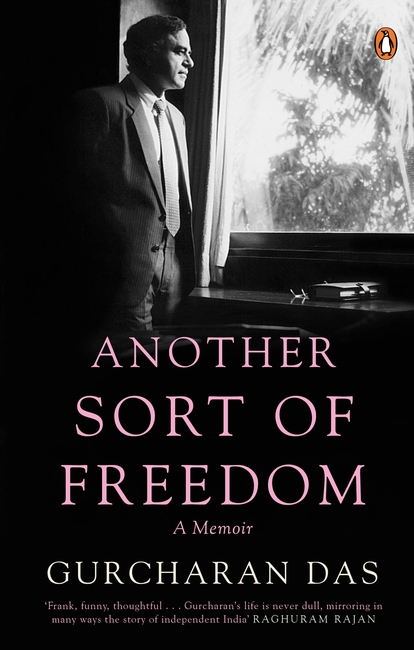
Another Sort of Freedom is a funny, moving and honest memoir of a man’s struggle to break free from expectations. Gurcharan Das was born in Lyallpur, Punjab, during World War II, when Hitler, Churchill and Hirohito were bashing everyone around. His mother noted in her diary, ‘This is a restless baby.’ By age two he had become ‘a difficult child’, and by three she was calling him a ‘troublemaker’. He discovered one day that he could run, and he has been running ever since.
There are strange twists in his journey, from Partition’s chaos to misguided attempts at winning over first loves. Setting out to become an engineer, he ends up with a philosophy degree from Harvard University. He then abandons a promising academic career in ivy-covered halls to become a salesman for Vicks VapoRub in India’s dusty bazaars. This leads him to the CEO’s position of Procter & Gamble India. One day, at the peak of his professional life, his high-powered corporate mask crumbles, and he walks away to become a celebrated writer and public intellectual.
Candid, witty and wry, the memoir is filled with moments of deep introspection at every turn alongside wise observations on the author’s encounters with history on four continents. This is Gurcharan Das as you have never seen him before.
Doctor Steel
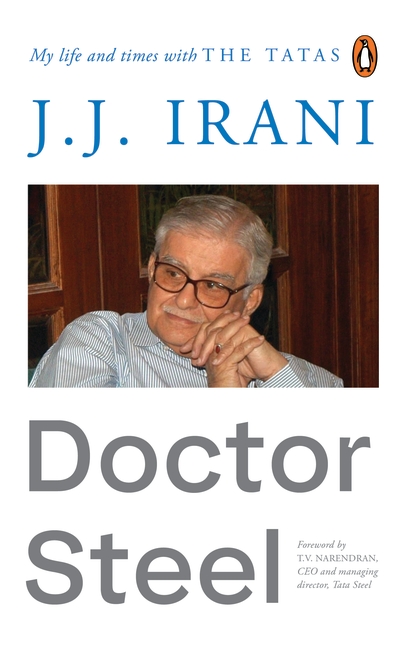
In the 1980s, the steel produced in India was not cost-effective, plagued by quality issues and unable to meet the standards required to take India a step ahead in its development goals.
Enter Jamshed Jiji Irani, fondly known as ‘Doc’ to all, whose efforts aimed at modernizing Tata Steel changed everything. Today, Tata Steel produces low-cost, high-quality metal of international standards. Under his leadership, Tata Steel ushered India into a new age of economic growth. But his story doesn’t end there. A leading industrialist, Irani was keenly involved in the 1990s economic liberalization that put India on the global map. He held positions on various Tata boards, and was part of the Confederation of Indian Industry and several other government-appointed committees. He was awarded the Padma Bhushan and an honorary knighthood by the British government for his work.
Behind his formidable exterior was a man with a big heart and a fondness for life. He was a man of integrity and conviction, devoted to Tata Steel and the people there. The chapters that make up Doctor Steel—the result of freewheeling conversations between Irani and N.K. Sharan in the months before the former’s passing—look back at this journey.
A.P.J. Abdul Kalam in 100 Anecdotes: Inspirational Biography of Indian President & Rocket Scientist | Illustrated Gift Edition for All Ages
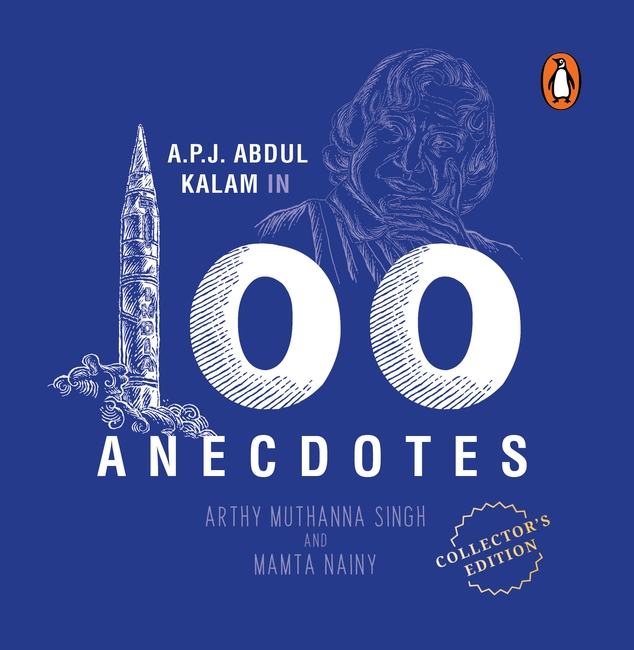
On 15 October 1931, Avul Pakir Jainulabdeen Abdul Kalam, popularly known as A.P.J Abdul Kalam, was born in Rameswaram, Tamil Nadu. He went on to become one of the most revered personalities of Independent India. A scientist, leader, thinker, teacher, and writer who achieved great success in various fields, Dr Kalam realized his dreams against all the odds.
This one-of-a-kind book, with gorgeous illustrations, is a collectible edition that celebrates an extraordinary man who serves as a role model for all. Starting from his days growing up in the island town of Rameswaram, to working on India’s space programmes, to his years as the eleventh President of India and his life thereafter, the hundred anecdotes in the book have been chosen with utmost care to demonstrate the importance of hard work, commitment, courage, and innovative thinking that he stood for.
This book, apart from sharing amazing life lessons, also shows the importance of scientific curiosity and celebrates the scientific progress that we owe to great scientists like Dr Kalam. It is a wonderful tribute to a remarkable life.
Why You Should Read the Book?
• A special collector’s edition to celebrate life of a remarkable icon.
• A part of a series of interesting biographies done in a special format that includes books like Gandhi in 150 Anecdotes, Satyajit Ray in 100 Anecdotes and His Holiness The Dalai Lama in 100 Anecdotes.
• Striking wood-cut style of illustrations to complement the engaging text, episodic narrative that is accessible.
• A must for every library, in school, college or at home.