




Sunaina Joshi is a reporter with a leading news channel.
Her day-to-day work involves reporting on urban-centric, health-related issues; myriad subjects that bore her, leaving her jaded. Her real passion is a life in the great outdoors, and reporting on wildlife and the environment, something she is unable to do as often as she would like. Unexpectedly, a fabulous opportunity falls into her lap when her channel is commissioned to run a campaign on tiger conservation, featuring a Bollywood star who is trying to resurrect his image and career following a drug scandal.
The shoot takes a dramatic turn when the television team finds itself in the middle of a local conflict and a heated incident involving a tiger attacking a forest guard. Controversy follows, with the decision to relocate the tiger to a zoo, leading to protests
and fresh outrage over the action. To Sunaina’s dismay, she finds
herself becoming the epicentre of the converging controversies. Also
complicating matters are the run-ins she has with the arrogant owner
of the resort. But is her aggravation with him turning to attraction?
Can she keep her wits about her while remaining professional
about the things she loves?
Archives: Books
Strange Burdens
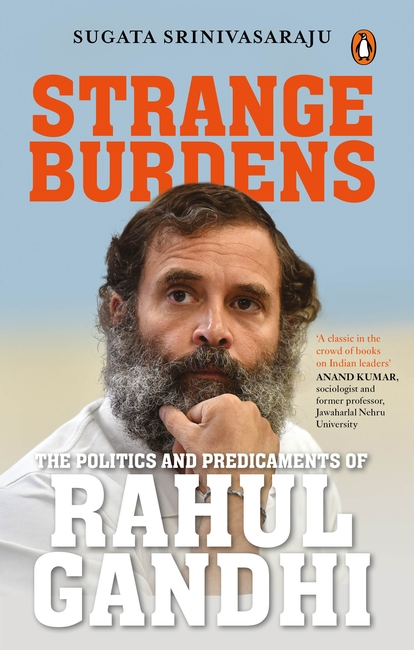
Strange Burdens is not a biography but a book of political commentary. It examines and analyses Rahul Gandhi’s ideas and leadership since he officially entered politics in March 2004. It journeys all the way to the conclusion of the Bharat Jodo Yatra in Srinagar on 30 January 2023 and captures the dilemmas of his
disqualification a couple of months later.
The narrative here crawls across two decades with the intention of understanding Rahul Gandhi’s politics and predicaments, confusions and contradictions, triteness and triumph, as well as his burdens and benignity. It is not the purpose of this book to understand his failures and successes in tabular columns but speculate in the best traditions of political commentary why he is where he is, both politically and as an individual. The book does not seek to answer questions about his suitability or unsuitability for a public role but is rather focused on how he has been caught in the currents of history. It is not a myth-busting or myth-making exercise, nor is it an inquisition; it is a pursuit of political insight.
Since the book is about Rahul Gandhi and the Congress party, it cannot not be about Narendra Modi and the Bharatiya Janata Party. Examining one automatically illuminates the other. The book looks at the contrasts and convergence of the two personalities and the two parties they represent.
Hanuman Drama
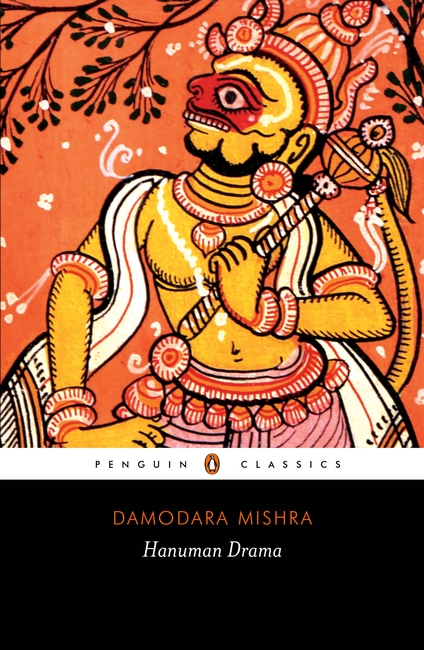
This poem recounts the life and deeds of the god-hero Rama. Legend has it that it was first inscribed on rocks by his devotee Lord Hanuman but was then thrown away into the sea on the advice of the sage Valmiki. Discovered centuries later in King Bhoja’s time, its verses were carefully transcribed and fashioned into what became Hanumannataka, composed by Bhoja’s court poet Damodara Mishra. This beautiful work has now been translated into English by A.N.D. Haksar and will appeal to lovers of mythology, poetry and philosophy.
After Messiah
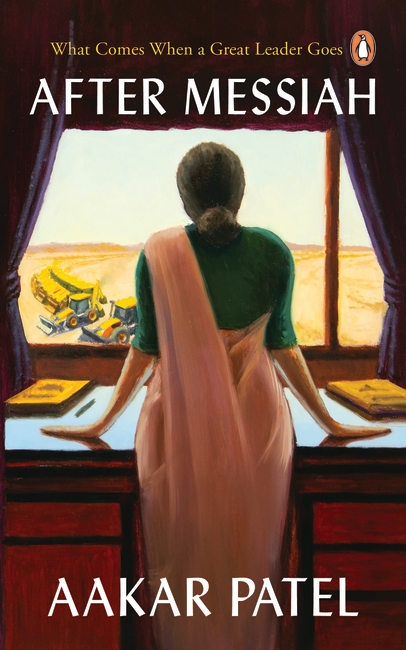
‘Everyone bowed to the Big Man. He was glorified, deified even, with temples raised to him, as the embodiment of the nation.’
Now the Big Man is gone, with nobody named as his successor. Into this void is pushed Mira, who is reluctant at first but increasingly interested in the position she finds herself in. Will she use her authority to further her agenda, or will she hold on to her principles? Watched by her political rivals, Jayeshbhai and Swamiji, and guided by well-wishers Ayesha, Prabhu and Du Bois, she marches on and discovers something about power-and about herself.
Sivakami’s Vow 4: Shattered Dream
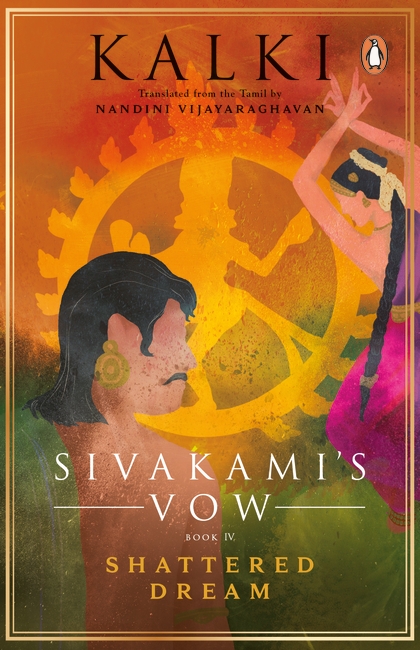
To meditate lifelong at the feet of our lord-Kalki’s choice of Thirunavukkarasar’s words to end his magnum opus, Sivakami’s Vow, is indicative of the shift from romance to reflection, from the mundane to the spiritual.
Nine years have passed since Narasimha Varmar has ascended the throne to the Pallava kingdom … nine years that the dancer Sivakami has spent as a captive of the Chalukya emperor, Pulikesi. In that time, the Pallava emperor has been preparing to wage a bloody war against the Chalukyas-to fulfil his promise to Sivakami and his father. But the duties of a sovereign have driven him to make difficult choices in his personal life. Will friendships and allegiances change on account of this? With the passage of so much time, does Sivakami still yearn for vengeance? And what have the last nine years meant for the Pallava commander-in-chief, Paranjyothi, and the conniving bikshu, Naganandi?
As Kalki expertly weaves together various strands of honour, love and friendship in this fourth and final volume of Sivakami’s Vow, he takes the reader through a gamut of emotions. It is no surprise that this novel is considered a classic.
Leading from the Back
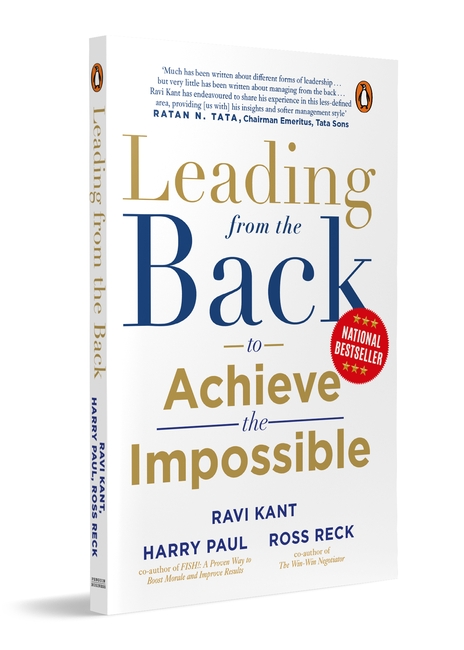
Are you looking for a leadership model that is uncomplicated, easy to use and produces amazing results? If so, then Leading from the Back is for you! In it you will find everything you need to become a superstar leader. You will learn how to earn respect from your team members and help them in achieving the impossible. No more learning about numerous principles and laws of leadership. Just a three-part model that has an amazing track record of proven success.
Through an engaging parable about the travails of an upcoming young manager, Shiv Kundra, whose leadership style hampers both his ability to lead and his ability to deliver, the authors outline the fascinating concept of ‘leading from the back’.
Leading from the Back is a distillation of the collective experience and wisdom of Ravi Kant (former CEO, vice chairman, Tata Motors), Harry Paul (co-author of the bestseller FISH! A Proven Way to Boost Morale and Improve Results) and Ross Reck (co-author of The Win-Win Negotiator).
How the Light Gets In

There is an adventure inside every person, waiting to be had . . . the discovery of a self, long buried within.
This personal belief reverberates through Ashok Alexander’s How the Light Gets In. In his memoir of an improbable start-up in public health, he writes about an organization with the audacious goal of ending needless deaths and sickness at scale, amongst India’s poorest mothers and children. It is a great leap emboldened by an unshakable faith in the ‘idea that cannot be denied’. It is a tale of adventure filled with twists and turns, told with a disarming honesty.
Ashok writes with his signature ability to transport the reader from the ground-level view of a Mumbai shoeshine boy, through hushed hallways of power, and on to the green forests and enchanting hills of tribal Madhya Pradesh-where much of the book is set. This book is a curated tour of the other India, with all its pathos and ineffable beauty. This is also a story of personal transformation-Ashok left a high-profile job in corporate India to be inspired by the everyday heroism and grit of utterly marginalized women, soon after realizing a simple truth: you must ask the way from those you serve. The journey described here will leave you awash with feelings-joy, anguish, anger, compassion and much laughter. It is about the adventures waiting within, that give great hope and never fail to inspire.
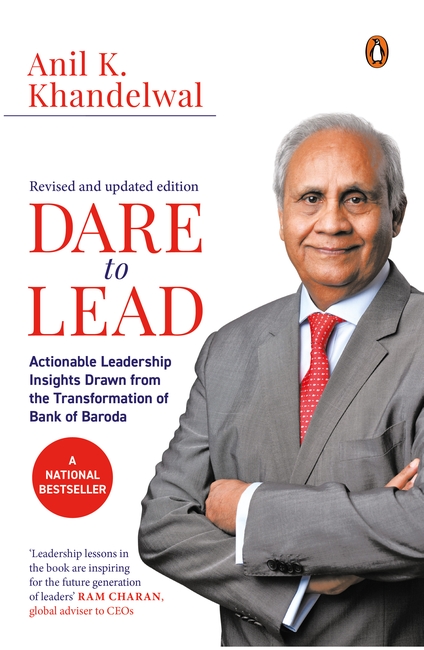
Dare to Lead
Dhara’s Revolution

Sarvaloka Public School calls children ‘future citizens’ but makes every decision without ever talking to the students. Nine-year-old Dhara is determined to change that. She sparks a revolution, and gets the whole school to vote for the very first time. However, caught in the storm of elections, Dhara loses sight of what is really important to her.
Can she find her way back to what truly matters before everything spirals out of control?
The Illustrated Masala Lab
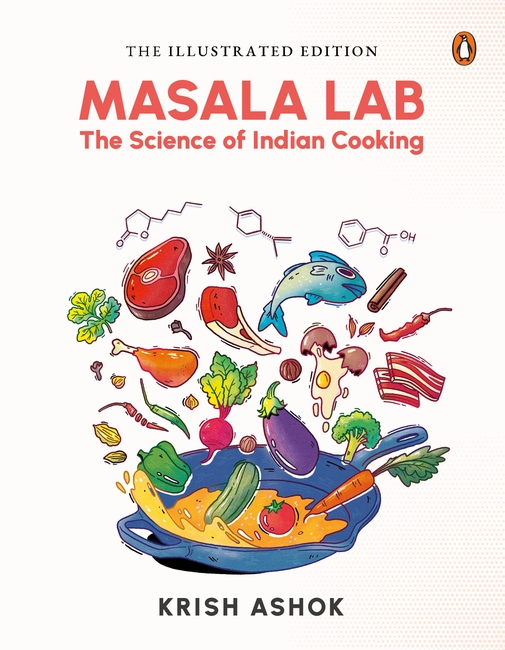
With its meteoric rise to bestseller status, Masala Lab has captivated readers across generations, and now returns as an irresistible collector’s edition, adorned with ingenious additions, illustrations, infographics and charts: it’s the collector’s edition you know your kitchen-laboratory needs.
Ever wondered why your grandmother threw a teabag into the pressure cooker while boiling chickpeas, or why she measured using the knuckle of her index finger? Why does a counter-intuitive pinch of salt make your kheer more intensely flavourful? What is the Maillard reaction, and what does it have to do with fenugreek? What does your high-school chemistry knowledge, or what you remember of it, have to do with perfectly browning your onions? Just like memorizing an equation might have helped you pass an exam but not become a chemist, following a recipe without knowing its rationale can be a sub-optimal way of learning how to cook.
Masala Lab by Krish Ashok is a scientific exploration of Indian cooking aimed at inquisitive chefs who want to turn their kitchens into joyful, creative playgrounds for gastronomic experimentation. In this special edition, Meghna Menon’s vibrant illustrations effortlessly complement Krish Ashok’s lighthearted approach to the demystification of culinary science, making it the perfect vehicle to absorb the exhaustive testing, groundbreaking research and scientific rigour that went into the making of this revolutionary book.