



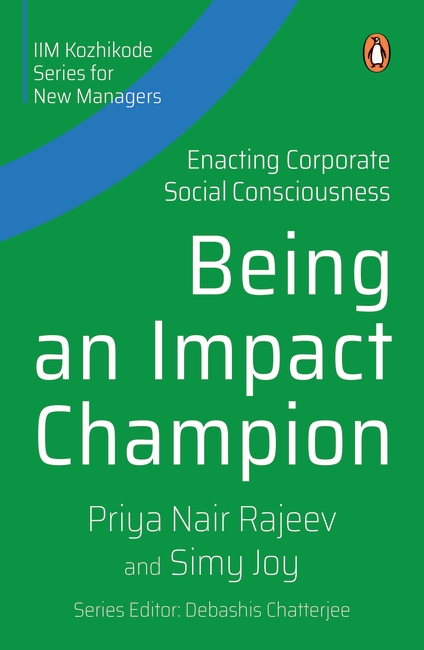
Social consciousness is neither corporate social responsibility (CSR) nor public relations but a mindset that understands and accepts the interconnectedness of an organization’s economic, social, and natural environments. Socially conscious organizations come into existence when led by socially conscious managers. This book enables socially conscious managers to become Impact Champions through three pathways to successfully initiate and run socially responsible business innovations, CSR projects, and social entrepreneurial ventures. The book is organized into five parts. The first part sets the context and provides the readers with tools to reflect on contemporary social and environmental issues and orient themselves towards action. To develop the skills necessary to contribute to the triple bottom line, young managers need to deepen their understanding of social problems, developmental issues, threats to the environment, and long-standing issues of sustainability and environmental management, all of which are woven into various chapters. In the following four parts, the book progresses through three pathways: socially driven business innovation, CSR, and social entrepreneurship. Being an Impact Champion hopes to instill confidence in new managers to talk about socially and environmentally sensitive issues facing the corporate world and thereby expand their capacity to influence.
Archives: Books
Educating a Billion
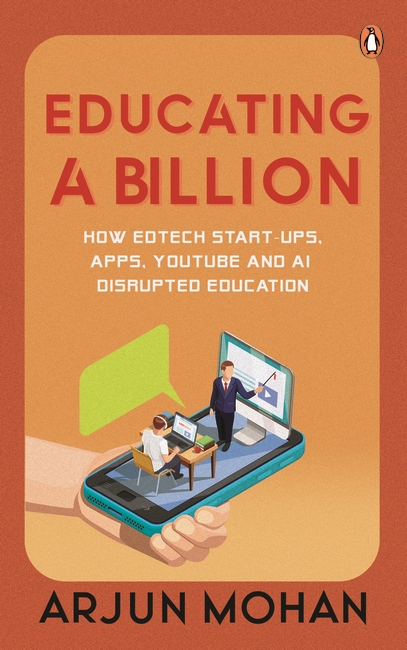
Educating a Billion is an insider’s take on how edtech companies in India are trying to solve the issues plaguing our education system and trying to deliver quality at scale. It covers the formative days of India’s well-known edtech start-ups-BYJU’S, Unacademy, upGrad and Whitehat Jr, among others, and how these companies created products with a promise that made a difference. The growth of these start-ups is synonymous with the growth of venture capitalist led capital deployment in privately held Indian companies (private markets). The book covers Covid-19-induced changes in our educational system which led to the hypergrowth of the edtech ecosystem, a watershed event for digital start-ups globally.
With a unique ringside perspective, Arjun Mohan weighs in on the future of edtech and how technologies like artificial intelligence (AI) and virtual reality (VR) are going to play an important role in the next phase. Above everything else, this book is the story of India’s new generation of entrepreneurs and founders-their hopes, their unwavering faith in the face of ambiguity and their rejection of fear. The book is about vision, audacity and optimism that’s changing the education system after 200-plus years of slumber.
Burning Roses in My Garden
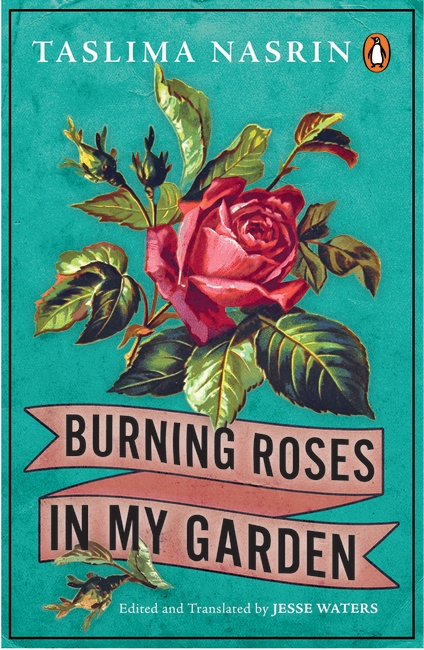
‘Have I not, having kept a man for years, learnt that it’s/ like raising a snake?/ So many animals on this earth, why keep a man of all things?’ writes one of the world’s most celebrated writers, Taslima Nasrin, in her first-ever comprehensive collection of poetry translated from the original Bangla into English. The poems get to the heart of being the other in exile, justifying one’s place in a terrifying world. They praise the comfort and critique the cruelty of a loved one. In these are loneliness, sorrow, and at times, exaltation. Relying almost entirely upon the free verse form, these poems carry a diction which is at once both gentle and fierce, revealing the experiences of one woman while defining the existence of so many generations of women throughout time, and around the world.
How to Reach Mars and Other (Im)possible Things
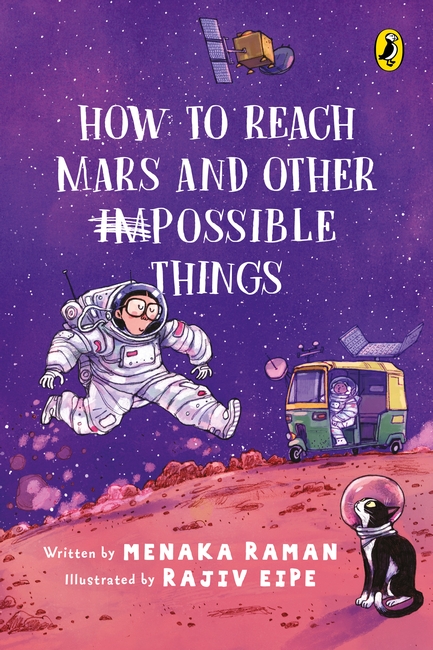
Rabia is one of the most curious girls you’ll meet. She’s always full of questions: How, Why,
What, Where and When!
When she hears a classmate say that women can’t be scientists, she has to find out if it’s true. Luckily, she’s soon visiting the Indian Space Research Organization (ISRO) on a field trip with her classmates, where she bumps into Dr Mary, a physicist.
When Rabia learns that Dr Mary is one of the scientists working on a daring mission to Mars, she asks her all the questions that she can think of about the mission.
Join Rabia and Dr Mary as they walk through ISRO and learn everything about making the impossible-possible!
One Way to Live
One Way to Live was written at a time when Dr Tehemton Udwadia knew that he had just a few months left to live. It is partly a personal memoir recounting about his youthful romance and the influence of his mother and heartfelt anecdotes about his friends and family, and partly his own medical journey, including the story behind the setting up of Center for Minimal Access SurgeryTraining (ceMAST)-perhaps his greatest achievement.
The last few couple of chapters of this book were written at a time when Dr Udwadia was on ventilator support; the second and final epilogue was dictated by him from a hospital bed at a time when he could barely speak. He passed away on 7 January 2023. It was life well-lived.
Shades of Blue
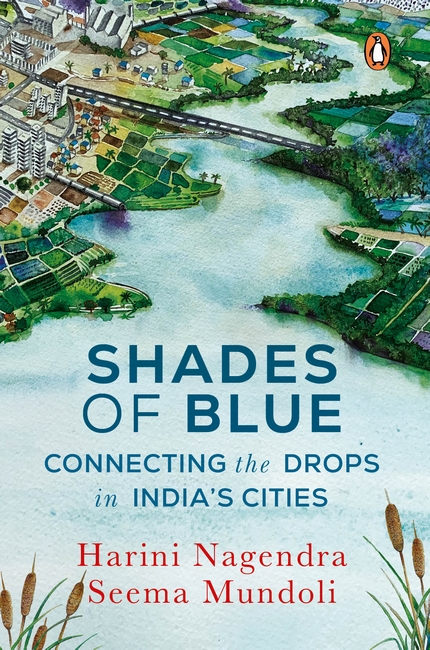
For millennia, our cities have prospered and grown in the cradles of civilization-fertile lands blessed with rivers, lakes, seas and oceans. From the origins of life on earth, right down to its downfall, biblical or otherwise, water has been integral to the human story.
In this passionate and extensively researched tribute to the elixir that sustains us all, authors Harini Nagendra and Seema Mundoli take us on a panoramic view of the water bodies of India and the urgent need to address their emergent ecological threats. From the Yamuna in Delhi to the Cauvery in Karnataka and the Pichola Lake in Udaipur to the Brahmaputra in Assam, this book is epic in its sweep and yet deeply moving in its intimate concerns.
Interspersed with anthropological, legal and scientific vignettes of the water are fascinating anecdotes, ditties, myths and monsters blue and green. This book also brings into dialogue a vast range of colourful characters-from medieval poets to colonial masters and modern scientists-to paint for us a tapestry of connected histories and ring a timely knell for saving the very ecological systems that have sustained us for ages.
1947-1957, India: the Birth of a Republic
The story of a decade-1947 to 1957-that made and unmade India
The first decade after India’s independence, 1947-1957, was probably the most crucial in the nation’s history. Opening a window to this period, this book weaves a story out of the complex ideas and events that have largely remained beneath the surface of public discourse. The transfer of power, the framing of the Constitution and the formation of the governance machinery; the clash of ideas and ideologies among parties and personalities; the beginning of the disintegration of the Congress and the consolidation of political forces in the opposition; Nehru’s grappling with existential problems at home and his quest for global peace; the interplay between democratic ideals and ruthless power play-all these factors impinged on each other and shaped the new republic in its formative decade.
Thought-provoking, argumentative and unputdownable, 1947-1957, India: The Birth of a Republic is a must-read for anyone interested in Indian political history.
One Among You
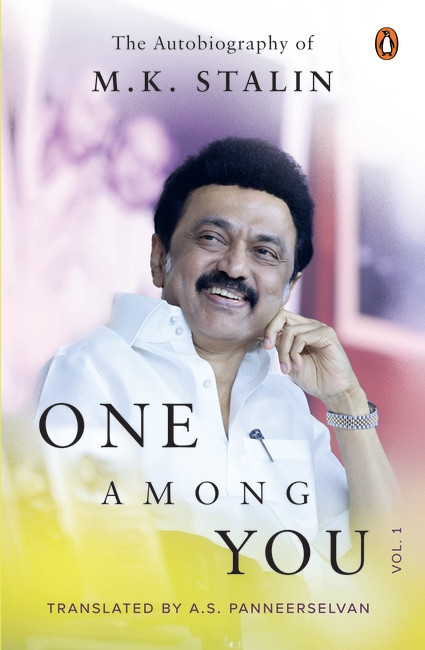
In 1966, M.K. Stalin began his political innings by launching the Gopalapuram Youth Dravida Munnetra Kazhagam. Over the next five decades, his political career would see him rise to become the Mayor of Chennai in 1996, the President of the Dravida Munnetra Kazhagam (DMK) in 2018 and the Chief Minister of Tamil Nadu in 2021.
One Among You, a translation of Volume 1 of Stalin’s Tamil autobiography, Ungalil Oruvan, is the story of the first twenty-three years of his life, from 1953 to 1976. These formative years were witness to Stalin’s school and college days, his early involvement with the DMK and his integral role in the party publication, Murasoli. But Stalin’s journey extends beyond politics. He also had a profound connection to the world of theatre and cinema, where his passion for art intersected with his pursuit of social change.
As the son of the political titan Kalaignar M. Karunanidhi, it was inevitable that Stalin would grow up in a household throbbing with discussions about art, culture, politics, and language. This autobiography, ably translated by veteran journalist and editor, A.S. Panneerselvan, offers an intimate glimpse into the world that moulded the Tamil Nadu Chief Minister.
World’s Best Girlfriend
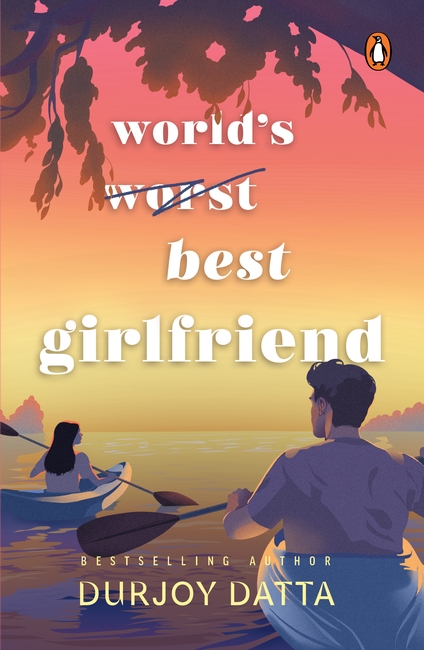
‘When he turns, I see his eyes. There’s a sense of surety in them, a sense of danger, a sense of entitlement and definitely, arrogance.’
Daksh and Aanchal meet under improbable circumstances in the most unlikely of places-a posh resort in the Andamans. While Aanchal is fighting hard to escape the shackles of a lower middle-class existence, Daksh is aimless and unsure of what his future holds. Strangely, they are drawn to each other.
‘My gaze drifts to her exposed back, and the tiny knot that secures her shimmering choli in place. Emotions of anger mix with a strange desire in me.’
Four years later, when they meet again, Daksh’s world has crumbled around him. The burden of caring for his sick father and six-year-old sister has left him with little time for anything else. Yet, despite their diverging paths, Daksh and Aanchal find themselves reconnecting in unexpected ways. Their mutual attraction deepens.
Till now, fate has been pushing them together, but what will happen when they decide to take matters into their own hands? Will life be as they’ve imagined, or will destiny take even that away from them?
Sinbad and the Rise of Iblis
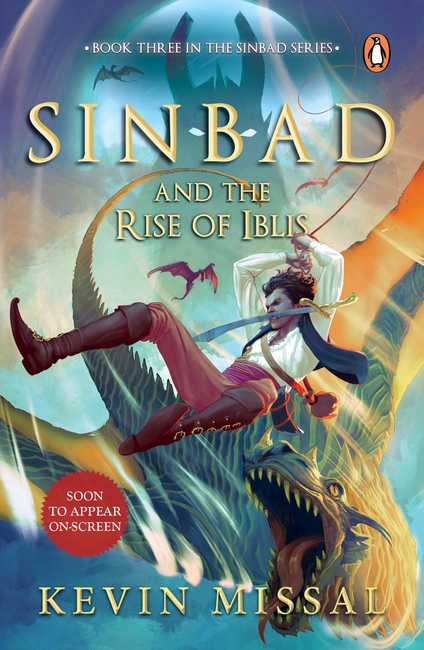
You might be wondering why I’m still speaking in the midst of chaos. Well, danger has now become my constant companion. In my reckless quest for power, I shattered the trust of those who once stood by my side. The words ‘betrayer’ and ‘broken’ are now etched into my very being.
But there is no time to give in to my misery. The dreaded devil, once imprisoned, has risen from the depths of Qlitop. With a legion of abominable creatures at his command, he now threatens to unleash unrestrained havoc upon the world.
Time is rapidly pushing us towards the abyss. Desperate, I must embark on a harrowing journey to acquire three mystical artefacts that can save our ravaged Earth. Yet, as fate would have it, these
objects can only be found within alternate universes, adding another layer of torment to my already tormented existence.
Prepare yourself for the final instalment in Kevin Missal’s Sinbad series, a gripping reimagination of the legendary sailor from the classic One Thousand and One Nights!