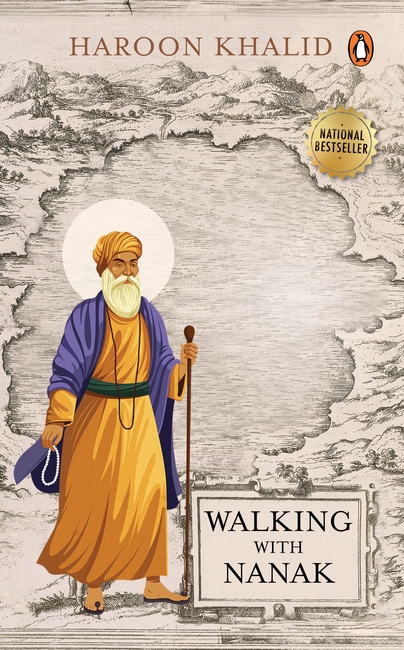
Haroon Khalid’s lifelong fascination with Guru Nanak was reignited when he came upon ‘Baburbani’, a poem written by the saint. This, and the discovery that Guru Nanak spent a large part of his life in Pakistan, inspired Khalid to undertake a journey that he hoped would help him learn more about the revered founder of Sikhism.
In this wonderful paean to Guru Nanak, Khalid describes his travels across the length and breadth of Pakistan as he visits the many gurdwaras and other locales associated with the saint, delving into their history and musing about their place and significance in a Muslim country. But this book is not merely a story about gurdwaras, it is also a re-telling of the story of Nanak the son, the poet, the wanderer, the father, the friend. Sifting through the stories of his miracles and poetry, we emerge with a picture of Nanak the man.
Also exploring the histories of all the subsequent Gurus after Nanak, the book traces the story of how an unorganized spiritual movement evolved into the institutionalized Khalsa of Guru Gobind Singh. Through the journeys of all the Gurus, the book describes how Nanak the poet became Guru Nanak the saint.

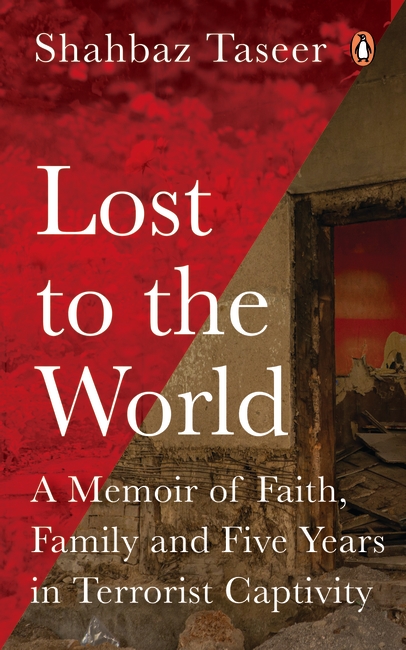
In late August of 2011, Shahbaz Taseer was driving to his office in Lahore, Pakistan when he was dragged from his car at gunpoint and kidnapped by a group of Taliban-affiliated terrorists.
Just seven months earlier, his father, Salman Taseer, the governor of Punjab Province, had been shot dead by his guard for speaking out against Pakistan’s blasphemy laws.
For almost five years Shahbaz was held captive, moved ever-deeper into the lawless Hindu Kush, frequently tortured and forced to endure extreme cruelty, his fate resting on his kidnappers’ impossible demands and the uneasy alliances between his captors, the Taliban and ISIS.
Lost to the World is the remarkable true story of Taseer’s time in captivity, and of his astonishing escape. It is a story of extraordinary faith, bravery and sorrow, with moments of kindness, humour and empathy, offering a hopeful light in the dark years of his imprisonment.
While deeply harrowing, this tale is also about resilience. Taseer countered his captors’ narrative of a holy war by immersing himself in the Quran in search of hope and a means to see his own humanity under even the most inhumane conditions, and ultimately to find a way back to his family.
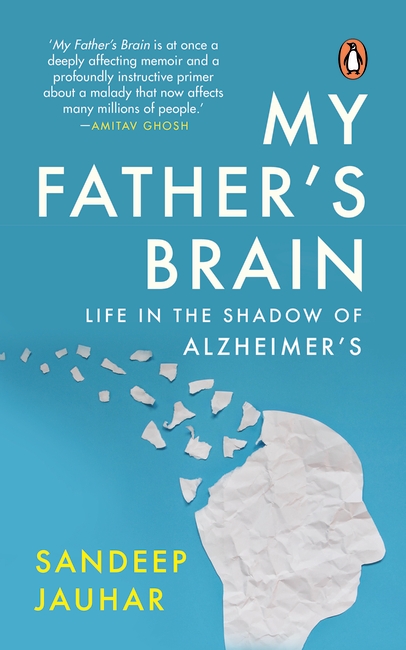
There may be up to 10 million Indians living with Alzheimer’s disease or related dementias, and that number is expected to increase dramatically in the next few decades. What is it like to live with and amid this increasingly prevalent condition-an affliction that some fear more than death? In My Father’s Brain, the distinguished physician and author Sandeep Jauhar sets his father’s descent into Alzheimer’s alongside his own journey toward understanding this disease and how it might best be coped with, if not cured.
In an intimate memoir rich with humour and heartbreak, Jauhar relates how his immigrant father and extended family felt, quarrelled, and found their way through the dissolution of a cherished life. Along the way, he lucidly exposes what happens in the brain as we age and our memory falters and explores everything from the history of ancient Greece to the most cutting-edge neurological-and bioethical-research. Throughout, My Father’s Brain confronts the moral and psychological concerns that arise when family members must become caregivers, when children’s and parents’ roles reverse, and when we must accept unforeseen turns in our closest relationships-and in our understanding of what it is to have a self. The result is a work of essential insight into dementia, and into how scientists, caregivers, and all of us in an aging society are reckoning with the fallout.
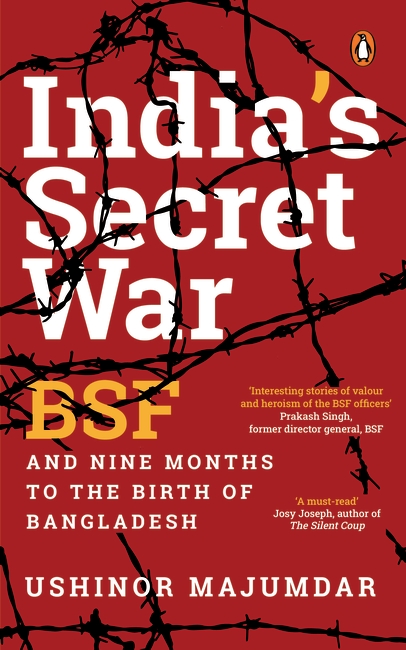
Triggered by the US-backed Pakistani junta’s brutal measures against the Bengalis, Sheikh Mujibur Rahman proclaimed the independence of East Pakistan on 26 March 1971. They needed the world’s support, and India was their first ally.
The Border Security Force (BSF), an elite Indian force, was only five years old at the time and became central to India’s sustained military response in East Pakistan for nine months, until the alliance of Indian and Bangladeshi forces won Dacca. The BSF’s founding chief, K.F. Rustamji, and his men went beyond their charter of policing borders to respond to one of the world’s worst humanitarian crises that was unfolding right next door to India. For nine months, till the 1971 India-Pakistan war, they covertly gave support to the forces of resistance, through clandestine missions and black ops deep in East Pakistan, while diplomats and politicians primed the world for the war. They welcomed democratically elected politicians and helped establish them as the government-in-exile, installed a clandestine radio station, triggered the defections of East Pakistani diplomats and foiled the Pakistan Army’s tactical trump card to damage the Indian Air Force bases.
With access to classified records and through exhaustive interviews with surviving veterans, award-winning investigative reporter Ushinor Majumdar has crafted this first comprehensive historical account of the BSF’s role in the Bangladesh liberation war, which changed the course of South Asian history.

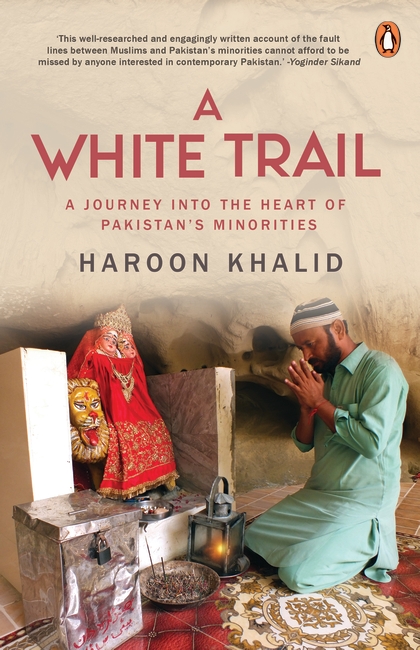
A travelogue and an ethnographic study that builds upon hundreds of oral testimonies, A White Trail tells the stories of the complex lived-realities of religious minorities in Pakistan-stories of their triumphs, insecurities, aspirations, marginalization and resilience. The book tells the tale of a group of young Hindu boys who came together to revive their festivals after decades of hidden celebrations. It narrates the story of the Sikh community in Nankana and how it began carving out an identity in a Muslim-dominated city. And it explores how the Christian community expresses its religious identity in a local, South-Asian flavour.
A White Trail is a journey through the different festivals of the five religious minorities of Pakistan, narrating the lives of the different communities in their own words. It reveals what it means to celebrate religious festivals under the shadow of rising intolerance, structural persecution and increased cases of religious violence.
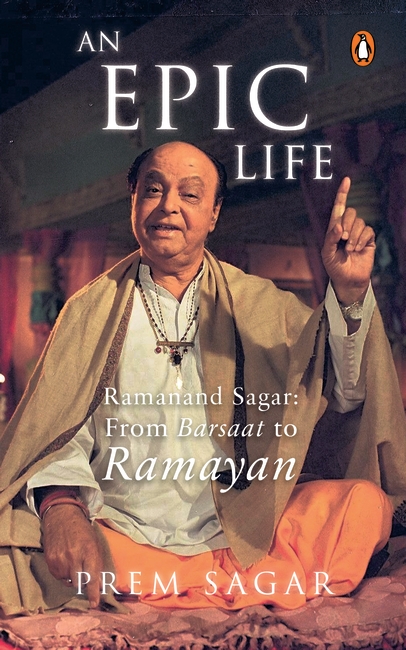
On 25 January 1987, with the telecast of the very first episode of Ramayan, Indian television changed for all time to come. In a matter of weeks, the series became a national obsession. During the Ramayan slot, roads emptied out. No marriages and political rallies were scheduled for that time. More than three decades later, there has been nothing to match it.
Ramanand Sagar, the man behind the phenomenon and a successful filmmaker from Bombay, was among the first to recognise the immense power of television. He first made his mark as a writer in Raj Kapoor’s Barsat (1949). From 1961 to 1970, Sagar wrote, produced and directed six consecutive silver jubilee hits-Ghunghat, Zindagi, Arzoo, Ankhen, Geet and Lalkar.
An Epic Life: Ramanand Sagar, From Barsaat to Ramayan, written by his son, Prem Sagar, an award-winning cinematographer, is an intimate look at the life of a visionary. It traces Sagar’s life from his birth in Kashmir in 1917, his dramatic escape in 1947 when Pakistani tribesmen attacked the state, his arrival in Bombay and his subsequent glorious career-the crowning achievement of which was the smashing success of Ramayan.

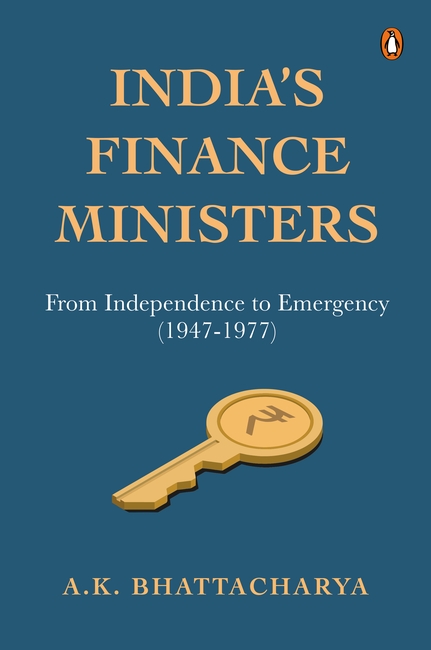
Independent India has so far witnessed twenty-eight finance ministers. But only a handful of them could leave their mark on the exchequer or North Block, the headquarters of the Indian finance ministry. From Independence to Emergency: India’s Finance Ministers 1947-1977 is the story of India’s unforgettable finance ministers who shaped India’s economy in the first thirty years after Independence. The book highlights the significant difference that these finance ministers made to the management of the Indian economy and to the policy evolution of the government, and who thus left an indelible mark on the psyche of Indian citizens. It attempts to measure the impact these decisions left, not only on India’s economic system but also on its political system, and looks at to what extent the decisions were influenced by the socio-economic backgrounds of the finance ministers.
Full of interesting anecdotes, the book is the first in-depth account of the crucial role these finance ministers have played in the functioning of India’s economy.

A bomb explodes in a university cafe, claiming the lives of nineteen students. The Empty Space begins with the identification of those nineteen dead. The mother who enters the cafe last to identify the nineteenth body brings home her dead eighteen-year-old son packed in a box, as well as the of the sole survivor e blast, a three-year-old boy who, by a strange quirk of fate, is found lying in a small empty space, alive and breathing.
The Empty Space chronicles the memories of the boy gone, the story of the boy brought home, and the
cataclysmic crossing of life and death.

Do you know why the Indian Navy counts ‘One, Two, Six’ instead of ‘One, Two, Three’ while doing group tasks?
Or that the Intelligence Bureau was set up in response to an assassination?
Or that a Frenchman who had served three nations before turning thirty eventually rose to become the most powerful general of the Marathas?
Or that an army man gave his name to the highest mountain without ever having set foot on it?
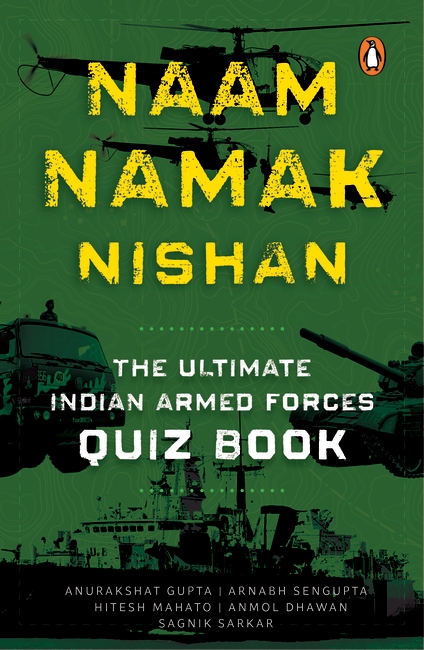
Find out the answers to these and more as a team of quizzer-doctors from the Armed Forces Medical College (AFMC) Pune takes you on a journey across 250 questions, exploring trivia that connects the Indian Armed Forces to topics ranging from mythology, history and art to geography, fashion and sport.
This and more in a quiz book that will help you see the Indian Armed Forces through a lens you might never have seen before.
Happy exploring!

Manasi is a stalwart of Malayalam literature. With her unparalleled feminist writing and powerful voice, she has mastered the art of telling radical short stories. Through Subversive Whispers, a collection of some of her best work, she continues to defy patriarchy, question Brahminical hegemony and push narratives that subtly yet fervently challenge the status quo. The book introduces readers to the irreverent ‘Sheelavathi’, which explores the Madonna-Whore complex in a uniquely local context, ‘Devi Mahathmyam’, which sheds light on the price that women pay for being goddesses in mere name and stories such as ‘Spelling Mistakes’, ‘Square Shapes’ and ‘The Walls’, all of which explore romantic love with a piercing realism.
In stark and urgent murmurs that build up a fever pitch, these stories channel women’s voices that open up their inner worlds, struggling to capture the minutiae of their suffering. It is this whisper-like quality of Manasi’s storytelling that J Devika deftly conveys in translation, bringing the author’s prose to the English reader in an incendiary collection that is sure to cast light on the darkened chambers of patriarchy and the hidden recesses of women’s minds.