Publish with Us

Follow Penguin

Follow Penguinsters

Follow Penguin Swadesh

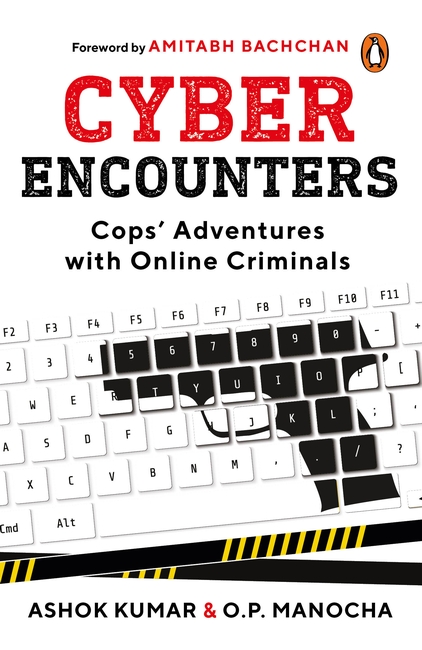
Cyber Encounters

As technology has evolved, so has crime. Digital technologies have brought with them a whole host of crimes committed online-unsuspecting people are cheated of crores of rupees, duped by false advertisements on fake websites, incited to click on suspicious links through payment gateways, and download apps that give remote access of their device to criminals. From credit card fraud to phishing, the list is endless.

Cyber Encounters delves deep into this nebulous cyberspace, to bring twelve fascinating accounts of cybercrime. Ashok Kumar, DGP, Uttarakhand Police and a veteran in the systematic fight against cybercrime in the state, and OP Manocha, an ex-DRDO scientist, unfold a specific type of cybercrime in each tale, based on a true story. Packed with information on the crime, its investigation and the apprehending of the criminals, this illuminating insider account is a must-read.

The Adventures of Feluda (Special Birthday Edition; Collector’s Edition Box Set)

Dive into twelve timeless classic whodunnits by iconic storyteller Satyajit Ray, featuring the legendary detective, Feluda. Join the private investigator as he plunges into seemingly impossible and strange cases accompanied by his sharp and curious nephew, Topse, and the comically anxious novelist, Jatayu.

1. THE EMPEROR’S RING: Feluda is on holiday in Lucknow when a priceless Mughal ring is stolen.

2. THE ROYAL BENGAL MYSTERY: A bloodthirsty tiger is suspiciously killing off people related to an ancestral treasure.

3. THE HOUSE OF DEATH: The search of a scroll leads Feluda to a motley crew of characters, among whom lurks a dangerous killer.

4. TROUBLE IN GANGTOK: In the picturesque city of Gangtok, a businessman is murdered, and the list of suspects is long.

5. THE MYSTERY OF THE ELEPHANT GOD: In Varanasi, the theft of a valuable statuette of Ganesha leads Feluda to unmask a fake sadhu.

6. THE GOLDEN FORTRESS: Feluda sets out in search of a missing boy claiming to remember his previous life.

7. THE CURSE OF THE GODDESS: A stamp collection vanishes; some coded diaries are uncovered and the head of a family in Hazaribagh lies dead.

8. THE BANDITS OF BOMBAY: Soon after Jatayu hands over a package to a man in a red shirt, someone is murdered.

9. THE SECRET OF THE CEMETERY: Feluda chances upon an old grave that has been dug up at the Park Street cemetery.

10. A KILLER IN KAILASH: Feluda, Topse and Jatayu try to prevent the smuggling of priceless sculptures out of India.

11. THE CRIMINALS IN KATHMANDU: A murder in Calcutta sets Feluda on a trail that leads him all the way to Kathmandu and the doorstep of his arch-nemesis, Maganlal Meghraj.

12. THE INCIDENT ON THE KALKA MAIL: When a man’s blue briefcase gets accidentally switched with someone else’s during a train ride, he enlists Feluda’s help to recover it.

The Case for Nature

Our planet is facing not one but two crises.

In a world where carbon emissions and climate financing are rightly rising up the agenda, there exists another catastrophe that is often overlooked but just as dire-the global collapse of our ecosystems. Siddarth Shrikanth’s The Case for Nature presents a compelling vision for tackling this other crisis by rethinking our relationship with nature in economic, social and even personal terms.

Shrikanth argues that we can create flourishing economies and societies by preserving and restoring our planet’s ‘natural capital’ and introduces the pioneers of this nature-positive revolution with vivid examples from across the world. But he also calls on readers to reflect on the roots of this crisis, drawing upon indigenous world views to show that nature must be woven into our modern societies, not set apart.

By offering a hopeful yet deeply pragmatic perspective on how we can exist in harmony with our living planet, The Case for Nature is a must-read for anyone seeking to understand how nature can help us forge a more sustainable future and what they can do to contribute to this vision.

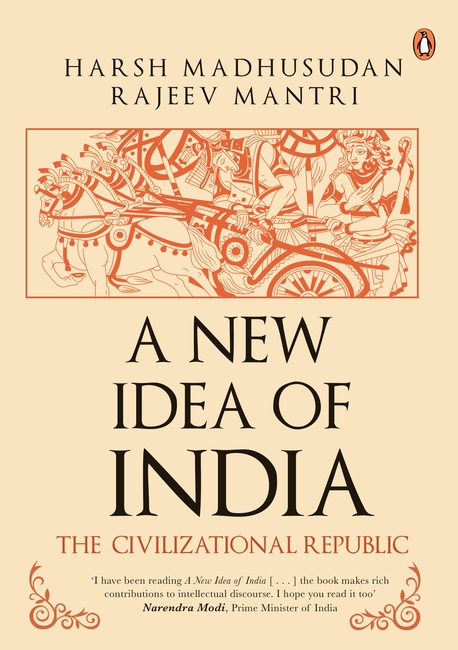
A New Idea of India

For the better part of seven decades after independence, the Nehruvian idea of India held sway in India’s polity, even if it was not always in consonance with the views of Jawaharlal Nehru himself. Three key features constituted the crux of the Nehruvian way: socialism, which in practice devolved to corruption and stagnation; secularism, which boxed citizens into group membership and diluted individual identity; and non-alignment, which effectively placed India in the Communist camp.

In the early Nineties, India began a gradual withdrawal from this path. But it was only in 2019, with Narendra Modi’s second successive win in the general elections, that this philosophy is finally being replaced by a worldview that acknowledges India as an ancient civilization, even if a young republic, and that sees citizens as equal for developmental and other purposes.

A New Idea of India constructs and expounds on a new framework beyond the rough and tumble of partisan politics. Lucid in its laying out of ideas and policies while taking a novel position, this book is illuminated by years of research and the authors’ first-hand experiences, as citizens, entrepreneurs and investors, of the vagaries and challenges of India. This revised edition builds on some of the arguments of the earlier edition and brings things up-to-date.

Shiva Purana

The Shiva Purana is the fifth book in an eighteen-part series on the sacred Hindu texts known collectively as the Puranas. Translated with great rigor and precision, Bibek Debroy recounts the tales of creation and the many myths that surround Lord Shiva in twenty-four thousand shlokas and an introduction that simplifies the myth and history of the Puranas.

Brimming with insight and clarity, this translation presents readers with an opportunity to truly understand classical Indian texts. Previous translations by Bibek Debroy include the Bhagavata Purana, the Markandeya Purana, the Brahma Purana, and the Vishnu Purana.

Shiva Purana

The Shiva Purana is the fifth book in an eighteen-part series on the sacred Hindu texts known collectively as the Puranas. Translated with great rigor and precision, Bibek Debroy recounts the tales of creation and the many myths that surround Lord Shiva in twenty-four thousand shlokas and an introduction that simplifies the myth and history of the Puranas.

Brimming with insight and clarity, this translation presents readers with an opportunity to truly understand classical Indian texts. Previous translations by Bibek Debroy include the Bhagavata Purana, the Markandeya Purana, the Brahma Purana, and the Vishnu Purana.

Shiva Purana

The Shiva Purana is the fifth book in an eighteen-part series on the sacred Hindu texts known collectively as the Puranas. Translated with great rigor and precision, Bibek Debroy recounts the tales of creation and the many myths that surround Lord Shiva in twenty-four thousand shlokas and an introduction that simplifies the myth and history of the Puranas.

Brimming with insight and clarity, this translation presents readers with an opportunity to truly understand classical Indian texts. Previous translations by Bibek Debroy include the Bhagavata Purana, the Markandeya Purana, the Brahma Purana, and the Vishnu Purana.

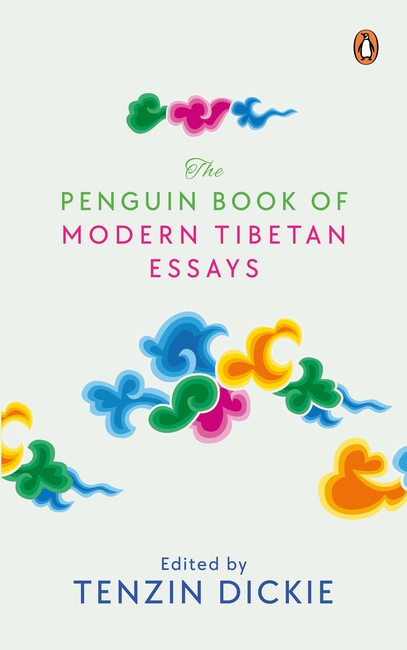
The Penguin Book of Modern Tibetan Essays

The Penguin Book of Modern Tibetan Essays is a groundbreaking anthology of modern Tibetan non-fiction. This unprecedented collection celebrates the art of the modern Tibetan essay and comprises some of the best Tibetan writers working today in Tibetan, English and Chinese.

There are essays on lost friends, stolen inheritances, prison notes and secret journeys from-and to-Tibet, but there are also essays on food, the Dalai Lama’s Gar dancer, love letters, lotteries and the Prince of Tibet. The collection offers a profound commentary not just on the Tibetan nation and Tibetan exile, but also on the romance, comedy and tragedy of modern Tibetan life.

For this anthology, editor and translator Tenzin Dickie has commissioned and collected 28 essays from 22 Tibetan writers, including Woeser, Jamyang Norbu, Tsering Wangmo Dhompa, Pema Bhum and Lhashamgyal.

This book of personal essays by Tibetan writers is a landmark addition to contemporary Tibetan letters as well as a significant contribution to global literature.

Also available in a paperback edition outside the Indian subcontinent. To order online, visit https://www.amazon.com/Penguin-Book-Modern-Tibetan-Essays/dp/0143462326/ref=tmm_pap_swatch_0?_encoding=UTF8&qid=1685626767&sr=8-2

How Not to Get Wet in the Rain

Do you know the trick to remaining dry in the rain? Or how to turn brass into diamonds? Or simply divide five oranges equally among seven children? This treasury of tales from the Indian tradition offers tricks to solve all these problems and more. We meet a strange mouse-girl; a goof who mistakes gold coins for trash; a king that can’t stop coughing; a mystery man who pulls the emperor’s beard; a kingdom made up of wild animals; and many such strange and incredible characters.
These simple tales of wisdom show us how any problem-however bizarre or impossible-can be solved with some good old-fashioned common sense and gentle wit.

Six 10s: Sixty Indian Stories You May Not Have Heard Before (The 10s Series Box Set) Buy 5, Get 1 free!

There are so many things about India we learn-and so many fascinating things that are left to find out. This set deals with six such subjects-ranging from history, environment and art to people who have transformed lives in many ways. Sixty such enthralling and incredible stories are contained in this box that is sure to delight and spark the curiosity of young readers.

Read the books to find out about

Monarchs whose amazing stories you may not know

Animals that you may never again see in the wild

Heroes who help people live with dignity

Champions who are fighting to save the planet

Art mysteries that have never been solved

Women who were the first to do what they did

error: Content is protected !!