Most expectant mothers talk to their unborn. But what if the unborn starts to respond?
Mahika is hoping that a baby will breathe new life into her dead marriage. But all her pregnancies meet the same fate, because no baby is perfect for Shivam, her genius geneticist husband. Until there is one. Rudra, the world’s first genetically altered foetus, is Shivam’s perfect creation and Mahika’s last hope.
The six-week-pregnant Mahika has just walked into her fertility clinic when she discovers an anonymous note that discloses the ugly truth behind her pregnancy. Before Mahika can come to terms with the fact that her husband’s quest for perfection has marked its territory in her womb, she finds herself locked in her own house. But then she discovers that her unborn son has extraordinary powers. As weeks pass by, Rudra calibrates and recalibrates his powers with one aim-Mahika’s freedom.
But Rudra needs more than his newly acquired powers to free his mother. He needs to betray his creator, his father. And he must do it before it’s too late.

Can an outdated or failed solution in one industry bring disruption to another?
Can a racing team improve industrial manufacturing productivity?
Can science fiction offer entrepreneurs valuable lessons in innovative thinking?
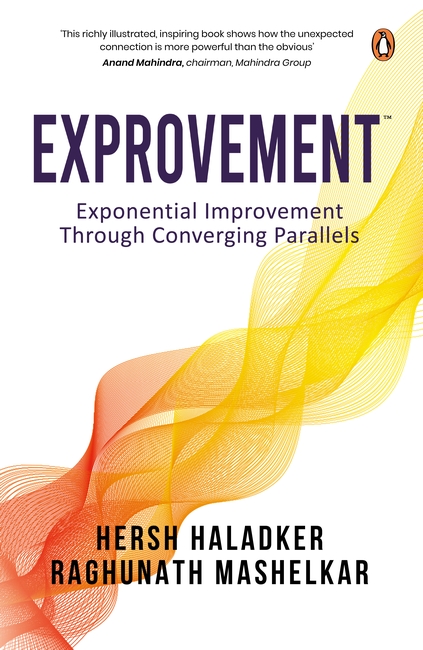
Such examples lie at the core of Exprovement, which is exponential improvement borne out of drawing parallels between the seemingly unrelated, much in the same way Henry Ford revolutionized the automotive industry by comparing and correlating his business with the meat-packing industry.
Through the various examples highlighted in this book, Hersh Haladker and Raghunath Mashelkar emphasize that searching for growth opportunities within an offering’s existing industry usually results in incremental improvement, whereas exponential improvement can be achieved by drawing parallels from outside of the current context.
This book will inspire leaders to look outward and find parallels, keeping in mind that ‘obvious’ comparisons can, at best, lead to improvement, whereas ‘unexpected’ ones can lead to exponential improvement and perpetuate a legacy of innovation.

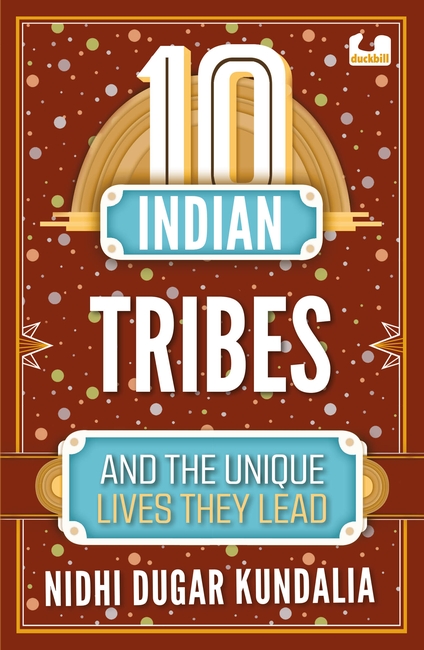
This book tells the story of ten Indian tribes who have been living lives very different-far away from or even within the same physical spaces-from the rest of mainstream India. Their histories have seldom been told. These tribes are . . .
The Halakkis
The Kanjars
The Konyak Nagas
The Changpas
The Alu Kurumbas
The Khasis
The Hill Marias
The Jarawas
The Meos
The Bhils
Nidhi Dugar Kundalia traces the origins and explores the daily lives, customs and challenges of some of the many tribes who share the country with us.
Identical stood the two Taj Mahals, but the black one hid a sinister secret.
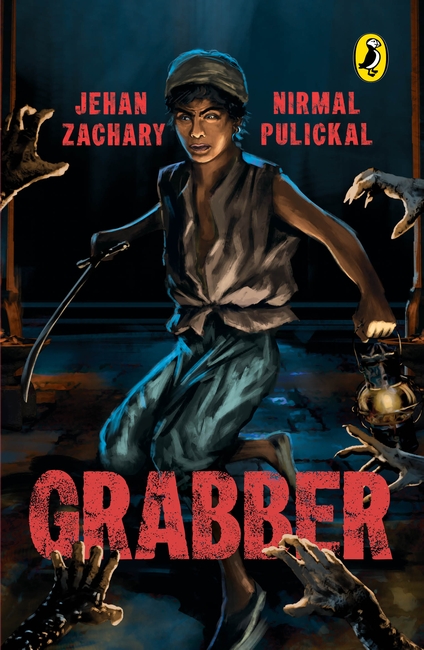
Buried in the sands of time is an urban legend-there was once another grand tomb as beautiful and as magnificent as its white twin, the Black Taj Mahal. But it hid a dark secret: the sixty-four chopped hands that built the White Taj.
Centuries later, during the British era, twelve-year-old Nuru befriends a queen from the erstwhile Mughal courts. Mumtaz appears and disappears as she pleases but warns of a prophecy. The revival of the pisacha-a ghoulish union of the sixty-four severed hands that built the White Taj Mahal.
Everyone’s end is near and there is only one way to defeat this evil-find the fabled Black Taj Mahal.

Chauhan’s writing is resistance literature. It echoes the harrowing screams of a people long suppressed.
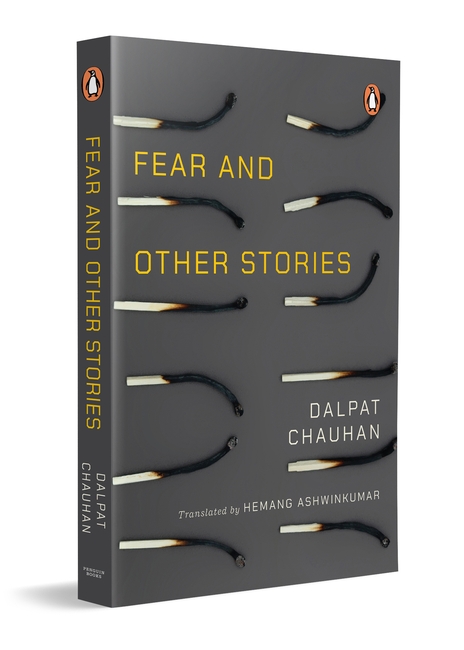
Fear and Other Stories is a reminder of the inherent dangers of the Dalit life, a life subjected to unimaginable violence and terror even in its most mundane moments. In this collection of short stories, veteran Gujarati writer Dalpat Chauhan narrates these lived experiences of exasperation and anger with startling vividity. His characters chronicle a deep history of resistance, interrogating historical, mythological and literary legends, foregrounding the perspectives of the disenfranchised.
Chauhan deftly wields his prose to counter dominant narratives, pointing out gaps and voicing the silences within. In ?The Payback, for a change, we see famished savarnas begging Dalit families for food that they scorn otherwise. The eponymous Fear follows the heroic but doomed resistance of Dalit youths fighting against savarna men with the ‘right’ to enter their homes and molest women inside. And the allegorical Cold Blood features a doctor who tries to leave behind his identity with his surname, only to be reminded of it when the savarnas accept his blood, but not water from his hands.
Hemang Ashwinkumar’s nimble translation introduces the English reader to Chauhan’s heart-wrenching stories while unmasking a rural Gujarat unrecognizable from its supposedly vibrant idylls. His introduction to the book not just contextualises Chauhan’s work, but is also a touching and thought-provoking commentary on the larger canvas of Dalit literature.
India’s food is one of her most remarkable features: its countless tastes and styles reflect the nation’s history, enduring traditions, and diversity of people and place.
But it is changing at a rapid rate beyond anyone’s imagination.
Eating the Present, Tasting the Future ventures ‘off the plate’ to journey through India’s contemporary foodscape to discover the myriad forces transforming what, how and where Indians are producing, trading and eating their food. At a time when food and our relationship with it are topics of increasing global interest, this is a timely, and important, work, offering unique insight into a complex society.

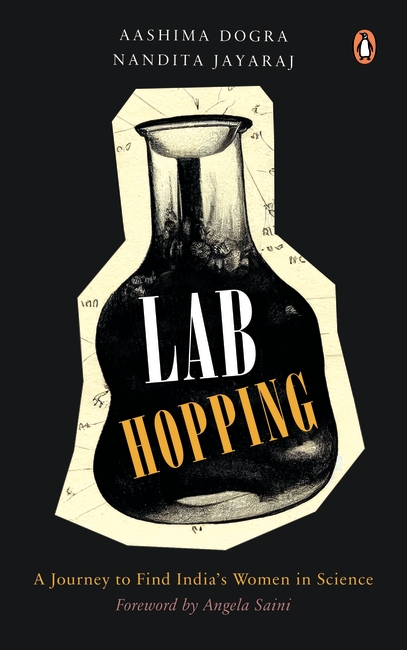
Embark on a one-of-a-kind journey through India’s science laboratories in pursuit of the true story behind the gender gap.
From Bhopal to Bhubaneswar, from Bangalore to Jammu, Aashima Dogra and Nandita Jayaraj engage in thought-provoking conversations with renowned scientists like Gagandeep Kang, Rohini Godbole, Kiran Mazumdar-Shaw and Prajval Shastri, as well as researchers at earlier stages of their scientific careers. These dialogues about the triumphs and challenges faced by women offer fresh perspectives on the gender gap that continues to haunt Indian science today.
Our labs are brimming with inspiring stories of women scientists persisting in science despite facing apathy, stereotypes, and sexism to systemic and organizational challenges. Stories that reveal both a broken system and the attempts by extraordinary women working to fix it. By questioning whether India is doing enough to support its women in science and if western models of science and feminism can truly be applied in India, the authors not only offer a comprehensive examination of the state of women in science but also offer a roadmap for the way forward.
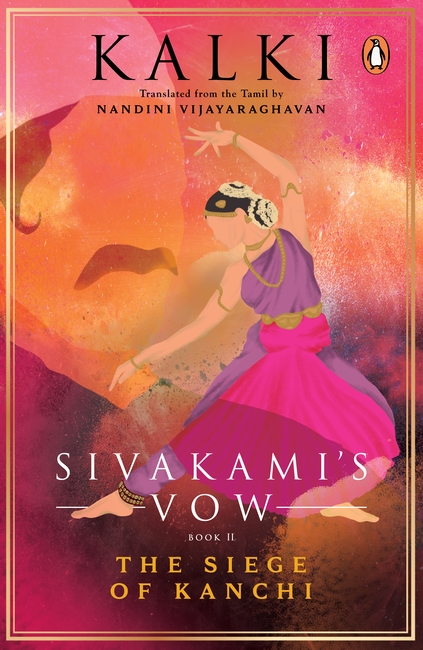
The political stature of the Pallava crown prince, Narasimha Varmar, has grown considerably after defeating the king of Ganga Nadu at the historic Pullalur battle. But he has more obstacles to overcome. Emperor Mahendra Pallavar, after restraining the Chalukya forces for nine months at the northern border of the Pallava kingdom, is on his way back to Kanchi and continues to oppose the crown prince’s relationship with the dancer, Sivakami.
Meanwhile, the Machiavellian Naganandi adigal has convinced Sivakami and Aayanar to leave their home in the forest against Narasimha Varmar wishes. And the Chalukya army marches towards Kanchi, causing destruction and damage across the countryside. Yet, the emperor remains unwilling to cross swords with them. Expecting the enemy to lay siege to the Kanchi fort, Mamallar must find a way to balance his duties as crown prince and his love for Sivakami.
Expertly weaving suspense, romance and drama, Kalki’s gripping narrative describes the tremendous efforts of the Pallavas to counter the Chalukya invasion and the growing intimacy between Mamallar and Sivakami in the action-packed second volume of Sivakami’s Vow: The Siege of Kanchi.

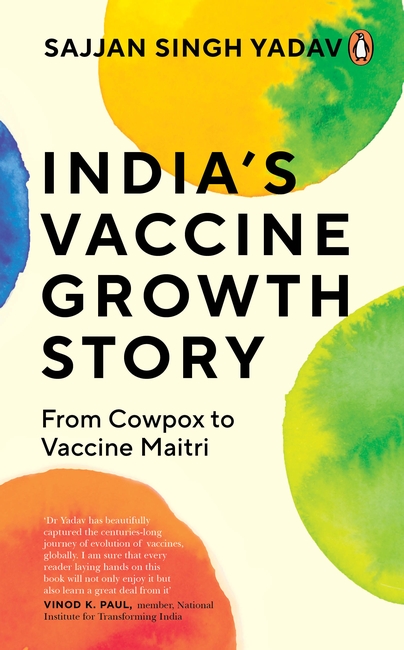
THIS POTENT GROUP OF WEAPONS HAS NOTABLY ANNIHILATED SMALLPOX, PUSHED POLIO TO THE VERGE OF ELIMINATION AND IS NOW TAKING ON COVID-19
Indians practised inoculation centuries before the West discovered vaccines in 1796. India’s Vaccine Growth Story charts the journey of vaccines from the Jennerian era to the COVID-19 pandemic, covering multiple facets of vaccines from the Indian and global perspectives. Apart from discussing vaccine leadership, vaccine nationalism, vaccine hesitancy, eagerness and equity, as well as the latest diplomatic currency-the Vaccine Maitri- the book takes its readers through India’s exciting and meticulously planned project of executing the world’s largest vaccination drive.

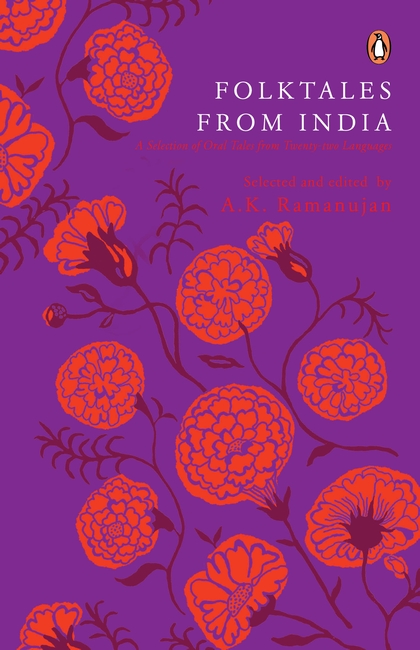
Folklore pervades childhoods, families and communities and is the language of the illiterate. Even in large, modern cities, folklore-proverbs, lullabies, folk medicine, folktales-is only a suburb away, a cousin or a grandmother away. Wherever people live, folklore grows. India is a country of many languages, religions, sects and cultures. It is a land of many myths and countless stories. Translated from twenty-two Indian languages, these one hundred and ten tales cover most of the regions of India and represent favorite’s narratives from the subcontinent. A.K. Ramanujan’s outstanding selection is an indispensable guide to the richness and vitality of India’s ageless oral folklore tradition.