



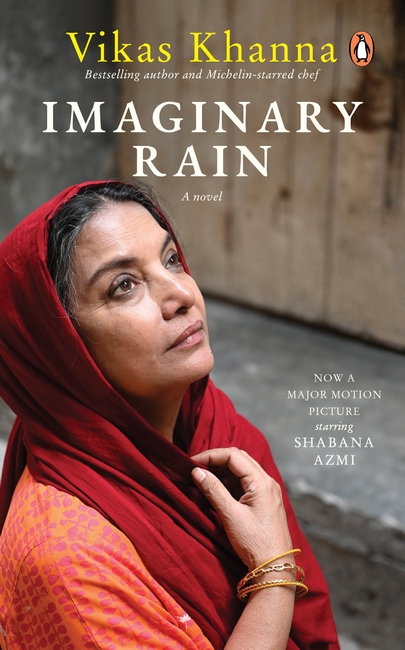
Prerna, a woman now in her fifties, has been running an Indian restaurant in downtown Manhattan for two decades. She is on the cusp of a midlife crisis, and her life indeed unravels when she suddenly loses her son, her lease, and with these, her passion for cooking as well. Caught in the grip of newly awakened emotions, Prerna finds herself confronted by many haunting questions from her past, which take her back to her motherland, India. And so begins an intensely personal struggle that will lead Prerna to forgive herself, escape her past and rediscover her true passion for cooking.
This novel is a celebration of life as well as an immigrant’s story of survival, forgiveness and moving on.
Archives: Books
Victory City
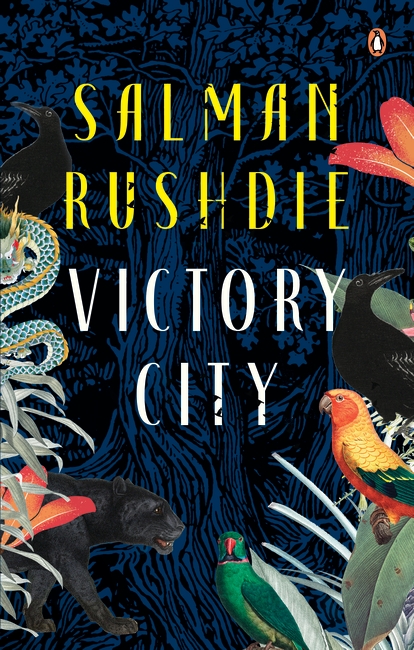
The epic tale of a woman who breathes a fantastical empire into existence, only to be consumed by it over the centuries – from the transcendent imagination of Booker Prize-winning, internationally bestselling author Salman Rushdie.
In the wake of an insignificant battle between two long-forgotten kingdoms in fourteenth-century southern India, a nine-year-old girl has a divine encounter that will change the course of history. After witnessing the death of her mother, the grief-stricken Pampa Kampana becomes a vessel for the Goddess, who begins to speak out of the girl’s mouth. Granting her powers beyond Pampa Kampana’s comprehension, the goddess tells her that she will be instrumental in the rise of a great city called Bisnaga – literally ‘victory city’ -the wonder of the world.
Over the next two hundred and fifty years, Pampa Kampana’s life becomes deeply interwoven with Bisnaga’s, from its literal sowing out of a bag of magic seeds to its tragic ruination in the most human of ways: the hubris of those in power. Whispering Bisnaga and its citizens into existence, Pampa Kampana attempts to make good on the task that the Goddess set for her: to give women equal agency in a patriarchal world. But all stories have a way of getting away from their creator, and Bisnaga is no exception. As years pass, rulers come and go, battles are won and lost, and allegiances shift, the very fabric of Bisnaga becomes an ever more complex tapestry – with Pampa Kampana at its centre.
Brilliantly styled as a translation of an ancient epic, this is a saga of love, adventure and myth that is in itself a testament to the power of storytelling.
The Laughter
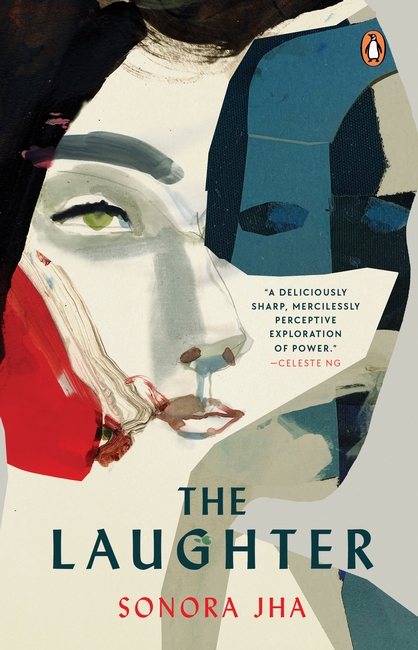
Dr. Oliver Harding is long settled into the routines of a divorced, aging academic. But his quiet life is upended by his new colleague, Ruhaba Khan, a dynamic Pakistani law professor.
Ruhaba unexpectedly ignites Oliver’s long-dormant passions, a secret desire that quickly tips towards obsession after her teenaged nephew arrives to stay with her. Drawn to them, Oliver tries to reconcile his discomfort with the worlds from which they come, and to quiet his sense of dismay at the encroaching change they represent-both metaphorically and in Ruhaba’s spirited engagement with the student movements on campus.
After protests break out demanding diversity across the university, Oliver finds himself and his beliefs under fire, even as his past reveals a picture more complicated than it seems. As Ruhaba seems to fade in and out of reach, Oliver reacts in ways shocking and devastating.
Sonora Jha has created a complex character both in tune and out of step with our time, an erudite man who first inspires and then challenges our sympathies. As the novel reaches its shocking conclusion, Jha compels us to re-examine scenes in a new light, revealing a depth of loneliness in unlikely places, the subjectivity of innocence, and the looming peril of white rage in America.
An explosive and tense work of fiction, The Laughter is a fascinating portrait of privilege, radicalization, class, and modern academia that forces us to confront the assumptions we make, as both readers and as citizens.
The Best of Satyajit Ray (Boxset, Volume 1 & Volume 2)
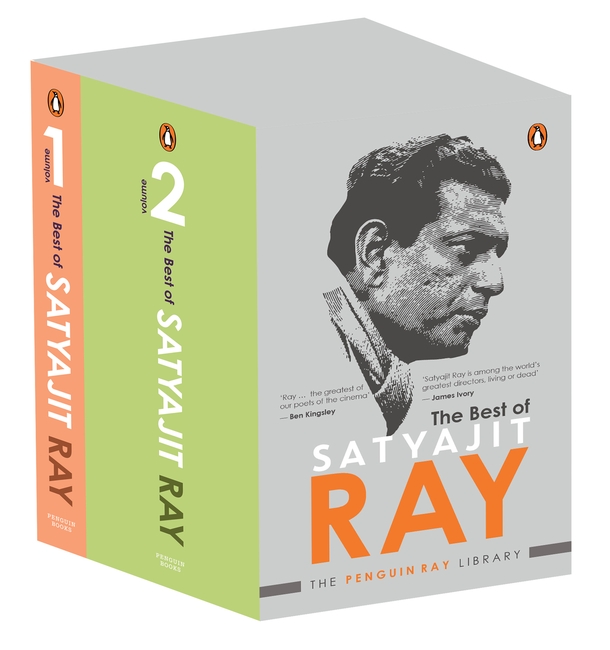
Satyajit Ray (1921-1991), polymath, polyglot, novelist, short-story writer, illustrator, designer, music composer, was one of the most eminent film directors of world cinema. His Pather Panchali (Song of the Little Road, 1955) established his position as a major film director, winning numerous awards. Recipient of the Lifetime Academy Award in 1992 ‘In recognition of his rare mastery of the art of motion pictures and for his profound humanitarian outlook, which has had an indelible influence on filmmakers and audiences throughout the world’, Ray took Indian cinema to a grand platform hitherto unachieved by any Indian film director. “Not to have seen the cinema of Ray means,’ said Akira Kurosawa, ‘existing in the world without seeing the sun or the moon.’
While Ray’s films are fairly well-known, his writings-fiction and non-fiction-written in Bengali and English continue to attract attention. His illustrations, design works, comic strips, science fictions, detective stories are gems of Indian literature. Ray’s non-fictions are gems, which bring to lights his thoughts on film-making, film appreciation, composition of music, art, design and screenplay, among others. ‘The Penguin Ray Library’ is an endeavour to open a window to the master’s writings to a wide spectrum of readers.
From the ever-popular adventures of Ray’s enduring creation, the professional sleuth Feluda to the chronicles of Professor Shonku; short stories; writings on filmmaking; and thoughts on world as well as Indian cinema, among others, this anthology, a two-volume boxset, The Best of Satyajit Ray is not only a treat for the Ray enthusiasts but also a collector’s edition.
The Ultimate Sales Accelerator

ONE SALES STRATEGY TO WIN IN BOTH BUSINESS AND LIFE
There are 7.7 billion sales owners in the world. Everyone is selling either a product, a service or an idea. The fact that everyone is selling brings its own unique challenges and possibilities.
How can high-growth companies and start-ups win clients amid unprecedented competition?
How can one close large deals virtually?
How does one become a great storyteller and influence others?
How can one communicate effectively in life scenarios such as parenting, hiring or asking for a raise?
What is the higher purpose of sales?
Sharing forty-two practical business, consumer and real-life experiences, this book reveals one simple and powerful sales strategy that is the perfect answer to all the above questions. In an engaging manner, Amit provides you with a clear and easy-to-implement blueprint for this strategy.
The Updated and Expanded Edition includes
Virtual Selling Readers’ Case Studies 10 Videos Embedded as QR codes
The Nitopadesha

In the distant land of Gandhara, there once was a janapada called Chakrapuri. Its elders were a worried lot. Their children were uninterested in the welfare and upkeep of the janapada. Most of them were consumed by self-interest and avarice, seeking personal gains, even at the cost of their fellow citizens. Realizing that the young must learn the arts and crafts of citizenship, the Sabha of Chakrapuri decided to employ Nitina of Takshashila, whose wisdom was said to be unparalleled, to teach their children. So it came to pass that the unconventional scholar was entrusted with the charge of these boys and girls for the next ninety days.
Thus begins the Nitopadesha. A labyrinth of stories in the style of the Panchatantra and the Jataka tales, this is a book about good citizenship and citizen-craft that will speak to the modern reader. Covering aspects such as what citizenship means, the ethical dilemmas one faces as a citizen and how one can deal with social issues, Nitin Pai’s absorbing translation is an essential read for conscientious citizens of all ages.
The Financial Independence Marathon
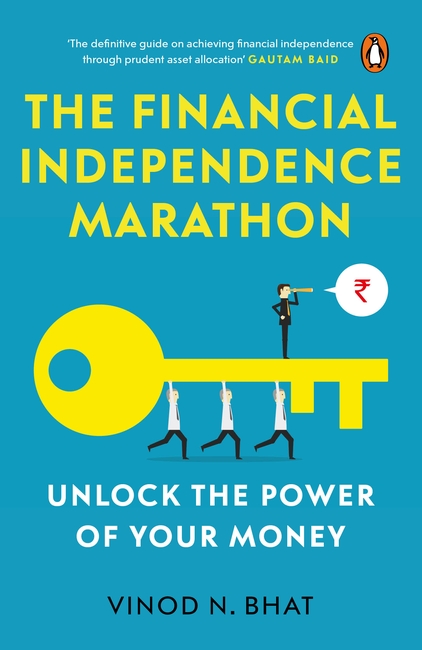
‘Time is money’. But the opposite is also true, i.e., ‘money is time’. Money, if used wisely, gives us the free time to do what makes us happy. It is crucial to understand the concept that money creates time because time is a non-renewable resource. And becoming financially independent is akin to finding a hidden treasure of time. It’s similar to discovering a gold mine, because it gives us the ability to live life on our own terms.
The key is not to think of financial independence as a goal but as a marathon, which we need to enjoy. This book is an easy, entertaining and actionable guide to becoming financially independent and avoiding any pitfalls on the journey.
The Company We Keep
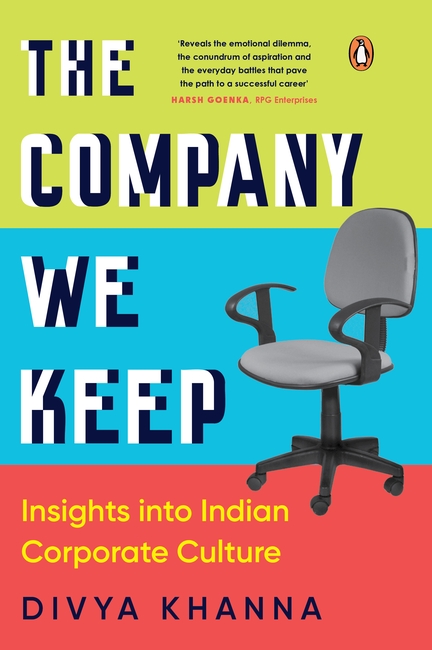
There are many challenges facing business corporations today-the pandemic we have barely moved on
from, economic recession, rapid changes in consumer behaviour and technological and competitive disruptions. These challenges stick out like the visible tip of an iceberg, while culture, the biggest challenge, is like the slow-moving, gigantic mass that lurks deep under the surface. We cannot deal sufficiently with superficial problems if we do not understand the depths that drive them.
‘Culture eats strategy for breakfast’ is a widely accepted saying in the business world, often attributed to Peter Drucker. This is as true for corporate India as it is for its consumers. Yet, we spend more time and money studying our consumers and their cultures than we do ourselves.
The Company We Keep is a market research-based exploration of Indian corporate culture. It looks beyond the glamour and jargon of the business world to individual stories that share real personal insights into the aspirations, vulnerabilities, pressures and possibilities of corporate careers and lives. These are urgent conversations we need to keep having as we reflect, review and decide where we can go from here.
Heart on the Edge: A compelling Story of Love, Betrayal, and Secrets by Novoneel Chakraborty
Naishee Kamaraj has a special bond with her younger brother, Shravan. One day when he suddenly goes missing, everyone tells her perhaps he left of his own volition, but Naishee knew her brother better than anyone else. She fears there has been foul play. And her fears come true when she receives a second-hand phone with a video of her brother being held captive. She needs to perform some horrific activities to save her brother. As time ticks by, Naishee knows she will come out a totally different being by the end of it all . . .
The Half Empress
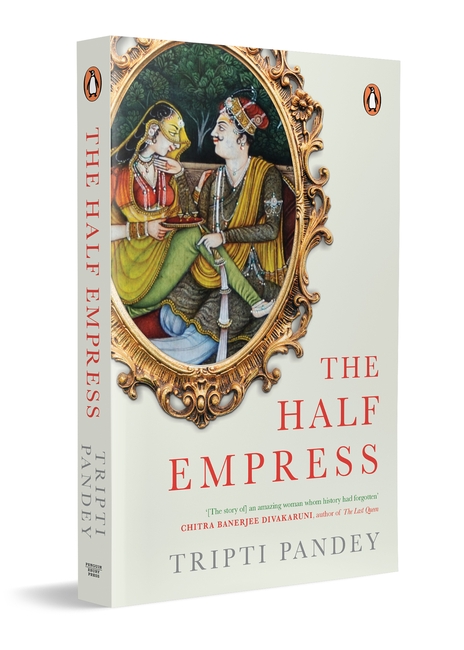
Among the rulers of Jaipur, Maharaja Sawai Jagat’s name is taken with contempt, because of his affair with a tawaif, or courtesan, Raskapoor, the daughter of a Muslim mother and a Brahmin father. The Maharaja defied all norms and bestowed upon her the title of ‘Half Empress’. With little experience, Raskapoor resiliently navigated her way through the cobwebs of the royal life. But, pitched against a fleet of plotters in an atmosphere filled with deceit, she finally fell into their trap and was imprisoned. There are many stories about how her life ended-the compassionate prison chief allowed her to flee or she flung herself on to the pyre of Jagat Singh. But today, she is best remembered by the guides who routinely mention her as a celebrity prisoner at the famous Nahargarh Fort.
In her historical novel The Half Empress, Tripti Pandey transports the reader to the royal corridors of nineteenth-century Jaipur and brings to life the story of a formidable woman who has been deliberately omitted from history.