Publish with Us

Follow Penguin

Follow Penguinsters

Follow Penguin Swadesh

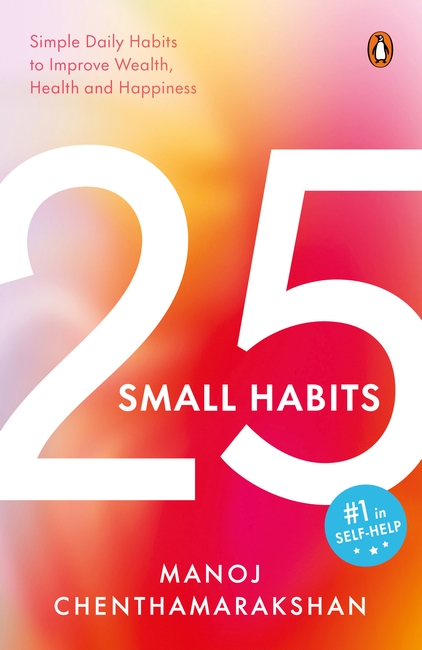
25 Small Habits

We all know that our habits shape our lives, but when we try to incorporate a new habit into our lifestyle, we understand how difficult it can get. Most people fail to retain a new habit past the first week. This book doesn’t teach you how to develop habits; instead, it offers you a set of twenty-five small habits that take very little time and can be held on to without much effort.

The habits in this book are designed to give you holistic growth in terms of self-development, community, career, relationship, and physical and mental health. You can choose the habits that you are able to fit into your daily schedule.

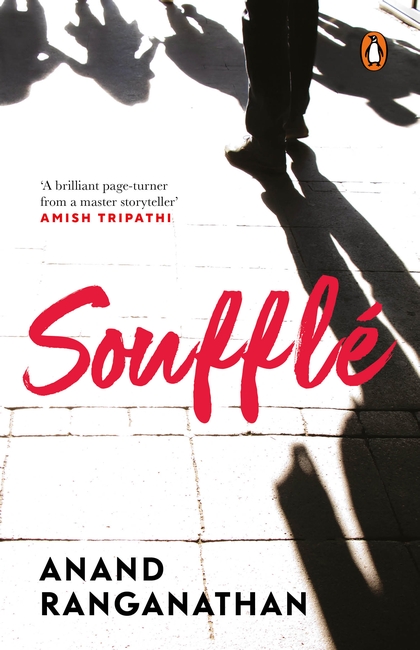
Souffle

One sultry Mumbai night, business tycoon Mihir Kothari takes a bite of a soufflé and drops dead. According to the CCTV footage, celebrity chef Rajiv Mehra is the killer. It seems like an open-and-shut case.

Or is it?

A catastrophic accident on the day the chef is to be hanged allows him to escape and, driven by an inner calling, pursue a new life. Chased by shadows he thought he had left behind, torn by spurned love, the chef
returns in search of the real killer so that he can prove his innocence. But there is a problem. Unknown to him, the killer has chosen his next target: the chef himself!

Soufflé is a rich, layered thriller that explores life, love and the passions that motivate people to do unexpected and impossible things.

‘If this psychological, compelling and unpredictable novel doesn’t keep you hooked, give up reading’
ASHWIN SANGHI

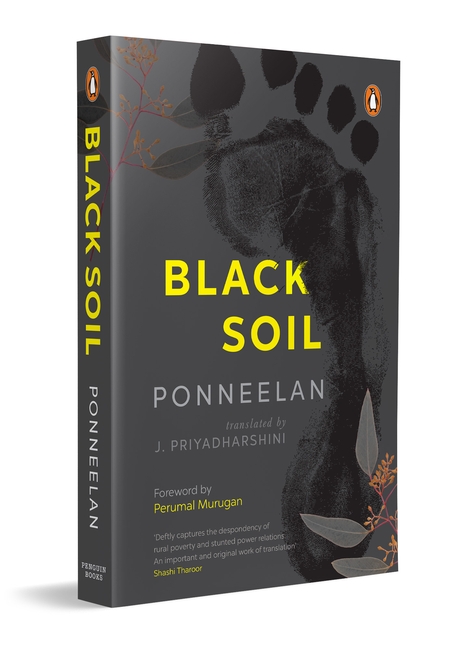
Black Soil

Kannappan is posted to Perumalpuram as the new schoolteacher. The village lies in the black soil region of Tamil Nadu where the river Tamirabarani flows. He’s an outsider in this village with Veerayyan, a local farmer, as his only guide and friend.
Once settled in his role, Kannappan observes the everyday brutality faced by the farmers at the hands of the sadistic, all-powerful landlord-the Master. Child marriage is common in the village and so is the appalling practice of marrying young lads to older women who then serve as their father-in-law’s consort. Through his gentle yet probing conversations with the villagers, Kannappan tries his best to show the villagers a better way of life. The farmers who had begun protesting the excesses meted out to them by the upper-caste landlord soon find an ally in Kannappan. The schoolteacher’s sympathies for their cause bolster their waning spirits and replenishes their resolve to fight back.
Ponneelan’s first novel is a tour de force. Now translated for the first time, Black Soil lays bare the atrocities faced by the farmers and the human cost of building a better tomorrow.

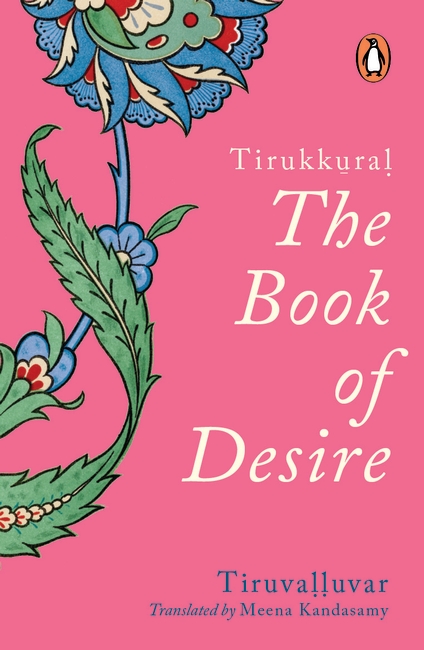
Tirukkural

Written by the poet Thiruvalluvar, the Kamattu-p-pal is the third part of the Tirukkural – one of the most important texts in Tamil literature. The most intimate section of this great work – it is also, historically, the part that has been most heavily censored. Although hundreds of male translations of the text have been published, it has also only ever been translated by a woman once before. Tirukkural is award-winning writer Meena Kandasamy’s luminous translation of the Kamattu-p-pal.

Meena Kandasamy delves into this classic, and provides the first feminist interventionist translation into English-remaining true to the desire throbbing through the lifeblood of the text, while retaining the drama that pervades the quintessential Tamil world of exaggerated hurt, lover’s quarrels and evenings lost to longing.

With her trademark wit, lyricism and passionate insight, Meena weaves a magic spell: taking the reader on a journey through 250 kurals, organised under separate headings – ‘The Pleasure of Sex’, ‘Renouncing Shame’, ‘The Delights of Sulking’ – the result is a fresh, vital, and breath-taking translation that conveys powerful messages about female sensuality, agency, and desire. It is a revolution 2000 years in the making.

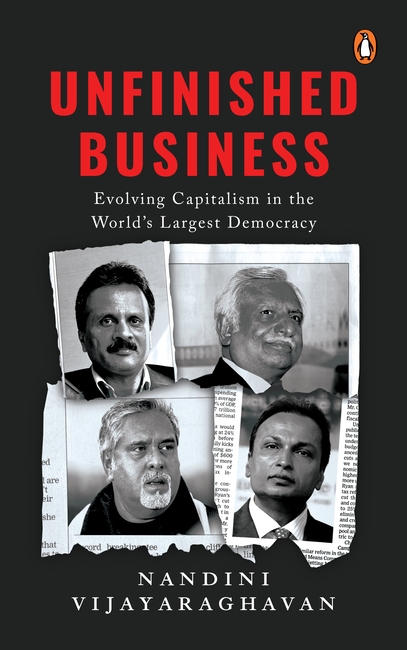
Unfinished Business

Unfinished Business is a chronicle of contemporary Indian corporate history, narrated through the professional trajectories of four high-profile businessmen: Anil Ambani, Naresh Goyal, V.G. Siddhartha and Vijay Mallya.
By no means unique in their proclivity for debt and penchant for politics, these four men belonged to a rarefied club of entrepreneurs, who could raise a sizeable quantum of financing with ease despite their businesses not generating adequate cash flows and/or possessing sufficient collateral.
So, what competitive advantage(s) did this guild of Indian entrepreneurs have? What caused their enterprises to struggle, while other similar organizations whose CEOs shared these attributes survived and even flourished? How did the Indian business ecosystem, regulatory norms, lenders’ underwriting practices and investor due diligence influence the organizations helmed by this quartet?
Following these four entrepreneurs’ careers and professional decisions, Unfinished Business throws light on the evolution of Indian capitalism during the first two decades of the twenty-first century, set against the backdrop of a dynamic political, regulatory and business climate in India. And, with great insight, clarity and analysis, Nandini Vijayaraghavan explores the takeaways for entrepreneurs, regulators, lenders and investors in this compelling, illuminating read.

The Half Known Life

Paradise: that elusive place where the anxieties, struggles, and burdens of life fall away. Most of us dream of it, but each of us has very different ideas about where it is to be found. For some it can be enjoyed only after death; for others, it’s in our midst-or just across the ocean-if only we can find eyes to see it.

Traveling from Iran to North Korea, from the Dalai Lama’s Himalayas to the ghostly temples of Japan, Pico Iyer brings together a lifetime of explorations to upend our ideas of utopia and ask how we might find peace in the midst of difficulty and suffering. Does religion lead us back to Eden or only into constant contention? Why do so many seeming paradises turn into warzones? And does paradise exist only in the afterworld – or can it be found in the here and now?

For almost fifty years Iyer has been roaming the world, mixing a global soul’s delight in observing cultures with a pilgrim’s readiness to be transformed. In this culminating work, he brings together the outer world and the inner to offer us a surprising, original, often beautiful exploration of how we might come upon paradise in the midst of our very real lives.

Diversity

While there are many things that make us the same, there are also many things that make us different. Where we live, what we eat, how we dress and even how we speak-these are just a few things that make us who we are.

Let’s explore all of the wonderful things that make us special in our own way!

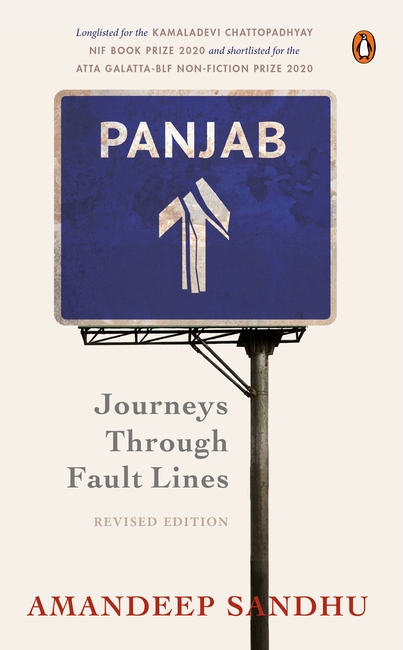
Panjab

Unlike people born in Panjab who have a direct connection with, and hence a memory of the land, I have no liminal or tangible marker of belonging to Panjab. While my family did hail from Panjab, I was neither born here, nor do I live here. I have no address, bank statement, Aadhaar card, passport or land ownership to prove my connection with Panjab.
In 2015, Amandeep Sandhu began an investigation that was meant to resolve the ‘hole in his heart’, his ’emptiness about matters Panjab’. For three years, he crisscrossed the state and discovered a land that was nothing like the one he had imagined and not like the stories he had heard.
Present-day Panjab prides itself on legends of its military and valorous past even as it struggles with daily horrors. The Green Revolution has wreaked ecological havoc in the state, and a decade and a half of militancy has destabilised its economy and governance. Sikhism-the state’s eclectic and syncretic religion- is in crisis, its gatekeepers brooking no dissent and giving little spiritual guidance. And Panjab has yet to recover from the loss of its other half, now in Pakistan.
This revised edition includes a chapter on the 2020-21 farmers’ struggle which proved beyond doubt that the old spirit of the land with its undercurrent of resistance to power and hegemony still beats away. The hope that Panjab’s unyielding knots can be untied continues to linger.

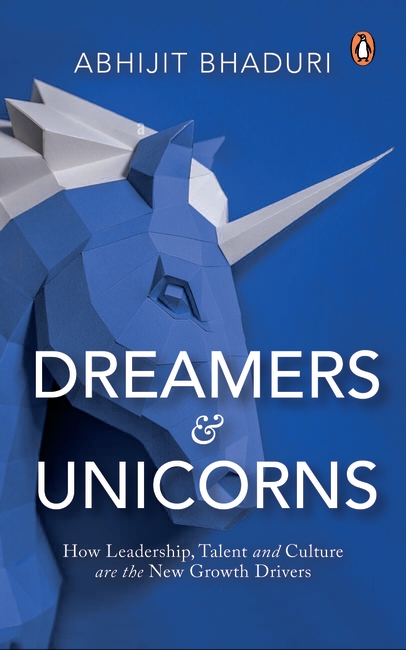
Dreamers and Unicorns

Which description fits your organisation?

DREAMERS: Most Dreamers or early-stage startups, know how to build products, not organisations. Most Dreamers stay local and never become a Unicorn with a national footprint.

UNICORNS: Three curses the Unicorns have to watch for-a narcissistic leader, a leadership team of old cronies and a toxic culture. These prevent them from going global and becoming Market Shapers.

MARKET SHAPERS: A Market Shaper changes how we live and work-across countries and cultures. Their challenge is to continuously earn the trust of governments and communities.

INCUMBENTS: Many Incumbents were once Market Shapers and Unicorns. The leaders don’t know that the firm and its offerings are irrelevant. Not being able to attract and retain talent is a warning bell the leaders often ignore.

Packed with ideas and innovations, this powerhouse of a book by best-selling author and talent management specialist Abhijit Bhaduri explains why leadership, talent and culture are the new drivers of growth whether you are a Dreamer, a Unicorn, a Market Shaper or an Incumbent.

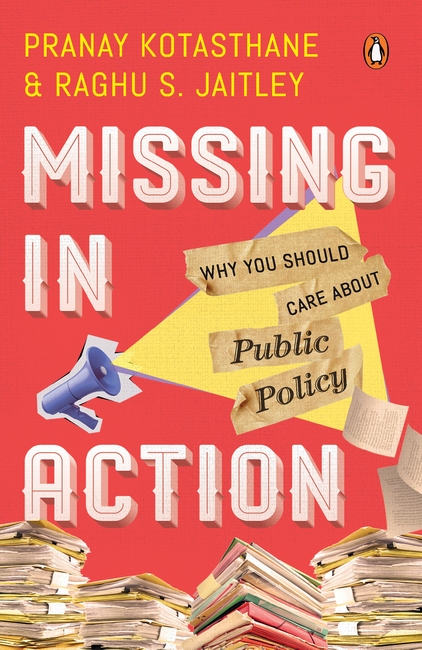
Missing In Action

In Search of an Adarsh Indian State

In India, public policies are all around us. Despite this pervasiveness, yeh public sab nahin jaanti hai (the public doesn’t know it all).

Questions are rarely asked of the Indian State-the institution that makes rules, bends them and punishes others for breaking the laws it creates. The privileged can afford not to think about the State because we have given up on it. The not-so-privileged have resigned themselves to a State that provides short-term benefits.

Either way, we seldom pause to reflect on why the Indian State works the way it does.

Missing in Action aims to change such perceptions through sketches from everyday experiences to illustrate India’s tryst with public policymaking. It acquaints the reader with some fundamental concepts of the public policy discipline. It explains the logic (or the lack of it!) of the Indian State’s actions, shortcomings, constraints, and workings.

Jargon-free and accessibly written, the book achieves the difficult task of both entertaining and educating.

There have been many books about Indian society, but none so far about the Indian state. Missing in Action fills that gap, and how! Kotasthane and Jaitley are two of our finest thinkers, and their writing combines a surgeon’s precision with a poet’s art of revealing the unseen. They paint both the big picture and the small details. This book is a masterpiece that will be essential reading 50 years from now. If you want to understand India, you should read Missing in Action.

Amit Varma, Creator of The Seen and the Unseen Podcast and The India Uncut Blog

Missing in Action is a thoroughly engaging, entertaining, and educational book. The book helps readers understand why the Indian State is the way it is-powerful yet ineffective, well-intentioned yet weak, and ambitious yet underperforming. A must-read for everyone!

Rohini Nilekani, Philanthropist, Author of Samaaj Sarkaar Bazaar: a citizen-first approach

The policy outcomes are the result of the three important forces: society, market and the Government. This wonderful book by Pranay Kotasthane and Raghu S. Jaitley beautifully tells you why and how this happens. Their pedagogical strategy is deceptively simple but very effective. The book has many real-life examples of both policy triumphs and disasters in our country and the authors lucidly explain the how and why. I would urge you to read this remarkably perceptive book that is analytically rich while making the learning ride very enjoyable.

Vijay Kelkar, Chairman, Thirteenth Finance Commission and former Finance Secretary, Government of India

error: Content is protected !!