Every 26th January, people gather on New Delhi’s Rajpath amidst a colourful jamboree of fluttering flags, marching soldiers and dancing children. What is celebrated on this day is at the heart of our democracy-the magnificent Constitution of India.
The document didn’t only lay down the law but united India with a vision that took two years, eleven months and seventeen days to realize. Subhadra Sen Gupta captures the many momentous occasions in Indian history that led to its making in The Constitution of India for Children. Populated with facts and dotted with cheerful illustrations, this book provides answers to innumerable questions asked over the years.
Which language is our Constitution written in?
Were women a part of the team that drafted the Constitution?
Why do political parties have symbols next to their names?
What is the official language of India?
An essential handbook for every student and denizen of India, here is a compendium of knowledge that serves as an insightful introduction to the most important document of Independent India.

My India: Ideas for the Future is a collection of excerpts from Dr A.P.J. Abdul Kalam’s speeches in his post presidency years. Drawn from Dr Kalam’s addresses to parliaments, universities, schools and other institutions in India and abroad, they include his ideas on science, nation-building, poverty, compassion and self-confidence.
Dr Kalam draws on the lives of stalwarts such as Marie Curie and Dr Vikram Sarabhai to encourage and inspire his young readers. Through these speeches, he shares many valuable lessons in humility, resilience and determination, and leads children to think, grow and evolve.
A project very close to his heart, Dr Kalam’s last book for children is a road map for every child to pursue their dreams, to be the best they can be, leading to the realization of a better India.

Who was Shah Bano and why was her alimony pertinent to India’s Secularism? Does the fundamental right to life include the right to livelihood and shelter? Where there is the right to live, is there also the right to die? How did Bhanwari Devi’s rape help define sexual harassment at the workplace? Here are the Supreme Court’s ten pivotal judgements that have transformed Indian democracy and redefined our daily, lives. Exploring vital themes such as custodial deaths, reservations and environmental jurisprudence, this book contextualizes the judgements, explains key concepts and maps their impacts. Written by one of India’s most respected lawyers, Ten Judgements That Changed India is an authoritative yet accessible read for anyone keen to understand India’s legal system and the foundations of our democracy.
Do you sometimes feel tired, lethargic and spiritless?
How can Ayurveda help in a simple, practicable manner?
Time is scarce and precious in today’s world, and
we seek solutions that are quick. While allopathic medicine
tends to focus on the management of disease, the ancient study
of dinacharya provides us with holistic knowledge of
preventing disease and eliminating its root cause.
Taking us through a day in the life of Ayurveda living,
Dr Bhaswati Bhattacharya illustrates the core principles
of Ayurveda and shows us how to incorporate these in our
routine. She explains the logic behind the changes she
recommends and how they benefit us. Informative and
accessible, Everyday Ayurveda is the perfect lifestyle guide
designed to maximize health, longevity
and happiness the natural way.
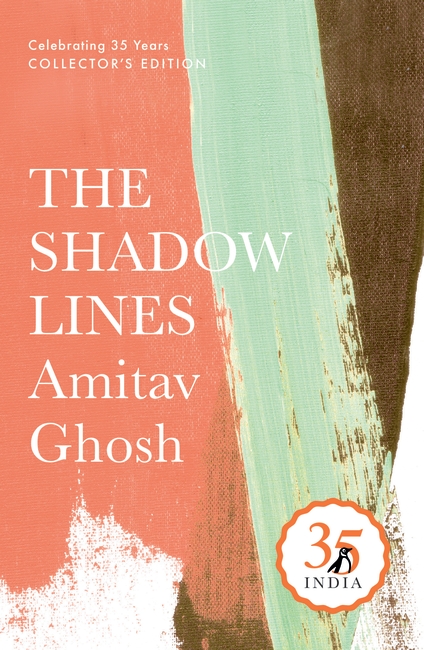
As a young boy, Amitav Ghosh’s narrator travels across time through the tales of those around him, traversing the unreliable planes of memory, unmindful of physical, political and chronological borders. But as he grows older, he is haunted by a seemingly random act of violence. Bits and pieces of stories, both half-remembered and imagined, come together in his mind until he arrives at an intricate, interconnected picture of the world where borders and boundaries mean nothing, mere shadow lines that we draw dividing people and nations. Out of a complex web of memories, relationships and images, Amitav Ghosh builds an intensely vivid, funny and moving story. Exposing the idea of the nation state as an illusion, an arbitrary dissection of people, Ghosh depicts the absurd manner in which your home can suddenly become your enemy. Winner of the Sahitya Akademi Award.

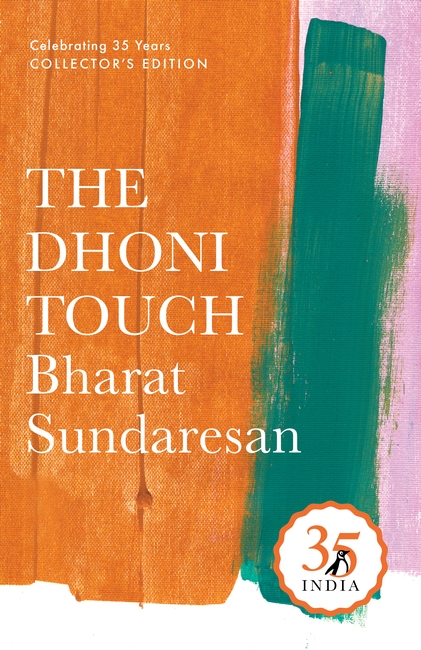
For over a decade, Mahendra Singh Dhoni has captivated the world of cricket and over a billion Indians with his incredible ingenuity as captain, wicketkeeper and batsman. Bharat Sundaresan tracks down the cricketer’s closest friends in Ranchi and artfully presents the different shades of Dhoni-the Ranchi boy, the fauji, the diplomat, Chennai’s beloved Thala, the wicketkeeping Pythagoras-and lays bare the man underneath. He discovers a certain je ne sais quoi about the man who has a magical ability to transform and elevate everything which comes into his orbit-the Dhoni Touch.

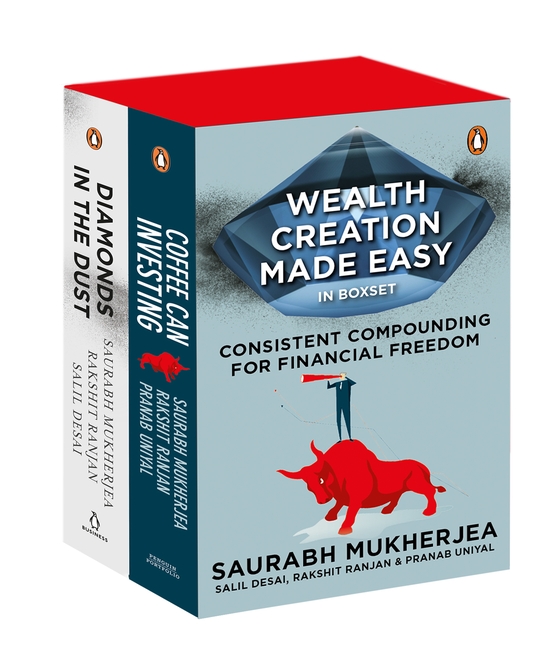
This box includes a set of two bestselling books on investing and wealth creation.
Diamonds in the Dust offers Indian savers a simple, yet highly effective, investment technique to identify clean, well-managed Indian companies that have consistently generated outsized returns for investors. Based on in-depth research conducted by the award-winning team at Marcellus Investment Managers, it uses case studies and charts to help readers learn the art and science of investing in the US$3 trillion Indian stock market.
The book also debunks many notions of investing that have emerged from the misguided application of Western investment theories in the Indian context.
Vital and indispensable, this book will serve as the ultimate manual on investing and provide practical counsel to readers to achieve their financial goals.
Coffee Can Investing offers a simple strategy to make not 10 not 15 but 20 percent compound annual growth rate (CAGR) on your investments. Using this strategy one can easily grow their money four to five times whilst taking half the risk compared to the overall market. The book decodes the secret to identifying low-risk investments that generate great returns.

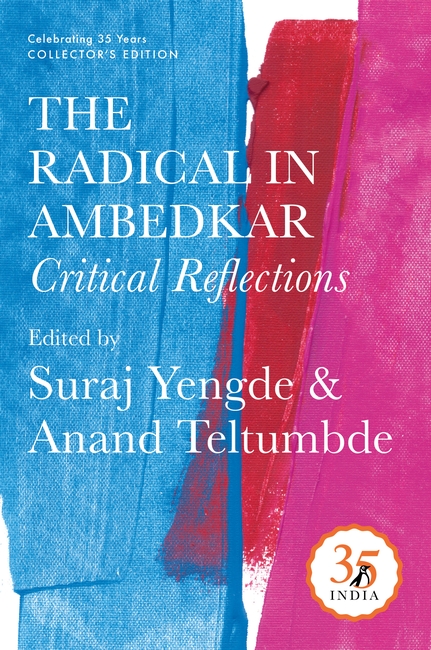
This landmark volume, edited and introduced by Anand Teltumbde and Suraj Yengde, establishes B.R. Ambedkar as the most powerful advocate of equality and fraternity in modern India. While the vibrant Dalit movement recognizes Ambedkar as an agent for social change, the intellectual class has celebrated him as the key architect of the Indian Constitution and the political establishment has sought to limit his concerns to the question of reservations. This remarkable volume seeks to unpack the radical in Ambedkar’s legacy by examining his life work from hitherto unexplored perspectives.
Although revered by millions today primarily as a Dalit icon, Ambedkar was a serious scholar of India’s history, society and foreign policy. He was also among the first dedicated human rights lawyers, as well as a journalist and a statesman. Critically evaluating his thought and work, the essays in this book-by Jean Drèze, Partha Chatterjee, Sukhadeo Thorat, Manu Bhagavan, Anupama Rao and other internationally renowned names-discuss Ambedkar’s theory on minority rights, the consequences of the mass conversion of Dalits to Buddhism, Dalit oppression in the context of racism and anti-Semitism, and the value of his thought for Marxism and feminism, among other global concerns.
An extraordinary collection of immense breadth and scholarship that challenges the popular understanding of Ambedkar, The Radical in Ambedkar is essential reading for all those who wish to imagine a new future.
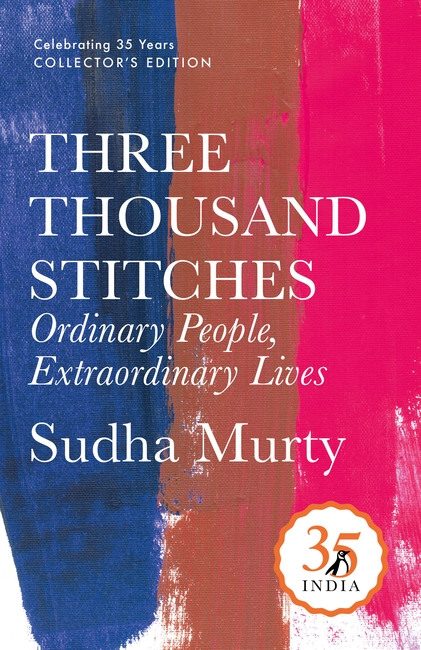
So often, it’s the simplest acts of courage that touch the lives of others. Sudha Murty-through the exceptional work of the Infosys Foundation as well as through her own youth, family life and travels-encounters many such stories . . . and she tells them here in her characteristically clear-eyed, warm-hearted way. She talks candidly about the meaningful impact of her work in the devadasi community, her trials and tribulations as the only female student in her engineering college and the unexpected and inspiring consequences of her father’s kindness. From the quiet joy of discovering the reach of Indian cinema and the origins of Indian vegetables to the shallowness of judging others based on appearances, these are everyday struggles and victories, large and small.
Unmasking both the beauty and ugliness of human nature, each of the real-life stories in this collection is reflective of a life lived with grace.