Naseeruddin Shah’s sparkling memoir of his early years, ‘from zero to thirty-two’, spans his extraordinary journey from a feudal hamlet near Meerut, to Catholic schools in Nainital and Ajmer, and finally to stage and film stardom in Mumbai. Along the way, he recounts his passages through Aligarh University, the National School of Drama and the Film and Television Institute of India, where his luck finally began to change.
And Then One Day tells a compelling tale, written with rare honesty and consummate elegance, leavened with tongue-in-cheek humour. There are moving portraits of family members, darkly funny accounts of his school days, and vivid cameos of directors and actors he has worked with, among them Ebrahim Alkazi, Shyam Benegal, Girish Karnad, Om Puri and Shabana Azmi. The accounts of his struggle to earn a living through acting, his experiments with the craft, his love affairs, his early marriage, his successes and failures are narrated with remarkable frankness and objective self-assessment. Brimming with delightful anecdotes as well as poignant, often painful revelations, this book is a tour de force, destined to become a classic of the genre.
In Shashi Tharoor’s satirical masterpiece, the story of the Mahabharata is retold as recent Indian history, and renowned political personalities begin to resemble characters from the Mahabharata-all of whom have a curious and ambiguous relationship with Draupadi Mokrasi (D. Mokrasi for short) . . .

Makers of Modern India is a detailed source for information about the country’s political traditions. The republic of India had a very tumultuous beginning and the author shows you how 19 political activists were instrumental in the evolution of this country. The author goes beyond a description of the people by including extracts of the speeches they have written. Each phase of the freedom movement and the following years of independent India are shown through the written works produced by these 19 individuals. In Makers of Modern India you will see caste, religion, colonialism, the economy language, gender, nationalism, democracy and secularism in a historical context. The book is a treat for those who are curious about the formation of the multifarious collection of people, ideas and religions in India. The author shows you how the lack of unison in the opinions of the makers of India complemented each other and resulted in the finished product called India.

The story of the forging of India, the world’s largest democracy, is a rich andinspiring one. This volume, a sequel to the India’s Struggle forIndependence, analyses the challenges India has faced and the successes ithas achieved in the light of its colonial legacy and century-long struggle forfreedom. It covers the framing of the Constitution and the evolution of theNehruvian political and economic agenda and basics of foreign policy; theconsolidation of the nation and contentious issues like party politics in theCentre and the states, the Punjab problem and anti-caste politics anduntouchability. These, along with objective assessments of Jawaharlal Nehru,Indira Gandhi, Jayaprakash Narayan, Lal Bahadur Shastri, Rajiv Gandhi,Vishwanath Pratap Singh, Atal Bihari Vajpayee and Manmohan Singh,constitute a remarkable overview of a nation on the move.

Basharat Peer was a teenager when the separatist movement exploded in Kashmir in 1989. Over the following years countless young men, seduced by the romance of the militant, fuelled by feelings of injustice, crossed over the Line of Control to train in Pakistani army camps. Peer was sent off to boarding school in Aligarh to keep out of trouble. He finished college and became a journalist in Delhi. But Kashmir-angrier, more violent, more hopeless-was never far away.
In 2003, the young journalist left his job and returned to his homeland to search out the stories and the people which had haunted him. In Curfewed Night he draws a harrowing portrait of Kashmir and its people. Here are stories of a young man’s initiation into a Pakistani training camp; a mother who watches her son forced to hold an exploding bomb; a poet who finds religion when his entire family is killed. Of politicians living in refurbished torture chambers and former militants dreaming of discotheques; of idyllic villages rigged with landmines, temples which have become army bunkers, and ancient sufi shrines decapitated in bomb blasts. And here is finally the old story of the return home-and the discovery that there may not be any redemption in it.
Lyrical, spare, gutwrenching and intimate, Curfewed Night is a stunning book and an unforgettable portrait of Kashmir in war.
In 1979, Binodini won the Sahitya Akademi Award for her groundbreaking feminist novel Boro Saheb Ongbi Sanatombi, a work of historical fiction based on the life of her rebellious aunt, Princess Sanatombi of Manipur. Now translated into English by Binodini’s son L. Somi Roy, this is the love story of Sanatombi and Lt Col. Henry St
P. Maxwell, the British representative in the Tibeto-Burman kingdom of Manipur.
A poignant tale of love and fealty, treachery and valour, it is set in the midst of the imperialist intrigues of the Raj, the glory of kings, warring princes, clever queens and loyal retainers. Reviving front-page global headlines of the Anglo-Manipuri War of 1891, Binodini’s perspective sparkles with wit, empathy and beauty, vividly bringing to life the court and manners of a little-known kingdom. In doing so, she recovers its extraordinary history and a forgotten chapter of the British Raj.

e is Eka-vachani, a king who always keeps his word; Eka-bani, an archer who strikes his target with the first arrow; and Eka-patni, a husband who is eternally and absolutely devoted to a single wife. He is maryada purushottam Ram, the supreme upholder of social values, the scion of the Raghu clan, jewel of the solar dynasty, the seventh avatar of Vishnu, God who establishes order in worldly life. Hindus believe that in stressful and tumultuous times chanting Ram’s name and hearing his tale, the Ramayan, brings stability, hope, peace and prosperity. Reviled by feminists, appropriated by politicians, Ram remains serene in his majesty, the only Hindu deity to be worshipped as a king.

A CLASSIC OF REPORTAGE FROM RURAL INDIA BY AWARD-WINNING AUTHOR, WITH A FOREWORD BY GOPALKRISHNA GANDHI
Acclaimed across the world, prescribed in over 100 universities and colleges, and included in part in The Century’s Greatest Reportage (Ordfront, 2000), alongside the works of Gabriel Garcia Marquez, Studs Terkel and John Reed, Everybody Loves a Good Drought is the established classic on rural poverty in India. Twenty years after publication, it remains unsurpassed in the scope and depth of reportage, providing an intimate view of the daily struggles of the poor and the efforts, often ludicrous, made to uplift them.
An illuminating introduction accompanying this twentieth-anniversary edition reveals, alarmingly, how a large section of India continues to suffer in the name of development so that a small percentage may prosper. Besides exposing chronic misgovernance, it is also a devastating comment on the media’s failure to speak for the voiceless.

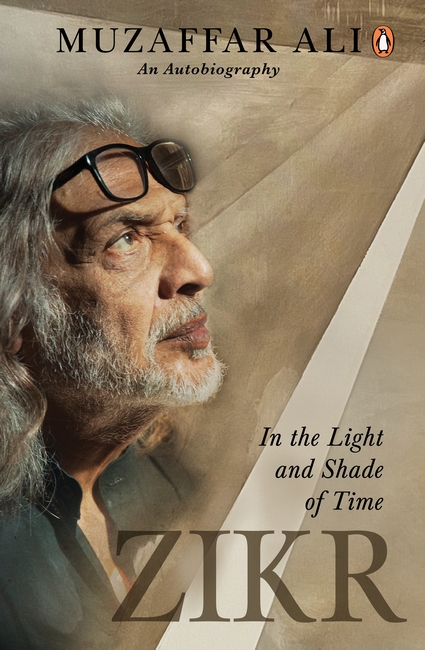
Internationally renowned, Muzaffar Ali has donned many hats in his lifetime. The scion of the princely house of Kotwara, the boy Muzaffar was shaped by the changing post-Partition India. Having studied science at Aligarh University, he started his career in an advertisement agency in Calcutta, worked with the nascent Air India and then ventured on a journey that produced cinematic masterpieces like Umrao Jaan. Along the way, his path collided with many-from Satyajit Ray to Faiz Ahmad Faiz-and he has cultivated many a passion, whether for cars or couture.
His autobiography is a peek into this wealth of experience-a close look at Ali, prince, poet, philosopher, film-maker, automobile aficionado and artist. Zikr is also a rich interior portrait of an artist, as Ali takes us behind the scenes of films like Anjuman and Gaman, speaking of the sensibilities that shaped them and the influences on his work. Above all, this is a book that resounds with a deep love for life.
Whether you’re looking for inspiration, seeking to venture off the beaten track of Bollywood or wishing to bite into a slice of erstwhile Awadhi culture, Zikr has something to offer all.

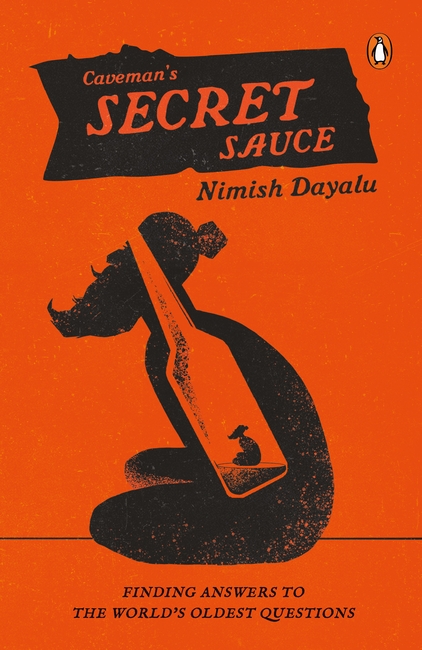
What if, one day, you find yourself in a Himalayan cave, far away from the world? For Jeet, this is a choice he made after leaving city life behind.
One evening, a strange man called Adi, who does mysterious things, makes his way into Jeet’s cave. The two develop a friendship that will help Jeet unravel the secrets of the wild. In his pursuit to grow, Jeet travels to a mountain village that has been untouched by time and then up a sacred mountain, meeting some fascinating characters along his journey. On this quest from the surreal to the supernatural, Jeet untangles some of the most complex mysteries of the world, which often kept him awake at night in the city.
Intriguing, adventurous and containing the pearls of forgotten ancient Indian myths and legends, Caveman’s Secret Sauce has the right ingredients that are missing in society today.