Jamyang Norbu has taken the stories of ‘forgotten’ Tibetans–resistance fighters, secret agents, soldiers, peasants, merchants, even street beggars–and skillfully worked their myriad accounts into a single glorious ‘memory history’ of the Tibetan struggle. He uses recollections from his own childhood to ease the reader into an immersive understanding of the complexity of Tibet’s modern history: the Chinese invasion, the uprisings in Kham and Amdo, the formation of the Four Rivers Six Ranges Resistance Force, the March ’59 Lhasa Uprising, the CIA supported Air Operations, the Nyemo peasant Uprising of 68/69 and the Mustang Guerilla Force in northern Nepal, where Norbu later served.
He writes of leaving home to drive tractors at refugee settlements, educate refugee children, produce plays at the Tibetan Institute of Performing Arts, and collect intelligence for the Tibetan Office of Research and Analysis (TORA) and for France’s External Intelligence Agency (SDECE). He uses these anecdotes not so much as autobiography but as a framing device to recount the lives, deeds and, too often, tragedies of the many Tibetans he encountered and befriended throughout his life–nearly all of whom played vital roles in shaping the recent history of their country but whose contributions are still unsung and forgotten. Jamyang Norbu’s lifelong commitment to collecting and orchestrating the ‘echoes’ of these many forgotten voices from the past has resulted in a lyrical, learned and compassionate book that could well be described as the prose epic of the Tibetan freedom struggle.

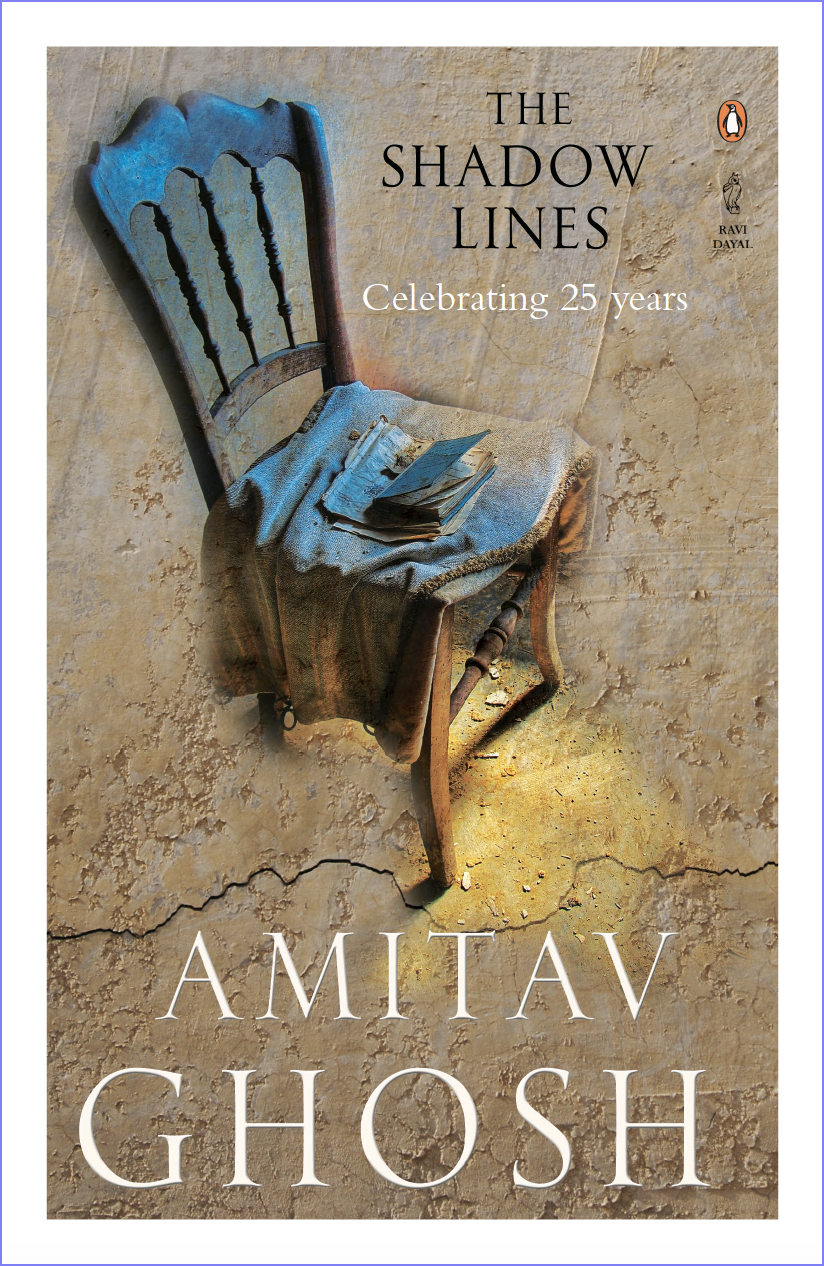
As a young boy, Amitav Ghosh’s narrator travels across time through the tales of those around him, traversing the unreliable planes of memory, unmindful of physical, political and chronological borders. But as he grows older, he is haunted by a seemingly random act of violence. Bits and pieces of stories, both half-remembered and imagined, come together in his mind until he arrives at an intricate, interconnected picture of the world where borders and boundaries mean nothing, mere shadow lines that we draw dividing people and nations. Out of a complex web of memories, relationships and images, Amitav Ghosh builds an intensely vivid, funny and moving story. Exposing the idea of the nation state as an illusion, an arbitrary dissection of people, Ghosh depicts the absurd manner in which your home can suddenly become your enemy. Winner of the Sahitya Akademi Award.

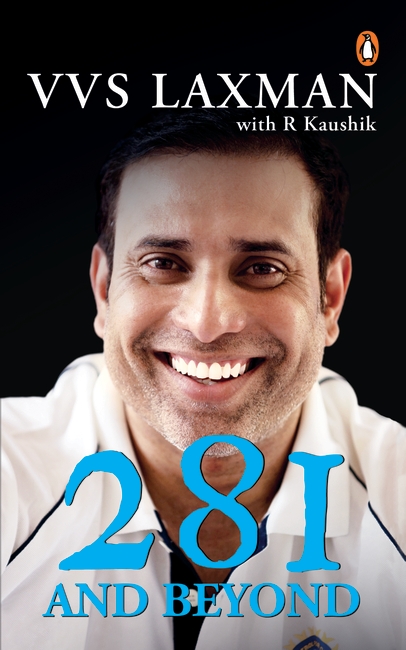
‘It never occurred to me to just play it safe and get to where no Indian had gotten before-a Test triple century. Do I regret reaching for the ball well outside off from McGrath that I spooned to point? Do I feel I should have batted out that one hour at my disposal and ticked off the 25 needed to get to the Promised Land? No, and no. I have never played my cricket that way . . . The individual milestone would have been terrific, but if I were to get the chance to replay that day, I would do exactly the same. I walked off the park immensely satisfied. I hadn’t missed out on 300 by 19 runs; I had made 281 . . . and put the team in a position from where we could expect to pull off a win against all odds. Isn’t that what you play the game for?’
A stylish batsman who could score against any kind of bowling, VVS Laxman played over a hundred Tests to aggregate more than 8000 runs. Cricket fans still remember with awe his game-changing knock of 281 against Australia in 2001 at Eden Gardens. But playing for India was never easy, and despite his vast experience and unimpeachable skill, he never made it to a World Cup team.
All through his playing years, Laxman was known to be a soft-spoken man who kept his distance from controversy. Which is what makes this autobiography truly special. It’s candid and reflective, happy and sad by turns. He writes of dressing-room meltdowns and champagne evenings, the exhilaration of playing with and against the best in the world, the learnings with John Wright and the rocky times under Greg Chappell.
In 281 and Beyond, Laxman lays bare the ecstasy and the trauma of being one of the chosen XI in a country that is devoted to cricket.

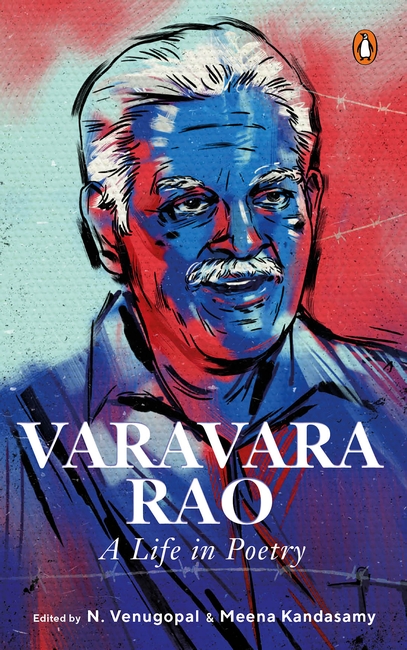
Varavara Rao: A Life in Poetry is the first-ever collection in English of poems by the Telugu poet, selected and translated from sixteen books that he has published. Having begun to write poetry in his early teens, Varavara Rao, now in his early eighties, continues to be a doyen of Telugu modern poets.
He was a consistent comrade-in-letters to all the social movements from the 1960s to the 2010s, and this volume is a capsule of momentous social history captured in his
poetic imagination.
The poems in the collection offer an artistic blend of tender response and thoughtful reaction to social realities, as well as an explosion of powerful emotions from a voice
sought to be subdued. Varavara Rao’s poetry, more than anything else, is an offering of solidarity to the voiceless, the underdog and the oppressed.

‘Rohan’s work is especially important for he has been able to make environmental news and messages accessible to the world at large’. — Arati Kumar Rao, National Geographic explorer, environment photographer, writer and artist
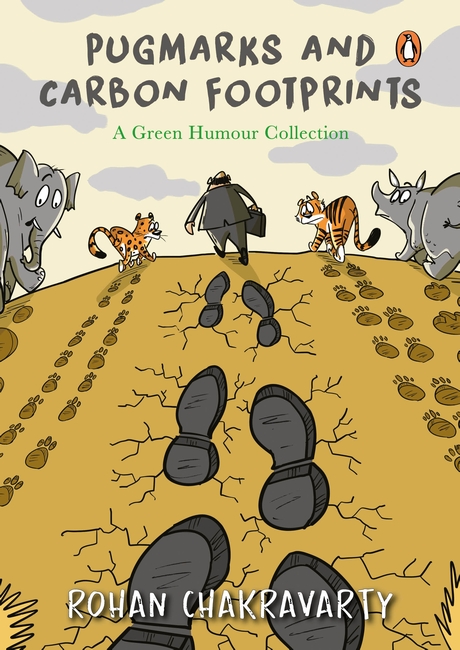
Pugmarks and Carbon Footprints is a collection of gag cartoons and comic strips based exclusively on wildlife and nature. Staying true to their theme, the cartoons and comics in the book will speak about wildlife, ecology, interesting trivia about the lives of wild animals, and how the lives of these creatures are entwined with ours. Other than providing some much needed comic relief during environmental doomsday, the book will equip the reader with snippet-sized information about environmental issues in an easily palatable manner.
A comprehensive and satirical take on various aspects of the natural world and the threats to its conservation, Pugmarks and Carbon Footprints will appeal both to the scientifically inclined reader as well as the layman.

Puffin Chapter books is a series of short, illustrated books for young readers.
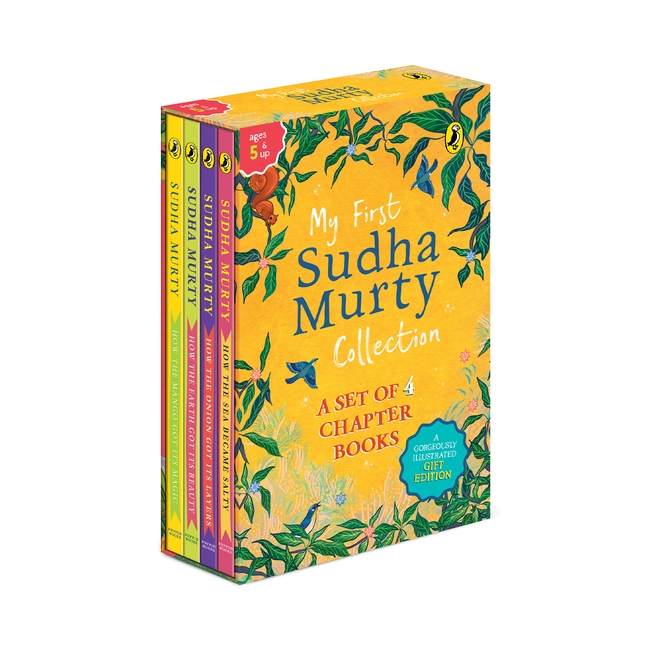
From India’s favourite writer comes a curated collection of 5 heartwarming stories packaged as charming chapter books. Each book offers a splendid introduction to Sudha Murty’s world through captivating illustrations, endearing characters and deliciously written tales in her unique style.
Magical, beautiful and full of wonder this boxset is a perfect gift for beginners.
Includes these five timeless chapter books:
How the Sea Became Salty
A long, long time ago, seawater was sweet and drinkable. How it became salty is a remarkable story.
How the Onion Got Its Layers
Have you noticed how the onion has so many layers? And have you seen your mother’s eyes water when she cuts an onion? Here is a remarkable story to tell you why.
How the Earth Got Its Beauty
Have you ever stopped to marvel at the earth’s beauty: at snow-capped mountains and oceans so deep; at colourful flowers and extraordinary animals? The tale of how such beauty came into existence is a curious one indeed.
How the Mango Got Its Magic
We all love the sweetness of mango and how it quenches our thirst on a hot summer day, but have you ever wondered how the mango got its magical sweetness?
How the Bamboo Got Its Bounty
In a lush, green forest, a shy, unassuming tree is presented with a reward by the forest queen. This makes
all the forest inhabitants curious . . .

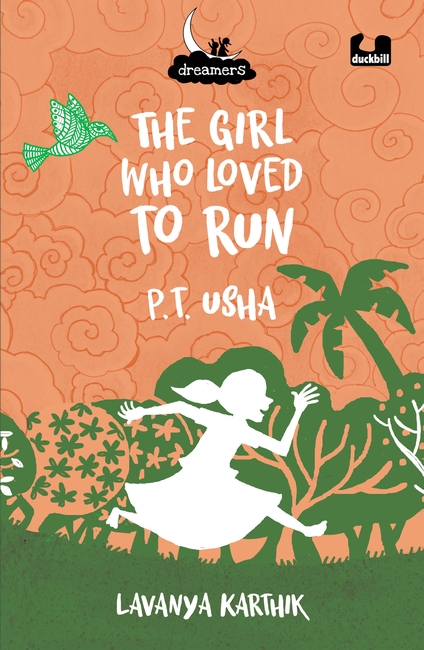
Quick as a bird, fast as a train-there she goes! This is the story of P.T. Usha, before she became a legend in Indian sports.
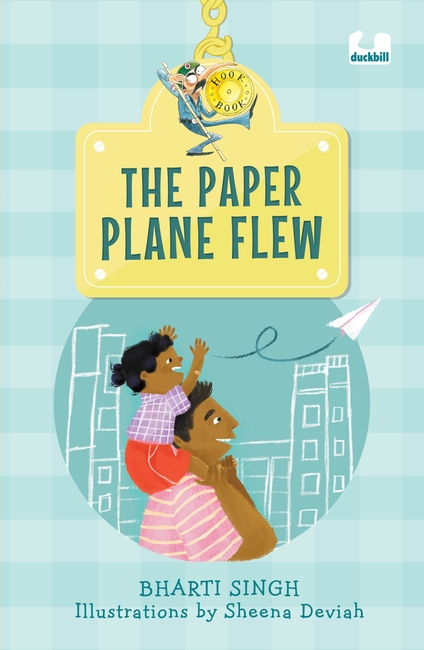
One afternoon, Mithi and her father make a paper aeroplane and send it into the sky. How far it will travel?
About the Hook Book Series
In a world where children’s books often feel cut from the same cloth, Hook Books stand out as a vibrant blend of imagination, humour, and heart. Crafted as a bridge between picture books and early chapter books, this series delivers stories that spark joy and wonder, while remaining rooted in age-appropriate learning.
Hook Books keep the fun going with:
- Short, digestible bits of text (perfect for budding readers)
- Bright colour illustrations that pull kids into the story
- Themes that speak to the everyday lives of children—plus a sprinkle of whimsy!
From fantasy tales to those that touch on more advanced ideas, Hook Books ensure that young readers are always in for a treat, no matter their reading level. Even better, these books take children on journeys through different parts of India, giving them a taste of the rich diversity of our world through local flavours, landscapes, and cultures. Whether the story takes place in bustling cities or quiet villages, Hook Books make every setting feel like home.

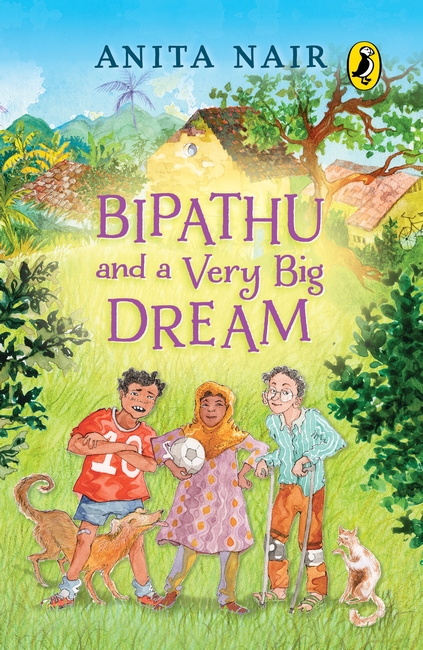
When school reopens in the village of Kaikurussi after the pandemic lockdown, nine-year-old Bipathu makes new friends-Madama, a blind lady who has moved to the village, Maash, a neighbour, Rahul, a boy who loves football as much as she does, and Duggu, a rescued puppy. When Madama gifts Bipathu’s brother Saad, a special needs child, a pair of braces, Bipathu starts believing in the power of the universe. So, when Suleiman, the class bully, roughs up Rahul to prevent him from training for the football match selections, Bipathu looks to the universe for help.
While Bipathu and Saad, along with Duggu, help Rahul ace up his game, will her own dream of playing football ever come true?
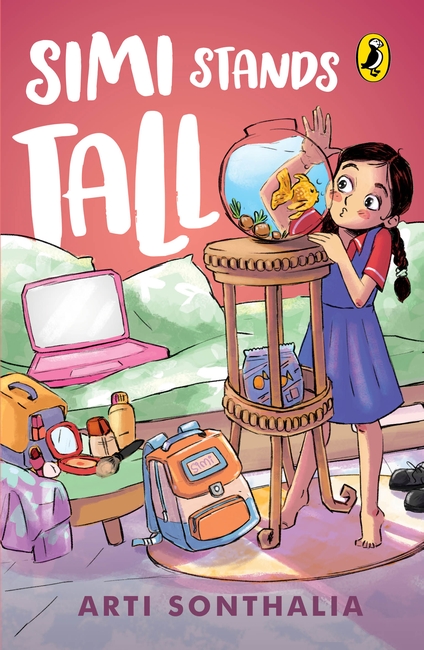
Simi has to join a new school in a new city. But the three-time academic award winner of Bhaarti Bhavan is suddenly a nobody at Newton International School. She discovers that a boy named Parth, who dresses in shabby clothes and torn shoes, is much smarter than her. The popular girl, Alisa, has a mean streak. Simi’s only confidant is her pet goldfish, Goldie, as she navigates annoying older siblings and her mother’s chemotherapy.
With so many changes in her life, will Simi learn to choose her human friends wisely, stand
up tall for herself and defend her real friends?