Janaki dreams of a secret world, far from the rigid rules of her town. This is the story of how nature shows her the way to it.
A delightfully illustrated short biography that will inspire young readers.
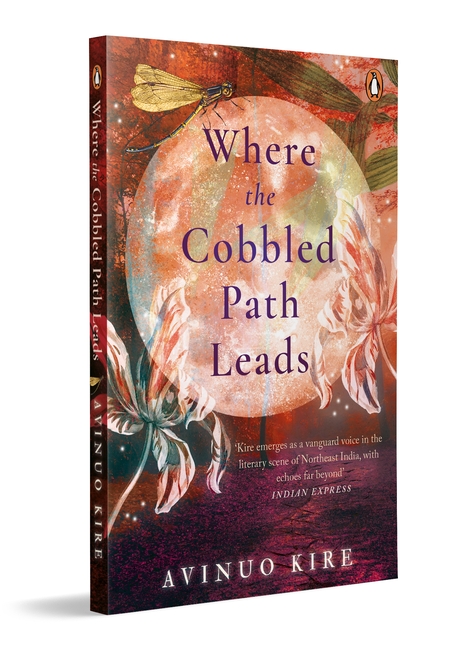
Janaki dreams of a secret world, far from the rigid rules of her town. This is the story of how nature shows her the way to it.
A delightfully illustrated short biography that will inspire young readers.
Narayan loved words, while Doodu loved to draw. This is the story of how two brothers created the immortal town of Malgudi.
A delightfully illustrated short biography that will inspire young readers.
Eric is a buttoned down Boston boy, a misfit in his family of hearty fisher folk. Uncertain he will ever complete the book on immigration he has been funded to write, he impetuously decides to follow his bossy girlfriend to Mexico. There, he is seduced by the pageantry of this colourful new country and its old world charm, and stumbles on an astonishing discovery – his grandfather was one of the Cornish miners who worked the local mines more than a hundred years ago, and once had another wife. Soon, Eric will find himself abandoning his own tentative future project in search of his family’s other lives.
The Zigzag Way is the story of twentieth century Mexico, through civil unrest and personal calamity; of the exploitation of the Mexican Indians, and their dubious saviours, such as the formidable Doñavera, widow of a mining baron, and eric’s own grandmother, a young Cornish girl whose grave lies in a hillside cemetery. And in unravelling their dark, often violent, histories on the día de los Muertos, the day locals celebrate and remember their dead, Eric comes face to face with his own story, its past and present; even, the afterlife. Haunting and luminous, the zigzag way is a magical novel of strange, elegiac beauty.
Written over 2500 years ago by Chinese general Sun Tzu, The Art of War is one of the most influential and renowned treatises on military strategy. But its knowledge transcends warfare, finding practical uses in all areas of contemporary life.
Be it at work, with friends and family, or within ourselves-conflict is an inevitable part of one’s journey. But the tools you need to battle these conflicts rest within you. This book will teach you how you can overcome the roadblocks that are stopping you from living your best life and reaching your highest self. Master your emotions, anticipate life’s many challenges, adopt discipline, and become an adept leader.
Perceptive and powerful, The Art of War is a must-read for anyone who wants to take charge of their life and succeed in all their endeavours.
Translated by Bibek Debroy
A GLORIOUS RENDITION OF ONE OF THE OLDEST PURANAS BY A MASTER TRANSLATOR
The Brahma Purana is the first of a series of eighteen texts known collectively as the Puranas. These are counted amongst the foundational texts of Hinduism. The holy trinity of Brahma as the creator, Vishnu as the preserver and Shiva as the destroyer constitutes the central deities of this series and features in its narratives. Sometimes referred to as Adi Purana, Brahma Purana oscillates between being a work of geography with a focus on the holy sites of the River Godavari, and being an encyclopaedic work of cosmology, genealogy and mythology.
Reading almost like a travel guide, it celebrates temples and sites related to Vishnu, Shiva and Devi as it focuses on places like modern-day Odisha and Rajasthan. Brimming with insight and told with clarity, this luminous text is a celebration of a complex mythological universe populated with gods and mortals, providing readers with an opportunity to truly understand Indian philosophy.
Translated by Bibek Debroy
A GLORIOUS RENDITION OF ONE OF THE OLDEST PURANAS BY A MASTER TRANSLATOR
The Brahma Purana is the first of a series of eighteen texts known collectively as the Puranas. These are counted amongst the foundational texts of Hinduism. The holy trinity of Brahma as the creator, Vishnu as the preserver and Shiva as the destroyer constitutes the central deities of this series and features in its narratives. Sometimes referred to as Adi Purana, Brahma Purana oscillates between being a work of geography with a focus on the holy sites of the River Godavari, and being an encyclopaedic work of cosmology, genealogy and mythology.
Reading almost like a travel guide, it celebrates temples and sites related to Vishnu, Shiva and Devi as it focuses on places like modern-day Odisha and Rajasthan. Brimming with insight and told with clarity, this luminous text is a celebration of a complex mythological universe populated with gods and mortals, providing readers with an opportunity to truly understand Indian philosophy.
More than seven decades after the Partition of India in 1947, the burden of grief in the hearts and minds of those affected still bears heavy. With a mere stroke of ink on a map, a nation was divided into two, affecting families from one generation to the next, the resultant wounds of which run painfully deep even today.
People on either side of the dreaded Radcliffe line that divided India and Pakistan experienced unimaginable trauma. The horrific events which led to the displacement of millions of people is forever etched in the memories of those who survived this nightmare. Yet, despite the widespread devastation, there were also some uplifting stories of humanity, grit and determination, along with the memories of all that was lost and those who were lost. Through these real stories of Partition, Rajeev Shukla has captured inspiring tales of love, kindness and perseverance of the human spirit.
There are stories from people who went on to become prime ministers, presidents, industrialists, medical researchers and more. In the decades following Partition, these stories of how families rebuilt their lives from scratch are worth remembering.
From the stories of figures like Manmohan Singh and Muhammad Ali Jinnah, to Gauri Khan’s grandmother and Avtar Narain Gujral, Scars of 1947 is a moving and nostalgic collection of a journey back in time, of an unforgettable period that left two nations scarred forever.
Asha Devi is India’s youngest ever Prime Minister. She is twenty-nine years old, charismatic and driven. Elevated to power after the assassination of her father she must prove that she is more than just a dynast.
But within days of her swearing-in, things begin to go wrong. Terrorists take hundreds of people hostage at Delhi’s top mall. Her coalition partner turns on her. Her step-brothers resent her accession. And she is caught up in a ratings war between two of India’s top TV channels and their self-obsessed anchors.
As Asha struggles to retain her hold on power, defeat the terrorists, keep her family together, win over coalition partners and tackle the beast of 24×7 news TV, she never loses sight of one objective: She must track down the man who murdered her father.
Written in a cinematic, fast-moving style this book offers an insider’s view of how things move at the top echelons of government and gives us a rare peek into the underbelly of the TV news business. It also brings back Asha Devi, the much-admired heroine of Seema Goswami’s bestselling Race Course Road.
In 1971, India waged a momentous war against Pakistan. But before all-out war, an even more significant tank battle was fought on 21 November 1971 by the C Squadron 45 Cavalry, which demolished the Pakistani General A.A.K. Niazi’s plans of victory and set the stage for the utter routing of the Pakistani Army.
Equipped with the amphibious PT-76 tanks, the Indian Army’s C Squadron 45 Cavalry was unleashed to swim across the River Kabodak, near the Boyra salient (now in Bangladesh), to counter the threat from East Pakistan. On 21 November 1971, the two warring armies clashed in a tank versus tank battle at Garibpur. In one fell swoop, Pakistan’s 3 (Independent) Armoured Squadron, consisting of fourteen American M-24 Chaffee tanks, was completely destroyed and two of its infantry battalions were badly mauled. This was followed by the shooting down of three Sabre F-86 jets for the loss of two PT-76 tanks on the Indian side. And thus, the biggest attack planned by General A.A.K. Niazi to teach the Indians and the Mukti Bahini a lesson had gone up in smoke.
This battle was a victory and a decisive one at that. It was a trumpet call to the rest of the world of India’s intent to stand up for human liberty and dignity in this war of liberation.
On 3 December 1971, Pakistan declared war. The rest is history.
The Burning Chaffees is a thrilling account of the pivotal battle of 21 November by Brigadier B.S. Mehta.
Note: There is an error on Page 267. Brigadier Mehta was awarded Mention-in-Despatches for his gallant services, and not the MVC. The error is regretted and has been corrected in the new edition.
Have you ever wondered why diets just don’t seem to work? In Yuktahaar, celebrity nutritionist Munmun Ganeriwal argues that the reason why none of the diets in the past have seemed to work is because they focused on the wrong cause-you, the reader. While we may continue to have a fling with low carb, vegan, low fat diets and everything in between but a long-lasting solution may never be found if we do not shift our focus from ‘you’ to ‘them’-the human-gut microbiome connection.
Nearly all chronic issues are rooted in an imbalanced microbiome. Disruption in the balance of your belly-based microscopic community not only causes weight gain and increases the risk of chronic diseases but also impacts our mood, behavior, happiness, and a general sense of well-being.
In this book, Munmun gives an actionable 10-week holistic program that encourages a gut balancing lifestyle, consisting of season-wise meal plans, recipes, exercise routines, sleep hygiene tips, and yoga practice. The book also charts actress Taapsee Pannu’s phenomenal physical transformation while working with Munmun. With a focus on combining traditional, regional Indian foods with evidence-backed tips, Yuktahaar will transform your relationship with food and rebalance your gut for a leaner and healthier you.