




Are you a Smartypants?
Do you ask a lot of questions? Like–
Is the Sun really a star?
Which is the hottest planet?
Are Saturn’s rings made of diamonds?
If you do, then you just might find the answers in this book.
It has gorgeous pictures, simple explanations and a very curious cat!
Archives: Books
From Stuck-up to Start-up
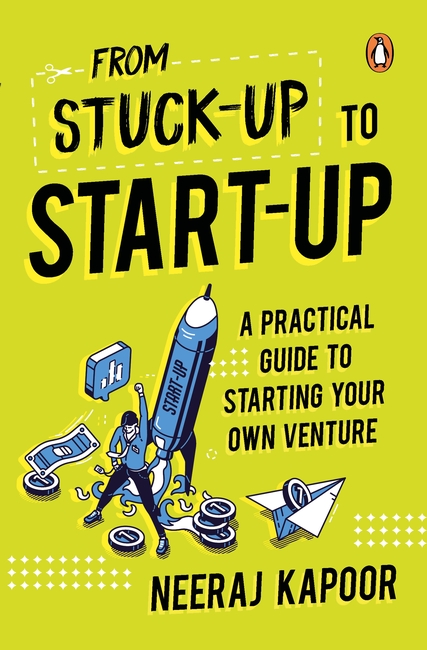
Stuck-up to Start-up is a step-by-step guide to launching your start-up without quitting your job and exploring new opportunities in a post-covid-19 world. It is suitable for those millions of professionals who are stuck in their job traps and who have dreams of starting someday but don’t know ‘how’. The book answers the ‘how to’ questions that most people have but don’t know whom to ask.
The book has been carefully crafted to become an essential handbook for students at business schools, and for every professional worth his dreams. Neeraj brings the flavour of sharing from his life that’s vivid and real to the reader, which connects with the reader and has high retention value. This enables readers to enhance their clarity, decision-making and effectiveness at work and in life to launch their start-up and rapidly scale up with ease, grace, power and freedom.
Sri Siddhi Ma
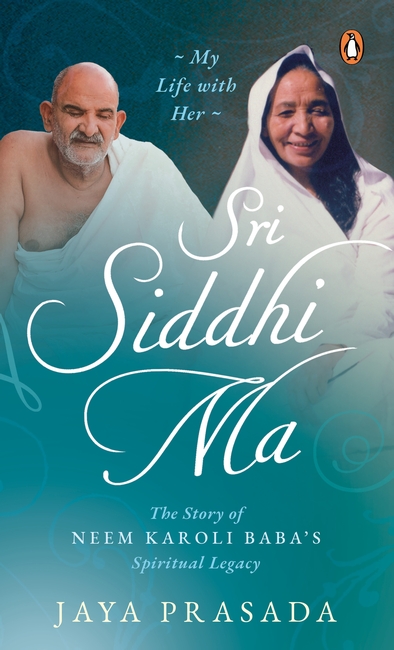
Revered the world over, Baba Neem Karoli Maharaj, known as Maharaj ji, emphasized ‘manav seva hi madhav seva hai.’ ‘Service to humanity is service to god.’ His simple boundless love and compassion drew deep devotion from the east and the west.
The beacon of light taking forward Maharaj ji’s spiritual legacy was his chosen disciple Sri Siddhi Ma, the silent saint of Kainchi. Living by the highest precepts of renunciation and devotion to the guru, Ma remained the eternal disciple to the eternal guru, Maharaj ji.
This perceptive account by Jaya Prasada reflects her journey with Sri Siddhi Ma. Prasada, though not a strong believer in her early days, was eventually blessed with a life with Sri Siddhi Ma, and imbibed through Ma the divine essence of Maharaj ji.
Filled with anecdotes of her time with Ma and Maharaj, and accounts of the godly and supernatural events Prasada saw with her own eyes in the company of such strong, spiritually charged figures, she recounts their journey as well as her own with such sensitivity, conviction, wit and charm that it is enough to turn any non-believer into a believer.
Untangling Conflict
In Untangling Conflict, the authors guide families in business through an introspective process that helps them determine their own bespoke approaches to preventing and mitigating conflict. Drawing on decades of lessons learned from supporting families and the businesses they own, the book brings conflicts to life through the lens of a fictional family and the business conglomerate they own. Readers of the book begin by grounding themselves in the defining attributes of their family and their relationship with the business through deep reflection. The book untangles messy threads of conflict within family businesses by examining issues laden with emotion, those related to the rights, benefits, and restrictions of ownership, and issues of business strategy. By exploring these three threads of conflict, the authors help families understand, prevent, and respond to disagreements, without disrupting the family business. Lastly, the book offers tools to align expectations and reduce friction between families, non-family employees, and the partners of the family-owned businesses.
Alice in Wonderland (PREMIUM PAPERBACK, PENGUIN INDIA)
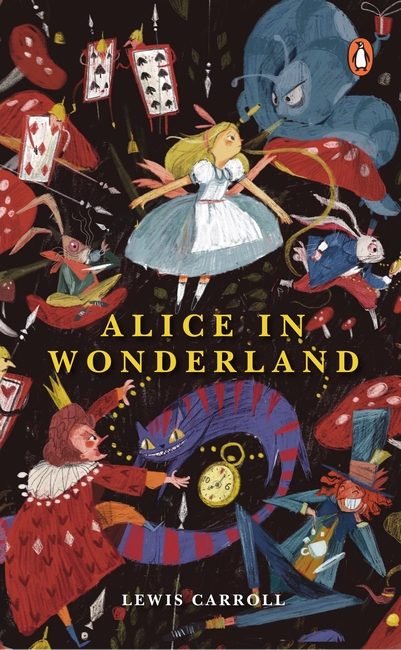
One fine afternoon, young Alice tumbles down a rabbit hole and finds herself in Wonderland–a strange and fascinating place where nothing is as it seems.
Utterly lost but still hopeful, Alice follows the White Rabbit through the labyrinthine roads of Wonderland. Along the way, she meets a host of interesting creatures and finds herself in bewildering situations. She has tea with the infuriating Mad Hatter, engages in puzzling conversations with a vanishing cat, and plays croquet with the Queen of Hearts–all in the breath of a single afternoon.
Stumbling and struggling through the magical world of Wonderland, there seems to be no way out; will Alice ever find her way back home?
Full of the unexpected and the extraordinary, Alice in Wonderland is an entertaining and enchanting work of children’s fiction. A timeless classic, it has been enjoyed by readers across age groups and is one of the most well-loved stories of all time.
Siddhartha (PREMIUM PAPERBACK, PENGUIN INDIA)
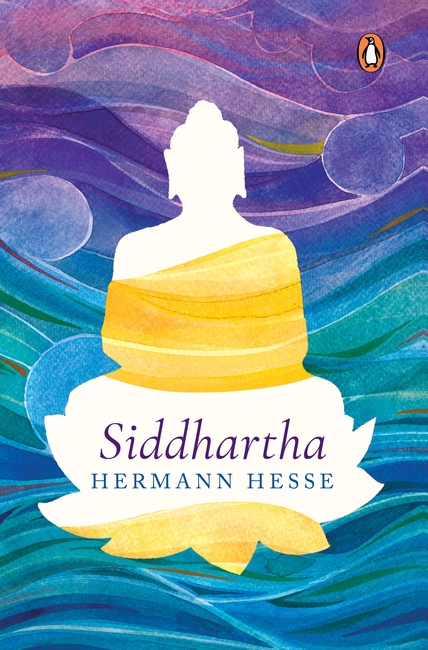
Set in India during the time of the Buddha, Siddhartha is the most influential and famous novel of Nobel Prize-winning author Hermann Hesse.
Desiring spiritual fulfillment, Siddhartha, a young Brahmin, leaves his home to become an ascetic-and on his journey meets the wise Gotama, the famous Buddha. But Siddhartha believes no teacher, however great, can discover meaning for an individual-and so continues alone on his quest to find himself.
In his journey Siddhartha experiences life as a pious brahmin, a Samana, a rich merchant, a lover, and a father-shifting between decadence and asceticism as he navigates the material world. Still unhappy, still unfulfilled, Siddhartha is on the verge of giving it all up when he encounters the ferryman. The events that follow change his life forever.
Thought-provoking, inspiring, and utterly profound-this spiritual novel has influenced generations of readers, writers, and thinkers.
Sone Chandi Ke Buth
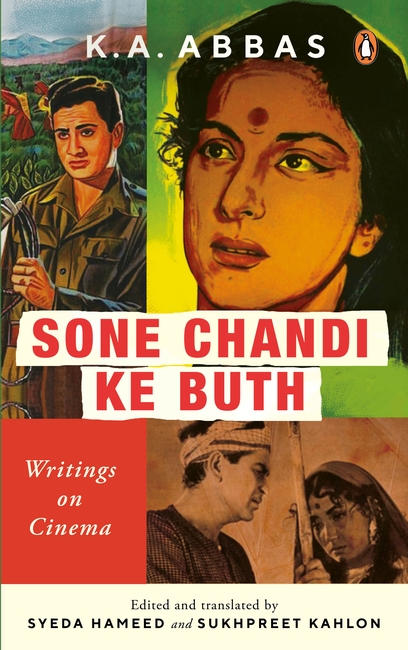
K.A. Abbas gave me my first film, Saat Hindustani. I called him Mamujaan. The book is a deep, incisive look at the gold and silver world of cinema. The sheen wears off but the spirit lives on. K.A. Abbas Trust keeps Abbas Saheb’s unrelenting spirit effervescent’ AMITABH BACHCHAN
‘An interesting read’ SHABANA AZMI
‘A must read for film lovers’ RANDHIR KAPOOR
Sone Chandi ke Buth is a collection of writings on cinema that includes the observations, thoughts and
reflections of Khwaja Ahmad Abbas. Originally written in Urdu by the well-known journalist, screenwriter and film-maker, it has now been translated for the first time into English.
The book is a collection of short stories, essays and articles on famous film personalities and varied aspects of the film industry. Abbas was a prolific writer who published seventy-four books in his seventy-three years, besides writing extensively on the film industry for the Bombay Chronicle newspaper. Sone Chandi Ke Buth, published a year before he passed away, was his last
book-a final word on the glitz, glamour and gritty reality of the Hindi film world.
It includes his candid observations on famous actors, writers and directors such as Raj Kapoor, Amitabh Bachchan, Dilip Kumar, Satyajit Ray, Meena Kumari, Balraj Sahni and V. Shantaram. A series of essay focuses on various aspects of cinema, from the changes in the film
industry to the power of film stars. The book also includes short stories set in the context of the film industry, some having veiled references to actual film stars. A common thread running through them all is his emphasis on making socially relevant films rather than those that succumb
to the pull of glamour and the box office.
This book also presents a section of his writings as a film journalist for the Bombay Chronicle. His column, ‘The Last Page’, one of the longest running in Indian journalism, began in 1935, and moved to the Blitz after the Chronicle‘s closure, where it continued until his death in 1987. They
complement the writings in Sone Chandi Ke Buth and are invaluable for cinema lovers.
Abbas’s matter-of-fact style and the didactic element in his prose illustrate the humanistic ideals that were at the very core of his thought. His writing, both humorous and incisive, is like a laser that pierces right to the heart of the matter.
The Life and Times of George Fernandes
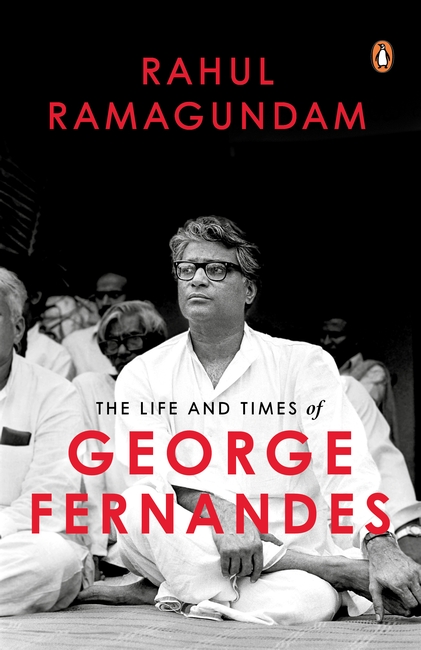
The Militant Trade Union Leader. The Dauntless Political Rebel. The Passionate Socialist Dreamer.
This is a biography of India’s George Fernandes.
George Fernandes (1930-2019)-a firebrand trade union leader, socialist politician and incredibly powerful orator-is popularly known for leading the All India Railwaymen’s Federation (AIRF) in May 1974 and calling upon its approximately 1.7 million employees to strike, which brought India to a halt for twenty days. Often described as a rebel, he pursued every cause he took up with passionate devotion, heedless of the many ups and downs in his life. From the early years of fighting for the rights of dock and municipal workers of Bombay (now Mumbai) through the Emergency, which he resisted by going underground, to his last private decade as a bed-ridden Alzheimer’s patient, his fights were always persistent and single-handed. George could call Bombay to be shut down and rose from its streets to become India’s Defence Minister.
The Life and Times of George Fernandes chronicles the story of George, who rose from the streets of Bombay to stride the corridors of power. In this extraordinary biography, Rahul Ramagundam opens a window to George’s political evolution and traces the course of the Socialist Party in India from its inception in 1930s to its dissolution into the Janata Party in the late 1970s. In the process, this book explores the trail of India’s opposition parties that worked to displace the long-ruling Congress Party from its preeminent position.
Comprehensive, evocative and fascinating, this first definitive biography of George Fernandes is an unputdownable tour de force.
Madam Sir
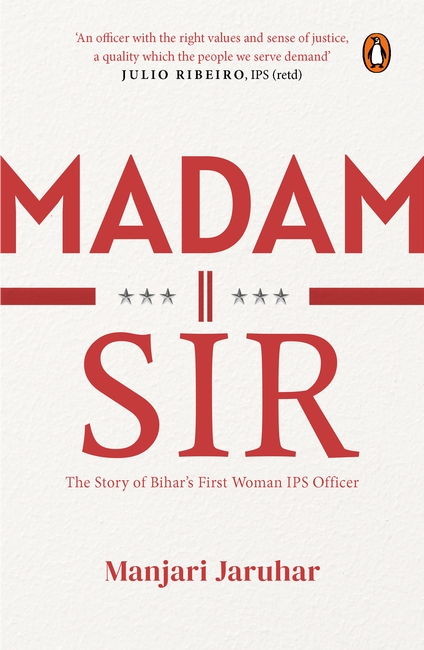
After an unexpected turn of events upended the homemaker role her parents had planned for her, Manjari Jaruhar overcame extraordinary odds to become the first woman from Bihar to join the country’s elite police cadre.
A masterclass in courage, resilience and leadership by a woman who broke new ground and thrived despite being viewed with disbelief and derision by her colleagues, Madam Sir is a stirring account of a sheltered girl’s rise to the top echelons of the Indian Police Service.
Set against the backdrop of significant events such as the Bhagalpur blindings, the 1984 anti-Sikh riots and Lalu Prasad’s reign in Bihar, Madam Sir looks at the IPS from the inside, through a woman’s eyes.
This is a story that will inspire you to pursue your dreams and infuse you with the spirit to reach impossible heights.
Vibhajan
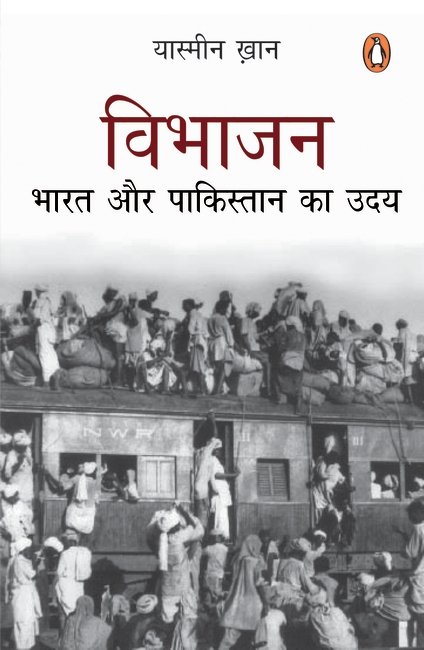
The Partition of India in 1947 was one of the most horrific events of decolonization in the twentieth century. The geographical divide brought displacement and death, rape and plunder, benefiting the few at the expense of the very many. In The Great Partition, Yasmin Khan exposes the widespread obliviousness to what Partition would entail in practice as well as the haste and recklessness with which it was completed. Moreover, she powerfully underscores the catastrophic human cost and shows why the repercussions of Partition resound even now, some sixty years later. Drawing on fresh information from an array of sources, Khan provides an authoritative and accessible analysis of Partition, and the damaging legacy left in its wake.