



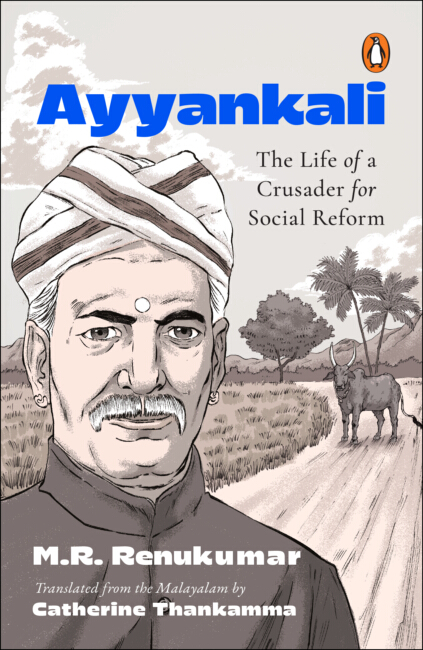
‘Mahatma’ Ayyankali’s (1863–1941) social interventions were radical, secular and fundamental, aimed at ensuring dignity, social justice and economic equality for Dalits. Few people know that his famous ‘Leave the fields fallow’ call to Dalits was aimed not at securing better wages, but for ensuring their right to education. His shrewd and practical political foresight is best evidenced in the manner in which he orchestrated the events that led to the rejection of the kallayum malayum—symbols of Dalit female enslavement.
M.R. Renukumar’s biography of the reformer was first published in Malayalam in 2017. In Catherine Thankamma’s translation, Ayyankali’s life and work now comes to readers across the world.
Archives: Books
A Quest for the Perfect Rice

A Quest for the Perfect Rice is not a cookbook—it’s a cultural epic served on a plate
This is biryani as you’ve never encountered it before: not a recipe, but a civilization in a pot. Blending history, food writing and storytelling, the book takes you on a richly layered journey through the origins of biryani, khichadi, pulao, tehari and India’s enduring rice traditions.
Framed as a surreal midnight conversation with the spirit of Nawab Wajid Ali Shah, the last ruler of Awadh, the narrative unfolds like a grand, ghost-hosted durbar. As the night deepens, legendary figures from history arrive—bringing with them stories of royal kitchens, forgotten rituals, culinary rivalries and the evolution of India’s most beloved dish.
Part food history, part cultural anthropology and part whimsical storytelling, this book traces over 5000 years of culinary evolution—exploring Persian influences, regional adaptations and the emotional role rice plays in Indian homes and celebrations. From Muradabadi to Anglo-Indian variations, each chapter reveals how geography, memory and identity shape what ends up on our plates.
Witty, immersive and deeply researched, A Quest for the Perfect Rice is a feast of stories where flavour meets folklore. If you love biryani, food history, Indian culture or simply a great story well told, this book will change the way you see every grain of rice.
When We Are Strangers
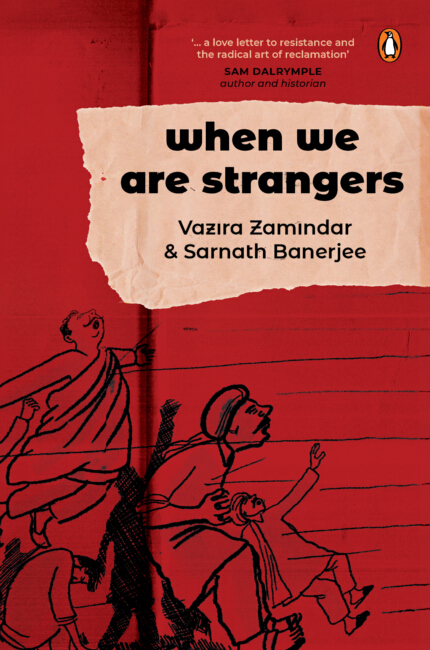
Mohandas Karamchand Gandhi and Khan Abdul Ghaffar Khan: Two kindred souls who fought the British empire and were united in thought and deed.
Mahmud and Sita. A photographer and a student of history who wanted to make history, not merely record it.
When We Are Strangers unfolds across some of the most dramatic, and yet often forgotten, moments of the anticolonial struggle—from the streets of a Peshawar bazaar where the Khudai Khidmatgars stood unarmed before British bullets and the Garhwal Rifles laid down their arms, to Gandhi and Bacha Khan as they walked through Bengal and Bihar to suture the wounds of Partition violence – these are stories that resist the theft of a shared inheritance, and insist on the world-making capacity of individual courage and collective dreams.
Written by Vazira Zamindar and illustrated by Sarnath Banerjee, this graphic novel moves through acts of care, self-discovery, friendship and steadfast faith, so that we may yet live together again.
How To Be Unbothered
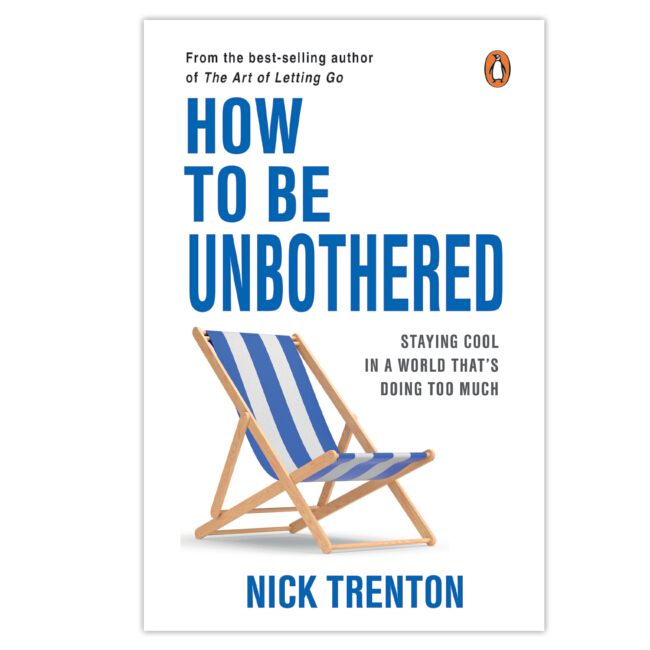
A flat tire at the worst moment. A passive-aggressive email from your boss. A stranger’s sneer that somehow gets under your skin for the rest of the afternoon.
None of it is catastrophic. And yet—there goes your day.
How To Be Unbothered isn’t a wellness manual or a scripted pep talk. It’s an honest appraisal of a simple, uncomfortable truth: the chaos isn’t going anywhere. Neither are the difficult people or the relentless low-grade noise of modern life.
What can change is your relationship to it all.
Drawing on Stoic philosophy, positive psychology, and behavioral science, Nick Trenton shows you how to:
• Stop reacting to criticism and start responding with clarity
• Use negative visualization to drain fear of its power
• Cut the clutter—mental, digital, and otherwise—before it cuts you
• Catch your own spiraling thoughts before they gather momentum
The objective isn’t about becoming emotionally numb or pretending problems don’t exist. It’s about knowing with focus what actually deserves your attention—and being able to ignore the rest.
Your peace isn’t something the world owes you.
It’s something you take back.
The Ultimate Guide to Peak Performance
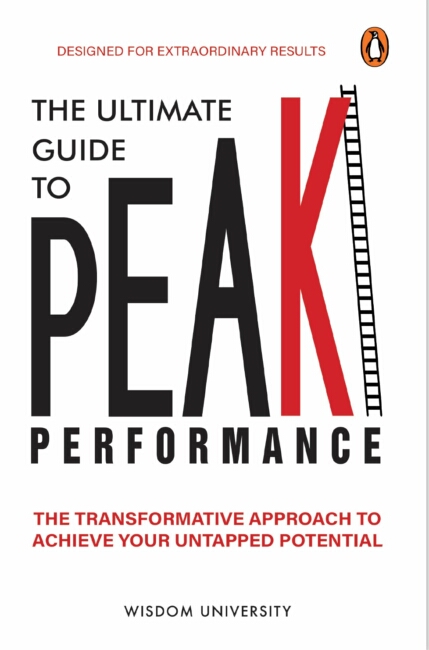
The Ultimate Guide to Peak Performance is your practical roadmap to consistently putting your best foot forward—at the office, at home, and everywhere in between—without burning out in the process.
If you’re ready to stop feeling stuck, scattered, or stretched thin, this guide will show you how to unlock your focus by ditching the multitasking myth, build real resilience so pressure fuels you instead of flattening you, tap into your peak state on demand, and lead with clarity that brings out the best in everything around you.
Peak performance isn’t constant intensity. It isn’t outpacing everyone around you. It’s the ability to access your highest level of clarity, focus, and effectiveness—persistently, sustainably, and when it matters most.
Your outlook is your edge—Develop the mindset that separates steady performers from standout achievers.
The Art of Game Theory
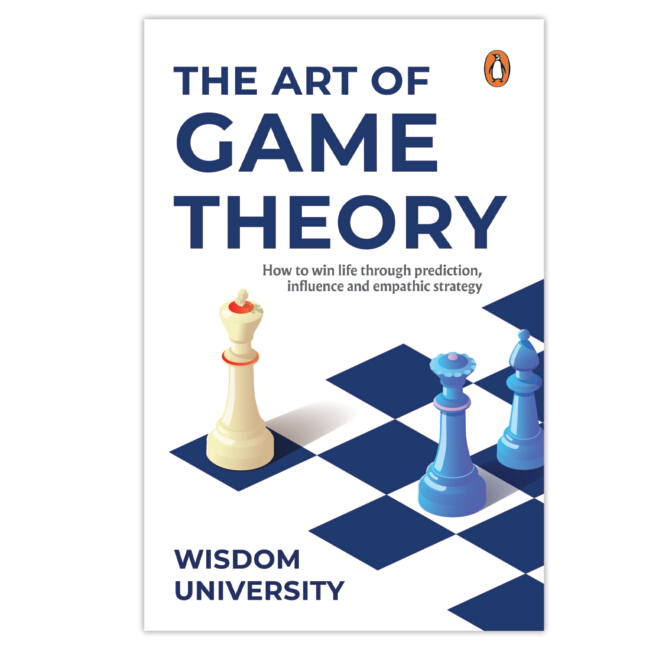
Despite forward planning and the best intentions, how do we still end up making bad decisions—and can we stop?
The answer lies in game theory: the science of strategic decision making used by Nobel Prize winners, world-class CEOs, and elite sportsmen. Until now, it’s been locked behind dense textbooks and academic jargon.
The Art of Game Theory changes that in watertight goals, helping you:
• Read any room to spot hidden dynamics before anyone else does
• Win negotiations knowing when to push and when to walk away
• Stay one step ahead to build strategies that work in the real world
• Turn setbacks into advantages by mastering the art of tactical retreat
From the kindergarten playground to the corporate boardroom, the same strategies determine the outcomes. Drawing on decades of cutting-edge research, learn how winners think.
The world is always making its next move.
It’s time we started making ours.
Killer Families: The Asylum Confessions #2

The name’s Jack Steen, Night Nurse at an asylum for the criminally insane.
For those who arrive at my ward, mine is the last face they’ll see before they die. Most of them know me as their Angel of Death.
I can make death come easy. But there’s a catch. I need their confessions. The ones everyone wants to hear.
This time, it’s all about keeping it in the family.
Despite his actions, Patient 424 insists he was only protecting his daughter. Patient 1001, a pig farmer and a ‘good’ father failed in ways that can’t be forgiven. Patient 523 is a mob boss—but whether he’s powerful or pathetic is for you to decide. Patient 983 claims she only ever wanted to love children in her care—you be the judge what drove her to dark ends, then.
I write down everything they say—every word, every pause, every slip.
But they’re liars. Manipulators. Killers.
Are these confessions the truth? Or just one last game?
I don’t know.
And soon, neither will you.
Sincerely
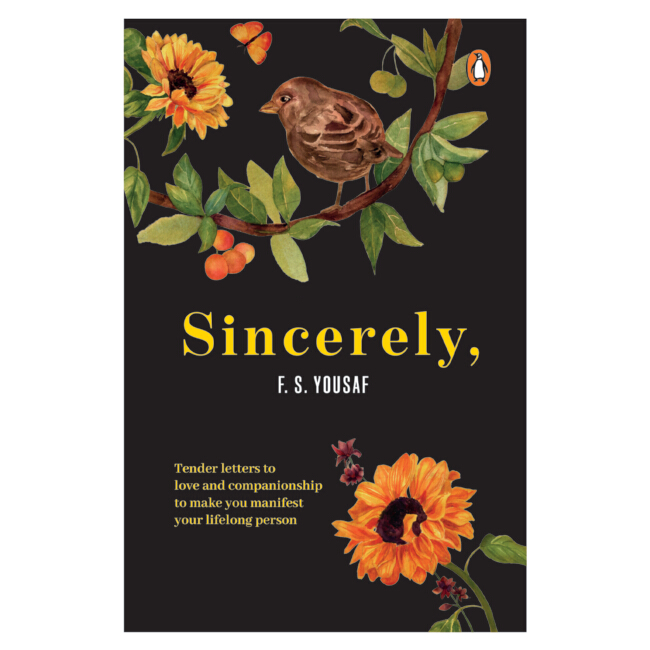
Sincerely began as a private proposal: a collection of poems tucked under a shirt, carried to a gazebo along with a heart beating out of its cage, and finally read by its muse on a sunny July afternoon.
By compiling them in this collection, F. S. Yousaf is sharing a dream with the readers, compelling them to knit and manifest their own miracle.
He manages to capture something extraordinary in this slim volume: the small, sacred moments between two people that make up a lifetime. The dreams they are afraid to name, the hands brushing under the table, the way one person can feel like home, like destiny, like the horizon’s yearning for the sky.
Yousaf’s musings on love and companionship are a reminder that the act of love is always healing irrespective of changing sensibilities. There is transformative and grounding magic in the pursuit of loving someone and allowing to be loved.
Read it, and allow yourself to manifest a love like that!
The Witch: A brand-new, haunting thriller from Freida McFadden, #1 New York Times bestselling author of The Housemaid!

Named one of the TIME100 Most Influential People of 2026
“I enjoy Freida McFadden…The books are engrossing and her sense of humour is sharp and dark. Vengeance comes with a twist and is satisfying” – STEPHEN KING
“McFadden is a writer at the top of her game―and the undisputed mistress of the psychological thriller.” – E.L. James
“Take the propulsive darkness of Gone Girl, the prolific output of Colleen Hoover, and the addictive twists of Harlan Coben, and you have something close to Freida McFadden.” – The Independent
“Intimidatingly prolific” – The Sunday Times
Some secrets don’t die―they wait.
When Julia Barlow loses her job and her apartment, she has nowhere left to go but Pemberton, her family’s sprawling seventeenth-century estate in rural Massachusetts. Officially, she’s there to check in on her ageing grandmother. Unofficially, she’s hoping the old house will give her a place to disappear.
Instead, Pemberton begins to unravel her.
Every night, the grandfather clock stops at exactly 3:41 a.m. The lights flicker without warning. And a disembodied voice cries for help outside Julia’s bedroom door.
As Julia digs into the house’s dark history, she uncovers the story of a woman executed for witchcraft in 1692―and realises the past may not be finished with Pemberton yet. When decades of family lies begin to surface, Julia must confront a terrifying truth: Pemberton may be haunted by women whose voices refuse to stay silent.
From #1 Sunday Times bestselling author Freida McFadden comes The Witch, a chilling, twist-filled thriller about secrets―those we inherit, those we bury, and those people will burn to keep silent.
The Inner Charioteer
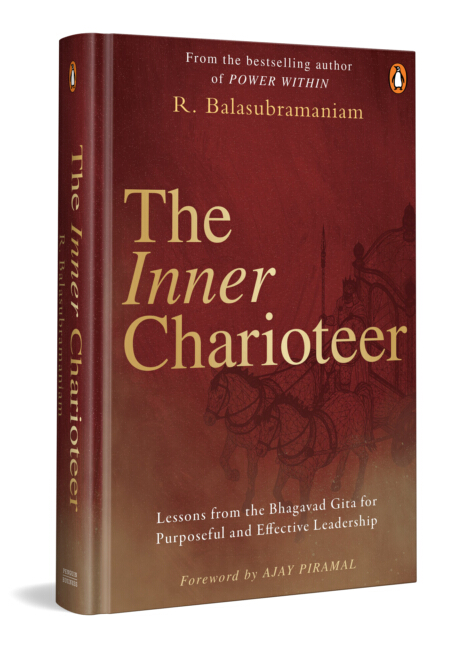
Modern leadership has a paradox at its heart, we rush to manage others before we have learned to govern ourselves. The Inner Charioteer turns to the Gita to address this, not as a distant text, but as a practical operating manual for human existence.
The dialogue between Arjuna and Krishna mirrors the dilemmas every leader faces – the paralysis of responsibility, the fog of doubt, the pull of temptation, the hunger for visibility, and the struggle to act ethically in uncertainty. The Gita does not soften these struggles; it illuminates a path through them.
Born from four decades of questions lived out in the field, among tribal communities in the Western Ghats, in policy corridors, in the slow discipline of institution-building, this book explores the foundations that anchor leaders when outcomes fail and ego threatens judgment. Each chapter engages with the Gita’s themes through provocations, stories, and practical tips. It is both personal and universal, connecting ancient insight with today’s business and leadership challenges.
For public figures, corporate leaders, educators, activists, and anyone in search of purpose, The Inner Charioteer offers a way of becoming inwardly anchored while remaining outwardly accountable.