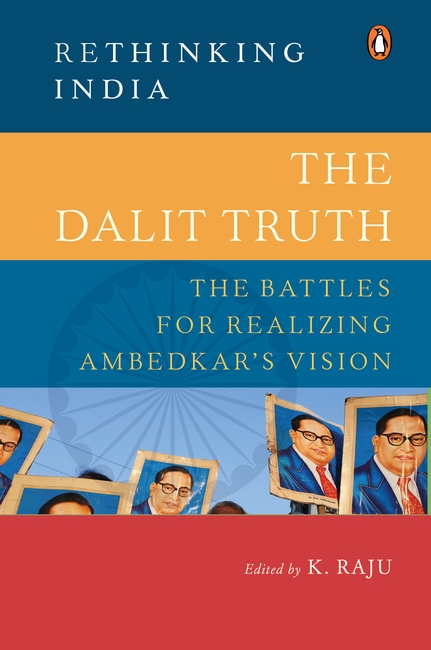
The Dalit Truth contains a symphony of Dalit voices as they call out to the future. A multitude of Dalit truths and their battles against the lies perpetrated by the caste system are reflected in the pages of this book, pointing towards a future filled with promise and prospects for the coming generations.
This eighth volume in the Rethinking India series, published in collaboration with the Samruddha Bharat Foundation, probes the pathway to be followed by the Dalits as articulated by Ambedkar’s Constitution. The authors featured in the volume come from various fields and bring narratives of different colours, not just stories of dismay but also of possibilities. The essays offer deeper insights into social, educational, economic and cultural challenges and opportunities faced by the Dalits, the varied strategies of political parties for their mobilization and the choice to be made by the Dalits for attaining social equality.
The informed readers of today will find these pages both enlightening and refreshing. The Dalit Truth is a dossier for tomorrow.
Contributing authors: Sukhadeo Thorat; Raja Sekhar Vundru; Kiruba Munusamy; Suraj Yengde; Bhanwar Meghwanshi; Badri Narayan; Jignesh Mevani; Sudha Pai; PA. Ranjith; R.S. Praveen Kumar; Priyank Kharge; Neeraj Shetye; Budithi Rajsekhar

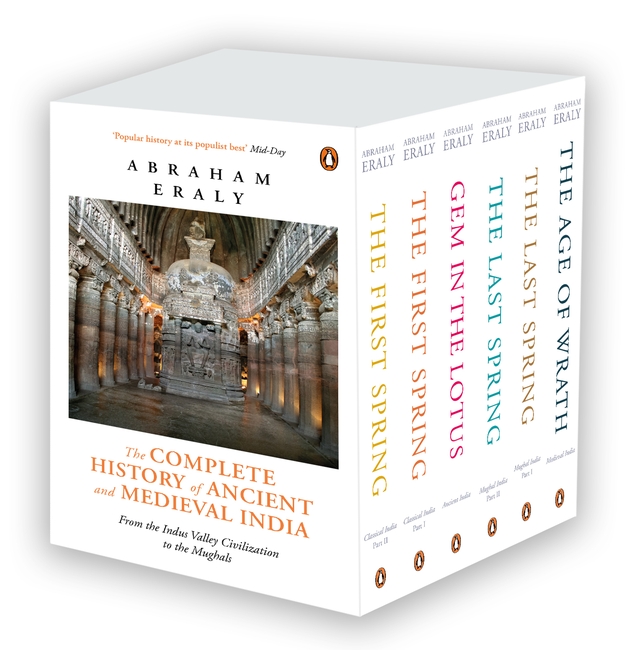
In this enthralling account, historian Abraham Eraly conjures a vivid picture of ancient, classical and medieval India-from the foundational seed of the Indus Valley Civilization in 2500 BCE to the grand saga of the Mughal Empire. This box set comprises the acclaimed books Gem in the Lotus, The First Spring (Part 1), The First Spring (Part 2), The Age of Wrath, The Last Spring (Part 1) and The Last Spring (Part 2).

Was Savarkar really a co-conspirator in the Gandhi murder?
Was there a pogrom against a particular community after Gandhi’s assassination?
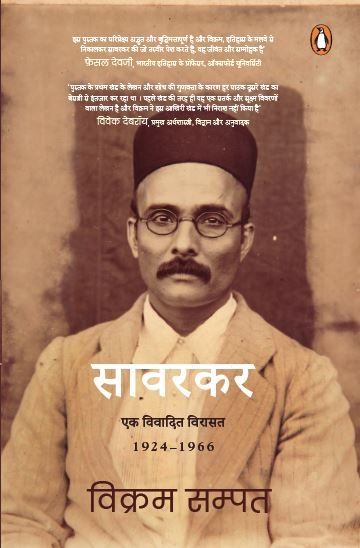
Decades after his death, Vinayak Damodar Savarkar continues to uniquely influence India’s political scenario. An optimistic advocate of Hindu-Muslim unity in his treatise on the 1857 War of Independence, what was it that transformed him into a proponent of ‘Hindutva’? A former president of the All-India Hindu Mahasabha, Savarkar was a severe critic of the Congress’s appeasement politics. After Gandhi’s murder, Savarkar was charged as a co-conspirator in the assassination. While he was acquitted by the court, Savarkar is still alleged to have played a role in Gandhi’s assassination, a topic that is often discussed and debated.
In this concluding volume of the Savarkar series, exploring a vast range of original archival documents from across India and outside it, in English and several Indian languages, historian Vikram Sampath brings to light the life and works of Vinayak Damodar Savarkar, one of the most contentious political thinkers and leaders of the twentieth century.

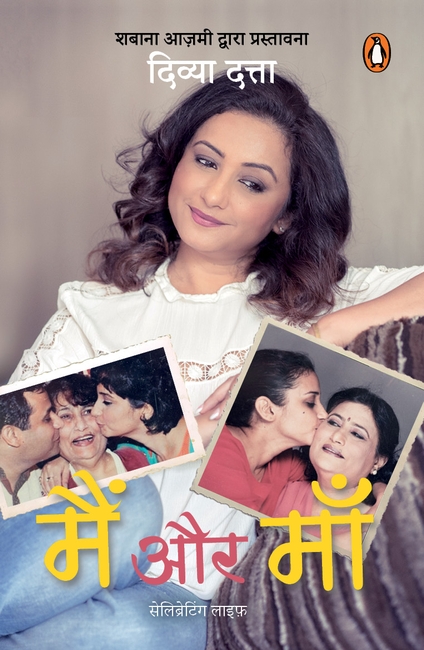
Capturing the beauty of a mother-daughter relationship, Divya Dutta in this moving memoir celebrates her mother’s zest for life that made her into the woman she is today. Divya walks us through the most intimate memories of her life, those that strengthened her relationship with her mother. The incredible bond she forged with her mother helped her through difficulties, times good and bad, that led to her becoming an award-winning actor of stature in the Indian film industry.
Me and Ma is a celebration of Divya’s exemplary achievements. It is also an honest, intimate and heartfelt tribute to the force behind her success-her mother.

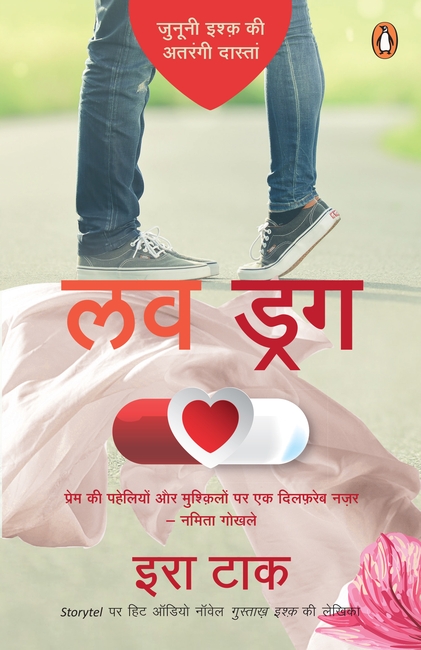
Love can arrive unexpectedly and it’s addictive like drugs.
Shazia couldn’t escape from Martin’s charm. Despite being totally different from each other, they are insanely in love.
‘Love Drug’ is the narrative of their intense, magical love saga which will keep you captivated.
To learn more about these love birds, read Era Tak’s new novel ‘Love Drug’.

‘Becoming CEO of your body and mind’
Dr Rajat Chauhan and Dr Darren Player have seen it all. They know what it is like to break real and imaginary obstacles when it comes to exercising, whether it’s for a peak performance or getting back from a disease or achieving optimal health. Drawing from a range of experiences, MoveMint Medicine empowers readers to become CEOs of their own body and mind-not by pushing one to the limit but by building on small victories.
Dr Chauhan and Dr Player focus on a widely ignored element of exercising: the mind. This book goes against the grain by drawing reader attention to mental health and its importance for one’s physical self. Never preachy and always funny,
MoveMint Medicine is the only book one needs to read to become a better version of oneself.

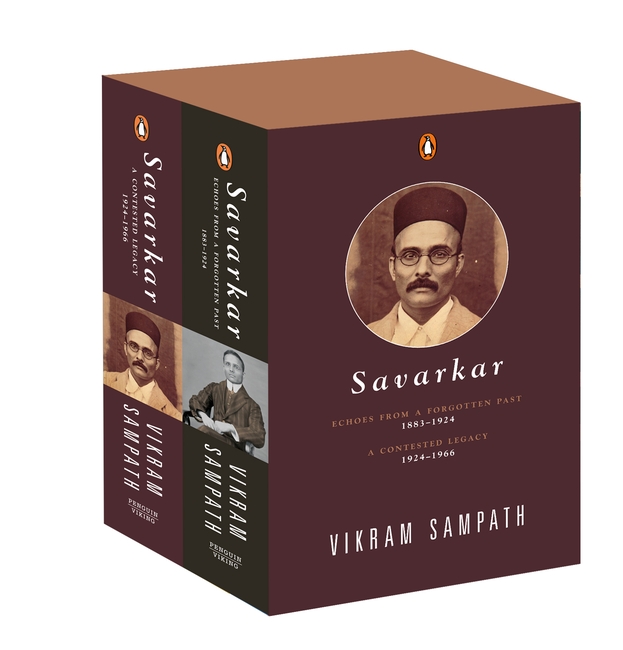
As the intellectual fountainhead of the ideology of Hindutva, which is in political ascendancy in India today, Vinayak Damodar Savarkar is undoubtedly one of the most contentious political thinkers and leaders of the twentieth century. From the heady days of revolution and generating international support for the cause of India’s freedom as a law student in London, Savarkar found himself arrested, unfairly tried for sedition, transported and incarcerated at the Cellular Jail, in the Andamans, for over a decade, where he underwent unimaginable torture.
Decades after his death, Savarkar continues to uniquely influence India’s political scenario. An optimistic advocate of Hindu-Muslim unity in his treatise on the 1857 War of Independence, what was it that transformed him into a proponent of ‘Hindutva’? What was it that transformed him in the Cellular Jail to a proponent of ‘Hindutva’, which viewed Muslims with suspicion?
This two-volume biography series, exploring a vast range of original archival documents from across India and outside it, in English and several Indian languages, historian Vikram Sampath brings to light the life and works of Vinayak Damodar Savarkar, one of the most contentious political thinkers and leaders of the twentieth century.
Comprehensive, definitive and absolutely unputdownable, this two-volume biography opens a window to previously unknown untold life of Vinayak Damodar Savarkar.
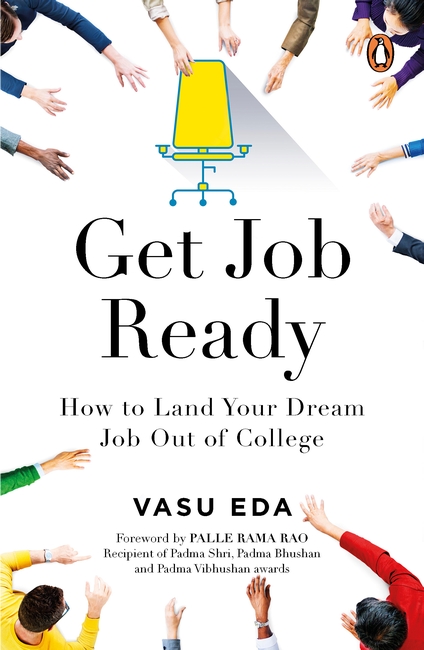
Millions of students graduate every year from college in India and are quickly faced with a problem-they do not have a pathway to a job or career. This is a major obstacle, not only for students, but also parents, the country’s colleges and the entire society.
Get Job Ready: How to Land Your Dream Job out of College is the first book of its type, providing India’s college students with a career pathway framework as a foundational element to improve their job readiness.
The book lays out the steps college students need to take, while in college, to transition from college to career. It includes topics such as how to gain job readiness skills and experience through volunteering, internships, class projects, extracurricular activities; creating a cover letter and résumé; handling an interview; creating a LinkedIn profile; and finding a mentor. It also includes pre-built career pathways, step-by-step guides and worksheets based on global best practices. Students who follow the steps laid out in the book will be job ready, and will be prepared to successfully enter the working world.

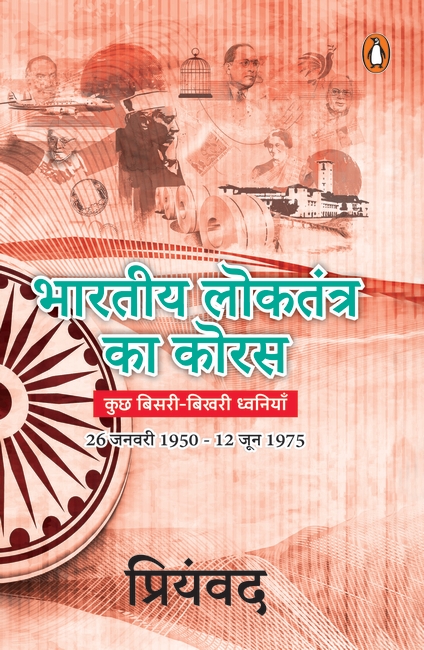
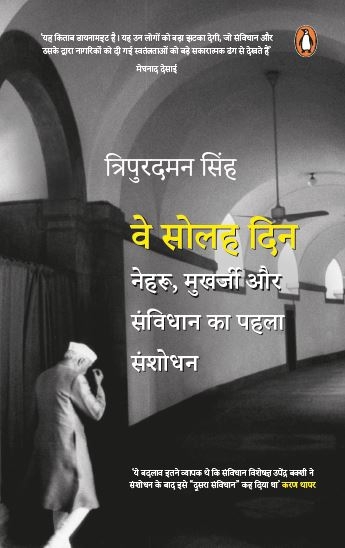
Ve Solah Din narrates the riveting story of the First Amendment to the Constitution of India-one of the pivotal events in Indian political and constitutional history, and its first great battle of ideas. Passed in June 1951 in the face of tremendous opposition within and outside Parliament, the subject of some of independent India’s fiercest parliamentary debates, the First Amendment drastically curbed freedom of speech; enabled caste-based reservation by restricting freedom against discrimination; circumscribed the right to property and validated abolition of the zamindari system; and fashioned a special schedule of unconstitutional laws immune to judicial challenge. Enacted months before India’s inaugural election, the amendment represents the most profound changes that the Constitution has ever seen. Faced with an expansively liberal Constitution that stood in the way of nearly every major socio-economic plan in the Congress party’s manifesto, a judiciary vigorously upholding civil liberties, and a press fiercely resisting his attempt to control public discourse, Prime Minister Jawaharlal Nehru reasserted executive supremacy, creating the constitutional architecture for repression and coercion.
What extraordinary set of events led the prime minister-who had championed the Constitution when it was passed in 1950 after three years of deliberation-to radically amend it after a mere sixteen days of debate in 1951?
Drawing on parliamentary debates, press reports, judicial pronouncements, official correspondence and existing scholarship, Sixteen Stormy Days challenges conventional wisdom on iconic figures such as Jawaharlal Nehru, B.R. Ambedkar, Rajendra Prasad, Sardar Patel and Shyama Prasad Mookerji, and lays bare the vast gulf between the liberal promise of India’s Constitution and the authoritarian impulses of her first government.