



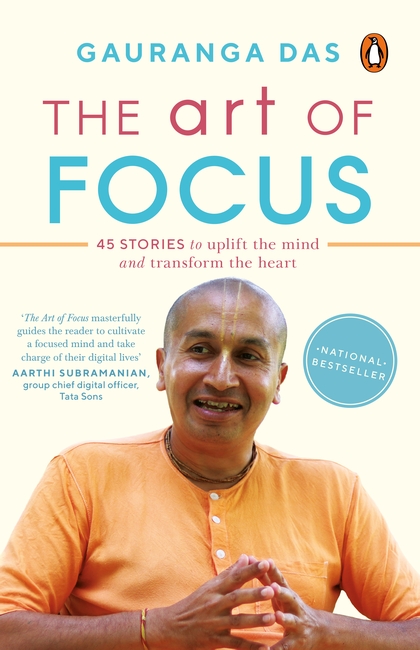
The COVID-19 pandemic has transformed the world we live in, more so than all the recent events put together. The pandemic has made humans question certain assumptions, relook at priorities and adjust life according to the new normal in the twenty-first century. As we take stock of life ahead, beyond this cusp of change, focus emerges as the fulcrum to help ease this transformation.
The Art of Focus, the second book in this three-part series, presents forty-five simple stories filled with revelations to enthral readers with learnings from the experiences of the protagonists and the dynamics of the situations that manifested in their lives.
The first book in the series, The Art of Resilience, presented ingredients to the readers to help them develop resilience in challenging situations that manifested at the start of the COVID-19 pandemic. The Art of Focus builds on the first book and inspires the resilient heart to develop a focused mind. This collective presentation will better equip the readers to take charge of their lives and adapt to the new normal effectively.
Archives: Books
Dangerous Pursuits
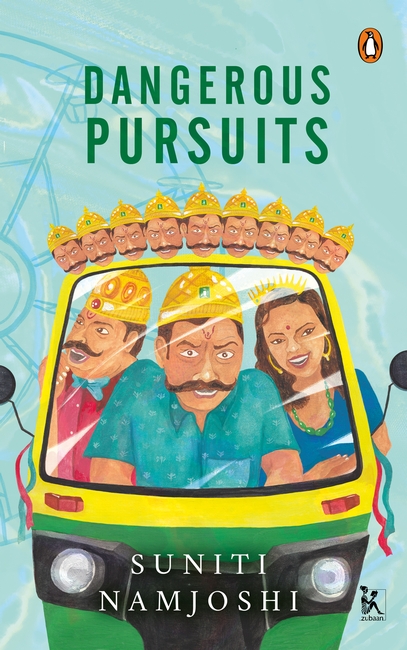
Humankind’s unrelenting mistreatment of our planet has finally led to a seemingly futile awareness of our acute shortage of time. What separates us from an oblivion preceded by excruciating pain and strife? The characters of this unique book, inspired by legends from lore and literature alike, pursue paths they believe are best for them and for their world. They are unaware of the flaws that distort their dreams. Divided into three parts, Suniti Namjoshi’s Dangerous Pursuits turns righteousness and virtue upon their heads, making for an irreverent and ruminative exploration of the beginning of the end of the world.
In “Bad People”, Ravana, Shupi and Kumbh deflect the world from its destructive course, but perfection remains a distant dream. Ravana, of course, belongs to epic; but how does he fit into the twenty-first century? With the help of Grandma Ketumati’s balm, these three ‘bad’ people outwit our contemporary villains. In “Heart’s Desire”, an old woman seeks to make a bargain with the devil, but the devil isn’t interested, and she finds herself stuck with two angels instead. She and the angels do their best, but the old woman learns that the heart’s desires aren’t all that she had expected. And in “The Dream Book”, based on The Tempest, Caliban, Miranda, Prospero and the rest find that their dreams clash and are as pretty and pitiless as glass shards. Yet, each time their dreams crack, they dream again, reckless in this dangerous pursuit.
Sing, Dance and Pray
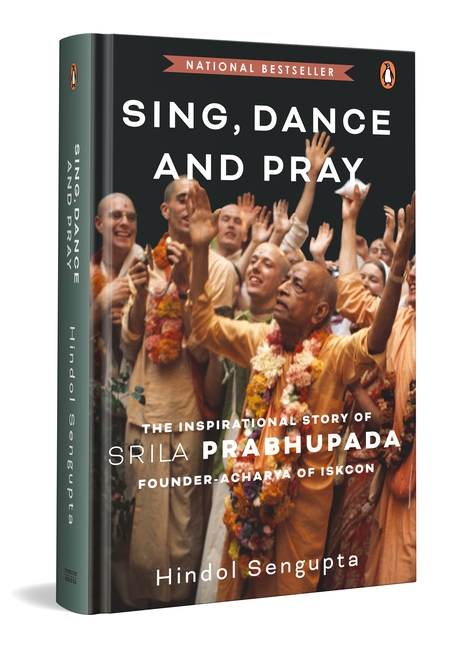
When A.C. Bhaktivedanta Swami Srila Prabhupada entered the port of New York City on 17 September 1965, few Americans took notice–but he was not merely another immigrant. He was on a mission to introduce ancient teachings of Vedic India to mainstream America. Before Srila Prabhupada passed away at the age of eighty-one on 14 November 1977, his mission was successful. He had founded the International Society for Krishna Consciousness (ISKCON), colloquially known as the ‘Hare Krishna Movement’, and saw it grow into a worldwide confederation of more than 100 temples, ashrams and cultural centers.
This is the inspirational story of Srila Prabhupada. As the founder of ISKCON, he ’emerged as a major figure of Western counterculture, initiating thousands of young Americans’.
He has been described as a charismatic leader who was successful in acquiring followers in many countries, including the United States, Europe and India. Srila Prabhupada’s story is bound to put you on a path of self-realization.
Against All Odds
Against All Odds: The IT Story of India is an insider’s account and an anecdote-rich history of Indian IT over the last six decades. It taps into the first-hand experiences of Kris Gopalakrishnan and fifty other stalwarts
who built and shaped the IT industry. This is a tale of persistence and resilience, of foresight, of planning and being ready when luck knocks on the door, of a spirit of adventure and, above all, of an abiding sense of faith in technology and the belief that it would do good for India. It is a tale of triumph, and the best is yet to come!
Tomb of Sand – WINNER OF THE 2022 INTERNATIONAL BOOKER PRIZE
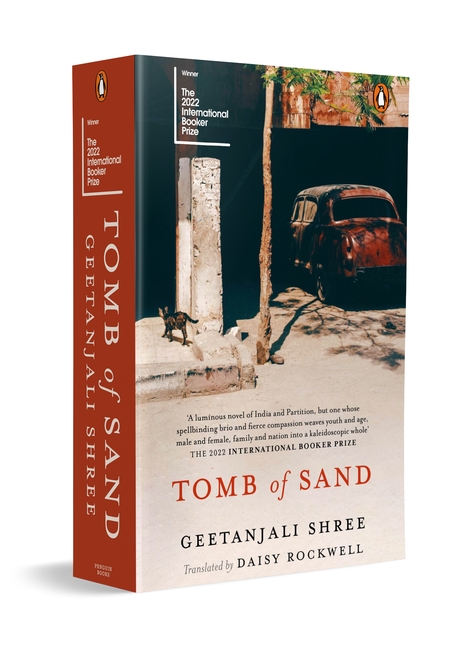
WINNER OF THE INTERNATIONAL BOOKER PRIZE 2022
Winner of an English Pen Award
LONGLISTED FOR THE JCB PRIZE 2022
In northern India, an eighty-year-old woman slips into a deep depression after the death of her husband, and then resurfaces to gain a new lease on life. Her determination to fly in the face of convention – including striking up a friendship with a transgender person – confuses her bohemian daughter, who is used to thinking of herself as the more ‘modern’ of the two.
To her family’s consternation, Ma insists on travelling to Pakistan, simultaneously confronting the unresolved trauma of her experiences of Partition, and re-evaluating what it means to be a mother, a daughter, a woman, a feminist.
Rather than respond to tragedy with seriousness, Geetanjali Shree’s playful tone and exuberant wordplay results in a book that is engaging, funny, and utterly original, at the same time as being an urgent and timely protest against the destructive impact of borders and boundaries, whether between religions, countries, or genders.
The Collected Works of Atul Gawande
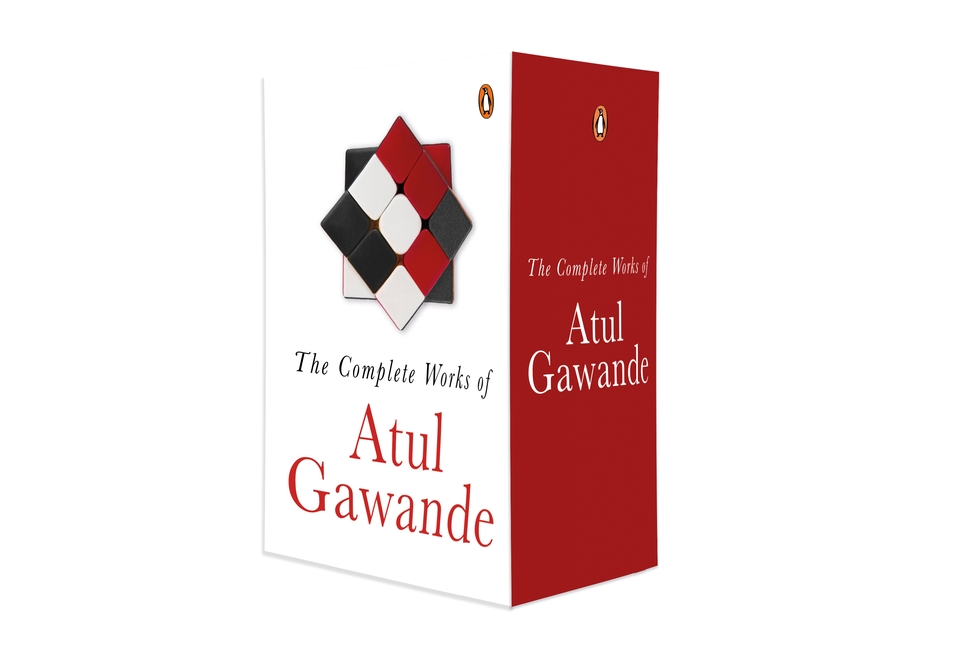
Combined box set of all the bestselling books by Atul Gawande, acclaimed surgeon and writer
In The Checklist Manifesto, Gawande finds a remedy to tackle immensely complex problems with the humblest of techniques: the checklist. Through riveting stories from the fields of medicine to disaster response, investment banking to skyscraper construction and businesses, he demonstrates how the checklist can help anyone improve their own and others’ lives.
In Being Mortal, Gawande argues that an acceptance of mortality must lie at the center of the way we treat the dying. Using his experiences (and missteps) as a surgeon, comparing attitudes toward aging and death in the West and in India, he provides an extraordinary account of loss. Questioning, profound and deeply moving, Being Mortal is a masterpiece.
In Better, Gawande’s gripping stories take us to battlefield surgical tents in Iraq, delivery rooms in Boston, a polio outbreak in India, and malpractice courtrooms in the US. He discusses the ethical dilemma of lethal injections, examines the influence of money on modern medicine, and recounts the contentious history of hand-washing. And as in all his writing, he gives us an inside look at his own life as a surgeon.
In Complications, Gawande performs surgery on medicine itself, laying bare a science that is complicated, perplexing and profoundly human. Dramatic true stories explore how mistakes occur, why good surgeons go bad, and what happens when medicine comes up against the inexplicable.
Malloban
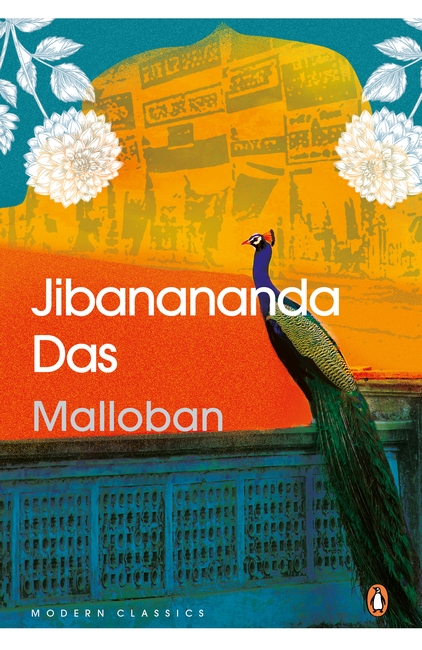
Malloban is set in North Calcutta in the winter of 1929. The eponymous protagonist, a lower-middle-class office worker, lives in College Street-a locality known for its bookstores, publishing houses, and universities-with his wife Utpala and their daughter Monu. The novel unfolds through a series of everyday scenes of dysfunction and discontent: bickering about bathrooms and budgeting, family trips to the zoo and the movies, a visit from Utpala’s brother’s family which displaces Malloban to a boarding house, and the appearance of a frequent late-night visitor to Utpala’s upstairs bedroom. Meanwhile, the daughter Monu bears the brunt of her parents’ “unlove.”
Arguably the most beloved poet in modern Bangla after Tagore, Jibanananda wrote a significant number of novels and short stories discovered and published after his death. Malloban is his most popular novel.
Soli Sorabjee
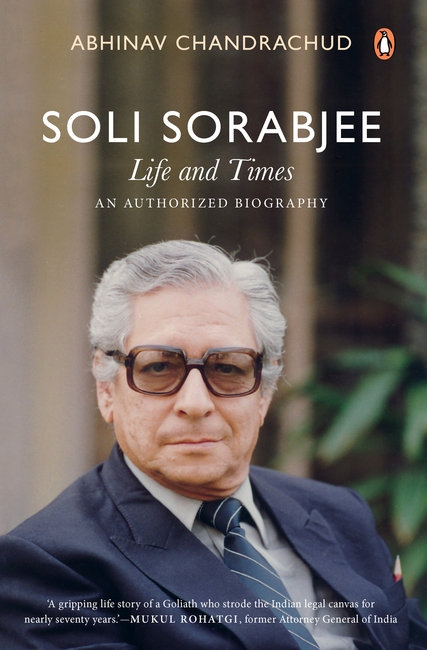
The first authorized biography of Soli Sorabjee
‘A gripping life story of a Goliath who strode the Indian legal canvass for nearly seventy years.’ – Mukul Rohatgi, former Attorney General of India
‘Superbly researched, this book by Abhinav Chandrachud is a must read. ‘ – Madhavi Goradia Divan, Additional Solicitor General in the Supreme Court of India
How does a Parsi lawyer, deeply influenced by the principles of Roman Catholicism, fall in love with a Bahá’í and go on to become the Attorney General of India for a Hindu nationalist BJP government? How does a boy with a broken leg, who studied in a Gujarati-medium school, and lost his father at the age of nineteen, go on to mount a heroic defense of the Janata government’s decision to dissolve Congress state legislatures (in 1977) in the Supreme Court? How does a newspaper columnist who admires Nehru, who criticizes the BJP for being ‘obsessed’ with ‘demolishing mosques’ and advises them to replace ‘Hindutva’ with ‘Bharatva’ or ‘Indianness’, get chosen by Prime Minister Vajpayee to represent the government in the Supreme Court in many cases, including the Ayodhya case? How does a lawyer with a humdrum customs and excise law practice, whose grandfather sold horsedrawn carriages in Bombay, become a U.N. human rights rapporteur, and repeatedly defend the fundamental right to free speech and expression in the Supreme Court of India?
Definitive, comprehensive and absolutely unputdownable, this first biography of Soli Sorabjee opens a window into the life and times of one of India’s foremost constitutional experts.
Planning Democracy
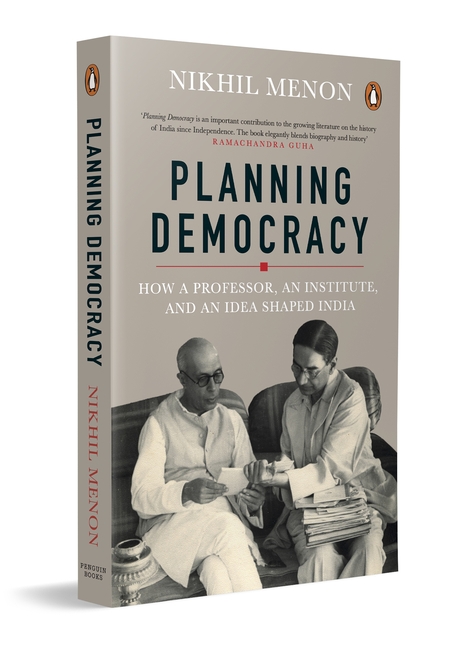
India’s Five-Year Plans were one of the developing world’s most ambitious experiments. After nearly two centuries of colonial rule, planning the economy was meant to be independent India’s route from poverty to prosperity. Planning Democracy explores how India married liberal democracy to a socialist economy. Planning not only built India’s data systems, it even shaped the nature of its democracy. The Five-Year Plans loomed so large that they linked surprisingly far-flung contexts-from computers to Bollywood to Hindutva.
In this compelling history, Nikhil Menon brings the world of planning to life through the intriguing story of a gifted scientist known as the Professor, a trail-blazing research institute in Calcutta, and the alluring idea of ‘democratic planning’. Set amidst global conflicts and international debates, Menon reveals how India walked a tightrope between capitalism and communism. Planning Democracy recasts our understanding of the Indian republic, uncovering how planning came to define the nation and revealing the ways in which it continues to shape our world today
The Commissioner For Lost Causes
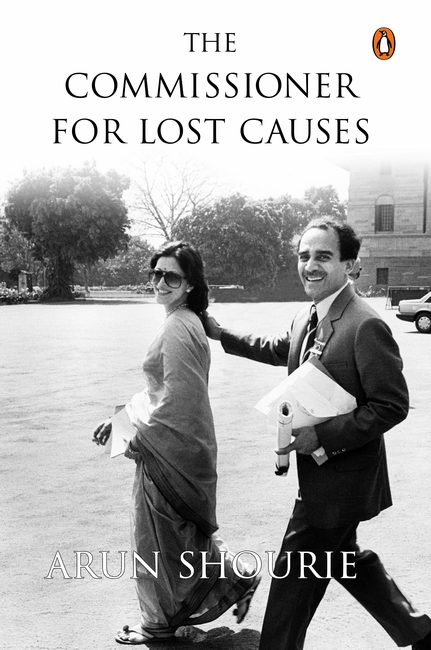
The work done by Arun Shourie and his colleagues rocked institutions and governments: the freeing of 40,000 undertrials; revealing the Bhagalpur blindings; purchasing Kamla; dislodging a ‘Sultan’; foiling ‘strikes’; controverting Judges; battling privilege motions; courting contempt of court charges; nailing corruption, forgeries, lies, and the opportunism of rulers; uncovering suppressed reports… What lay behind these and the consequences that followed?
A comprehensive account of dramatic incidents like getting governments to swallow legislation against the press, unseating of chief ministers, a prime minister unspooling himself even as manoeuvres to unseat him are scotched, a deputy prime minister trying to dislodge colleagues with fabricated documents, people’s movements ending up as rivulets in the sand, The Commissioner for Lost Causes discusses Shourie’s innings, the calumny hurled at him, his dismissal, and his being recalled and removed again.
Delicious tales of characters from the noble to the colourful to the short-sighted to outright bounders: from JP, to a president, to prime ministers, a deputy prime minister, chief ministers, a conman, indignant editors, and of course a great warrior, the press baron, feature in this honest retelling of the life of Arun Shourie, the writer, former editor and minister who was acclaimed as one of the fifty ‘World Press Freedom Heroes’.