



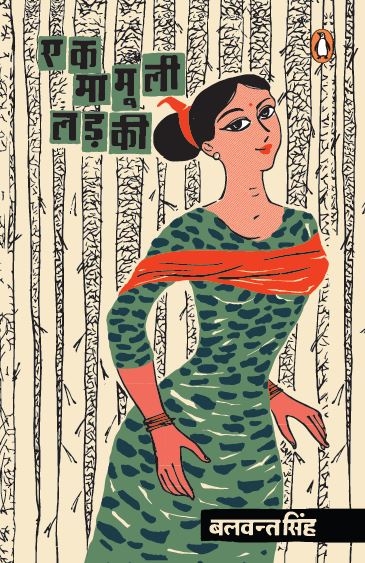
It is said every thing can be possible, if there is will. This book has given story of such a girl who is very helpless and lacking, but she achieved her moto with the help of her labour. Her love story is amazing, which is given in this book.
Archives: Books
Ye Kahaniyan Jo Kahaniyan Nahin Hain
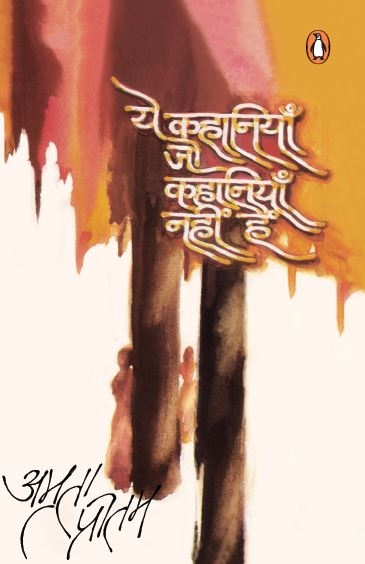
The author has written herself-if words have been free, would have travel for centuries.
Yah Sach Hai
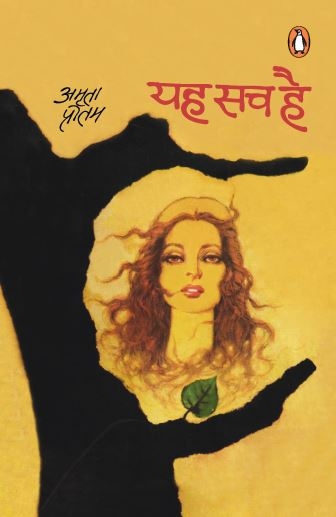
Story of killing a woman’s golden dream, the author has set a high ideal of truth by breaking all her limits
Terahwan Suraj
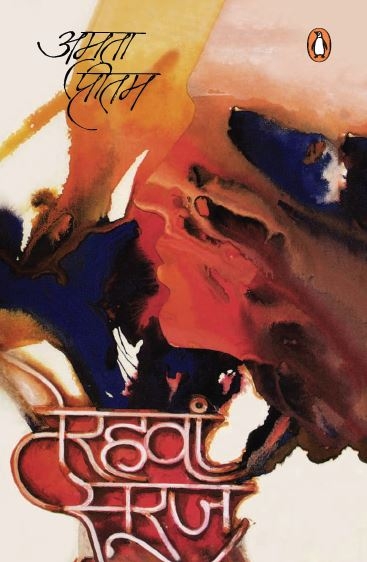
Amrita Pritam has written in this book herself that, sometimes death writes a book, which comes to write preface with life. This story shows a real love story.
Gandhi’s Assassin
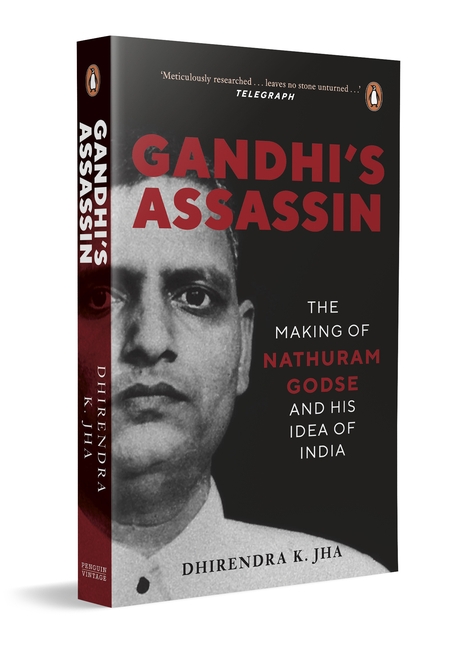
‘Dhirendra K. Jha has anatomized, with calm resourcefulness, the politics and psychology of a fanatic. He has also written a secret and sinister history of modern India—the one we need to understand our ruinous present’—PANKAJ MISHRA
A confirmed bigot and an oddball, the man who became Gandhi’s assassin was something of a miracle baby. Born to Brahmin parents after several stillbirths, Nathuram Godse started off as a child mystic. However, success in everything serious—studies or work—eluded him. The expectations and frustrations that mark the path of young men who cannot cope with the changing tides form the basis of Dhirendra K. Jha’s spectacular study of this disaffected youth. Godse was one of hundreds, and later thousands, of young Indian men to be steered into the sheltering fold of early Hindutva. As disruptions to history evolved new social structures, these men were caught by ideologues, cocooned in a community and coached and readied for action.
Gandhi’s Assassin: The Making of Nathuram Godse and His Idea of India lays bare Godse’s relationship with the organizations that influenced his world view and gave him a sense of purpose. The book draws out the gradual hardening of Godse’s resolve, and the fateful decisions and intrigue that eventually led to, in the chaotic aftermath of India’s independence in 1947, Mahatma Gandhi’s assassination. On a wintry Delhi evening on 30 January 1948, Godse shot Gandhi at point-blank range, forever silencing the great man. Godse’s journey to this moment of international notoriety from small towns in western India is, by turns, both riveting and wrenching.
Drawing from previously unpublished archival material, Jha challenges the sanitization of Gandhi’s assassination, and offers a stunning view on the making of independent India.
Bachelor Dad

How easy or difficult is it to be a single father in India?
How does the world react when a Bollywood celebrity becomes the first man to have a child via surrogacy?
1998
A superstar dad
A successful sister
A growing production empire
Yet a young Tusshar Kapoor was sitting far away from the arc lights in the US, working as a financial analyst, until circumstances led him to return to India to pursue a career in entertainment.
Little did he know that a totally different journey was awaiting him in the years to come; that he would make a life altering choice while on a car journey that would eventually make him India’s first celebrity single dad.
Written in a frank, fun, no-holds-barred and incisive first-person narrative, Tusshar reveals interesting childhood anecdotes, the process of raising a child as a single man in India, how the search for the perfect soulmate doesn’t stop after having a child and finally how, his son, Laksshya, changed his life forever.
Leadership to Last
Society tends to glorify the get-rich-quick entrepreneur–who builds a company, takes it public and then (maybe) contributes to charity.
In Leadership to Last, Geoffrey Jones and Tarun Khanna interview iconic leaders in India who have demonstrated leadership to last. There are leaders from South Asia and other emerging markets as well to illustrate that the ideas Indian entrepreneurs speak about are echoed by their counterparts in the Global South. All these magnates–Ratan Tata, Anu Aga, Adi Godrej, Kiran Mazumdar-Shaw, Devi Shetty and Rahul Bajaj, to name a few–have built, to general acclaim and acknowledgement, organizations that are seen as forward-looking and innovative. They subscribe to a code of ethics and contribute to the betterment of society. The authors demonstrate that this is a lot harder to achieve than unicorn status.
The authors corroborate how these stories are less about building a get-rich-quick organization and much more about triggering foundational and institutional change in society. These interviews, encapsulating the history of recent decades, eloquently lay out the opportunities and challenges of today and the future. The profiled leaders inspire awe by displaying audacity of intent, humility of demeanour and steadfastness of purpose.
Dada Comrade

‘This fine translation has once again returned Yashpal’s story to that fraught arena where every warrior appears exhausted today’-Ravish Kumar
‘A daring and unusual novel’-Vasudha Dalmia
‘A remarkable contribution to literary translation in English’-Apoorvanand
Harish, a young revolutionary in pre-Independence Lahore, upsets his party by questioning its credo of underground armed resistance. Escaping the party’s wrath, he becomes a labour activist, but is soon framed by the British government. Meanwhile, Shailbala, his comrade and lover, must take a decision about her pregnancy. As she courageously defies social norms and stands up to her influential father, can she find an ally within the revolutionary party-with Dada–Harish’s erstwhile mentor and antagonist–as its autocratic leader?
Yashpal’s first and semi-autobiographical novel, Dada Comrade is considered the pioneering political novel of Hindi literature. It raises questions about freedom and equality, as well as about sexuality and marriage-subjects as urgent today as in those times. In this first-ever English translation, Simona Sawhney brilliantly captures the force and intensity of the original, which had heralded the arrival of a literary genius.
The Tiger’s Pause
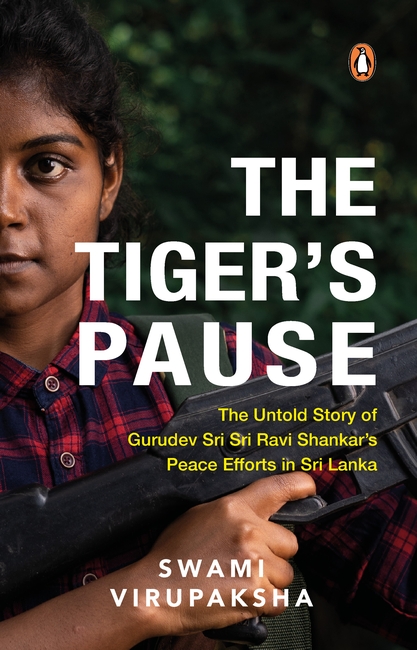
As the fourth phase of the twenty-six-year-long civil war in Sri Lanka was about to begin, Gurudev Sri Sri Ravi Shankar, founder of the Art of Living, visited the island nation with a singular aim: to bring peace to its citizens while trying to mediate between Prabhakaran, leader of the Liberation Tigers of Tamil Eelam (LTTE), and the government. The Tiger’s Pause chronicles Gurudev’s time in a highly strung country and also offers an exclusive look into the final chapters of Sri Lanka’s deadly conflict.
Swami Virupaksha, who spent nine years in the country expounding the Art of Living courses and organizing Gurudev’s visits, expertly charts the enormous hope of the Tamil and Sinhalese people against overwhelming misery. In prose that is both concise and empathetic, Swami Virupaksha gives readers a sweeping view of Gurudev’s endeavours towards a ceasefire agreement, and the ups and downs of a country’s quest for peace. The Tiger’s Pause is the narrative of the Sri Lankan people, and gives us a sense of what it takes to understand and address a shared trauma.
Open House
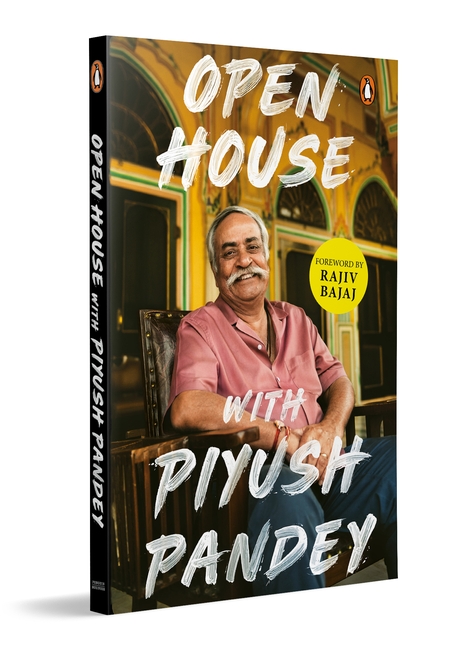
In Open House, Piyush Pandey takes the readers on a journey into his mind-his work, thoughts and experiences. He answers questions posed to him by people over the decades. Serious questions, incisive questions and frivolous questions. Is advertising a good career option? Should ad agencies work for political parties? Why does Ogilvy work for the BJP? Should citizens take the law into their own hands if they don’t like the advertising? Is Ogilvy a lala company? What is the future of advertising? Is Piyush Pandey too old to be in this business?
Honest, irreverent and informative, this is a roller-coaster ride with Piyush Pandey and Anant Rangaswami who has skilfully curated the book. With its practical wisdom and deep insights,
Open House will both entertain and enlighten you.