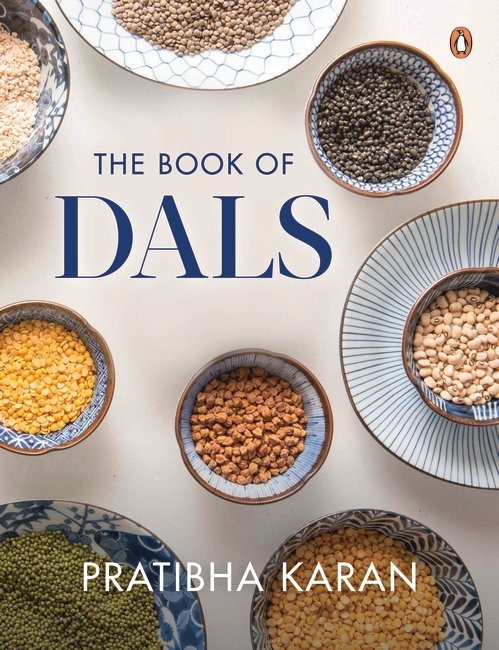
Dals have been an essential part of the human diet for centuries and they are an integral part of Indian cuisine. There are many enticing varieties of dals to choose from.
Pratibha Karan, in The Book of Dals, takes you on an incredible journey to different regions of the country and shows how locally available spices and herbs, vegetables and fruit impact the food of that region. The variety of dals and dal-based dishes that you can make with these are phenomenal and mind-boggling.
This book offers many varieties of beautiful, fragrant and beguiling dals that will have anyone savouring them in raptures. From the southern India, you will find Telangana Sambar, Khatti Dal and Dalcha with Vegetables and Meat. They are made using delicious combinations of chillies, tamarind, cloves, cardamom, pepper, coconut, curry leaves and drumsticks. It also has recipes such as Kootu from Tamil Nadu and the famous Bisi Bele Huliyana from Karnataka.
You will also find Lentils in Coconut Milk, Katachi Amti and Moong Sprouts from Maharashtra, and Dhansak, a Parsi dish, from Gujarat in western India. Dals from eastern India such as Chana Dal Bengali-style and Assamese Mati Maa are included. From the northern India, Delhi Rajma and Punjabi Dal Makhani find a place in the book.
This book is not limited by borders. It includes exotic dal recipes from the neighbouring countries like Nepal and Sri Lanka, and some delicious and wholesome dal-based soups too.

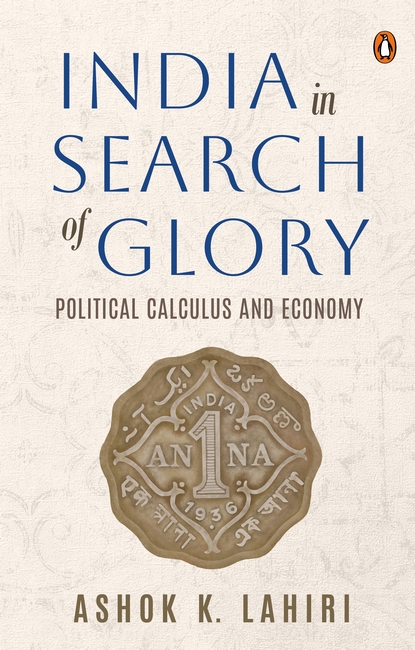
India and the Indians have made some progress in 75 years after Independence. The number of literates has gone up. The Indians have become healthier and their life expectancy at birth has gone up. The proportion of people below the poverty line has also halved. But the shine from the story fades when India is compared with that of the East Asian Tigers and China. It looks good but not good enough. India looks far away from the glory it seeks. This issue forms the core subject matter of this book. It tries to argue why India could not achieve more and what all it could have achieved. It paints a picture of its possible future and highlights the areas that need immediate attention.

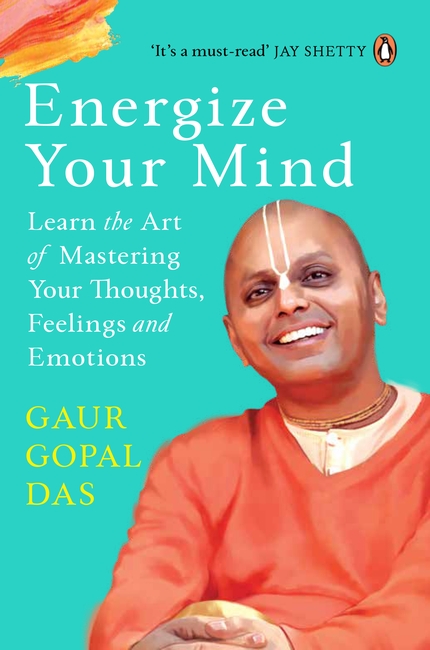
Take charge of your mind.
Be in charge of your life.
In this book, bestselling author and life coach Gaur Gopal Das decodes how the mind works. He combines his anecdotal style with analytical research to teach us how to discipline our mind for our greater well-being. Throughout this book, he provides interactive exercises, meditation techniques and worksheets to help us take charge of our mind.
This book is an essential read for anyone who wants to work towards a better, more fulfilling future for themselves.

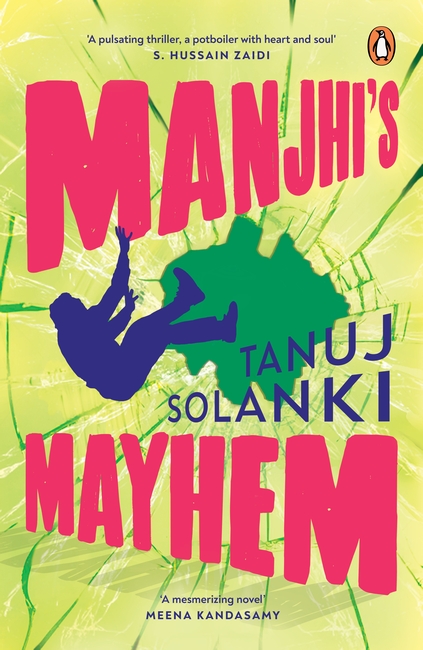
Introducing Sewaram Manjhi in this explosive novel that combines a tight mystery and an anti-hero who refuses to back down.
Sewaram Manjhi works as a security guard outside a posh Bombay café. On the surface, he’s not unlike millions of invisible Indians who make the city tick, but there is a difference: he holds rage in his heart, and he will go to any length to snatch a chunk of the good life. Enter Santosh, hostess at the restaurant across the street. A damsel in distress, Santosh has a strange request for Manjhi, and far be it from him to say no. What follows is tabaahi – mayhem – as Manjhi finds himself caught in a web of lies and deceit, and on the trail of a bag full of money that will lead to broken noses, bloody heads, sex, seduction, and murder. If he succeeds, Manjhi might finally discover what it means to be in control of one’s destiny in a land where birth determines fate.

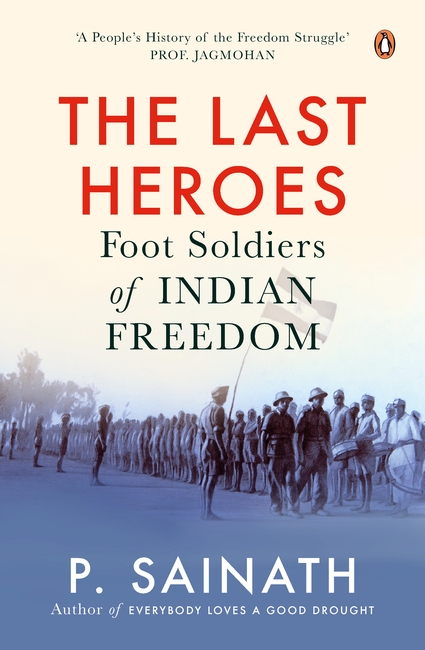
So who really spearheaded India’s Freedom Struggle? Millions of ordinary people-farmers, labourers, homemakers, forest produce gatherers, artisans and others-stood up to the British. People who never went on to be ministers, governors, presidents, or hold other high public office.
They had this in common: their opposition to Empire was uncompromising.
In The Last Heroes, these footsoldiers of Indian freedom tell us their stories. The men, women and children featured in this book are Adivasis, Dalits, OBCs, Brahmins, Muslims, Sikhs and Hindus. They hail from different regions, speak different languages and include atheists and believers, Leftists, Gandhians and Ambedkarites.
The people featured pose the intriguing question: What is freedom? They saw that as going beyond Independence. And almost all of them continued their fight for freedoms long after 1947.
The post-1947 generations need their stories.
To learn what they understood. That freedom and independence are not the same thing. And to learn to make those come together.

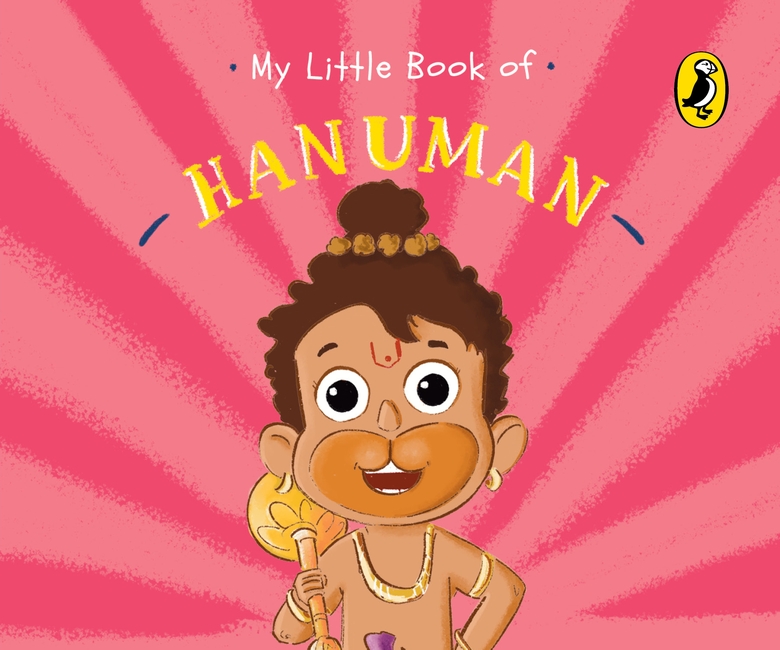
Hanuman wants to be big and strong.
But why does it have to take so long?
With charming illustrations and simple language, this short tale about Hanuman will entertain and delight.
Collect all six books in the series!
WHY YOU SHOULD BUY THIS BOOK:
AGE APPROPRIATE: Written in simple language to make reading easy for readers 3 and up
STURDY AND DURABLE: Perfect for learning and playing for a long time
SAFE FOR BABY: Handy format makes this safe for your baby
PERFECTLY SIZED BOOKS: Easy and convenient for little readers to hold
BRIGHT AND FUN PICTURES: To keep your little one interested and engaged
A PERFECT GIFT SET: For every preschooler for a holistic learning experience

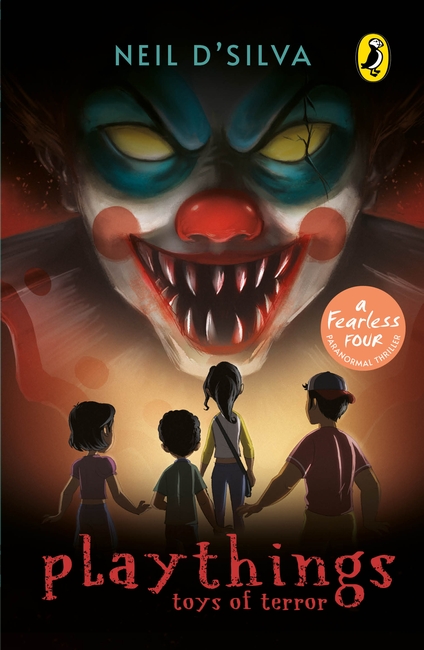
Karun suspects that his childhood toy-a clown named Jokko-is out to get him. Even after he throws it away
multiple times, it follows him around, standing at doorways, clapping its pudgy hands, smiling, staring,
tripping him on wires and choking him in his sleep . . .
Fearing for his life, Karun confides in The Fearless Four-a freshly minted paranormal investigation agency
run by four brave youngsters. As the investigators delve deep into the case, they uncover a more sinister plan at play: More vengeful toys are coming to life, attacking their owners, and turning them into living zombies.
Can The Fearless Four save Karun and the other children before it’s too late?

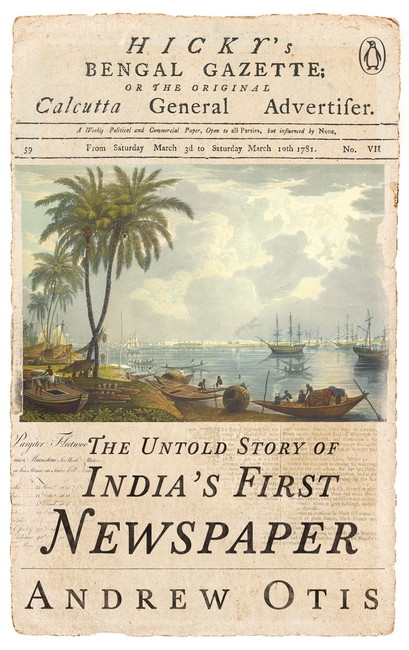
Late eighteenth-century Calcutta.
The British are well-ensconced in Bengal, but not yet an empire. Indian princes pose a danger to the East India Company’s plans of commerce and domination. Warren Hastings, the British governor-general, is attempting to consolidate his power in the Company.
Johann Zacharias Kiernander is on a mission to convert heathen souls in a land far from his native Sweden though he is not averse to lining his pockets while doing ‘God’s work’.
Into this steaming cauldron of skullduggery and intrigue walks James Augustus Hicky, a wild Irishman seeking fame and fortune. Sensing an opportunity, he decides to establish a newspaper, the first of its kind in South Asia. In two short years, his endeavour threatens to lay bare the murky underside of the early British empire. Does it succeed?
This is the story of the forces Hicky came up against, the corrupt authorities determined to stop him and of his resourcefulness. The product of five years of research by Andrew Otis in the archives of India, UK and Germany, Hicky’s Bengal Gazette: The Story of India’s First Newspaper is an essential and compelling addition to the history of subcontinental journalism.

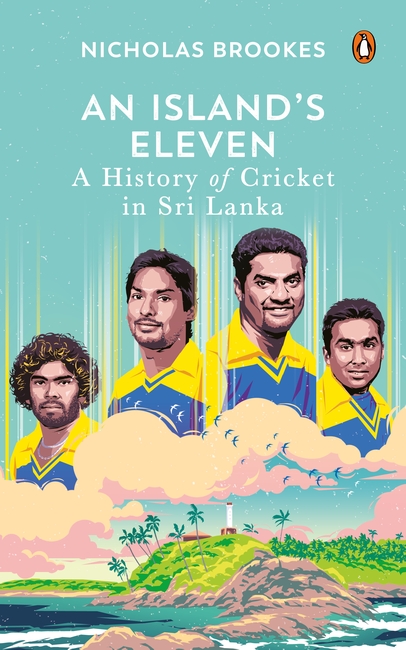
From Sathasivam to Sangakkara, Murali to Malinga, Sri Lanka can lay claim to some of the world’s most remarkable cricketers – larger-than-life characters who thumbed convention and played the game their own way. More so than anywhere else in the world, Sri Lankan cricket has an identity. This is the land of pint-sized swashbuckling batsman, on-the-fly innovators and contorted, cryptic spinners.
On the field of play, Victorian ideals of the past collide with madcap tropical hedonism to create something dizzying. Cricket is Sri Lanka, and Sri Lanka is cricket. We all know the story of the ’96 World Cup: how a team of unfancied amateurs rose from obscurity to the top the world, doing so with such swagger that they changed the way the game was played. Yet the lore of Sri Lankan cricket stretches back much further.
In the early days, matches between colonists and locals imbued cricket with a nationalistic drive. Ashes-bound ships stopping over in Colombo brought the world’s biggest stars, from Bligh and Bradman to Grace and Grimmet. More recently, Sri Lanka has had to face the triumphs and tragedies that come when cash flows freely into the gentleman’s game.
An Island’s Eleven tells this story for the first time, focusing on the characters and moments that have shaped the game forever.
The Sacred Wordsmith compiles the best of Raja Rao’s writings, including his autobiographical Prefaces and Introductions. The volume puts together several of his noted acceptance speeches, including those for the Sahitya Akademi Award and Neustadt International Prize, and other famous pieces, such as ‘The World is Sound’, ‘The Word’, ‘Why Do You Write?’, ‘The West Discovers Sanskrit’, ‘The English Language and Us’, and ‘The Story Round, Around Kanthapura’, a fascinating, unpublished account of the makings of his famous first novel.