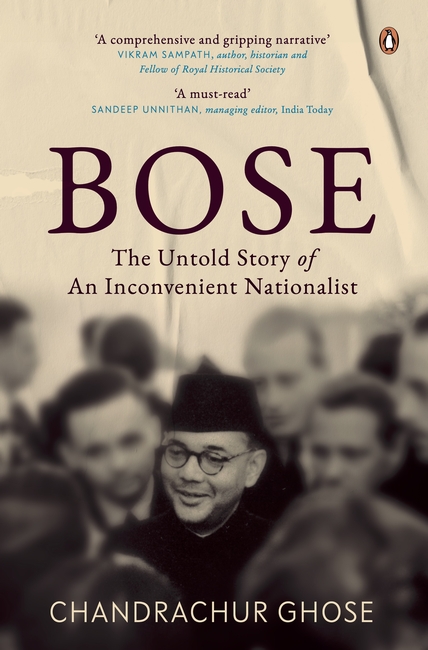
There are not many Indian heroes whose lives have been as dramatic and adventurous as that of Netaji Subhas Chandra Bose. That, however, is an assessment of his life based on what is widely known about him. These often revolve around his resignation from the Indian Civil Service, joining the freedom movement, to be exiled twice for over seven years, throwing a challenge to the Gandhian leadership in the Congress, taking up an extremist position against the British Raj, evading the famed intelligence network to travel to Europe and then to Southeast Asia, forming two Governments and raising two armies and then disappearing into the unknown. All this in a span of just two decades.
Now, new information throws light on Bose’s intense political activities surrounding the revolutionary groups in Bengal, Punjab, Maharashtra and United Provinces, his efforts to bridge the increasing communal divide and his influence among the splintered political landscape; his outlook and relations with women; his plunge into the depths of spirituality; his penchant for covert operations and his efforts to engineer a rebellion among the Indian armed forces. With this new information, what appeared to be dramatic now becomes more intense with plots and subplots under one man’s single-minded focus on freeing the motherland and envisioning its development in a new era.
Furthermore, one of the most sensitive issues that have prevented political parties and successive governments from talking much about Bose is his joining the Axis camp. While Jawaharlal Nehru and other prominent Congress leaders publicly denounced the move, the Communist Party of India went on to a prolonged vilification campaign. Sardar Patel issued instruction to Congress leaders to defend the INA soldiers without eulogizing their leader.
Was Bose really a Nazi sympathiser? Knowing very well about the strong public opinion that existed among the political leadership and the intelligentsia in India against Nazi Germany, Fascist Italy, and imperial Japan, why did he risk his own political image by allying with the Axis powers?
Pacey, thought-provoking and absolutely unputdownable, Bose: The Untold Story of an Inconvenient Nationalist will open a window to many hitherto untold and unknown stories of Netaji Subhas Chandra Bose.
Probably the first critical biography of Netaji Subhas Chandra Bose till date.

Renu Amin always seemed perfect: doting husband, beautiful house, healthy sons. But as the one-year anniversary of her husband’s death approaches, Renu is binge-watching soap operas and simmering with old resentments. She can’t stop wondering if, thirty-five years ago, she chose the wrong life. In Los Angeles, her son, Akash, has everything he ever wanted, but as he tries to kickstart his songwriting career and commit to his boyfriend, he is haunted by the painful memories he fled a decade ago. When his mother tells him she is selling the family home, Akash returns to Illinois, hoping to finally say goodbye and move on.
Together, Renu and Akash pack up the house, retreating further into the secrets that stand between them. Renu sends an innocent Facebook message to the man she almost married, sparking an emotional affair that calls into question everything she thought she knew about herself. Akash slips back into bad habits as he confronts his darkest secrets-including what really happened between him and the first boy who broke his heart. When their pasts catch up to them, Renu and Akash must decide between the lives they left behind and the ones they’ve since created, between making each other happy and setting themselves free.
By turns irreverent and tender, filled with the beats of ’90s R&B, Tell Me How to Be is about our earliest betrayals and the cost of reconciliation. But most of all, it is the love story of a mother and son each trying to figure out how to be in the world.
Translated from the Bengali by Bhaskar Chattopadhyay
From one of the greatest Bengali novelists of all time
Aranyak, written in 1939, is a famous Bengali novel by Bibhutibhushan Bandyopadhyay based on his long and arduous years in northern Bihar. There he came into contact with a part of the world that, even now, remains unknown to most of us. ‘Aranyak’ literally means ‘Of the Forest’.
This novel explores the simple and heart-warming story of a man who gets a job as an estate manager in Bihar, and slowly falls in love with the beautiful and tranquil forest around him. The dichotomy of urban and rural life comes alive, reflecting the great love that human beings and nature can share, one that Bandyopadhyay experienced in his heart. Written by one of the greatest Bengali authors, this haunting novel is rooted in guilt and sadness but also tremendous beauty.

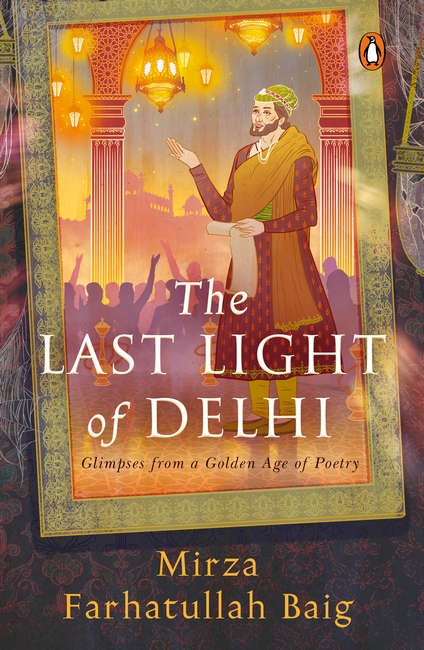
Farhatullah Baig imagines a mushaira as it might have been in the last glory days of Delhi, during the mid-nineteenth century, lit by the glowing embers of the dying Mughal empire.
The Last Light of Delhi is the story of a last grand mushaira held in the city of Delhi circa 1845. Though the mushaira is fictional, the book is a cultural document of the age, taking the reader on a journey in time to a past when poetry flowed through the streets of the city. It paints a portrait of a lost world, of the life and living styles of the upper classes of Delhi in the decade before the fateful year of 1857.
Baig takes the reader into the sitting rooms of some of the most iconic people of the time, from Mirza Ghalib to Bahadur Shah Zafar, giving us a glimpse into their private lives, describing their homes, their manners, their ways of dressing and talking, filling his portraits with colour and detail so that the poets appear vividly before us-and when they begin to recite their poems in the mushaira, it seems as if each poet is speaking out from the pages of the book.

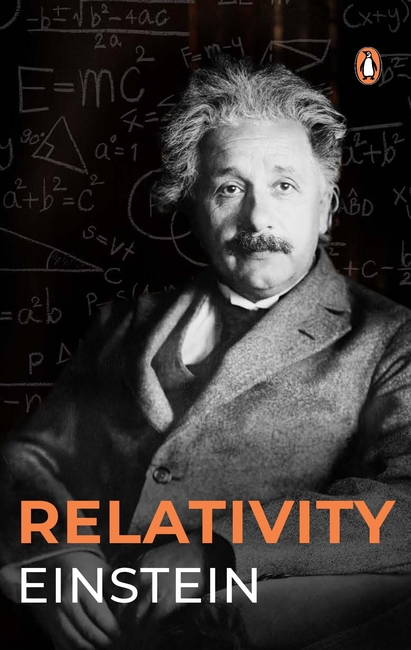
Nobel Laureate Albert Einstein was one of the world’s most brilliant minds. Arguably the founder of modern physics, his scientific ideas and research changed the world. His book Relativity: The Special and the General Theory is regarded as a seminal work-one of the most important and influential scientific ideas to have emerged out of the 20th century.
First published in 1916, the book explores the relationship between space, time, and the theory of gravitation-offering a new perspective on the universe. Einstein, using minimum mathematical terms and equations, explains some of the basic ideas and principles behind our world and the forces that have shaped it. The General Theory speaks of black holes, the evolution of the Universe, the behaviour of orbiting neutron stars, why clocks run slower on Earth than in space, and even suggests the possibility of time travel.
Ingenious and insightful, Relativity is a must-read for anyone who wants to expand their mind and learn about the universe and its working.

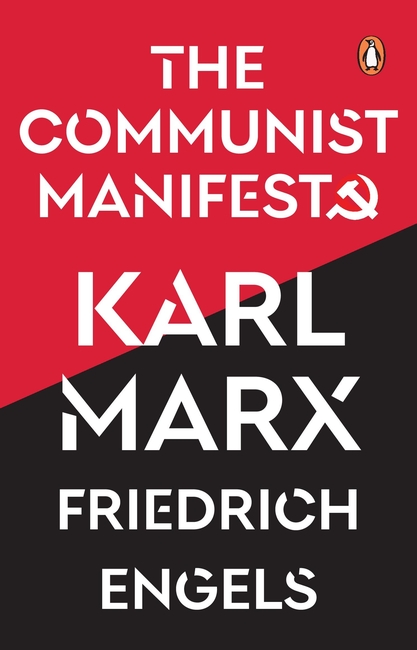
One of the most influential and widely read political documents, The Communist Manifesto deep dives into the nature and politics of society. History is nothing but a series of class struggles between the haves (the bourgeoisie) and the have-nots (the proletariats). Envisioning a revolution by the ‘workers of the world’ that will overthrow Capitalism, it speaks of a society free of private ownership and control, where everyone is free.
Now with seven rarely published prefaces, this edition of The Communist Manifesto encapsulates the theory of Marxism, as penned by German philosophers and political theorists, Karl Marx and Friedrich Engels. Lucid, potent, and above all eye-opening, The Communist Manifesto will change the way you see and understand the world.

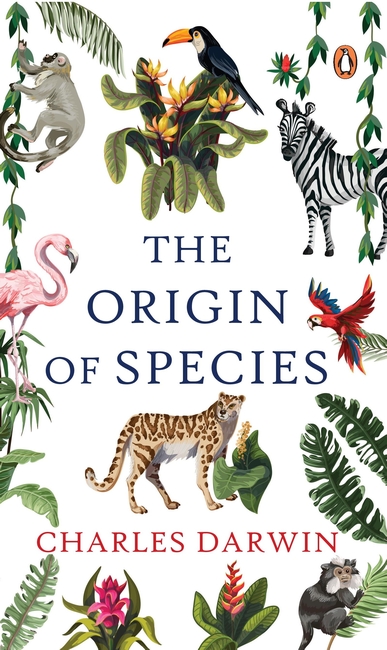
How was the universe created? Who made us? What makes us so distinct from other creatures on this Earth? Eminent naturalist Charles Darwin attempted to answer these questions in the early 19th century.
In 1831, Charles Darwin left Plymouth Harbor aboard the HMS Beagle. During the next five years, he conducted research on plants and animals from around the world, collecting key evidence and making detailed notes. Through his studies he discovered one of the greatest biological phenomenon that changed the course of mankind-evolution.
Twenty eight years later, he finally published his findings in The Origin of Species, a revolutionary work of scientific literature that laid down the foundations for evolutionary biology. In the book Darwin argues that all species evolve through a process of ‘natural selection’, adapting to their changing environment to ensure survival; this leads to the birth of new species and the transformation of the old.
Lucid, cerebral, and utterly riveting, The Origin of Species is amongst the greatest works of scientific imagination.

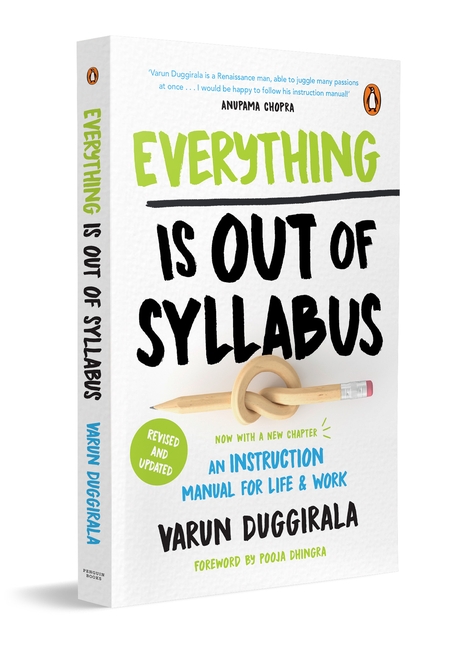
Life seldom comes with an instruction manual or a guidebook. It’s often messy and unpredictable too. While our education may prepare us for situations covered within its set syllabus, most of life happens outside this realm and this leaves us grappling with questions around work, life and everything in between.
Hence, this book.
Varun Duggirala has survived and thrived in a system that throws curveballs at us without the tools to actually overcome them. In Everything Is Out of Syllabus, he offers answers to important questions like:
What is the true meaning of success?
How can one become more creative and think outside the box?
How can we connect with people, including ourselves?
And much more.
Most importantly, he tells readers what are the skills one needs to master to live a more fulfilled life that is optimized for happiness.
Full of anecdotal wisdom, this book is partly funny, mostly reflective, and completely authentic. Everything Is Out of Syllabus is a must read for anyone who is trying to understand life and figure out their own roadmap to navigate it.

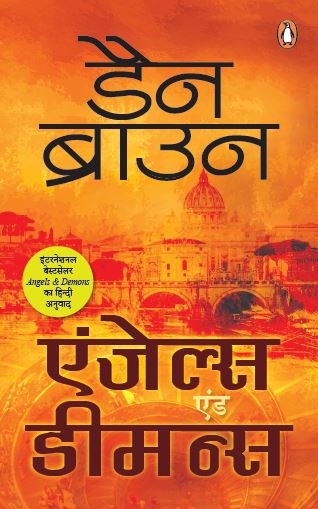
When a CERN scientist is found murdered, the investigators decide to contact Robert Langdon for assistance. A Professor of Symbology at Harvard, Langdon can’t understand why the police need his help. When he arrives, he discovers a series of strange symbols which link the murder to the Vatican, where the College of Cardinals has assembled for one purpose: the election of the new Pope. The entire world is watching as the ballot boxes are collected, but unless Langdon can help solve the clues in time, a deadly bomb waits beneath the city, waiting to go off.

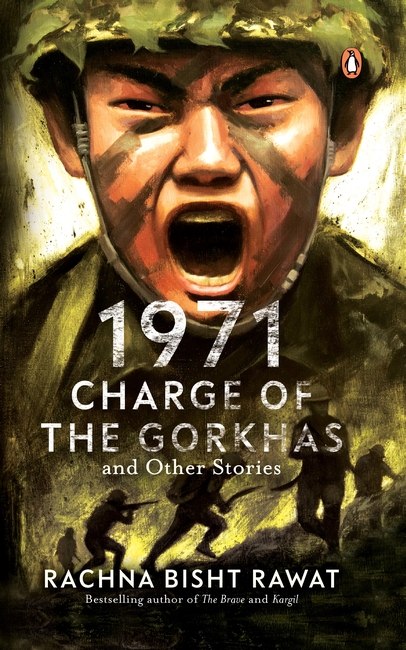
On the fiftieth anniversary of the 1971 Indo-Pak war, revisit its battlefields through stories of bravehearts from the army, navy and air force who fought for a cause that meant more to them than their own lives
Why do the Gorkha soldiers of 4/5 GR attack a heavily defended enemy post with just naked khukris in their hands?
Does Pakistan find out the real identity of the young pilot who, after having ejected from a burning plane, calls himself Flt Lt Mansoor Ali Khan?
What awaits the naval diver who cuts made-in-India labels off his clothes and crosses into East Pakistan with a machine gun slung across his back?
Why is a twenty-one-year-old Sikh paratrooper being taught to jump off a stool in a deserted hangar at Dum Dum airport with a Packet aircraft waiting nearby?
1971 is a deeply researched collection of true stories of extraordinary human grit and courage that shows you a side to war that few military histories do.