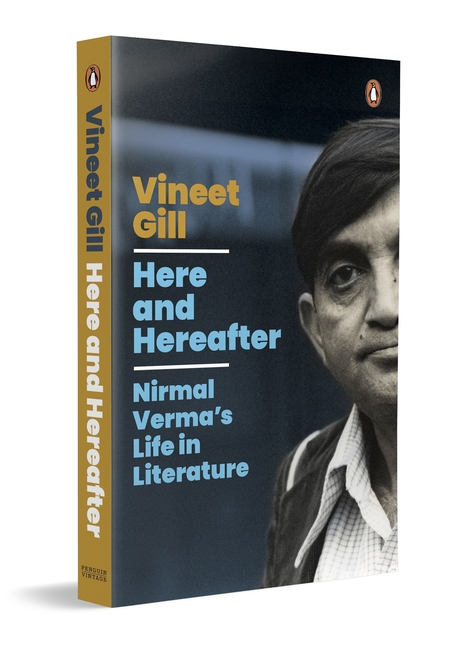
‘Here and Hereafter is as much about Nirmal Verma’s life in literature as it is about Vineet Gill’s. There is no other book quite like it’—ARVIND KRISHNA MEHROTRA
‘A literary gem’—AMITAVA KUMAR
How is a writer formed? Yes, through labour, commitment, perseverance, grit and various other things that we keep hearing about. But equally, a writer is formed through the workings of a particular kind of sensibility. As Vineet Gill attempts to understand this writerly sensibility in Nirmal Verma’s life and work, he finds that the personal and the literary are, on some level, inseparable.
In this masterly deep dive into the world of one of Hindi literature’s pioneers, Gill looks at the scattered elements of Verma’s life as ingredients that went into the making of the writer. The places he lived in, the people he knew, the books he read are all reflected, in Gill’s view, in Verma’s stories and novels. This is a work of intense readerly analysis and considered excavation-a contemplation on Verma’s oeuvre and its place in world literature.

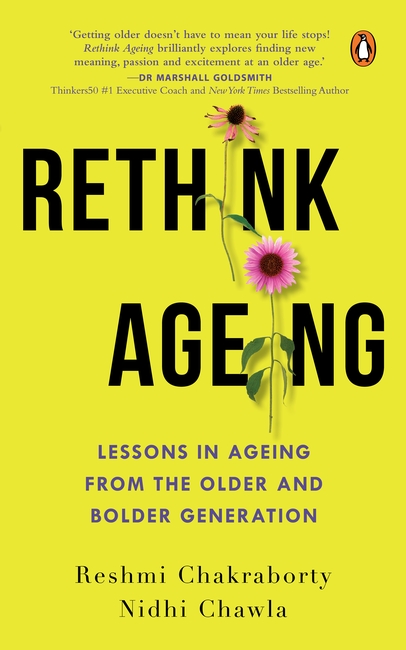
Veena Iyer, aged sixty-six, got a degree in dance movement therapy. She is training to upgrade her skill and now runs various workshops.
B.R. Janardan, aged eighty-seven, started running after sixty and has sixteen full marathons under his belt.
These important stories illustrate the shifting narrative for ageing in India. They battle the ageism that is deep-rooted in Indian culture with fixed notions of ‘approved’ behaviour. Grandchildren? Yes. Pilgrimage? Yes. But companionship? Gasp! A second career? Why the need?
India will have over 300 million senior citizens by 2050. ‘Active ageing’ has become a popular topic of conversation in urban India and is the process of developing and maintaining functional activities as one gets older. Therefore, it is no longer uncommon to meet people like Janardan or Iyer in our fast-evolving society. We have an ageing society that is living longer and adapting to nuclear families, faraway kids and amorphous social support. Urban Indians are navigating health challenges, isolation and shifting social barometers to practise active ageing, the best form of preventive healthcare. This book takes a deep dive into understanding ageing, its impact on society, and how to overcome certain ‘hurdles’. Biological age no longer defines and limits us. After all, why should age prevent us from living the lives we want to?

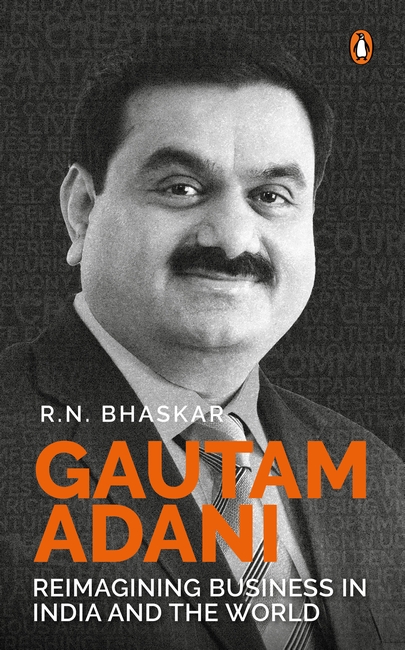
Gautam Adani needs no introduction. One of the richest men in the world, he also helms a business empire that is now India’s largest player in ports and renewable energy. He is also the country’s largest private sector player in sectors like airports, city gas distribution, power transmission, thermal power, edible oil, and railway lines. Yet, look beyond these facts, and startlingly little is known about Gautam Adani, the maverick businessman; about his motivations and vision; about his life, and the episodes, minor and major, that propelled him to make the choices he did.
This book sheds light on all that we have never known, but should know, about Gautam Adani. It delves deep, detailing a range of fascinating anecdotes from Gautam Adani’s life, illuminating his early childhood, his initiation into business, and the learnings and opportunities he exploited.
But beyond biography, this book is committed to analysing those business strategies of Gautam Adani that have intrigued all. It marries biography and business data, storytelling and hard numbers. Besides, it has been authored by one of India’s most senior journalists who has long followed Gautam Adani’s career.

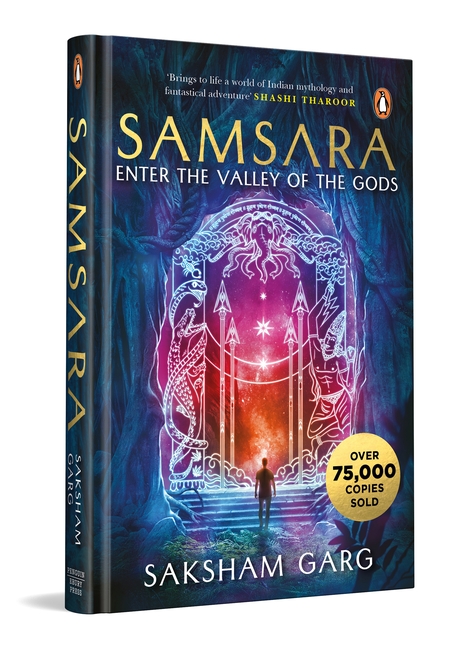
What if you came face to face with the gods?
Phones stop working. Smartwatches die. And arms start glowing with blue scars. This is what happens to Aman Chandra and ten other Souls of Samsara when they are kidnapped from modern-day India and transported to a hidden valley in the Himalayas. In this realm of magic, home to Hindu gods, immortal yogis and mythical beasts, the mission is clear for the Souls of Samsara: to learn the ancient art of yogic sorcery and prepare for a treacherous journey not many can survive.
But why must they go on this journey? And how are the gods connected to it all?
Before they get any answers, the Souls of Samsara realize that there is a larger scheme at play. The king of the gods has passed a controversial order. And Aman must make a tough decision that will change not just his life but the fate of an entire nation . . .

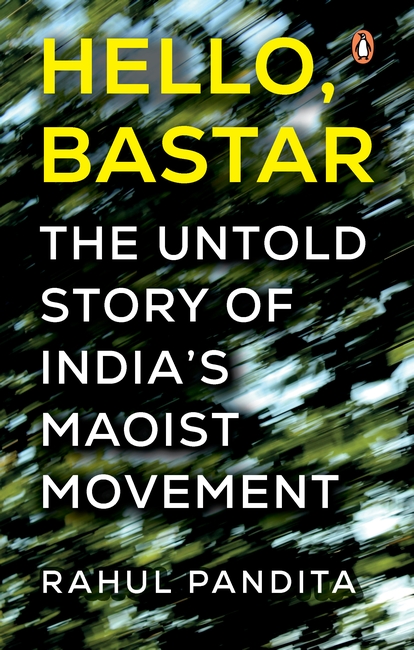
With direct access to the top Maoist leadership, Rahul Pandita provides an authoritative account of how a handful of men and women, who believed in the idea of revolution, entered Bastar in Central India in 1980 and created a powerful movement that New Delhi now terms as India’s biggest internal security threat. It traces the circumstances due to which the Maoist movement entrenched itself in about 10 states of India, carrying out deadly attacks against the Indian establishment in the name of the poor and the marginalised. It offers rare insight into the lives of Maoist guerillas and also of the Adivasi tribals living in the Red zone. Based on extensive on-ground reportage and exhaustive interviews with Maoist leaders including their supreme commander Ganapathi, Kobad Ghandy and others who are jailed or have been killed in police encounters, this book is a combination of firsthand storytelling and intrepid analysis.

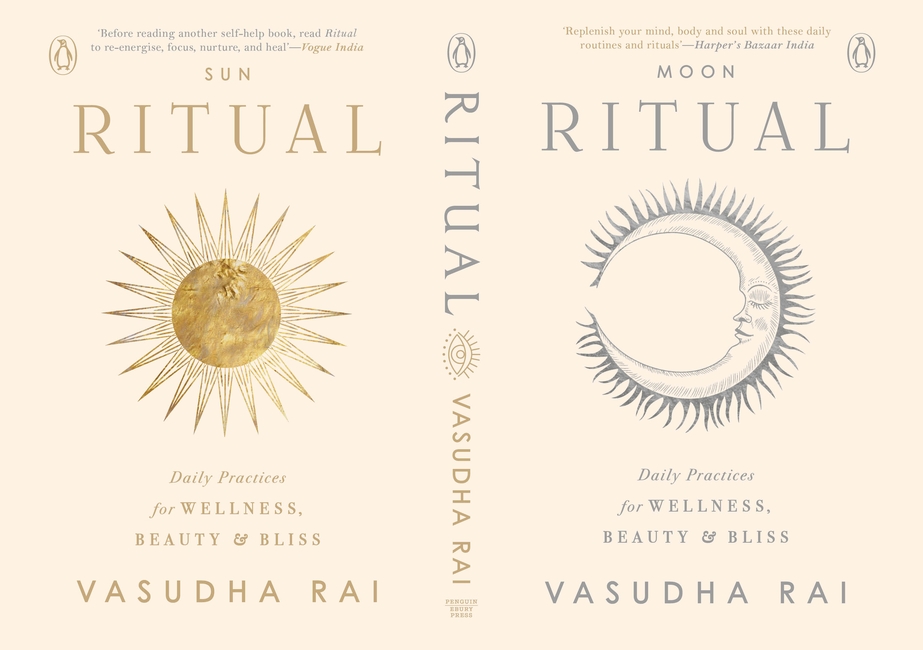
RITUAL is a collection of practices aimed at optimizing, harmonizing and maximizing the natural energies of the day and night
Renew your mind, body and spirit with activities such as sunbaths, sound healing, cleansing kriyas, beautifying masks, massages, breathwork and navel therapy. From sunrise to sunset, nightfall to dawn, these exercises will help you find moments of clarity, relaxation and bliss.
Inspired by long-standing traditions, this book presents a system of daily rites to create a bespoke routine that works for modern living. Vasudha Rai invites you to play and experiment with old practices so that you can indulge in the magic of Ritual.

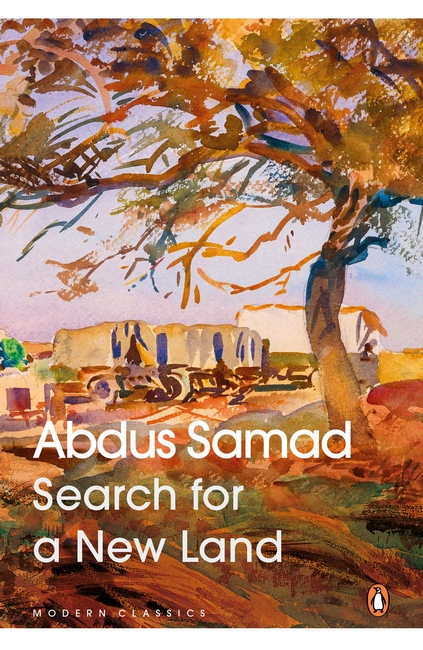
A Muslim feudal family in provincial Bihar Shareef faces devastating grief and anguish during the Partition of India in 1947 and then again, the partition of Bengal in 1971 when lines are drawn across their lands and hearts. Originally published in Urdu as Do Gaz Zameen, Abdus Samad’s deeply emotional and political novel traces the journey of the Hussain family from the 1920s to 1970s, as they travel through the Bihar province, to Calcutta, Karachi, and Dhaka and take us along intensely critical political events that shaped the formation of new lands and new identities in India, Pakistan, and Bangladesh.
Abdus Samad received the Sahitya Akademi award in 1990 for Do Gaz Zameen. His prolific literary career in Urdu fiction has garnered for him several other accolades and awards such as the Bharatiya Bhasha Parishad, the Ghalib award, and the Lifetime Achievement Award from the Urdu Academy in Bihar. Search for a New Land is the first translation into English of this epic novel.

Are maestros born or made?
By making ideas mate, can you create new ones?
How do you develop a mindset that helps you thrive?
Can you nudge yourself into being more productive at work?
Is it possible for you to debunk bullshit from the clutter all around?
…
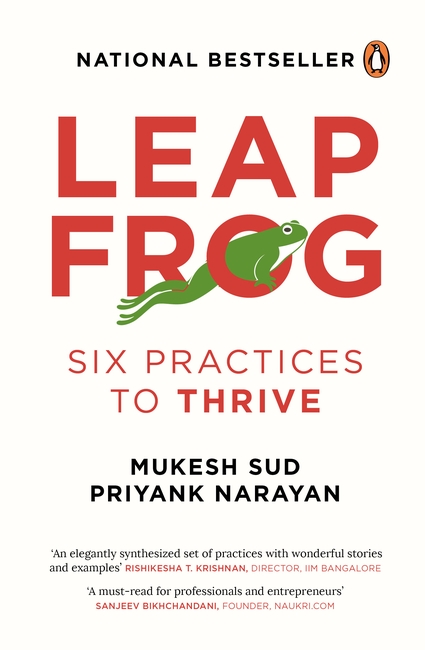
Find the answers to these questions and several more in Leapfrog
Leapfrog-in the context of thriving at work-is a scenario when a new entrant outperforms others. How do they achieve this? Are high performers born or made? Is there a way to nudge yourself into being more successful at work and also in life? With its six evidence-based insights, this book is poised to help you to advance your career at an incredible pace.
To begin with, the first step is to develop grit along with the ability to embrace boredom. The second practice, leaning on behavioral economics, focusses on nudging yourself to make better choices. The third practice is about being intellectually humble by accepting limits to what you know. The chapter on dancing with disciplines celebrates the magic of ideas colliding to create new ones. In a world full of noise and bullshit, you will need to curate choices to maintain a focus on what is relevant to you. The last practice helps you think like an entrepreneur and develop the ability to ask for what you want.
Based on their extensive experience of teaching and mentoring students, the authors have developed a framework called the Personal Journey Map (PJM), which will help you imbibe and implement the six practices by capturing your current repertoire, scanning the landscape ahead, and curating a path to a career in which you can prosper.
Tejo Tungabhadra tells the story of two rivers on different continents whose souls are bound together by history. On the banks of the river Tejo in Lisbon, Bella, a young Jewish refugee, and her family face daily threats to their lives and dignity from the deeply antisemitic society around them. Gabriel, her lover, sails to India with General Albuquerque’s fleet seeking wealth and a secure future for themselves. Meanwhile, on the banks of the Tungabhadra in the Vijayanagara Empire, the young couple Hampamma and Keshava find themselves caught in the storm of religious violence and the cruel rigmarole of tradition. The two stories converge in Goa with all the thunder and gush of meeting rivers. Set in the late 15th and early 16th century, Tejo Tungabhadra is a grand saga of love, ambition, greed, and a deep zest for life through the tossing waves of history.

Fifteen Brave Men and Women of Bharat who Never Succumbed to the Challenges of Invaders But were Lost and Forgotten in the Annals of History. These are the stories of those Bravehearts who Fought to Protect their Rights, Faith and Freedom.
History has always been the handmaiden of the victor. ‘Until the lions have their own storytellers,’ said Chinua Achebe, ‘the history of the hunt will always glorify the hunter!’ Exploring the lives, times and works of the fifteen long-forgotten and mostly neglected unsung heroes and heroines of our past, this book brings to light the contribution of the warriors who not only donned armour and burst forth into the battlefield but also kept the flame of hope alive under adverse circumstances.
Narrating the tales of valour and success that India, as a nation and civilization, has borne witness to in its long and tumultuous past, the book opens a window to the stories of select men and women who valiantly fought against invaders for their rights, faith and freedom.
Rajarshi Bhagyachandra Jai Singh of Manipur, Lalitaditya Muktapida of Kashmir, Chand Bibi of Ahmednagar, Lachit Barphukan of Assam, Begum Hazrat Mahal of Awadh, Rani Abbakka Chowta of Ullal, Martanda Varma of Travancore, Rani Rudrama Devi of Warangal, Rani Naiki Devi of Gujarat and Banda Singh Bahadur are some of the ‘bravehearts’ who fought to uphold the tradition and culture of their land.
Pacy and unputdownable, Bravehearts of Bharat chronicles the stories of courage, determination and victory, which largely remained untold and therefore unknown for a long time.