Publish with Us

Follow Penguin

Follow Penguinsters

Follow Penguin Swadesh

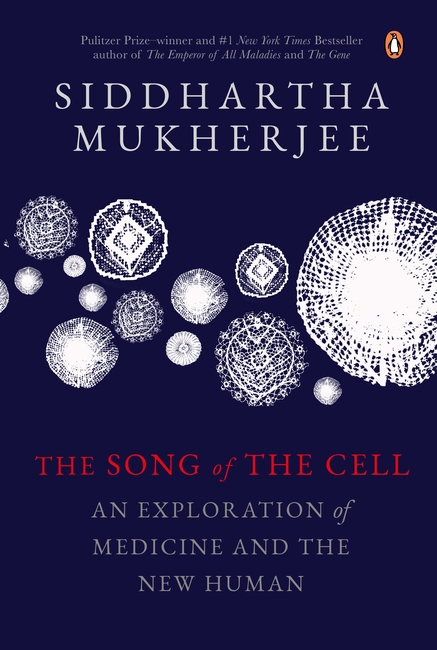
The Song of the Cell

From Pulitzer Prize-winning and #1 New York Times bestselling author of The Emperor of All Maladies and The Gene, The Song of The Cell is the third book in this extraordinary writer’s exploration of what it means to be human-rich with Siddhartha Mukherjee’s revelatory and exhilarating stories of scientists, doctors, and all the patients whose lives may be saved by their work.

In the late 1600s, a distinguished English polymath, Robert Hooke, and an eccentric Dutch cloth merchant, Antonie van Leeuwenhoek, look down their handmade microscopes. What they see introduces a radical concept that sweeps through biology and medicine, touching virtually every aspect of the two sciences and altering both forever. It is the fact that complex living organisms are assemblages of tiny, self-contained, self-regulating units. Our organs, our physiology, our selves-hearts, blood, brains-are built from these compartments. Hooke christens them ‘cells’.

The discovery of cells-and the reframing of the human body as a cellular ecosystem-announced the birth of a new kind of medicine based on the therapeutic manipulations of cells. A hip fracture, a cardiac arrest, Alzheimer’s, dementia, AIDS, pneumonia, lung cancer, kidney failure, arthritis, COVID-all could be viewed as the results of cells, or systems of cells, functioning abnormally. And all could be perceived as loci of cellular therapies.

In The Song of the Cell, Mukherjee tells the story of how scientists discovered cells, began to understand them, and are now using that knowledge to create new humans. He seduces readers with writing so vivid, lucid, and suspenseful that complex science becomes thrilling. Told in six parts, laced with Mukherjee’s own experience as a researcher, doctor, and prolific reader,
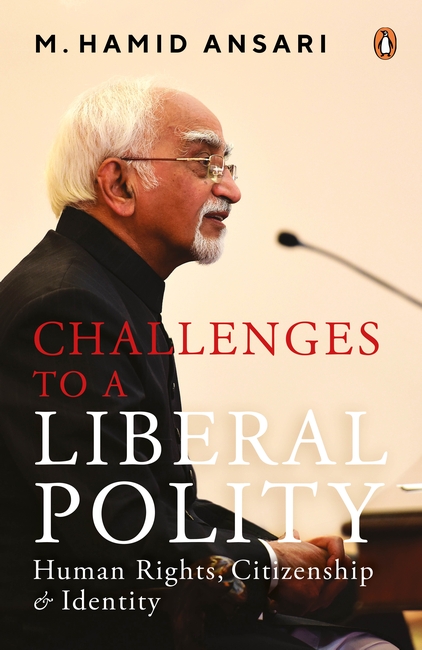
Challenges to A Liberal Polity

Challenges to a Liberal Polity, amazingly relevant and thought provoking for our times-by Hamid Ansari, former Vice President of India-brings to light some of the most critical issues, which influence our thoughts every day.

From Nehru’s vision for India as a major world power to the issues of citizenship, religion, democracy, the idea of plurality and Muslim identity in Indian society, inclusion/exclusion of Indian Muslims, the ‘mainstream’ decision making process in India, the role of women in order to build a compassionate society, implication for dissent, Muslims’ role and contribution to Indian culture, civilization and nation-building in the post-Independent India, among others, the book thrashes some of the burning issues of Indian polity and society.

Comprehensive, argumentative and evocative, this title will not only interest a wide spectrum of readers but also politicians, policymakers and students and scholars of Indian politics, history and sociology.

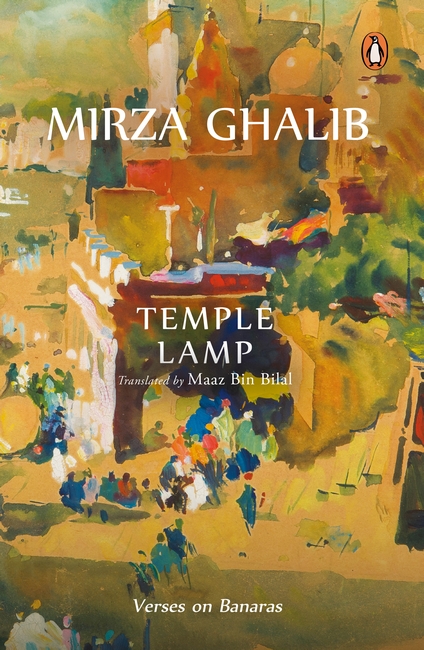
Temple Lamp

The poem ‘Chirag-e-Dair’ or Temple Lamp is an eloquent and vibrant Persian masnavi by Mirza Ghalib. While we quote liberally from his Urdu poetry, we know little of his writings in Persian, and while we read of his love for the city of Delhi, we discover in temple Lamp, his rapture over the spiritual and sensual city of Banaras.

Chiragh-e-dair is being translated directly from Persian into English in its entirety for the first time, with a critical Introduction by Maaz Bin Bilal. It is Mirza Ghalib’s pean to Kashi, which he calls Kaaba-e-Hindostan or the Mecca of India.

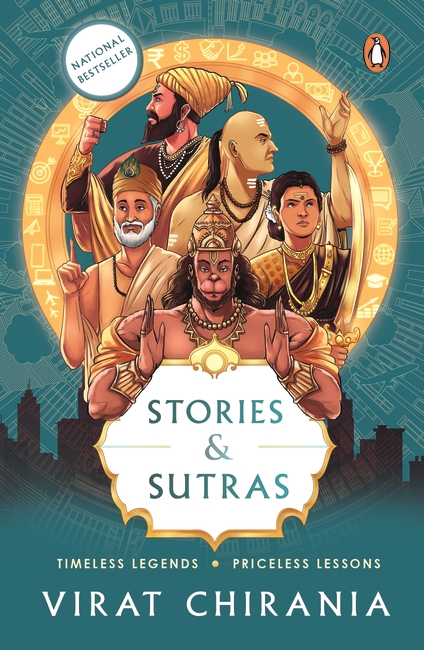
Stories and Sutras

India is the birthplace of legends, the mother of culture and tradition, and as Indians, we love our stories. This book contains ten powerful stories of the original superheroes-stories that will leave a permanent impression on your consciousness and spill over in your conversations, stories of passion and patriotism, of valour and wit, of devotion and sacrifice, and of intelligence and faith.

When decoded, the accounts in this book are not merely stories-they are a treasure trove of wisdom, life hacks, leadership and management sutras. Did you know that Lord Hanuman can teach us communication skills, that Chhatrapati Shivaji Maharaj can teach us how to run a startup and that Chanakya shows us how to use emotional intelligence in business strategy? Have you ever imagined Arjuna, Narada Muni, Kabir and Adi Shankaracharya as leaders and influencers and do you know about Rani Abbakka, one of the unsung battle queens of India? Stories and Sutras is a journey of these incredible tales and priceless sutras-an edutainment experience that is uniquely Indian and utterly global.

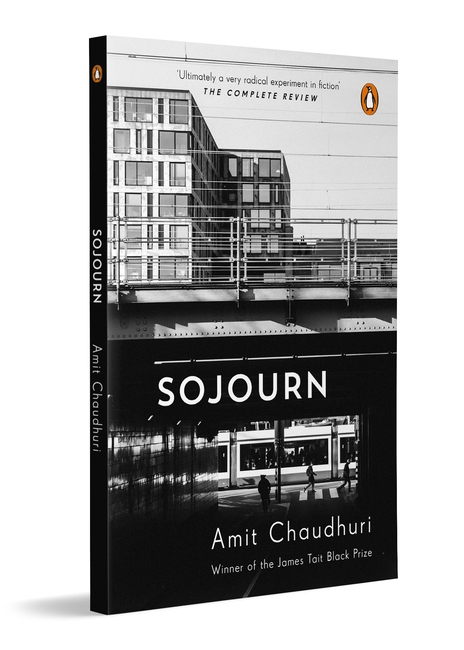
Sojourn

An unnamed man arrives in Berlin as a visiting professor. It is a place fused with Western history and cultural fracture lines. He moves along its streets and pavements; through its department stores, museums and restaurants. He befriends Faqrul, an enigmatic exiled poet, and Birgit, a woman with whom he shares the vagaries of attraction. He tries to understand his white-haired cleaner. Berlin is a riddle-he becomes lost not only in the city but in its legacy.

Sealed off in his own solitude, and as his visiting professorship passes, the narrator awaits transformation and meaning. Ultimately, he starts to understand that the less sure he becomes of his place in the moment, the more he knows his way.

The Bellboy

Latif’s life changes when he is appointed bellboy at the Paradise Lodge – a hotel where people come to die.

After his father’s death, drowned in the waters surrounding their small Island, it is 17 year-old Latif’s turn to become the man of the house and provide for his ailing mother and sisters. Despite discovering a dead body on his first day of duty, Latif finds entertainment spying on guests and regaling the hotel’s janitor, Stella, with made-up stories. However, when Latif finds the corpse of a small-time actor in Room 555 and becomes a mute-witness to a crime that happens there, the course of Latif’s life is irretrievably altered.

The Bellboy is as much a commentary on how society treats and victimizes the intellectually vulnerable as it is about the quiet resentment brewing against religious minorities in India today. With a mix of wry humour and heart-wrenching poignancy, the book narrates a young boy’s coming-of-age on a small island, and his innocence that persists even in the face of adversity and inevitable tragedy.

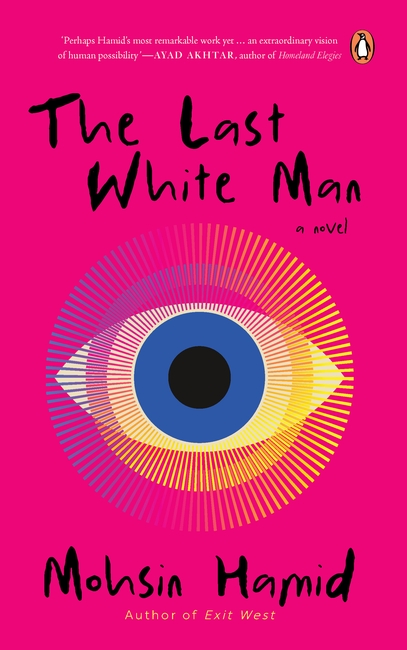
The Last White Man

One morning, Anders wakes to find that his skin has turned dark, his reflection a stranger to him. At first he tells only Oona, an old friend, newly a lover. Soon, reports of similar occurrences surface across the land. Some see in the transformations the long-dreaded overturning of an established order, to be resisted to a bitter end. In many, like Anders’s father and Oona’s mother, a sense of profound loss wars with profound love. As the bond between Anders and Oona deepens, change takes on a different shading: a chance to see one another, face to face, anew.

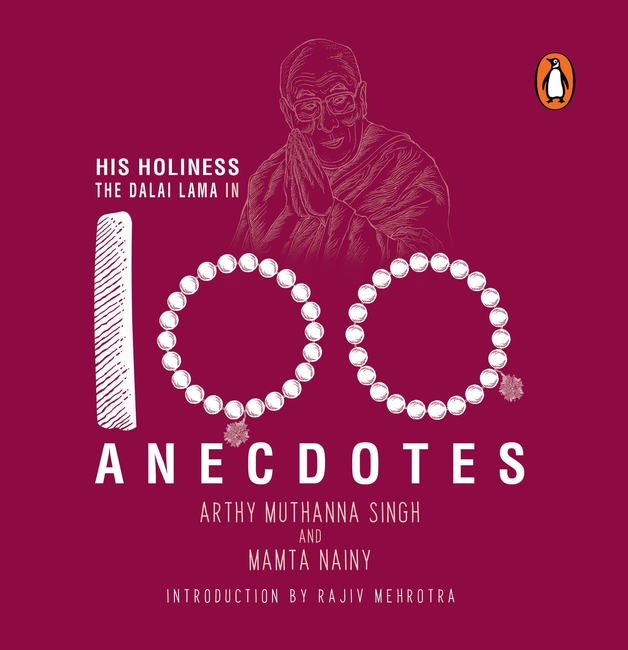
His Holiness the Dalai Lama in 100 Anecdotes

On 6 July 1935, a mischievous boy was born in a remote village in Tibet, who, at the age of two, was recognized as the fourteenth reincarnation of the Dalai Lama. His eventful boyhood in Lhasa, thrilling escape to India and subsequent exile in Dharamsala, captured the imagination of thousands. With an endearing smile and childish humour, he has become a symbol of optimism and hope for the oppressed.

Tracing his life through 100 lesser-known and inspiring incidents, unusual trivia and gorgeous illustrations, this one-of-a-kind book explores the Dalai Lama’s vision, teachings and philosophies. His Holiness the Dalai Lama in 100 Anecdotes is a classic tribute and a collectible edition that celebrates the various facets of an extraordinary spiritual leader from his birth through his eighty-seventh birthday.

error: Content is protected !!