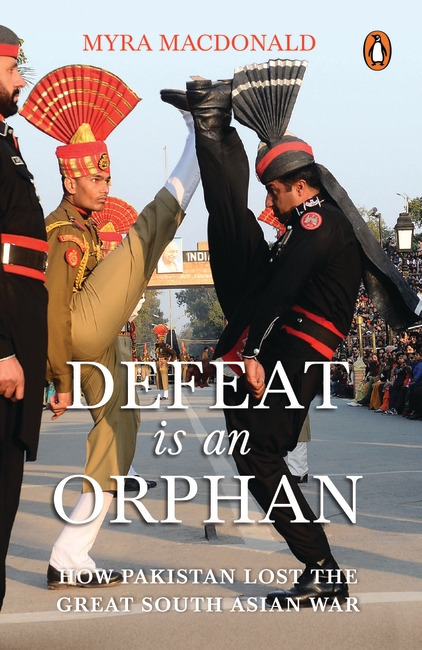
When India and Pakistan held nuclear tests in 1998, they restarted the clock on a competition that had begun half a century earlier. Nuclear weapons restored strategic parity, erasing the advantage of India’s much larger size and conventional military superiority. Yet, in the years that followed, Pakistan went on to lose decisively to India. It lost any ability to stake a serious claim to Kashmir, a region it called its jugular vein. Its ability to influence events in Afghanistan diminished. While India’s growing economy won it recognition as a rising world power, Pakistan became known as a failing state. Pakistan had lost to India before but the setbacks since 1998 made this defeat irreversible.
Defeat Is an Orphan follows the roller-coaster ride through post-nuclear India-Pakistan, from bitter conflict in the mountains to military confrontation in the plains, from the hijacking of an Indian plane to the assault on Mumbai. Nuclear weapons proved to be Pakistan’s undoing. They encouraged a reckless reliance on militant proxies even as the jihadis spun out of control outside and inside Pakistan. By shielding it from retaliation, the nuclear weapons also sealed it into its own dysfunction-so much so that the Great South Asian War, fought on-and-off since 1947, was not so much won by India as lost by Pakistan.

KERALA SAHITYA AKADEMI AWARD WINNER
A Thousand Cuts is a harrowing, sobering and ultimately inspiring autobiography of Professor T.J. Joseph, who in 2010 became the victim of a brutal terrorist assault, accused of blasphemy after setting an exam question that enraged fundamentalists. This book is an important reminder of the pernicious effect of religious extremism and the duty of every person to speak out against those who would silence free expression’ SHASHI THAROOR
‘There is excruciating agony here, but also black humour and irony that enliven and lighten the narrative even at the height of anguish’ K. SATCHIDANANDAN
‘The poignant tale, with its sense of urgency and helplessness, has been sensitively translated as A Thousand Cuts‘ RANA SAFVI
A chilling account of religious extremism
In 2010, T.J. Joseph, a professor of Malayalam at Newman College, Kerala, framed an innocuous question for an internal examination that changed his life forever. Following a trumped-up charge of blasphemy, members of a radical Islamist organization set upon him in public, viciously maiming him and chopping off his right hand. His memoir, told with amazing restraint and wry humour, is the moving tale of his life and family as they went through hell and beyond. Here’s the extraordinary story of a man who survived dismembering only to be betrayed by his
own Church. Let alone stand by him, it robbed him of his livelihood and isolated him from his community, driving Joseph’s long-suffering wife to melancholia and eventual suicide. Joseph’s story is one of fortitude, will power, forgiveness and compassion, told with rare wit that will make readers chuckle through their tears.
This is a tale that will leave the reader seething, weeping and smiling by turns.

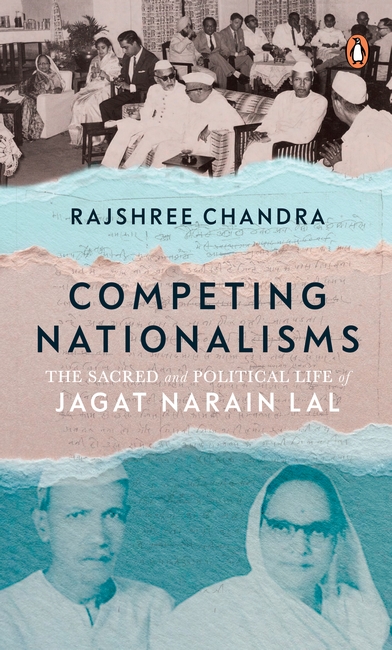
Competing Nationalisms is more than a political biography of Jagat Narain Lal-now forgotten by history, but once an influential member of the freedom movement in Bihar. As a member of the Congress and of the Hindu Mahasabha; as a Hindu nationalist who wanted to combine religion with civic virtues; as a Gandhian and an ‘ascetic nationalist’ seeking freedom in a political world, Jagat Narain Lal’s life becomes a mirror for the times in which a mix of religiosity, spirituality and ritual could not be separated from either the social or the political field.
The book travels with Jagat Narain Lal on his journey through four pathways-Ascetic, Hindu Nationalist, Anti-Colonial and Civic nationalisms. His life and times give us a glimpse into these intersecting, contesting and mutating idioms of nationalism. There are bigger leaders, taller nationalists, more valiant fighters of freedom, but none who perhaps so tortuously embodied the many possibilities and contradictions of Indian nationalism. In his anxieties, vulnerability, negotiations and truth-telling, we glimpse Indian nationalism’s own fraught relationship with questions of identity, faith and nationhood.
In leafing through her grandfather’s life, page by yellowed page, Chandra presents not just his political biography but, in a sense, a personal biography of Indian nationalism as well. In Jagat Narain Lal’s small story lies a bigger history of competing nationalisms, as well as a tale that
speaks to the present.

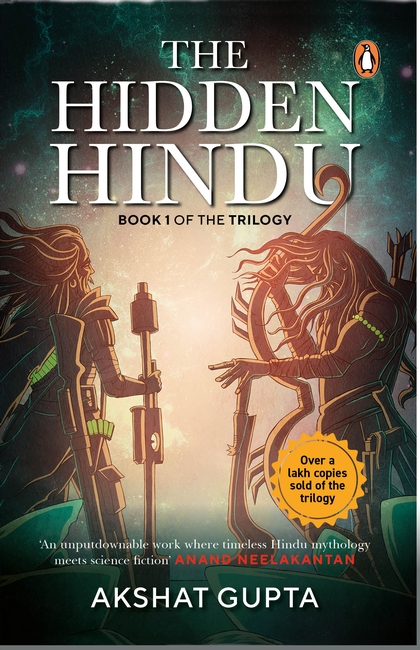
Prithvi, a twenty-one-year-old, is searching for a mysterious middle-aged aghori (Shiva devotee), Om Shastri, who was traced more than 200 years ago before he was captured and transported to a high-tech facility on an isolated Indian island. When the aghori was drugged and hypnotized for interrogation by a team of specialists, he claimed to have witnessed all four yugas (the epochs in Hinduism) and even participated in both Ramayana and Mahabharata. Om’s revelations of his incredible past that defied the nature of mortality left everyone baffled. The team also discovers that Om had been in search of the other immortals from every yuga. These bizarre secrets could shake up the ancient beliefs of the present and alter the course of the future. So who is Om Shastri? Why was he captured? Board the boat of Om Shastri’s secrets, Prithvi’s pursuit and adventures of other enigmatic immortals of Hindu mythology in this exciting and revealing journey.

The new and enhanced edition of Exam Warriors by Narendra Modi is not only an inspiring book for students but also for their parents and teachers. Written in a fun and interactive style, with illustrations, activities and yoga asanas, this book will be a friend in acing exams and facing life.
Non-preachy, practical and thought-provoking, Exam Warriors is a handy guide for youth of India and across the world.

A deep dive into understanding India-China relations
Why did India and China go to war in 1962? What propelled Jawaharlal Nehru’s ‘vision’ of China? Why is it necessary to understand the trans-Himalayan power play of India and China in the formative period
of their nationhoods? The past shadows the present in this relationship and shapes current policy options, strongly influencing public debate in India to this day.
Nirupama Rao, a former Foreign Secretary of India, unknots this intensely complex saga of the early years of the India-China relationship. As a diplomat-practitioner, Rao’s telling is based not only on archival material from India, China, Britain and the United States, but also on a deep personal knowledge of China, where she served as India’s Ambassador. In addition, she brings a practitioner’s keen eye to the labyrinth of negotiations and official interactions that took place between the two countries from 1949 to 1962.
The Fractured Himalaya looks at the inflection points when the trajectory of diplomacy between these two nations could have course-corrected but did not. Importantly, it dwells on the strategic dilemma posed by Tibet in relations between India and China-a dilemma that is far from being resolved. The question of Tibet is closely interwoven into the fabric of this history. It also turns the searchlight on the key personalities involved-Jawaharlal Nehru, Mao Zedong, Zhou Enlai and the 14th Dalai Lama-and their interactions as the tournament of those years was played out, moving step by closer step to the conflict of 1962.

Born into an untouchable community, Anna Bhau Sathe’s upbringing and experiences shaped his writings and political activism. Winner of the Maharashtra Government’s ‘best novel’ award, Fakira, among his best-known works, is one of the first prominent Dalit novels in Marathi.
The undaunted and ceaseless battle of the eponymous character, Fakira, for the collective welfare of his community forms the narrative. He revolts against the rural orthodox caste system and the British Raj to save his village from utter starvation, humiliation, and death. His efforts are dramatic and daring, and his methods in violation of the law. When attempts to capture him fail, the British authorities hold the community hostage, stating that unless Fakira surrenders, they will torture his people to death.
Translated by Prof. Baliram Gaikwad, Dalit magnanimity, fighting spirit, and thirst to live a dignified existence are at the core of the novel. Encompassing both historical and contemporary reality as well as the truest human emotions and situations, Fakira is part of a powerful literary genre that brings to the forefront the most encouraging, moving and realistic delineation of Dalit lives.

A practical guide to helping readers find their dream jobs.
Searching for a job is always stressful-the majority of job seekers experience nervousness, anxiety and tension during their job search. While one’s qualifications, experience and talent are important, all these are of no consequence if one cannot locate the right job, identify the right time to pitch for it and find the people who can help in getting it.
Job Search Secrets provides much-needed guidance to readers on how they can get their dream job easily. It includes tips on choosing the right career, finding hidden jobs, reaching people who can help in the job search, building long-term networks, using social media, cracking campus and virtual interviews, and more.
It is a step-by-step guide and practical manual with exercises and free tools, which anyone can use to find the dream job faster.

When Charulata Srinivasan returns from the US to Mumbai following the unexpected death of her brother, Ravi, in an accident, she stumbles on something that suggests a more sinister game is in play.
With her suspicions that Ravi may have been murdered dismissed by the police, Charu has no choice but to turn to Ravi’s best friend, David, and retired-policeman-turned-detective Anand to help her piece together the truth.
A startling discovery brings to light an immaculate blackmailing scheme, not only placing Charu in grave danger but also forcing her to grapple with the terrifying possibility that her brother was not the honest, decent man she thought him to be.
Can Charu deal with the horrifying truth to unravel the twisted threads of a conspiracy that has left her brother . . . and others . . . dead?
Like the farside of the moon, everyone has a face that has never been seen.
Does Charu have it in her to find the other side?
Praise for Krishna Udayasankar‘s previous works:
‘Spectacular’-Sonam Kapoor for The Aryavarta Chronicles
‘A fast-paced book, full of intrigue and guile’-Sunday Tribune for The Aryavarta Chronicles
‘. . . a thrilling page-turner that keeps you hooked from the start’-The Hindu for Beast
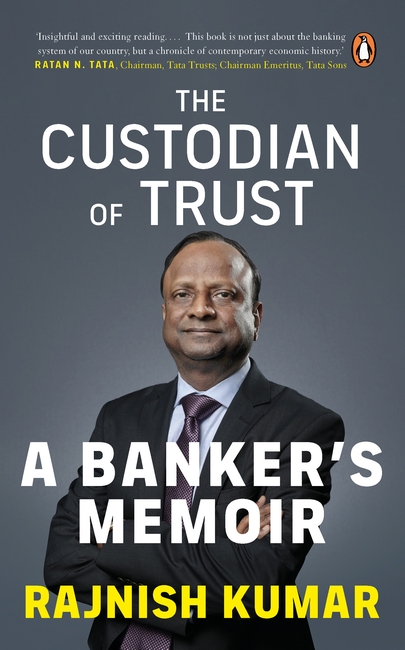
He was silently managing the crisis in India’s banking sector then.
Now he shares these stories in his memoir.
It began from a modest house in one of the narrowest lanes of the old city of Meerut. From being a probationary officer in the State Bank of India (SBI) in 1980 to its Chairman in 2017, Rajnish Kumar had an amazingly interesting journey in which he saw the many changes in India’s banking sector that greatly impacted the country and its economy.
As the Chairman of SBI, Kumar recounts, his term was rather momentous as the period-from 2017 to 2020-during which he shouldered this responsibility was rather unique under any circumstances. The Indian banking sector was going through one of its most tumultuous phases. The problem of non-performing loans (NPLs) had severely impacted the balance sheet and profitability of banks, especially those in the public sector.
In the aftermath of demonetization, the YES Bank fiasco, the crisis in Jet Airways and NPLs, among others, The Custodian of Trust is a candid memoir by the former Chairman of India’s largest commercial bank. Anecdotal, engaging and evocative, this book is an unputdownable memoir of a former banker.