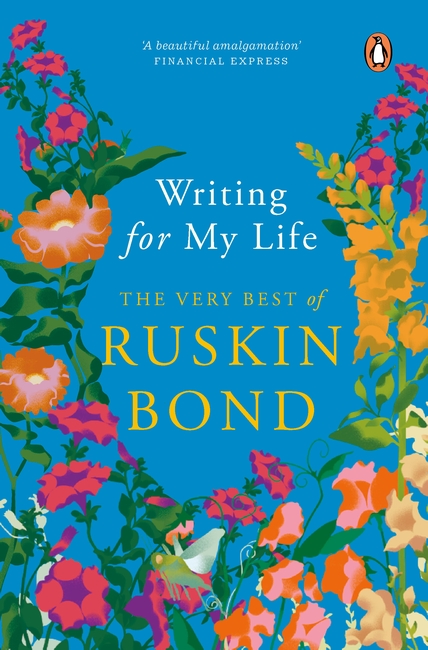
Experience the very best of Ruskin Bond’s writings in one book.
If only the world had no boundaries and we could move about without having to produce passports and documents everywhere, it really would be ‘a great wide beautiful, wonderful world’, says Ruskin Bond.
From his most loved stories to poems, memoirs and essays, Writing for My Life opens a window to the myriad worlds of Ruskin Bond, India’s most loved author. Capturing dreams of childhood, anecdotes of Rusty and his friends, the Ripley-Bean mysteries, accounts of his life with his father and his adventures in Jersey and London among others, this book is full of beauty and joy-two things Ruskin’s writing is mostly known for.
With a comprehensive introduction, this is the perfect gift to all the ardent readers and lovers of Ruskin’s effervescent writing. A wide collection of carefully curated and beautifully designed stories, this book is a collector’s edition.

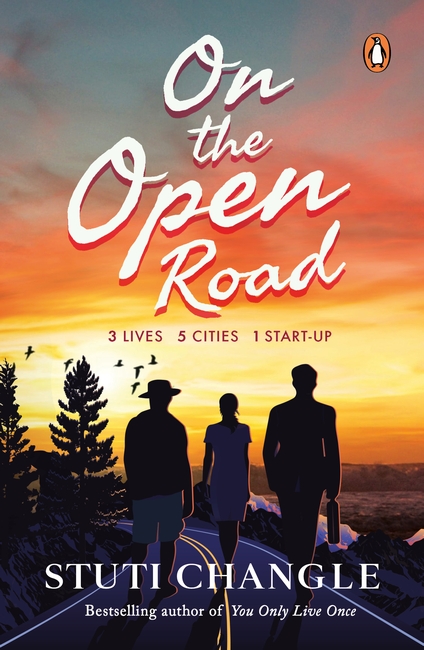
Myra wants to quit her job.
Kabir is looking to resign from the board.
Sandy just dropped out of college.
Discover yourself within these restless twenty-somethings as they stand on the cusp of making life-changing decisions. Battling their inner demons and societal taboos, they wish to live life on their own terms. Their passion brings them together and with nothing but Ramy’s travel blog as their guiding star, they set out on the open road to follow what they desire.
But their journey entails a devastating personal loss, an undying fear and a host of obstacles. Will they be able to
realize their shared dream? Or will they succumb to the hardships on their road to freedom?
On the Open Road is an inspirational story of three ordinary individuals who refuse to give up on themselves.
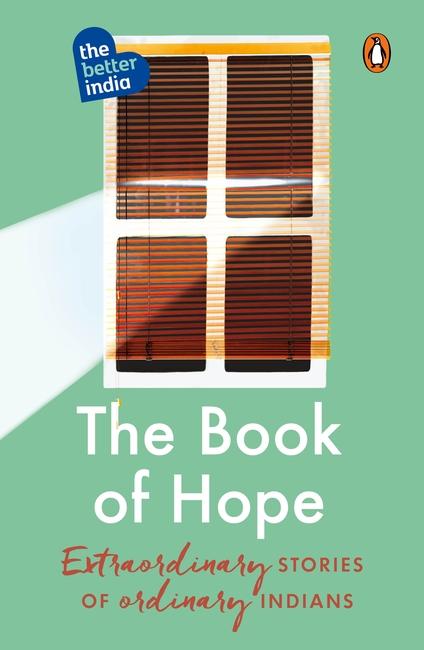
The Book of Hope is perfect for a nation that refuses to give up. Curated by The Better India, these are stories of resolve, love, faith, entrepreneurship, and compassion that will uplift your spirit. These stories serve as a pick-me-up when you’re feeling down, or when you need a reminder that in the end, we’ll make it through.
This book is an archive of a nation’s collective goodness. Stories are what connect us and remind us that hope is always possible, and the lives of these ordinary Indians will surely inspire you. These are the experiences of real people who found love, overcame loss, worked towards achieving their dreams, or those who bravely fought against societal norms. This book is a testament to the fact that anyone can do it - even you.
When all seems dull and bleak, think of this book as a ray of hope brightening up your heart, mind, and soul.
Foreword by Anand Mahindra.

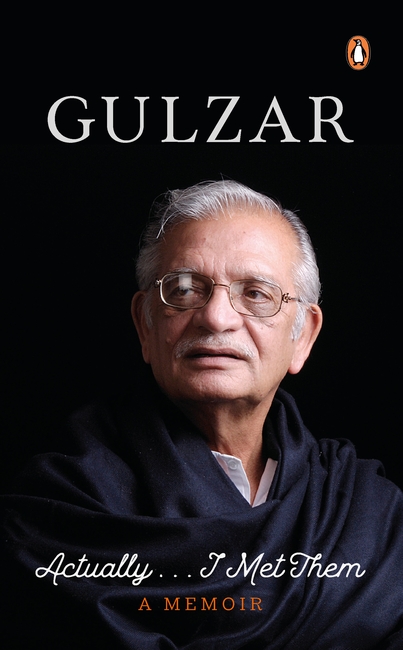
Personal. Intimate. Deeply moving.
An absolutely unputdownable memoir.
Do memories ever fade away? They never ‘dry up’, says Gulzar Saab, ‘They keep floating somewhere between the conscious and the subconscious mind. It’s a great feeling to swim there sometime. Pick up a few bubbly moments and cherish them again.’
From Bimal Roy to Satyajit Ray, R.D. Burman, Kishore Kumar, Ritwik Ghatak, Hrishikesh Mukherjee, Pandit Ravi Shankar, Pandit Bhimsen Joshi, Mahasweta Devi and Samaresh Basu, among others, in this fascinating book, Gulzar Saab goes down memory lane to bring to light his relationship with the doyens of cinema, music and literature, who he had known and worked with over a long period of time. In his words, ‘It seems like a dream when I revisit my memories of such great gurus and colleagues, and I feel overwhelmed that I have really interacted with them. I have to pinch myself on realizing that actually . . . I met them.’
Chatty, anecdotal and deeply personal, this book of memories will chronicle Gulzar Saab’s life and career through different eras of Indian cinema as he successfully transcended commercial and critical arts. Studded with rare photographs, Actually .. I Met Them will be a treat for his huge and devoted fan base.
An auto biography by Gulzar Saab.

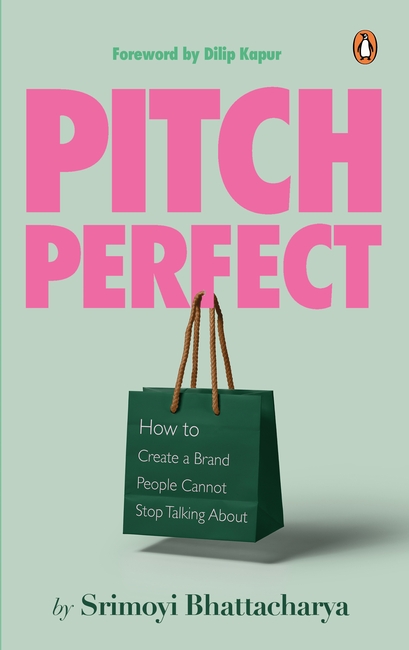
What do you do when you hear of an interesting brand or person?
You Google them, and visit their website and social media. It’s their storytelling that draws you in, and what locks you down are the stories being told about them. In today’s hyperconnected, hypercompetitive reality, everyone is vying for the same space on a screen with about 10 seconds of a potential client’s attention. So what’s the secret recipe to building a sticky brand while winning over and retaining consumers?
This is where Srimoyi Bhattacharya comes in to help you get your Pitch Perfect.
With more than 25 years of experience across three continents as a top publicist and strategist, Srimoyi is the founder of Peepul Consulting, one of India’s leading brand relations agencies. Respected for her depth of experience, she is an expert at helping brands find their most effective story, find their niche positioning or scale up, build conversations and amplify that message.
In Pitch Perfect, Srimoyi parts with every insider secret to help you pitch your brand just right. Plus, she’s brought in the finest names in luxury, fashion, beauty, lifestyle, media, social media, communications, and PR to give you valuable advice on building a brand people can’t stop talking about.
Whether you are starting a label, have been running a company for decades, or building a family business, this book is for you. It tells you how to establish your brand language, identify your audience, build creative associations, host memorable events, manage a crisis and much more.
Pitch Perfect is the must-read bible on brand-building, engagement, and amplification for anyone interested in the power of PR.

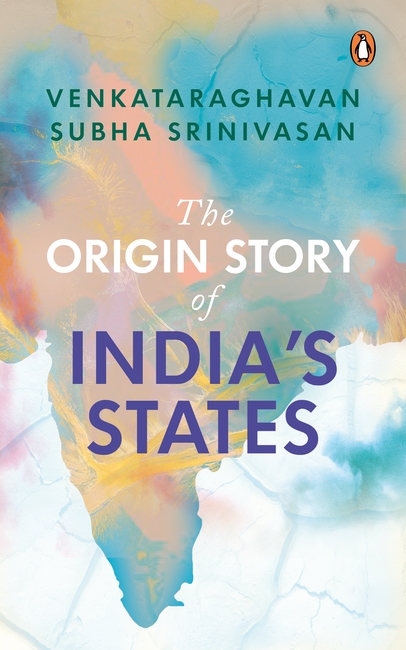
DO YOU KNOW THE STORY OF YOUR STATE?
You were born in an Indian state.
You went to school in an Indian state.
You live and work in an Indian state.
You, like every other Indian, call at least one state home.
Your state is a big part of your identity.
And yet, do you know the story of how your state was created?
The Origin Story of India’s States is a fascinating and illuminative account of the genesis of India’s states. It presents the incredible origin stories of each of India’s twenty-eight states and eight union territories, spanning from Independence until today.
The state that wasn’t even a part of India until 1975; the union territory that had a prime minister for a single day; the state that has not one or two but three capitals; and the union territory that has beaches on both coasts-this book looks into such unique aspects of Indian history and adds to our understanding of how our nation has been built.

A heinous crime has been committed-seven girls are brutally gang-raped by a group of upper-caste men. As news quickly spreads, their village comes under the national spotlight; journalists, policemen and ministers filter in, each trying to get to the bottom of the truth and find the culprits. Long oppressed, the girls from the minority community refuse to utter the names of the men; feigning ignorance and burdened by shame, they grapple with notions of honour and purity.
Lustre presents to us the portrait of a society-of a village afflicted by communal strains-as tensions rise with the police force coming under pressure, afraid the villagers will be seduced into joining the local Naxalite movement. As things take a violent turn, the novel offers a glimpse into the true situation in some parts of India as well as the collective psyche of a community-their thoughts on propriety, violence, subjugation, and, most importantly, revolution.
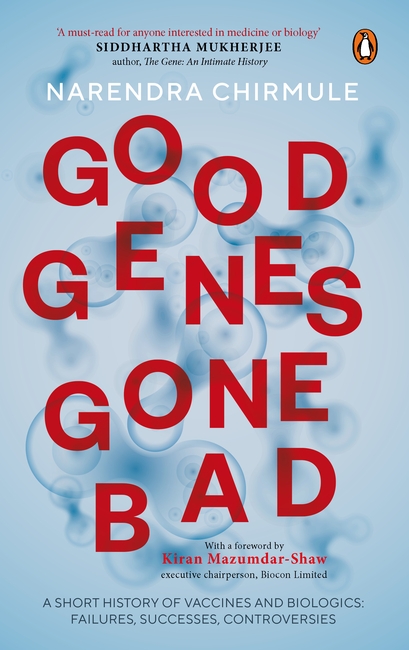
The field of biotechnology has evolved over the past four decades, developing medicines which are curing diseases. But this journey of success has been tough and arduous, built upon the shoulders of major failures.
Good Genes Gone Bad highlights seven such colossal failures in drug development-all of which culminated in the development of novel drugs-weaving together various analogies through the stories and thus allowing the reader to understand complex biological phenomena. These stories include treatment of medical conditions such as genetic clotting disorder (haemophilia), childhood-diarrhoea (rotavirus vaccine), preventing HIV infection, activation of the immune systems to treat cancer, gene therapy for treatment of diseases caused by gene-defects/mutations, cell therapy for treatment of leukaemias, and finally the success of Biocon’s approval of the first biologic drug for breast cancer.
Written by the former R&D head of Biocon, India’s largest pharmaceutical company, Good Genes Gone Bad is a fascinating look at the complex world of medicine and drug development, providing the readers with a sense of magnitude of challenges and the extent of difficulty that it takes to make novel medicines.

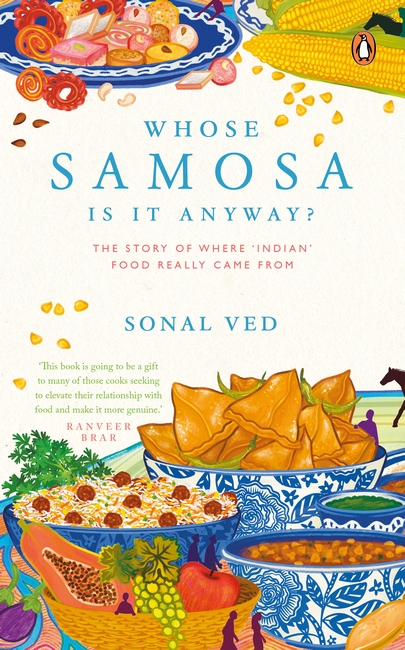
In this book, accompany Sonal Ved on a journey of taste through the various timelines across the Indian subcontinent. We go from the banks of the Indus in 1900 bc to the great kingdoms of the north many centuries later; from the time of the Mauryans to when the Mughal Sultanate reigned supreme. Meet the Europeans merchants desperate to trade in Indian treasures, be it the deep-blue indigo or the pricey pepper. On this trip discover answers to such questions as What are the origins of chutney or of the fruit punch, and how are they connected to India? Who taught us how to make ladi pav and kebabs, and how did the Burmese khow suey land up on the wedding menus of Marwaris? The author takes us through the food history and traditions from the mountains in Kashmir to the backwaters of Kanyakumari; from the ports of the Bay of Bengal to the shores of the Arabian Sea, where traders and travellers arrived from the world over. And, finally, we find out whose samosa it truly is . . .
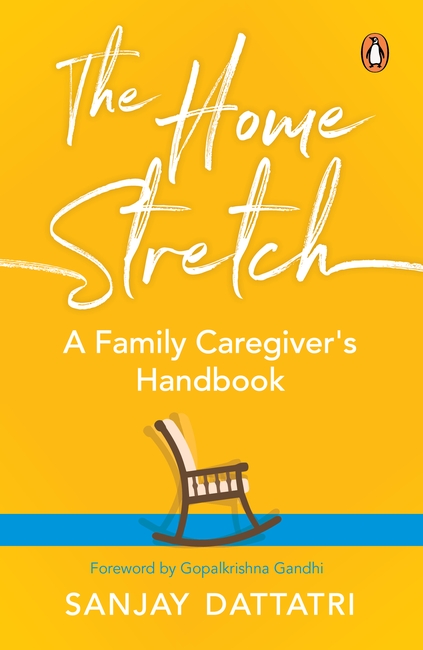
In their twilight years, people increasingly rely on friends and family to get through the day. In Indian homes, it is not unusual to see adult children sandwiched between parenting and caregiving obligations, with both young children and elderly parents in the house.
The Home Stretch is an empathetic, handy guide that seeks to simplify caregiving and equip readers with the tools
and guidance required to build a safer, happier and more comfortable life for the elders around them. From tips on
maintaining their health and independence to taking care of the bedridden, the book covers a wide range of topics
to meet the progressively complicated needs associated with caring for ageing loved ones.
A product of the author’s years of caregiving experience and interactions with countless doctors, counsellors, senior
citizens and other family caregivers, this book has the ability to transform how we look at ageing and the aged.