Publish with Us

Follow Penguin

Follow Penguinsters

Follow Penguin Swadesh

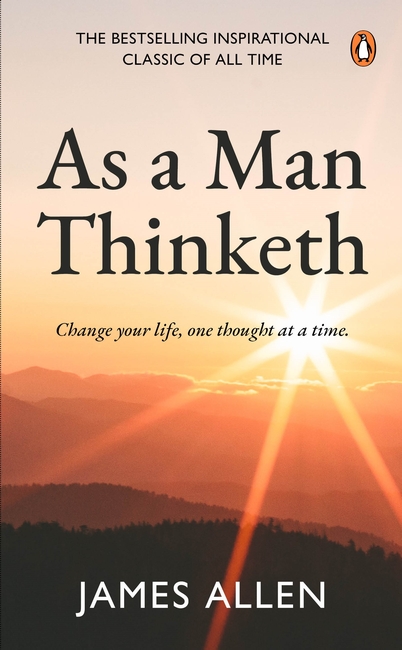
As a Man Thinketh (PREMIUM PAPERBACK, PENGUIN INDIA)

You can have everything you’ve ever wanted-a fulfilling life, a job you’re passionate about, true love, unlimited wealth, and a healthy body. Seriously, you can have it all. You just need to do one thing.

Think.

Surprised? Don’t be. Thousands of people, people exactly like you, have transformed their life for the better. They’ve discovered the power of thought, and used it to make their dreams a reality. And now, it’s your turn.

Everything in your life is an external manifestation of your thoughts; what you hold within, gets reflected outside. Do you know what this means?

It means you can get anything you want, that you can shape your destiny-all you need to do is master your mind.

‘As a man thinketh, so shall he be.’

Everything that has happened to you, or will happen to you, has one thing in common-it’s a result of your thoughts.

So if you change your thoughts, you can change your life. It’s that simple.

Read this book to learn how you can do it. Discover:

– How to use your thoughts to achieve your life goals
– How to control and manifest your circumstances
– How to cultivate internal purity, balance, and peace

Success, happiness, and inner peace is yours for the taking, you just need to read this book.
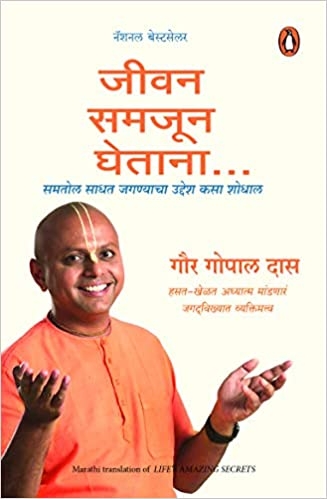
Life Amazing Secrets_Marathi

While navigating their way through Mumbai’s horrendous traffic, Gaur Gopal Das and his wealthy young friend Harry get talking, delving into concepts ranging from the human condition to finding one’s purpose in life and the key to lasting
happiness.

Whether you are looking at strengthening your relationships, discovering your true potential, understanding how to do well at work or even how you can give back to the world, Gaur Gopal Das takes us on an unforgettable journey with his
precious insights on these areas of life.

Das is one of the most popular and sought-after monks and life coaches in the world, having shared his wisdom with millions. His debut book, Life’s Amazing Secrets, distils his experiences and lessons about life into a light-hearted,
thought-provoking book that will help you align yourself with the life you want to live.

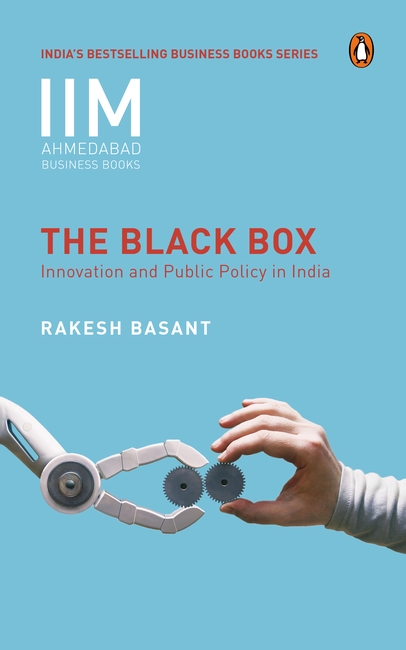
The Black Box

What policies should India pursue for fostering innovation? Taking the perspective that all policies that influence technology-related choices of firms should be considered part of innovation policy, the book analyses the impact on innovation of various policies, including those related to industry, trade, R&D, foreign direct investment, intellectual property rights, start-ups and higher education. It brings together conceptual and empirical literature from diverse intellectual streams to analyse the linkages between innovation and public policy. Combining insights from the disciplines of economics and management, the book highlights the complexity of policy choices, identifies certain focus areas and argues for consistency across various policy instruments to create an appropriate environment for innovation in India.

Discordant Notes, Volume 2

Comprehensive, definitive and authoritative, this is a must a must have for legal scholars and practitioners. Besides, the book will greatly interest policy makers as well as anyone, interested in India’s legal history.

A dissenting judgment, as ordinarily understood, is a judgment or an opinion of a judge, sitting as part of a larger bench, who ‘dissents’ (i.e. disagrees) with the opinion or judgment of the majority. Dissenting judgments or opinions appear in different ways.

Tracing, exploring and analysing all dissenting judgments in the history of the Supreme Court of India, from the beginning till date, Rohinton Fali Nariman brings to light the cases, which created a deep impact in India’s legal history. From the famous Bengal Immunity Co. Ltd. v. State of Bihar in 1955 to Bhagwandas Goverdhandas Kedia v. Girdharilal Pashottamdas and Co. in 1966, State of Bombay v. The United Motors (India) Ltd in 1953, Superintendent & Legal Remembrancer, State of West Bengal v. Corporation of Calcutta in 1967, Supreme Court Advocates-on-Record Association v. Union of India in 1993, Mafatlal Industries v. Union of India in 1997 and Pradeep Kumar Biswas v. Indian Institute of Chemical Biology in 2002, Keshava Madhava Menon v. State of Bombay in 1951, United Commercial Bank Ltd. v. Workmen and Ram Singh v. The State of Delhi in the same year and Union of India v. West Coast Paper Mills Ltd. in 2004 among others, this two-volume definitive work is a thorough examination of the important dissenting judgments of the Supreme Court of India, and of some of the Judges of the Supreme Court who have gone down as ‘Great Dissenters’, for having written dissents of legal and constitutional importance, some of which have gone on to be recognised as correct position of the law.

Discordant Notes, Volume 1

Comprehensive, definitive, and authoritative, this book brings to light the most significant dissenting judgments in the history of the Supreme Court of India. A must-have for all legal scholars and practitioners. Besides, the book will greatly interest policymakers as well as anyone, interested in India’s legal history.

A dissenting judgment, as ordinarily understood, is a judgment or an opinion of a judge, sitting as part of a larger bench, who ‘dissents’ (i.e. disagrees) with the opinion or judgment of the majority. Dissenting judgments or opinions appear in different ways.

Tracing, exploring and analysing all dissenting judgments in the history of the Supreme Court of India, from the beginning till date, Rohinton Fali Nariman brings to light the cases, which created a deep impact in India’s legal history. From the famous Bengal Immunity Co. Ltd. v. State of Bihar in 1955 to Bhagwandas Goverdhandas Kedia v. Girdharilal Pashottamdas and Co. in 1966, State of Bombay v. The United Motors (India) Ltd in 1953, Superintendent & Legal Remembrancer, State of West Bengal v. Corporation of Calcutta in 1967, Supreme Court Advocates-on-Record Association v. Union of India in 1993, Mafatlal Industries v. Union of India in 1997 and Pradeep Kumar Biswas v. Indian Institute of Chemical Biology in 2002, Keshava Madhava Menon v. State of Bombay in 1951, United Commercial Bank Ltd. v. Workmen and Ram Singh v. The State of Delhi in the same year and Union of India v. West Coast Paper Mills Ltd. in 2004 among others, this two-volume definitive work is a thorough examination of the important dissenting judgments of the Supreme Court of India, and of some of the Judges of the Supreme Court who have gone down as ‘Great Dissenters’, for having written dissents of legal and constitutional importance, some of which have gone on to be recognised as correct position of the law.

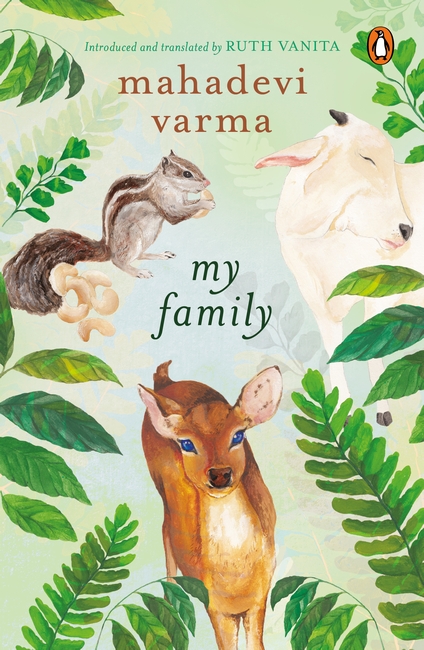
My Family

A classic of unmatched lyrical beauty by the ‘modern Mira’

For Mahadevi Varma, her animal companions were her chosen family. This family comes alive in Mahadevi’s lyrical prose, depicting the animals’ relationships with her, each other, and the human inhabitants of her home and her school. Rescued peacocks, squirrels, dogs, rabbits, and deer romp through these pages, each an unforgettable individual of many moods. Charming hand-drawn illustrations complement the delightful writing. Together, these portraits reveal an urban modernity permeated by nature.

In this first-ever translation of a little-known classic, Ruth Vanita brilliantly captures Mahadevi’s empathetic imagination, sparkling wit, and intense observation of detail. In her introduction, Vanita illuminates Mahadevi’s feminist and literary legacy, her powerful indictment of human cruelty, and how her prose sprang from the fount of her feelings for animals.

FROM THE BOOK

‘As [Neelkanth the peacock] stepped forward and backward, left and right, he would pause at some invisible point where rhythms meet . . . I cannot say how Neelkanth came to know that I liked his dancing very much, but one day, as soon as I approached the aviary, he suddenly descended from his swing and, spreading out the circular rainbow umbrella of his feathers, he stood in a dance pose.’

* * *

‘Animals recognize humans’ unpretentious affection but not high and low social status. I absorbed this truth from Sona [the doe] by osmosis. What had Sona to do with the grave and solemn Guru-ji [Mahadevi] of the girl students? . . . If Sona felt it necessary to jump over my head to express her affection, she would do so. It was impossible for her to be impressed by my status or circumstances.’

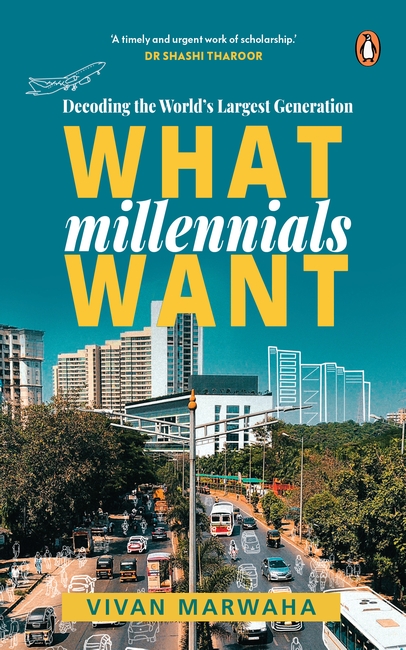
What Millennials Want

India is one of the youngest countries in the world and the generation of millennials make up for over 400 million people. This is the largest generation of people in the world.

That means that the choices and trajectory of this generation have pivotal consequences on local, regional, and global politics and economics. So the important question is: What do Indian millennials want? What are their economic aspirations and their social views? Most importantly, what makes them tick?

It’s 2021 and more than 84% of them reported having an arranged marriage, and 65% listed a government job as their top priority. So are millennials really any different from previous generations?

In What Millennials Want, Vivan Marwaha documents the aspirations and anxieties of these young people scattered across more than 30,000 kilometers in 13 Indian states. Combining an expansive dataset along with personal anecdotes, he narrates an intimate biography of India’s millennials, investigating their attitudes towards sex, marriage, employment, religion, and politics.

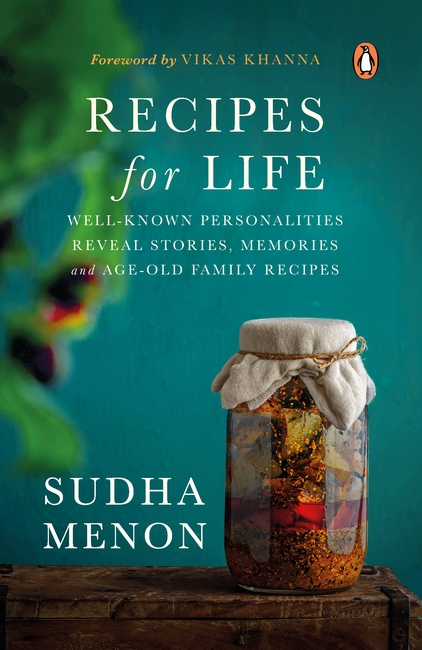
Recipes for Life

Remember how our mothers and grandmothers would spend time in the kitchen, sharing their stories and exchanging recipes from each other’s homes without writing them down? Between chopping, sauteing, grinding and frying a varierty of ingredients, and the aroma of home-cooked food laid out on the dinner table, families forged bonds that withstood the test of time. Now the connections we made through oral storytelling have dissapeared because of rise of modern-day nuclear families where children see their parents once in a couple of months.
The truth, however, remains that no matter how many countries we travel to and live in, or how many expensive meals we eat at Michelin-star restaurants, the magic of our mothers’ cooking never fades away. In Recipes for Life, Sudha Menon attempts to recreate those memories and the magic of the food we grew up with and cherish. The book is replete with stories, anecdotes and recipes from the homes of some of India’s much admired and accomplished people.

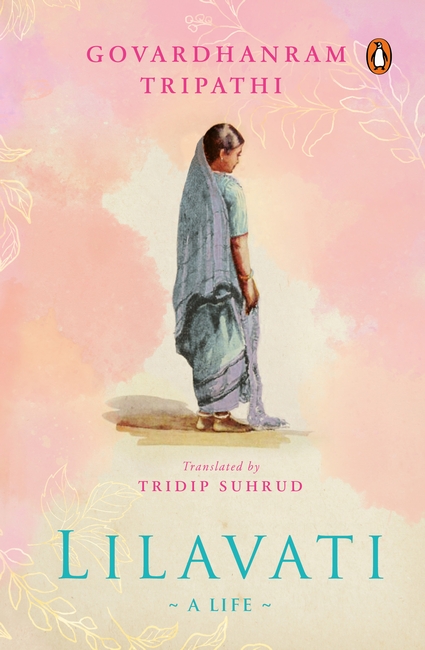
Lilavati

An exemplar of Indian literature-the only and heart-rending biography of a daughter by her father

In a moment of rare passion Govardhanram Madhavram Tripathi, author of Sarasvatichandra, exclaimed ‘I only want their souls’. He was referring to the souls of his countrymen and women, which he sought to cultivate through his literary writings. Lilavati was his and Lalitagauri’s eldest daughter. Her education and the writing of Sarasvaticandra were intertwined. She was raised to be the perfect embodiment of virtue, and died at the age of twenty-one, consumed by tuberculosis. In moments of ‘lucidity’ , she spoke of her suffering and that challenged the very foundations of Govardhanram’s life. In 1905 he wrote her biography, Lilavati Jivankala. This is a rare work in biographical literature, a father writing about the life of a deceased daughter. Despite Govardhanram’s attempts to contain Lilavati as a unidimensional figure of his imagination, she goes beyond that, sometimes by questioning the fundamental tenets of Brahminical beliefs, and at others by being so utterly selfless as to be unreal even to him.
Lilavati: A Life is a cross between literature in translation, social and political history, and women’s studies. Tridip Suhrud’s introduction dwells on the themes of the cultivation of selfhood, of nation and the ideal of sacrifice, which is sure to resonate with contemporary readership, especially women.

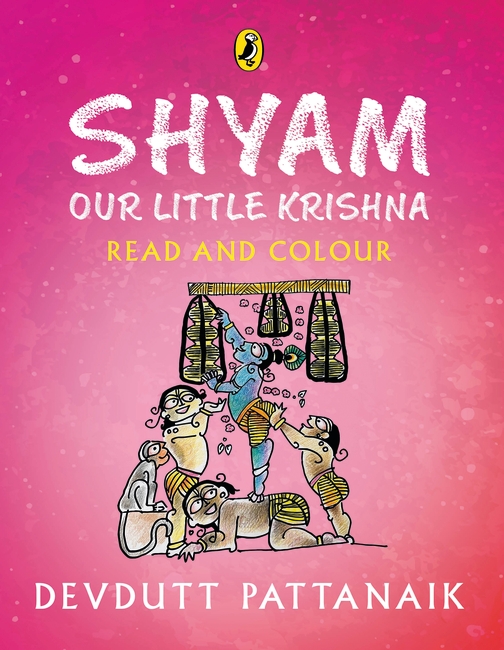
Shyam, Our Little Krishna

An all-in-one storybook, picture book and colouring book from India’s most-loved mythologist

Devdutt Pattanaik introduces the story of Krishna, fondly known as Shyam, to a new generation of readers. Told simply in his inimitable style, Shyam, Our Little Krishna is perfect as a read-aloud to acquaint young readers with the beauty, wisdom and love that Krishna embodied.

Curated with fascinating bite-sized stories, myths and trivia about the young god, it features over forty playful artworks accompanied by pages dedicated for colouring.

One-of-a-kind, this book is a must-have for every curious mythology enthusiast and budding artist!

error: Content is protected !!