



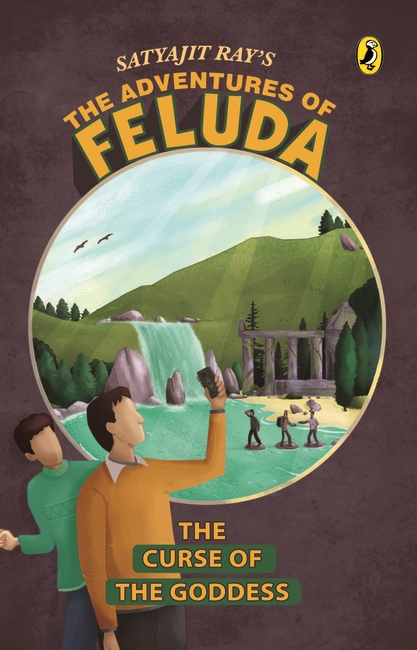
A deserted temple. The death of a patriarch. An escaped tiger… An incident near the desolate Chinnamasta temple on the rocky riverbank of Rajrappa leads to the death of Mahesh Chowdhury, the head of a Hazaribagh family. Adding to the mystery are a set of coded diaries, a valuable stamp collection that is missing, and a tiger that is roaming the streets of Hazaribagh. One of Feluda’s most intriguing adventures, this shows the master sleuth at his best.
Archives: Books
The Adventures Of Feluda: The Royal Bengal Mystery
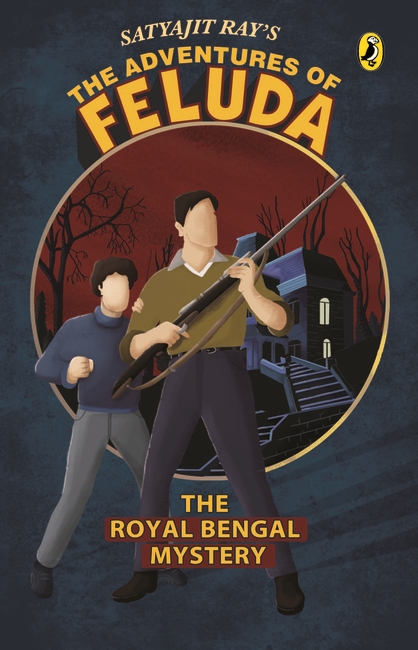
A maneater in the jungles of the Terai. An ancient riddle. The lure of hidden treasure … Visiting the famous hunter and wildlife writer Mahitosh Sinha-Roy in his Jalpaiguri palace, Feluda is presented with a riddle that holds the clue to ancestral treasure. But before he can begin unravelling the puzzle, Mr Sinha-Roy’s secretary is found dead in the forest, his body savaged by a big cat. Feluda’s investigations lead him deeper and deeper into a scandalous family secret, and bring him face to face with a bloodthirsty Royal Bengal tiger in a final confrontation.
Economist Gandhi
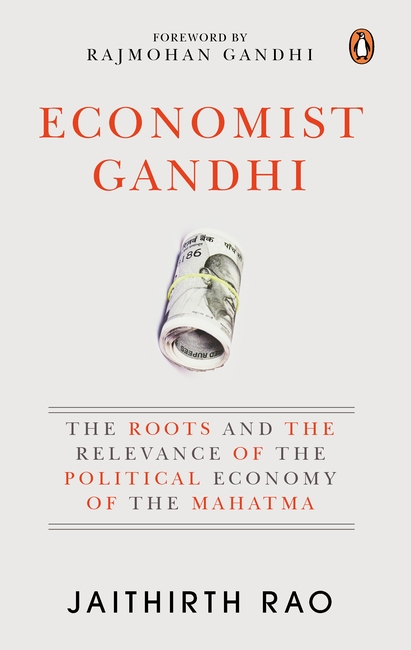
Examining Mahatma Gandhi through an unconventional lens, this book is an original and thought-provoking contribution to Gandhian literature. A refreshing take on the Mahatma’s economic philosophy, Economist Gandhi tells us why we need to look at him as an unlikely management guru and an original thinker who enriched the discourse around market capitalism. The book explains Gandhi’s positive approach towards business: even though he greatly reduced his individual wants, he was against poverty and wanted every Indian to enjoy a materially comfortable life.
Economist Gandhi is probably the first book on Gandhi that claims that he was not against business and capitalists. It not only provides insights into a hidden facet of Gandhi’s personality-his thoughts on economics and capitalism-but also enlightens the reader about some of Gandhi’s views on religion, ethics, human nature, education and society. The book unveils a Gandhi who is brilliant, daring and, most importantly, distinctive.
The Ramayana for Children
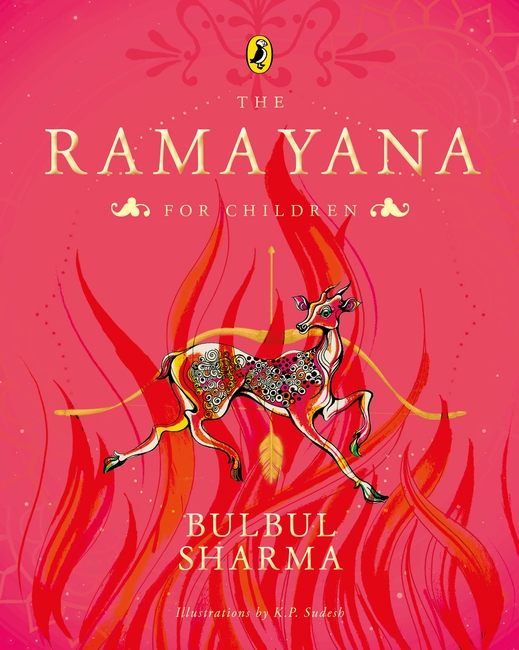
One of the best-known epics in the world, the Ramayana chronicles the tale of Rama, the prince of Ayodhya, who exiles himself to the forest for fourteen years to honour his father’s word. There, Rama, his wife Sita and his brother Lakshmana meet new friends and unusual foes, with each day bringing in new challenges and adventures. But one day, when Ravana of Lanka, the king of demons, abducts Sita, it leads to an inevitable war. With the help of Hanuman and his monkey army, Rama charges into the final battle where many heroes die and new ones are born.
In this fast-moving version for children, the ancient saga-with infinite stories woven in-takes on new life. With the perfect mix of drama and excitement, gods and princes, and love and war, this contemporary retelling makes for an ideal read for young readers.
Told with simplicity, freshness and great vitality by Bulbul Sharma, this book has remained a perennial classic for decades.
The popular mythological epic retold in a simple language and contains beautiful illustrations, this book is a great introduction to Hindu mythology for children of all ages.
Mazes and more: Marvellous Mazes
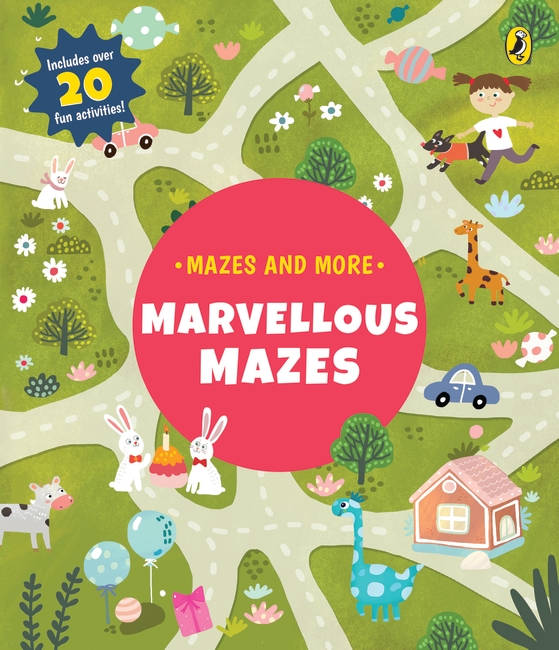
From hopping glaciers while avoiding logs, to helping a monkey cross a crocodile-infested river, each maze provides hours of fun and learning.
Marvellous Mazes is features full-colour pages filled with different puzzles and mazes, along with search and find activities to keep little minds engaged. Designed to encourage logical thinking, sharpen hand-eye coordination, these activity-filled pages are sure to keep little puzzlers engaged.
Grab your pencils, trace the squiggly path and follow each marvellous maze to a new discovery!
Here’s what you get in this book:
· KID-FRIENDLY FUN: All games and puzzles are designed with the developmental needs of ages 4 and up in mind.
· THEME BASED: Puzzles are organized by themes: Safari, Glacier, Beach, Cruise and so much more!
· VARIETY OF ACTIVITIES: Matching games, number puzzles, connect-the-dots, word puzzles, mazes and more.
· BRIGHT AND BEAUTIFUL PICTURES: Full of eye-catching, colorful illustrations and drawings
· ANSWER KEY: All mazes and puzzles come with answers to help kids if they get stuck on a puzzle
Mazes and more: Merry Mazes

From snowmen, reindeers to holiday decorations, Santa Claus and more, each holiday-themed maze provides hours of fun and learning.
Merry Mazes features full-colour pages filled with different puzzles and mazes, along with search and find activities to keep little minds engaged. Designed to encourage logical thinking, sharpen hand-eye coordination, these activity-filled pages are sure to keep little puzzlers engaged.
Grab your pencils, trace the squiggly path and follow each merry maze to a new discovery!
Here’s what you get in this book:
KID-FRIENDLY FUN: All games and puzzles are designed with the developmental needs of ages 5 and up.
THEME BASED PUZZLES: Puzzles are organized by themes: Island Hopping, Camping, Cruise ride, Christmas and so much more!
VARIETY OF ACTIVITIES: Matching games, number puzzles, connect-the-dots, word puzzles, mazes and more. BRIGHT AND BEAUTIFUL PICTURES: Full of eye-catching, colourful illustrations, drawings and mazes.
ANSWER KEY: All mazes and puzzles come with answers to help kids if they get stuck on a puzzle
Mazes and more: Funny Mazes
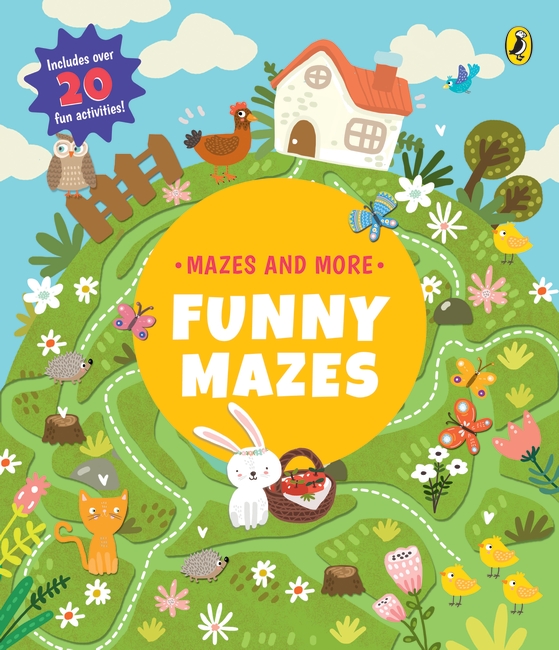
From helping chickens cross the maze to guiding the duck to its nest without getting caught in the whirlpool and much more, each maze provides hours of fun and learning.
Funny Mazes features full-colour pages filled with different puzzles and mazes, along with search and find activities to keep little minds engaged. Designed to encourage logical thinking, sharpen hand-eye coordination, these activity-filled pages are sure to keep little puzzlers engaged.
Grab your pencils, trace the squiggly path and follow each funny maze to a new discovery!
Here’s what you get in this book:
· KID-FRIENDLY FUN: All games and puzzles are designed with the developmental needs of ages 3 and up.
· THEME BASED PUZZLES: Puzzles are organized by themes: Circus, Island adventure, Fairyland, Camping and so much more!
· VARIETY OF ACTIVITIES: Matching games, number puzzles, connect-the-dots, word puzzles, mazes and more.
· BRIGHT AND BEAUTIFUL PICTURES: Full of eye-catching, colourful illustrations and drawings
· ANSWER KEY: All mazes and puzzles come with answers to help kids if they get stuck on a puzzle
Mazes and More
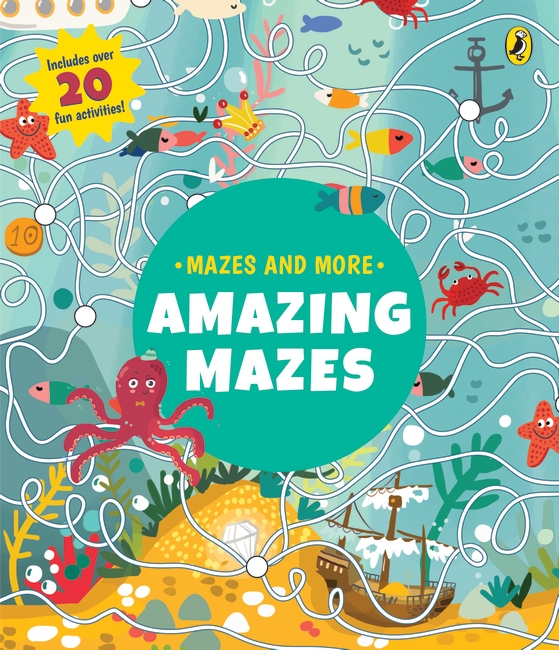
From adventures in the galaxy, hot air balloon ride, treasure hunt to helping the lion finds its way and much more, each maze provides hours of fun and learning. Amazing Mazes features full-color pages filled with different puzzles and mazes, along with search and find activities to keep little minds engaged. Designed to encourage logical thinking, sharpen hand-eye coordination, these activity-filled pages are sure to keep little puzzlers engaged.
Grab your pencils, trace the squiggly path and follow each amazing maze to a new discovery!
Here’s what you get in this book
· KID-FRIENDLY FUN: All games and puzzles are designed with the developmental needs of ages 6 and up in mind.
· THEME BASED PUZZLES: Puzzles are organized by themes: Circus, Island adventure, Fairyland, Camping and so much more!
· VARIETY OF ACTIVITIES: Matching games, number puzzles, connect-the-dots, word puzzles, mazes and more.
· BRIGHT AND BEAUTIFUL PICTURES: Full of eye-catching, colorful illustrations and drawings
· ANSWER KEY: All mazes and puzzles come with answers to help kids if they get stuck on a puzzle
The Great Indian Mathematicians
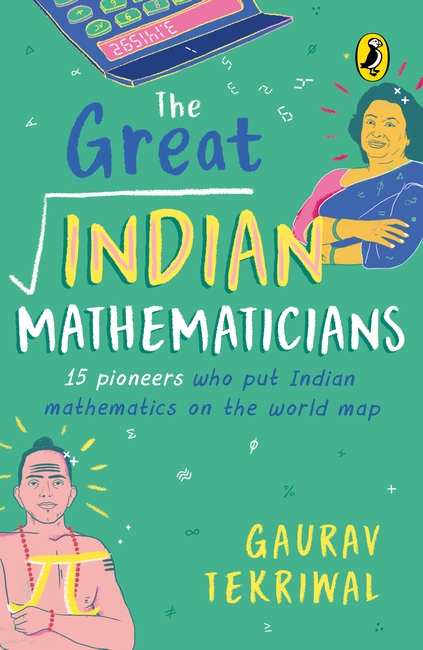
A must-read book for every Math enthusiast!
India’s mathematicians have made significant contributions over the last 5000 years. From the ever-popular Aryabhata, widely recognized for revolutionizing the number system and Shakuntala Devi, universally admired for her fast mental calculations to pioneers forgotten by time, like Baudhayana, who explained the Pythagoras’ theorem nearly 3000 years ago, and Anand Kumar of the Super 30 fame, among others. The figures included in this book are trailblazers in the world of mathematics.
Fresh, accessible and inspiring, The Great Indian Mathematicians celebrates persistent mathematicians throughout Indian history. This book is an ideal introduction for the next generation of tenacious and curious Mathematics wizards, and features a goldmine of tips and tricks, nuggets of surprise and much more!
Each chapter has an element of surprise from little-known facts, movies to watch, places to visit, and even a ‘Tips and Tricks’ section with simple tricks and sums for young readers to solve.
Boy, Bear (Hook Books)
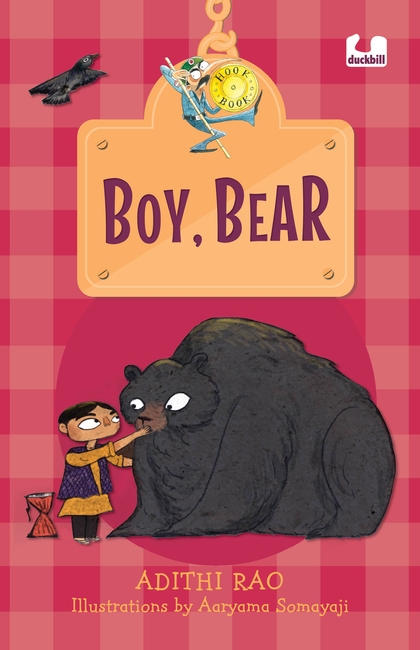
Boy and Bear have grown up together on the streets of Mumbai. Baba is a madari. But now that Baba is gone, how are Boy and Bear to survive?
About the Hook Book Series
In a world where children’s books often feel cut from the same cloth, Hook Books stand out as a vibrant blend of imagination, humour, and heart. Crafted as a bridge between picture books and early chapter books, this series delivers stories that spark joy and wonder, while remaining rooted in age-appropriate learning.
Hook Books keep the fun going with:
- Short, digestible bits of text (perfect for budding readers)
- Bright colour illustrations that pull kids into the story
- Themes that speak to the everyday lives of children—plus a sprinkle of whimsy!
From fantasy tales to those that touch on more advanced ideas, Hook Books ensure that young readers are always in for a treat, no matter their reading level. Even better, these books take children on journeys through different parts of India, giving them a taste of the rich diversity of our world through local flavours, landscapes, and cultures. Whether the story takes place in bustling cities or quiet villages, Hook Books make every setting feel like home.