



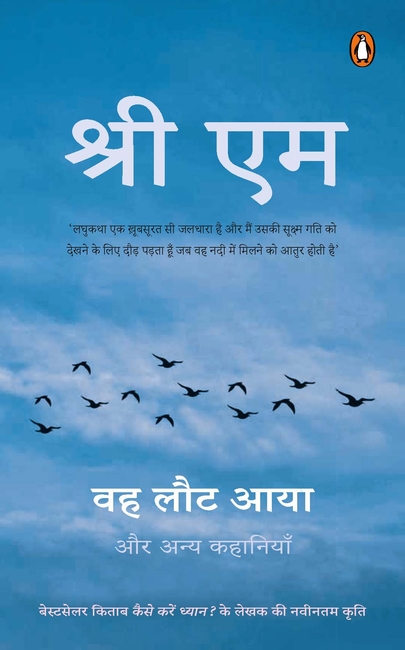
What happens when a disciple gets to know the dark side of his guru’s life? What happens when any thief improve in his character? The stories of Shri M, awarded with Padma Bhushan, urge us to look deep in the soul of man. These stories have a glimpse of what is the inspiration behind a particular work of a human being.
Archives: Books
Elephants and Cheetahs
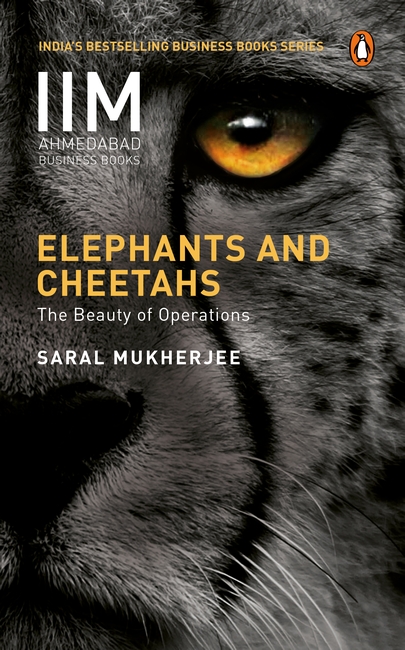
Do systems have souls? This book, based on a popular elective at IIM Ahmedabad, looks for answers in the hard trade-offs inherent in the design of operating systems and business models. It encourages business leaders to ask two different sets of existential questions: Does the organization that I am managing have a soul, and if so, what are the strategic choices that enable its synthesis (external orientation)? And, do I have a soul, and if so, who am I (internal orientation)? In the process, it uncovers a beauty inherent in patterns of strategic choices that enables an organizational soul to emerge, and an appreciation of the diversity of such souls.
Translations Gift Set
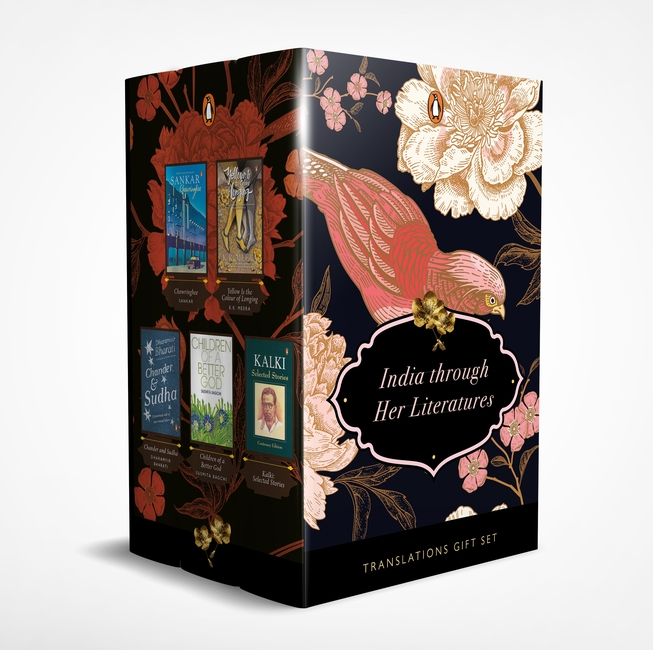
Riveting fiction from five Indian languages
Translations illuminate the richness and diversity of literature. This special Penguin gift set brings together dazzling works of fiction that capture the depth of Indian writing. From Sankar’s incredible homage to the city of Calcutta to the astonishing dark humour of K.R. Meera, from a transporting love story by Dharamvir Bharati to Susmita Bagchi’s transformational journey and Kalki’s satirical stories, these books offer an intimate view of Indian life and culture.
With writings from Bengali, Malayalam, Hindi, Odia and Tamil, this collection is a must-have for anyone fascinated by the vast range of Indian literatures.
The titles included in the set are:
Chowringhee
Yellow Is the Colour of Longing
Chander and Sudha
Children of a Better God
Kalki: Selected Stories
Penguin Classics Gift Set
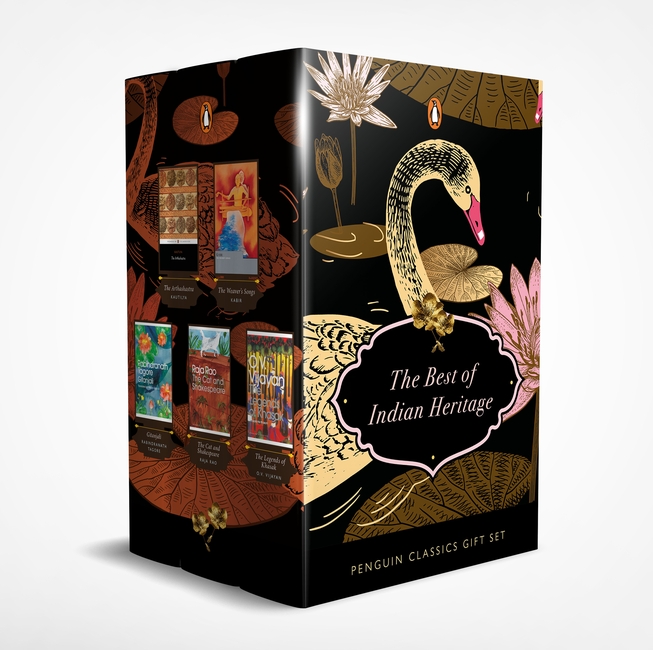
A magnificent selection of timeless Indian classics
Indian culture has been shaped by centuries of wisdom and a vast expanse of writing. This special Penguin gift set brings together momentous, time-honoured books that capture the essence of Indian heritage. Learn the ancient art of statecraft from master strategist Kautilya and drink deep from the profound mystical wisdom of Kabir. Savour the poetic beauty of Rabindranath Tagore and indulge in metaphysics and philosophy with Raja Rao, while wandering through the bewitching world of O.V. Vijayan.
This collection is a must-have for anyone enamoured by India’s rich cultural and literary legacy.
The titles included in the set are The Arthashastra, Kabir: The Weaver’s Songs, Gitanjali, The Cat and Shakespeare, and The Legends of Khasak
A Ramayana for Children
A book about consent and choosing responsibly
‘You are bound by rules,
but not I. I am free to choose.’
Long ago, the poet-sage Valmiki composed the Ramayana. It is the tale of Ram, the sun-prince of Ayodhya, who is obliged to follow family rules and so makes no choices. And of Ravana, king of Lanka, who does not respect anybody’s rules or other people’s choices.
Over the centuries, hundreds have retold the tale in different languages, adding new twists and turns. But few have noticed that the tale always depends on the five choices made by Sita. What were Sita’s five choices?
India’s favourite mythologist brings to you this charmingly illustrated retelling of the Ramayana that is sure to empower and entertain a new generation of readers.
Design Your Thinking
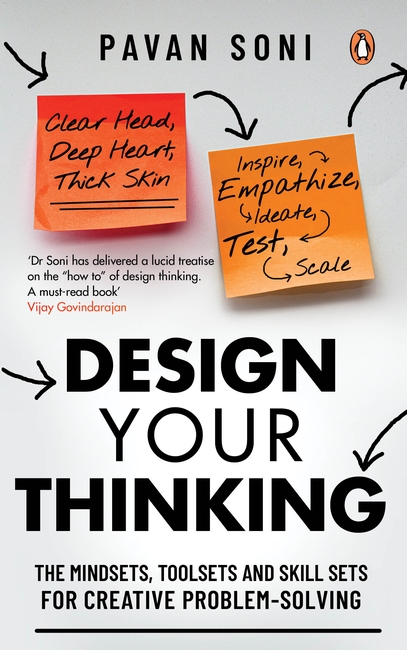
Creative problem-solving is at the heart of innovation, and some of the world’s most innovative companies are very systematic in following this approach. Most people would assume that creativity and discipline can’t coexist, and that only when resources are replete and the talent best-in-class can one be creative. But nothing could be further from the truth. In fact, creativity thrives amid constraints and calls for great discipline.
Pioneered by IDEO and Stanford d.school, design thinking is one such approach that draws inspiration from the realm of product design. However, it shouldn’t be narrowly associated with the world of start-ups and technology or thought of as something limited to product development. The method is increasingly being used in a wider context and can help us address a vast array of problems.
This book attempts to offer a practitioner’s perspective on how the tenets, methods and discipline of design thinking can be applied across a range of domains, including to everyday problems, and help us become expert problem-solvers through the use of the appropriate toolsets, skill sets and mindsets.
India 2030: Rise of a Rajasic Nation
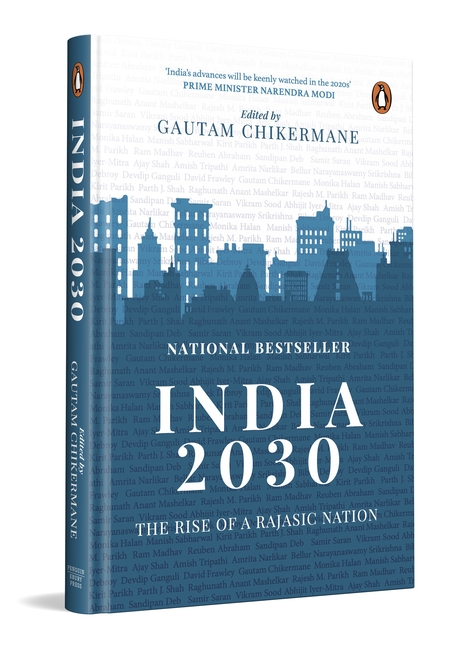
A collection of essays by experts across fields and their thoughts on the future of India in the next decade
Thought leaders from twenty diverse fields, ranging from politics, economics and foreign policy to health care and energy, predict what 2030 will look like for India and how the nation will evolve in this decade.
Editor Gautam Chikermane has masterfully weaved together essays by Abhijit Iyer-Mitra, Ajay Shah, Amish Tripathi, Amrita Narlikar, Bibek Debroy, David Frawley, Devdip Ganguli, Justice B.N. Srikrishna, Kirit S. Parikh, Manish Sabharwal, Monika Halan, Parth J. Shah, Raghunath Anant Mashelkar, Rajesh Parikh, Ram Madhav, Reuben Abraham, Samir Saran, Sandipan Deb and Vikram Sood into a single volume that looks towards India’s future.
A handbook for citizens, a road map for policymakers and a guide for scholars, this collection captures the many aspects of a future that will see India becoming the world’s third-largest economy and a regional power before the decade gets over.
Indians
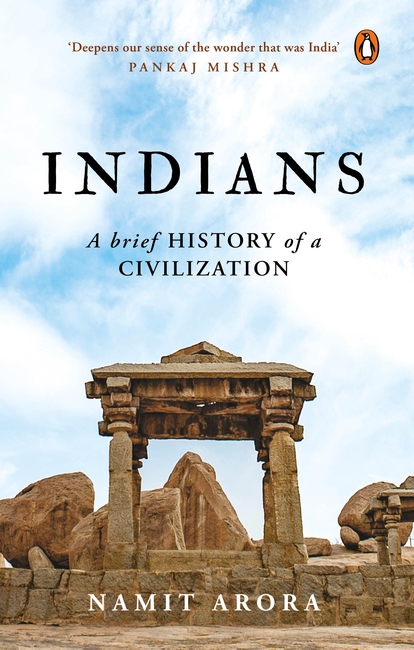
‘Deepens our sense of the wonder that was India’ ~ Pankaj Mishra
‘A gem of a book that is a joy to read . . . You can almost touch and feel the centuries and millennia as they pass by’ ~ Tony Joseph
‘Arora explores how Indians lived, ate, loved, built, fought and made sense of the material, rational and spiritual world down the ages . . . [A] mega-ambitious project’ ~ The Hindu
‘A wonderfully evocative book. Arora invites the reader to reflect on the past, without overwhelming her with dry historical facts but luring her in with vivid human stories’ ~ Prof. Mohan Rao
A BRILLIANT, ORIGINAL BOOK THAT REVEALS INDIA’S RICH AND DIVERSE HISTORIES
What do we really know about the Aryan migration theory and why is that debate so hot?
Why did the people of Khajuraho carve erotic scenes on their temple walls?
What did the monks at Nalanda eat for dinner?
Did our ideals of beauty ever prefer dark skin?
Indian civilization is an idea, a reality, an enigma. In this riveting book, Namit Arora takes us on an unforgettable journey through 5000 years of history, reimagining in rich detail the social and cultural moorings of Indians through the ages. Drawing on credible sources, he discovers what inspired and shaped them: their political upheavals and rivalries, customs and vocations, and a variety of unusual festivals. Arora makes a stop at six iconic places — the Harappan city of Dholavira, the Ikshvaku capital at Nagarjunakonda, the Buddhist centre of learning at Nalanda, enigmatic Khajuraho, Vijayanagar at Hampi, and historic Varanasi — enlivening the narrative with vivid descriptions, local stories and evocative photographs. Punctuating this are chronicles of famous travellers who visited India — including Megasthenes, Xuanzang, Alberuni and Marco Polo — whose dramatic and idiosyncratic tales conceal surprising insights about our land.
In lucid, elegant prose, Arora explores the exciting churn of ideas, beliefs and values of our ancestors through millennia — some continue to shape modern India, while others have been lost forever. An original, deeply engaging and extensively researched work, Indians illuminates a range of histories coursing through our veins.
A Touch of Eternity
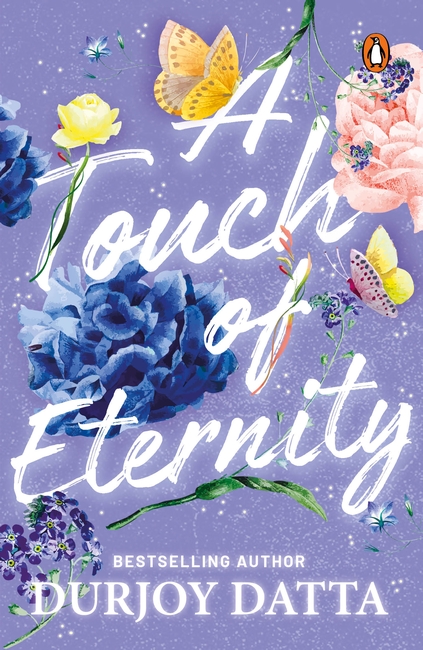
Born on the same day and at the same time, Druvan and Anvesha know they are soulmates in every sense of the word. Their parents, however, refuse to accept their ‘togetherness’ at first and try to tear them apart. Druvan and Anvesha hold on to each other against all odds.
In the same timeline, the world is on the brink of a major scientific breakthrough that could make reincarnation possible.
This is an opportunity for the two to prove their love and to tell the world that it is love that can make the impossible, possible.
Druvan and Anvesha participate in the experiment as if their life depends on it, because it does. Will the dream of a man to control love and life come true? And when the time comes, can one stay true to their soulmate?
Maverick Messiah
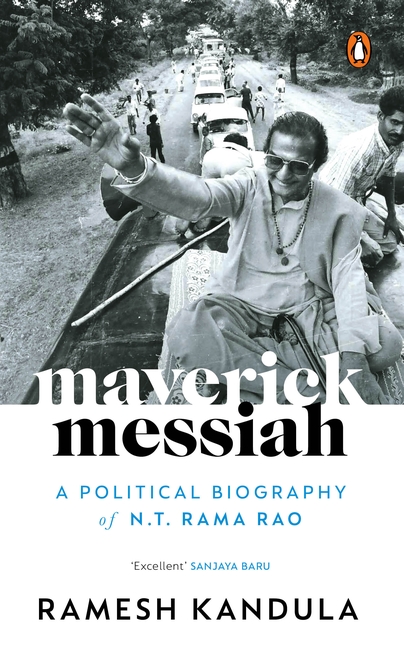
‘Excellent political biography of NTR. I enjoyed reading it. There is a lot of good stuff here’
SANJAYA BARU, author, political commentator
‘A very objective, lucid, truthful biography’
DR JAYAPRAKASH NARAYAN, founder, Lok Satta
‘…fair, even-handed and objective in assessing NTR’s political journey’
PARAKALA PRABHAKAR, author, political commentator
‘Found it impossible to put down the book till I completed it’
K. PADMANABHAIAH, chairman, Administrative Staff College of India
Nandamuri Taraka Rama Rao, widely known as NTR, was not merely a film star who strayed into politics and captured power in Andhra Pradesh. The actor-politician redefined the political culture in the state and scripted a new political idiom.
His rather dramatic entry into politics, the profound impact he left on the people of Andhra Pradesh and the vital role he played in national politics during his relatively short political life, however, have not received deserving recognition.
Maverick Messiah captures the different facets of NTR’s life in all their varied hues and puts in perspective the significant contribution of the actor-politician to the Indian political tapestry.