



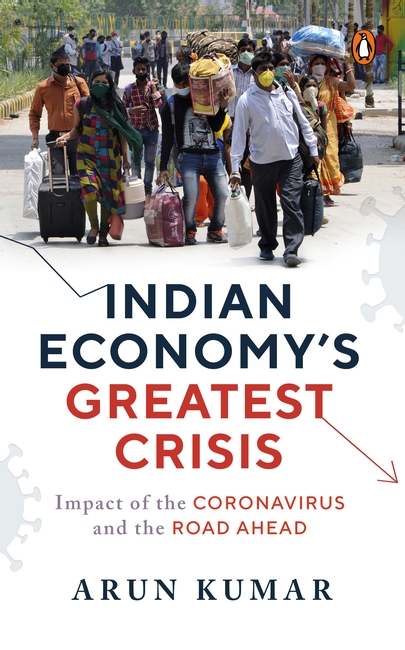
‘Desperate times call for desperate measures.’ The outbreak of COVID-19 aptly justifies this expression as the world faces an unprecedented situation. But what is so unusual about the coronavirus, especially since viral attacks-H1N1, Ebola and Nipah-have taken place earlier as well? How has it affected India and the world? What are the socio-economic implications for India? How has India’s response been to the coronavirus? What is more important-life or livelihood? How can India recover from the sudden economic shock caused by the pandemic?
This book is an attempt to answer these and many more such questions.
The coronavirus hit the world in December 2019 like a hurricane. What started as a medical emergency soon turned into an economic one. No global financial crisis has ever hit humanity as hard as COVID-19. The world, therefore, was caught ill prepared when the pandemic struck. The situation, to say the least, is worse than a war. The situation in India is no different: In terms of the number of cases reported, it is second only to the United States.
This book highlights the enormity of the impact of the coronavirus pandemic on India. It critically examines the government’s efforts to control the disease and mitigate its adverse effects on Indian economy and society. Making a compelling argument that an economy is not like a rubber ball, which, if dropped on a hard surface, will bounce back to its original position, the author provides incisive reasons to why economic recovery will be slow and not ‘V-shaped’. He, however, cogently suggests that good governance, a robust public-health system, and clean and representative politics are key to bringing India’s economy back on track.
Archives: Books
Goopy Gyne Bagha Byne
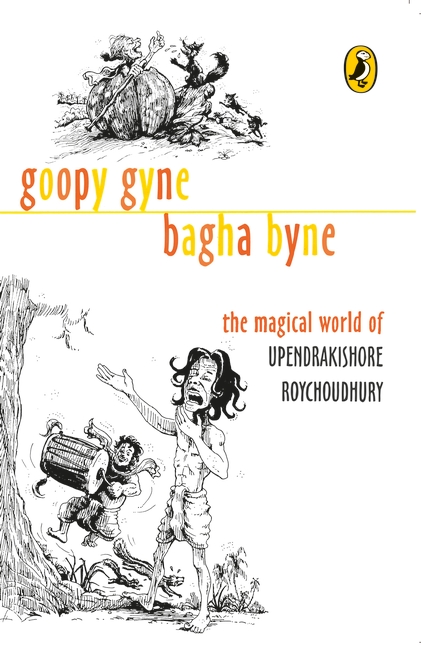
Artist, musician, man of science, Upendrakishore Roychoudhury was a man of many parts. But it is for his writing for children that he is best remembered.
This book is a selection of the best of his stories and the most fascinating of his characters: Goopy and Bagha, dedicated but unsuccessful musicians who are cast out of their homes because their music drives their families and neighbours crazy; Tuntuni, the little bird; the clever fox; Majantali Sarkar, the cat; the intrepid Granny Hunchback; and many others.
Swagata Deb’s vibrant translation brings Upendrakishore’s unique magic to a wider audience.
Puffin Classics: Goopy Gyne Bagha Byne and Other Stories
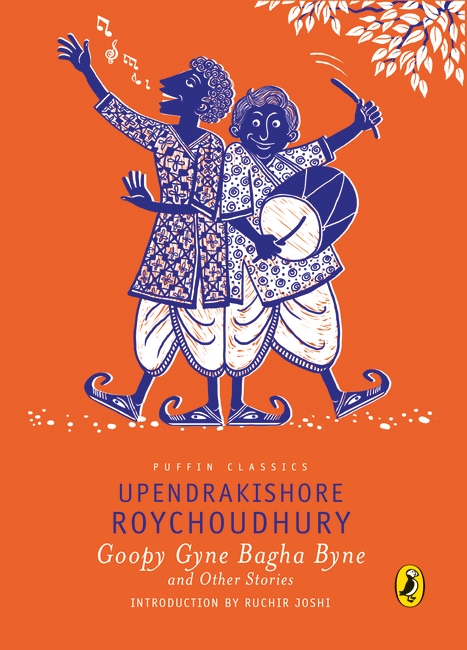
A spectacular selection of the best of stories by Upendrakishore Roychoudhuri, and the most fascinating of his characters. Meet Goopy and Bagha, dedicated but unsuccessful musicians who are cast out of their homes because their music drives their families and neighbours crazy; Tuntuni, the little bird; the clever fox; Majantali Sarkar, the cat; the intrepid Granny Hunchback; and many others. Swagata Deb’s vibrant translation brings Upendrakishore’s unique magic to a wider audience, giving a new lease of life to these evergreen tales.
Chumki and the Elephants (hOle Books)
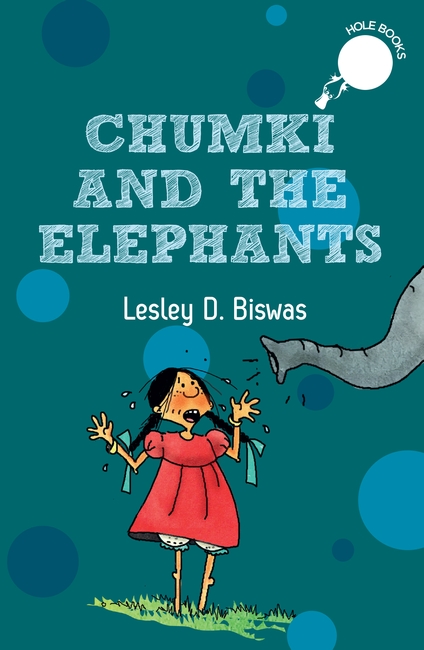
Dadi forgets everything, including Chumki’s name. When elephants escape from a nearby reserve, can it be a blessing in disguise and help Dadi remember?
The Clockwala’s Clues (hOle Books)
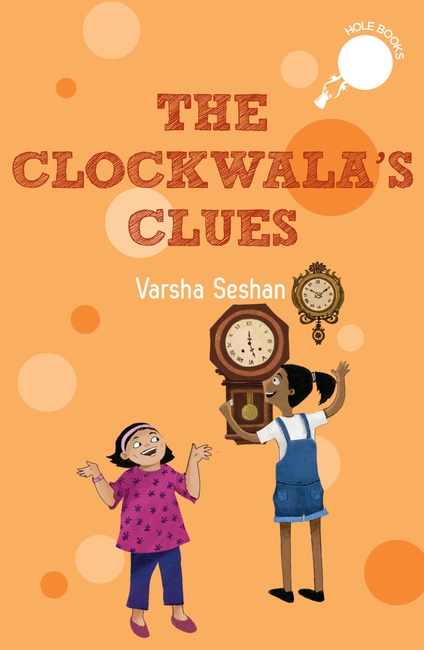
Jasmine and Sheba want to spend the holidays finding homes for stray puppies. But to do so, they have to first solve a series of puzzles set by Sheba’s father, Clockwala Uncle. Can they do this in time?
Pakistan’s Terror Conundrum
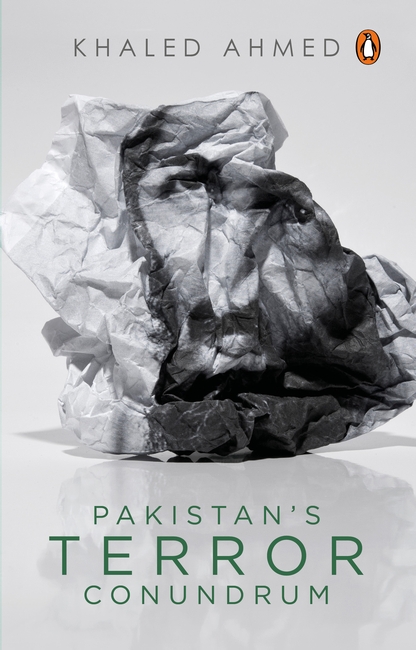
Pakistan was born amid communal violence and a collective consciousness of danger. Right from the outset, democracy was up for debate between the politicians nurtured by the British Raj and an orthodox clergy that advocated a utopia in which Islam was to be the ideological guide. Today, the threat of religion as an extra-legal force is causing many Pakistanis to think if the state can move forward into the future with Islam as its credo.
In this carefully curated collection of his writings in several publications, senior journalist Khaled Ahmed examines Pakistan’s policies regarding terrorism against the backdrop of increasing pressure from international organizations. Despite joining the US in its war against terror after 9/11, the country has been perceived as a safe haven and breeding ground for terrorists. Ahmed looks at the origins and activities of the various terrorist organizations, the role of the state and the ideology of its founding figures, some of whom seem to have been forgotten.
The Mahabharata
This definitive and magnificent 10-volume unabridged translation is one of the rare English translations of full of the epic. Bibek Debroy makes the Mahabharata marvelously accessible to contemporary readers. Dispute over land and kingdom may lie at the heart of this story of war between cousins-the Pandavas and the Kouravas-but the Mahabharata is about conflicts of dharma. These conflicts are immense and various, singular and commonplace. Throughout the epic, characters face them with no clear indications of what is right and what is wrong; there are no absolute answers. Thus every possible human emotion features in the Mahabharata, the reason the epic continues to hold sway over our imagination.
In this superb and widely acclaimed translation of the complete Mahabharata, Bibek Debroy takes on a great journey with incredible ease. This is the second volume in the series.
Nine Timeless Nuggets
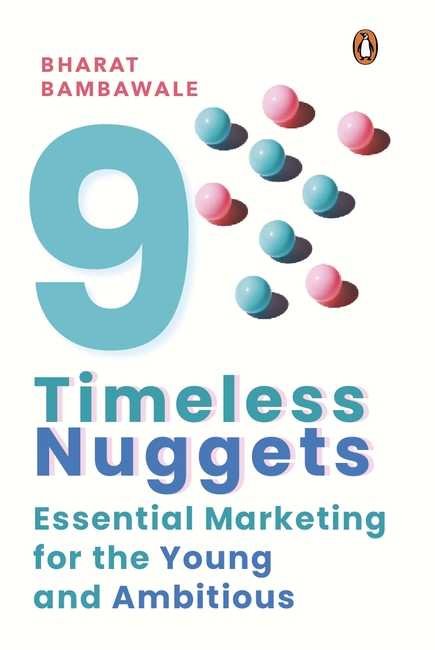
Nine Timeless Nuggets is a knowledge accelerator for young marketers and an absorbing update for experienced ones. It provides a 2020 perspective on timeless marketing ideas. Arranged in three sections-‘How to Think of People’, ‘How to Craft Your Brand’ and ‘How to Go to Market’-the book casts new light on eternal marketing fundamentals and makes us rethink some basic questions. Who are we talking to? Why do they buy? Where do brands come from? Where are brands going? How can marketers talk to people? How can they create strong customer connections? How can they build thriving customer relationships? The answers are all here.
In Nine Timeless Nuggets, Bharat Bambawale proposes new models for customer motivation, customer relationship and twenty-first-century brand building. Together, these models can provide a strong foundation to any brand’s marketing strategy. Through his career, Bharat has helped shape the fortunes of many national, regional and global brands. This gave him a vantage point to observe and experience the underlying principles that drive customers, no matter where they live and which languages they speak. Nine Timeless Nuggets is a distillation of these ideas and concepts.
The Mahabharata
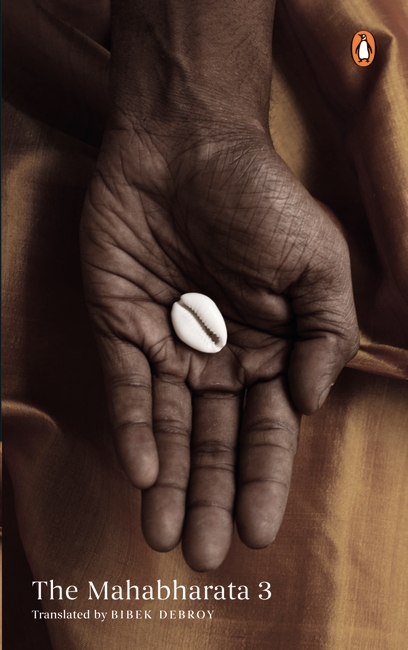
The Mahabharata is one of the greatest stories ever told. Though the basic plot is widely known, there is much more to the epic than the dispute between the Kouravas and Pandavas that led to the battle in Kurukshetra. It has innumerable sub-plots that accommodate fascinating meanderings and digressions, and it has rarely been translated in full, given its formidable length of 80,000 shlokas or couplets. This magnificent 10- volume unabridged translation of the epic is based on the Critical Edition compiled at the Bhandarkar Oriental Research Institute. Volume 1 consists of most of Adi Parva, in which much happens before the Kouravas and the Pandavas actually arrive on the scene. This volume covers the origins of the Kuru clan; the stories of Poushya, Poulama and Astika; the births of the Kouravas and the Pandavas; the house of lac; the slaying of Hidimba and Baka; Droupadi’s marriage; and ends with the Pandavas obtaining their share of the kingdom. Every conceivable human emotion figures in the Mahabharata, the reason why the epic continues to hold sway over our imagination. In this lucid, nuanced and confident translation, Bibek Debroy makes the Mahabharata marvellouly accessible to contemporary readers.
The Mahabharata
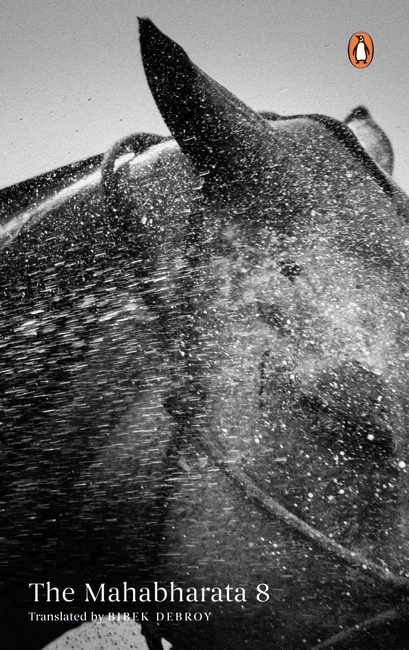
This definitive and magnificent 10-volume unabridged translation is one of the rare English translations of full of the epic. Bibek Debroy makes the Mahabharata marvelously accessible to contemporary readers. Dispute over land and kingdom may lie at the heart of this story of war between cousins-the Pandavas and the Kouravas-but the Mahabharata is about conflicts of dharma. These conflicts are immense and various, singular and commonplace. Throughout the epic, characters face them with no clear indications of what is right and what is wrong; there are no absolute answers. Thus every possible human emotion features in the Mahabharata, the reason the epic continues to hold sway over our imagination.
In this superb and widely acclaimed translation of the complete Mahabharata, Bibek Debroy takes on a great journey with incredible ease. This is the eighth volume in the series. It is the aftermath of the war. Ashvatthama kills all the remaining Pandavas-with the exception of the five Pandava brothers-and Panchalas. The funeral ceremonies for the dead warriors are performed. Bhishma’s teachings in the Shanti Parva, after Yudhishthira is crowned, is about duties to be followed under different circumstances.