This definitive and magnificent 10-volume unabridged translation is one of the rare English translations of full of the epic. Bibek Debroy makes the Mahabharata marvelously accessible to contemporary readers. Dispute over land and kingdom may lie at the heart of this story of war between cousins-the Pandavas and the Kouravas-but the Mahabharata is about conflicts of dharma. These conflicts are immense and various, singular and commonplace. Throughout the epic, characters face them with no clear indications of what is right and what is wrong; there are no absolute answers. Thus every possible human emotion features in the Mahabharata, the reason the epic continues to hold sway over our imagination.
In this superb and widely acclaimed translation of the complete Mahabharata, Bibek Debroy takes on a great journey with incredible ease. This is the seventh volume in the series.

We go about our lives in a rush-always busy, always tired. Often, we find our joy diminished and our health affected. Bestselling author and wellness coach Deanne Panday sees this all too often around her. Through her circle-of-life programme, she tells us about the thirteen vital elements that need to be in sync to lead a happy, healthy and successful-including physical wellness, career, home environment, joy, financial stability, understanding the effects of climate change, and more.
Each chapter focuses on one aspect and has simple, easy-to-follow advice, along with tips and activities that will be your key to a blissful life. The circle-of-life programme can be customized to your life, so it works best for you. It doesn’t aim to provide a quick-fix to your issues, but promises to guide you to evaluating your life holistically and designing your own magical path to wellness-a life free of stress, anger and dissatisfaction.
50 Toughest Questions of Life invites people to have a conversation about themselves with themselves. Deepak Ramola’s quest began after he was inspired by the life lesson of a young girl who said, ‘Life is not about giving easy answers, but answering tough questions.’ Over the years, Ramola has amassed life lessons from inspirational sources across the world: from the women of the Maasai tribe to young girls in Afghanistan and sex workers in Kamathipura; from the lessons of earthquake survivors in Nepal to Syrian refugees in Europe, among many more.
This book is a collection of fifty such questions that made him pause, along with a bouquet of answers, anecdotes, stories and notes from his journey of teaching human wisdom for a decade. Strikingly fresh, tender, yet searing, these questions will make you reflect and inspire you to push beyond your boundaries.

Former prime minister of India and member of the Bharatiya Janata Party, Atal Bihari Vajpayee was an understated and a singular politician of the kind rarely seen in contemporary times. His patriotism was uncompromising, forged out of the paradoxes of his life: the sensitive poet who summoned nerves of steel to conduct the Pokhran-II nuclear tests; the man from humble beginnings who envisioned a project as titanic as the Golden Quadrilateral
highway network. Devoid of any political pedigree or patronage, he harnessed his diplomatic acumen to transform India’s relations with the United States, which had long been mired in misunderstandings rooted in the Cold War. His calculated decisions led to key strategic and economic policy achievements.
In this book, Shakti Sinha, a close associate of Vajpayee, helps us understand Vajpayee as a decision-maker. The narrative focuses on the political challenges Vajpayee faced, and on his key initiatives in the strategic and economic fields during his first term as prime minister, which have had a lasting impact. Vajpayee fleshes out not only Vajpayee’s political philosophy but also provides an insider’s account of how the former PM thought and worked.

As their train puffs away into the distance, three runaway children, Lily, Vicky and Aman, are led by Makhmal Khan the monkey into the shimmering world of the forest. . . Deep within its shadows, beyond the last cloud on the horizon, stands Nyagrodha, the ancient banyan. Within its magical labyrinth the children encounter monarchs and mice, dreamers and scholars, paupers and fortune-seekers, braggarts and burglars, foppish fish and bloodsucking bugs, gory battles and incredible flying machines. But none of these can distract them from the dangers that threaten Simha, the fierce young king and his friend Jeev, the musical bull. For the story of their tangled lives is very like the childrens’ own. Will Aman, Vicky and Lily find their way back home through the maze of stories? Or will treachery destroy the friendship between Simha and Jeev, and leave the forest wounded and bleeding forever. ‘This is an upside-down story,’ Hanumanta the Langoor warns the children. ‘A story that will turn you inside out. Will you hear it unafraid?’

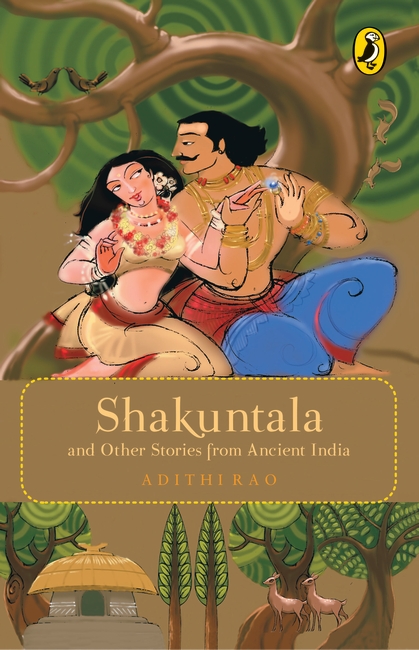
Six unforgettable stories of love and bravery, treachery and injustice, from ancient Indian literature. Classical Sanskrit and Tamil writing teem with myriad characters, and here we meet some truly memorable ones.
This collection of six plays, poems and epics retold for children includes ‘Shakuntala’, a heartrending story of the love between the beautiful Shakuntala and King Dushyanta; ‘The Little Clay Cart’, where the evil designs of the king and his family are foiled by the righteous Charudatta and Vasantasena; ‘The Story of an Anklet’, about Kannagi, who wreaks a terrible revenge for the wrong done to her; ‘Manimekalai’, the extraordinary account of a woman’s search for her true calling; ‘The Last Trial of Sita’, in which the playwright gives a whole new ending to the Ramayana, and ‘The Broken Thigh’, about the final, desperate combat between Duryodhana and Bheema on the battlefield of Kurukshetra. Accompanied by descriptions of the authors’ lives and the time when the stories were written, these lively retellings are an ideal introduction to some of the best-known stories from the Indian classics.

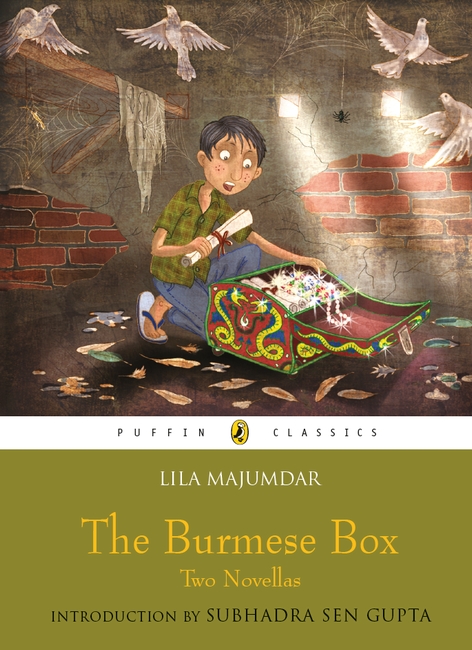
‘I’m going to find that box, the box that’s been missing for a hundred years … Do you know, there are precious gems in it, worth a king’s ransom? Emeralds the size of a rooster’s egg, rubies as big as pigeons’ eggs, pearls the size of a duck’s egg!Aunt Podi’s treasured Burmese box was a part of family history. When Panchu Mama narrates the hair-raising story of how it was acquired and the mysterious circumstances in which it got lost, Goopy decides to find the fabled box and its precious contents. ‘The Burmese Box’ is an action-packed story of a family on a treasure hunt, as they grapple with devious plans and nasty crooks, a highly suspicious detective and eccentric relatives.In ‘Goopy’s Secret Diary’, con men, hidden treasures, a stolen necklace and the secret of an old mansion make for a fascinating read as we follow Goopy’s rollicking adventures in a forest.Featuring two novellas, The Burmese Box is beloved children’s author Lila Majumdar at her best. Her impeccable style and trademark humour will keep generations of readers in thrall.
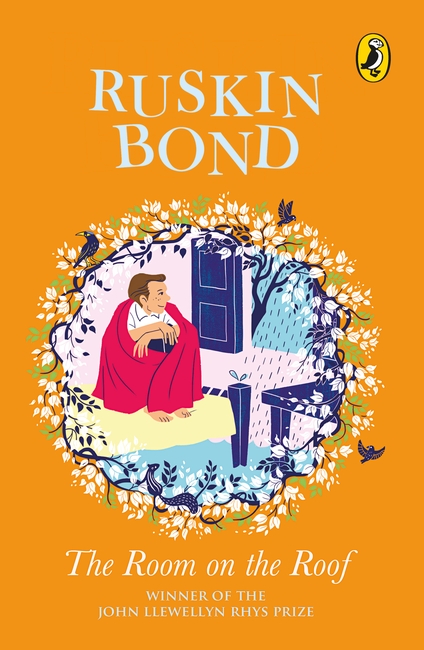
A classic coming-of-age story which has held generations of readers spellbound!
Rusty, a sixteen-year-old Anglo-Indian boy, is orphaned and has to live with his English guardian in the claustrophobic European part in Dehra Dun. Unhappy with the strict ways of his guardian, Rusty runs away from home to live with his Indian friends. Plunging for the first time into the dream-bright world of the bazaar, Hindu festivals and other aspects of Indian life, Rusty is enchanted … and is lost forever to the prim proprieties of the European community.
Written when the author was himself seventeen, this moving story of love and friendship, with a new introduction and illustrations will be enjoyed by a whole new generation of readers.

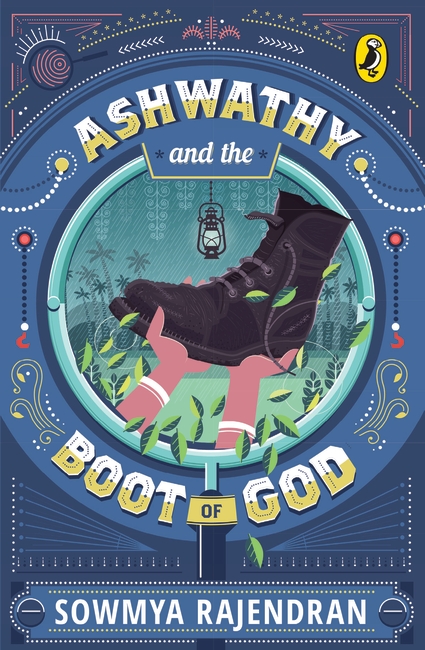
Of course, there is no such thing as the FBI branch of Kuttipuram, Kerala, but Ashwathy Venugopalan always believes in the impossible-life is more entertaining that way. And things only get more impossible in Ashwathy’s life when God arrives in a boot and requests her to investigate the murder of a woman in her town. Can Ashwathy, the atheist, crack her first case with God by her side?

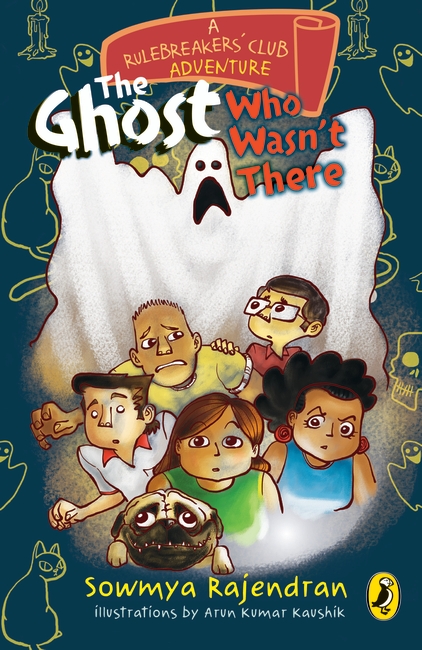
Who’ll let the dog out?
The Rulebreakers’ Club is a gang of five that’s stuck with the Worst Dog in the World. But they’ve finally found a way to get rid of him. All they have to do is catch a ghost and rob a bank. Oh, and they also have to save the world. Easy, right? Wrong! How are the Rulebreakers ever going to get out of the mess they’ve got themselves into? And where will they find this phantom ghost?